

When the flag atop the Ram Mandir in Ayodhya was hoisted by Prime Minister Narendra Modi on November 25, 2025, it marked more than the completion of a religious structure - it represented the culmination of a 5-year mega-engineering effort, a cultural renaissance, and a nationwide devotional movement.
Over 4,000 workers, artisans, engineers, and scientists collaborated round the clock to construct a temple built not just for today, but for the next 1,000 years.
A Vision Built to Outlast Time
The Ram Mandir is designed to be a millennia-lasting structure, an engineering marvel constructed without using iron or steel. This decision emerged from meticulous scientific study: metals corrode over time, and for a structure envisioned to stand for centuries, durability had to be woven into every layer.
Experts from:
CBRI Roorkee
IIT Madras, IIT Delhi, IIT Mumbai, IIT Guwahati
Indian Institute of Astrophysics
…contributed to the temple’s structural plans, geological assessments, seismic modelling, and long-term environmental resilience.
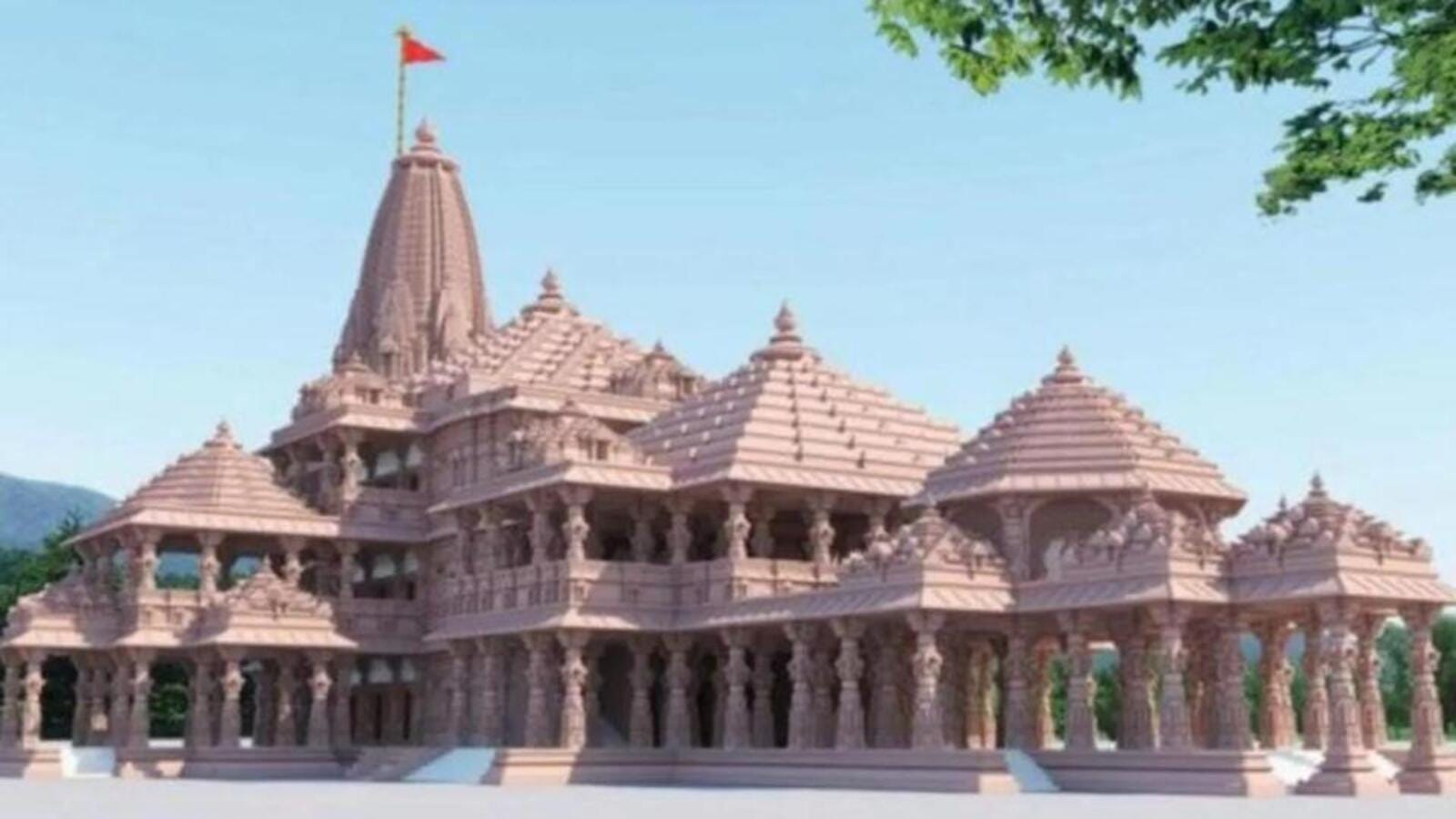
Nagara Style Architecture: A Timeless Aesthetic
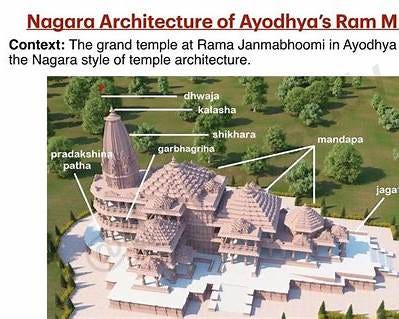
Inspired by the 5th-century Nagara school of North Indian temple architecture, the Ram Mandir is both grand in scale and refined in detail.
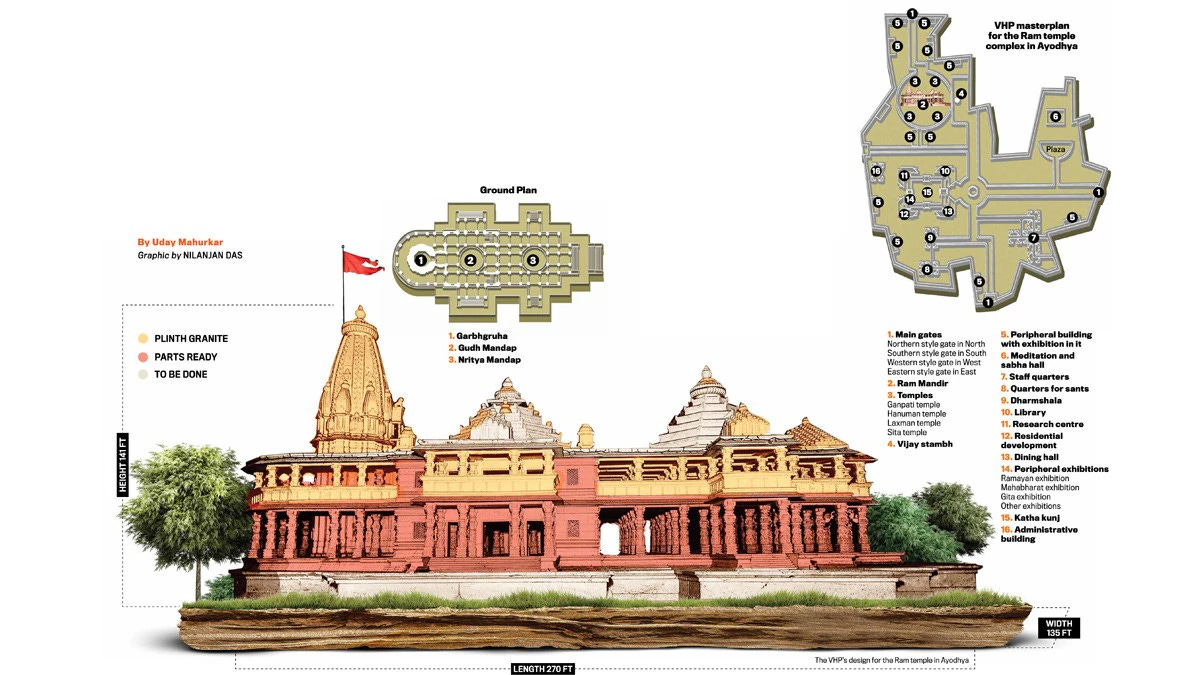
Temple Dimensions
Height: 161 feet
Width: 235 feet
Length: 360 feet
Storeys: Three
The entire temple is built using Bansi Paharpur sandstone from Rajasthan, chosen for:
its enduring strength
weather resistance
natural warm hue
longstanding use in heritage architecture
To protect the structure from birds and monkeys, engineers installed 31 titanium jalis (weighing about 12.5 tonnes). Titanium - a corrosion-resistant, high-strength metal - ensures protection without compromising aesthetics.
These grills were produced by MIDHANI (Mishra Dhatu Nigam Ltd), a defence-grade metallurgy company.
Inside the Sanctum: A Fusion of Artistry and Spirituality
The Garbha Graha (Sanctum Sanctorum)
At the core of the temple stands the idol of Ram Lalla, sculpted from Krishna Shila, a rare black granite from Mysuru. The idol was consecrated during the historic ceremony of January 2024, witnessed across the world.
Ground Floor: Pillars, Deities, and Gold-Plated Doors
Nearly 160 intricately carved pillars depict stories and deities from Hindu scriptures.
Out of the 47 temple doors, 14 are gold-plated, lending a divine radiance to the interiors.
First Floor: The Ram Darbar
The first level houses the Ram Darbar, featuring idols of:
Lord Ram in his majestic, royal form
Goddess Sita
Lakshman
Hanuman
All sculpted from pristine Makrana marble, the same marble used in the Taj Mahal.
Five Mandaps for Devotion and Culture
The temple layout integrates five grand mandaps:
Nritya Mandap – Hall of dance
Rang Mandap – Hall of colours / performances
Gudh Mandap – Central sanctified hall
Kirtan Mandap – Devotional singing
Prarthana Mandap – Prayer hall
Each mandap supports a unique spiritual, cultural, or ritualistic function.
Beyond the Sanctum: A Grand Temple Complex
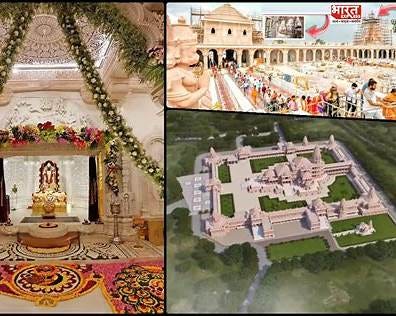
The Ram Mandir is not just a single structure - it is a vast sacred precinct enriched with symbolism, heritage, and architectural planning.
Double-Storeyed Parkota (Perimeter Wall)
Extends 750 metres around the temple
14 feet thick
Lower level houses six temples dedicated to:
Surya
Shiva
Ganesha
Hanuman
Bhagwati
Mata Annapurna
It also includes the administrative offices of the Shri Ram Janmabhoomi Teerth Kshetra Trust.
Upper Level: The Parikrama Marg
A wide, smooth circumambulation path designed to handle large crowds of pilgrims effortlessly.
Sapta Rishi Mandir
Dedicated to the seven legendary sages:
Vashishtha
Vishwamitra
Valmiki
Agastya
Nishad Raj
Ahalya
Shabri
This creates a spiritually complete pilgrimage circuit within the complex.
Engineering the Foundation: Built to Withstand Calamities
Constructing such a massive temple near the Saryu River posed unique geotechnical challenges. During excavation, engineers found moisture traces that could compromise stability.
Thus began one of the most impressive foundation engineering projects in modern India.
Multi-Layered Foundation Strategy
14-metre-deep excavation
Filling with 1.32 lakh cubic metres of roller-compacted concrete (RCC)
Placement of a 1.5-metre-high high-strength raft
Construction of a 6.5-metre granite plinth (24,000 granite blocks)
This ensures:
Earthquake resilience
Flood resistance
Moisture protection
Longevity exceeding a millennium
The temple’s ability to endure extreme weather and seismic forces makes it a unique blend of heritage architecture and modern geoscience.
Funding and Cost: A National Effort
The Sri Ram Janmabhoomi Teerth Kshetra Trust reported:
₹3,000 crore received in public donations initially
₹1,800 crore spent so far on the main temple structure
Unlike most large religious or public projects, the Ram Mandir has been funded almost entirely by voluntary public contributions — from large donors to individuals sending small amounts as acts of devotion.
What Remains to Be Completed
While the main temple structure is fully built, auxiliary developments will continue until late 2026:
Landscaping and greenery across the complex
The grand boundary wall
A large auditorium for cultural and religious programs
Additional visitor amenities and pilgrim management systems
A Millennium Monument for India
The Ram Mandir is far more than a place of worship - it is a civilizational project. It reflects how tradition can harmonize with technology, how ancient architectural philosophies can be revived using modern science, and how collective devotion can shape monumental achievements.
From its iron-free construction to its deep geological foundations, from the Krishna Shila idol to the Nagara spires, every aspect of the temple is designed to stand as a beacon of culture, faith, and engineering brilliance for the next 1,000 years.