

Ask almost any family in India about a yatra and you will not hear a travel story. You will hear something older.
Someone gave their word to their mother that they would take her to Kashi. Someone has been meaning to go to Ujjain since their father left this world. Someone has kept a vrat faithfully for eleven years and has never once stood before the murti they keep it for.
There is a date circled somewhere. There is money set aside, quietly, month after month. And there is a hesitation that has lasted years, because nobody knew whom to trust with it.
A yatra is not a holiday. It is a sankalp that has been waiting for its moment.
That waiting is what we exist to end.
Who we are
DharmikVibes began in August 2025 in Gurugram, and today we serve yatris across more than five temple cities.
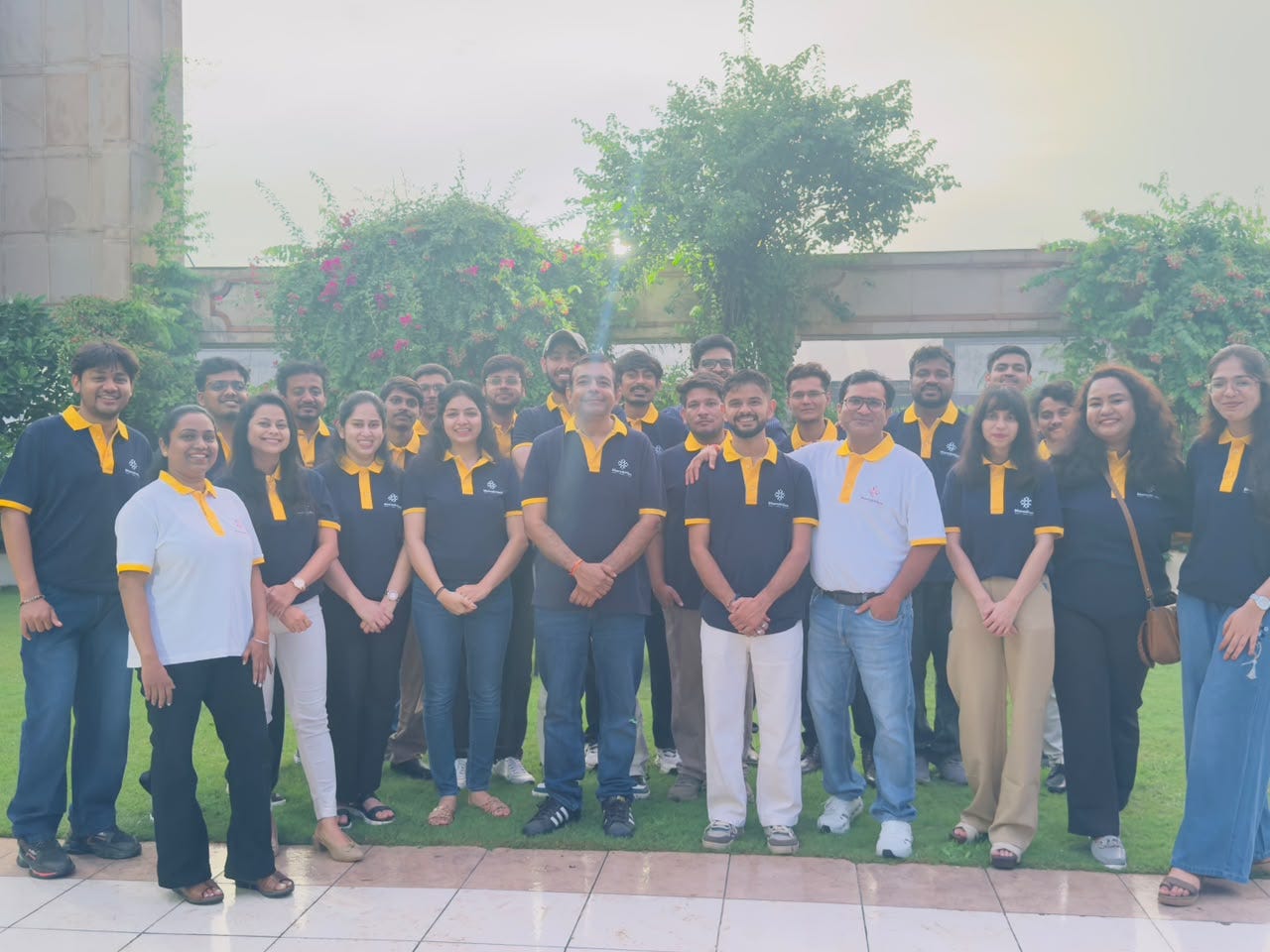
We are a team of devotees, technologists and people who have grown up in this tradition, working alongside temples, purohits, guides, drivers, small guesthouses and local sevaks. Several of us came to this work because of a yatra in our own family that was far harder to arrange than shraddha deserved.
We are not building a travel company. We are trying to hold, carefully, the arrangements that sit between a devotee and their darshan.


What troubles us
There is nothing lacking in the aastha of our people. There is a great deal lacking in the arrangements around it.
A yatri is left to assemble everything alone. Darshan timings from one source. A purohit through a cousin’s contact. A guide found at the gate. A room taken on faith. A vehicle bargained for on arrival. Five separate arrangements, five ways for a sacred day to be spoiled - and nobody answerable when it is.
Those with the deepest shraddha find it hardest. The yatris who most long to travel are often in their sixties and seventies. They may not type comfortably. They may not read English. Their knees may not manage long queues or unaided steps. Almost nothing in the way yatras are arranged today is built around them.
Distance adds its own helplessness. A son or daughter far from home, trying to arrange their parents’ yatra from another country, cannot see the room, cannot meet the driver, cannot walk the route. They are asked to place the people they love most in the hands of a stranger.
Nobody knows what is fair. A yatra is one of the few things a family arranges where the cost is unclear and the heart is already committed. Devotion should never be a reason to be charged more.
And those who serve on the ground live with uncertainty. The guide who knows every stone of a temple and each story attached to it earns nothing through the quiet months. The driver, the purohit, the vendor outside the gate, the family running a six-room guesthouse near the ghats - their seva is what every promise is actually made of, and their earnings rise and fall with no cushion beneath them.
Attend only to the yatri and you have built a booking website. Attend only to those who serve and you have built a directory. The work worth doing sits between the two.
Arth. Vishwas. Anubhav.
Economy. Trust. Experience. Three words, and everything we build rests on one of them.
Vishwas is what allows a devotee to hand over something they have carried for years. Without it, nothing else is even given a chance.
Anubhav is what they actually live through - the pace of the day, the dignity of the arrangements, whether anyone explained what was being performed and why.
Arth is the part no one sees on a screen: the guide, the driver, the purohit and the small sevak whose household depends on the work.
Attend to one and you have a feature. Attend to two and you have a good service. An ecosystem stands only when all three hold together - and each one carries the others. Vishwas brings yatris. Yatris bring steady work. Steady work lets our sevaks grow better at what they do. Better seva creates the anubhav that earns more vishwas.
That circle is the whole of it. Everything else is detail.
Our seva
In plain words, this is what we do:
We arrange yatras - the route, the stay, the travel, the timings, the pace - built around the yatris who are actually travelling, not around a fixed package.
We arrange poojas, rituals and darshan - performed properly, by the right hands, at the right muhurat, with the family told clearly what will take place and what it costs.
We bring yatris to true guides - people who know the sthal, its itihaas and its meaning, not whoever happens to be standing at the gate.
We hold the daily sadhana too - the vrat and festival calendar, dhyana, yoga, and learning from the Gita and our shastras. A yatra comes once; bhakti is daily.
We do all of it in the devotee’s own bhasha, because no one should have to pray in a borrowed language or fill an English form to reach their own tradition.
Vishwas is everything
All that we build follows from one question: would we place our own parents in these hands?
That is not a slogan. It is the test we hold decisions against. In practice it means:
A real person, answerable. Every yatra has someone whose name the family knows and who picks up the phone.
Clear cost, spoken at the start. Nothing discovered at the temple gate. No price set by how much someone’s heart is invested.
Honesty about what cannot be done. If a darshan cannot be arranged, or a climb is beyond someone who walks with difficulty, we say so before the booking, not after.
Being present when devotees reach out. Prayer keeps its own hours. So should those who serve it.
A call before departure, and a call after return. The second matters more. It is where we learn what truly happened.
The anubhav we are after
A yatra is not measured by an itinerary. It is measured by what a devotee felt.
An elderly couple who had to worry about no arrangement at all, and could give the whole day to the reason they came. A yatri who understood what was being offered and why, instead of standing politely through a ritual nobody explained. A daughter far away who received one photograph from the mandir and could finally breathe.
It is arriving somewhere far from home and finding that you were expected.
The households behind every darshan
This deserves to be said plainly.
Every teerth in India holds up a whole local life - guides, drivers, purohits, cooks, shopkeepers, small guesthouse owners, families who have lived beside a mandir for generations. They carry the entire anubhav. They also absorb all of its uncertainty.
We believe a platform in this work has exactly one honest justification: it must make that livelihood steadier.
That means sending work to local hands rather than around them. Paying properly, and paying on time. Training and supporting our sevaks so their seva grows finer and their earnings grow with it. Helping a guide build a naam that belongs to him.
If DharmikVibes grows and the people who serve alongside us do not, we will have built nothing worth building. That sentence is the one we keep returning to.
Where we wish to reach
We want any devotee - in a small town in Madhya Pradesh, in a flat in Dubai, in a village where no one in the house speaks English - to be able to undertake the yatra they have postponed for years, simply, in their own language, and to know it will be held with care.
We want the daily sadhana to be there too, on the ordinary Tuesdays between journeys.
And we want the guide, the driver and the purohit at the other end of that journey to earn a steady living from seva they are good at, and to be able to plan their year.
That is the whole ambition. Everything we build is in its service.
Why an ecosystem, and not an app
Travel. Spirituality. Wellness. Local infrastructure. In India these are not four industries - in a temple town they are one street.
The mandir sustains the guide. The guide depends on the driver. The driver depends on the guesthouse being full. The guesthouse depends on the season, the festival calendar, and whether anyone thought to tell devotees that this is a good week to come. Put a road, a clean rest stop or a trained guide into that street, and the effect reaches every household along it.
We believe the work around India’s teerth sthals can support livelihoods on a scale very few sectors in this country can match.
That is why we are building an ecosystem and not an app, and we will not pretend it is the easier road. An app can be shipped by a small team in a few months. An ecosystem asks temples, purohits, guides, drivers, guesthouses, local administration, technology and devotees to move in one direction - much of it offline, much of it built only by going and standing there in person, all of it slower than writing software.
It is harder. It is also the only version of this that changes anything on the ground.
How we work
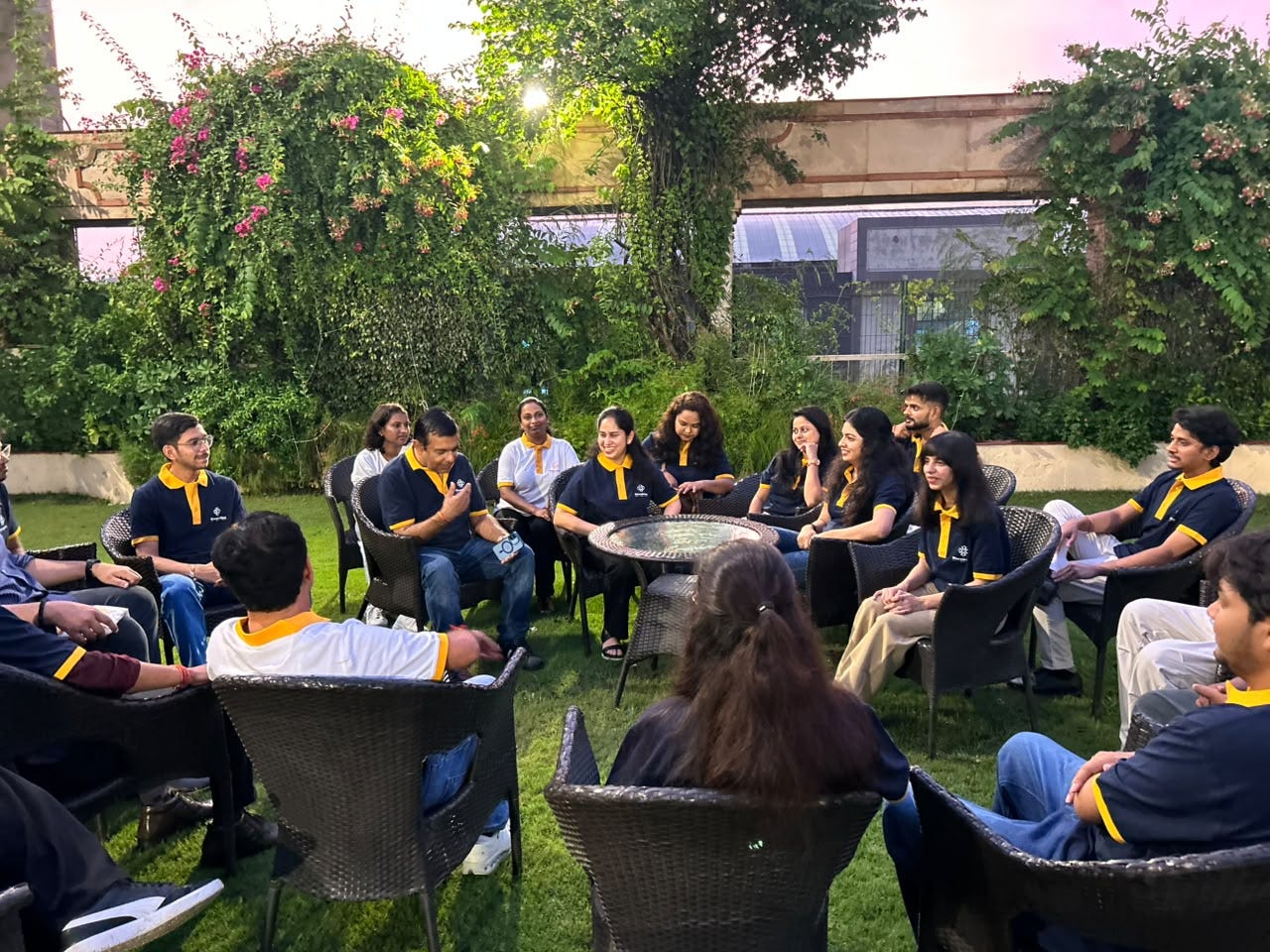
We came together recently in Gurugram - the whole team, from different cities. No hall, no projector, no rows of chairs facing a screen. We sat outdoors in a circle on the grass and talked through the afternoon and into the evening.
A circle has no front. No one speaks down to anyone, everyone can see everyone, and people say what they have been carrying for months. Much of what is written above was spoken aloud in that circle, by the people who do this work every day.
If you are reading this
If you are a devotee with a yatra you have been putting off - write to us. Tell us what you have been meaning to do. That is how we learn what to build next.
If you are a guide, a purohit, a driver or a small sevak at a teerth - we would be glad to walk alongside you. [partner@dharmikvibes.com]
And if you have already travelled with us: thank you for placing in our hands something you had carried for a long time. We know what that is worth.
🙏
- Team DharmikVibes