
Akshaya Tritiya 2026: 7 Sacred Temples to Visit for Divine Abundance and Infinite Blessings
The most auspicious day of the Hindu year falls on Sunday, April 19, 2026 - here is your complete guide to the temples where devotion, prosperity, and spiritual awakening converge.

There are certain days in the Hindu calendar when the veil between the material and the divine grows thin. Akshaya Tritiya is one of them.
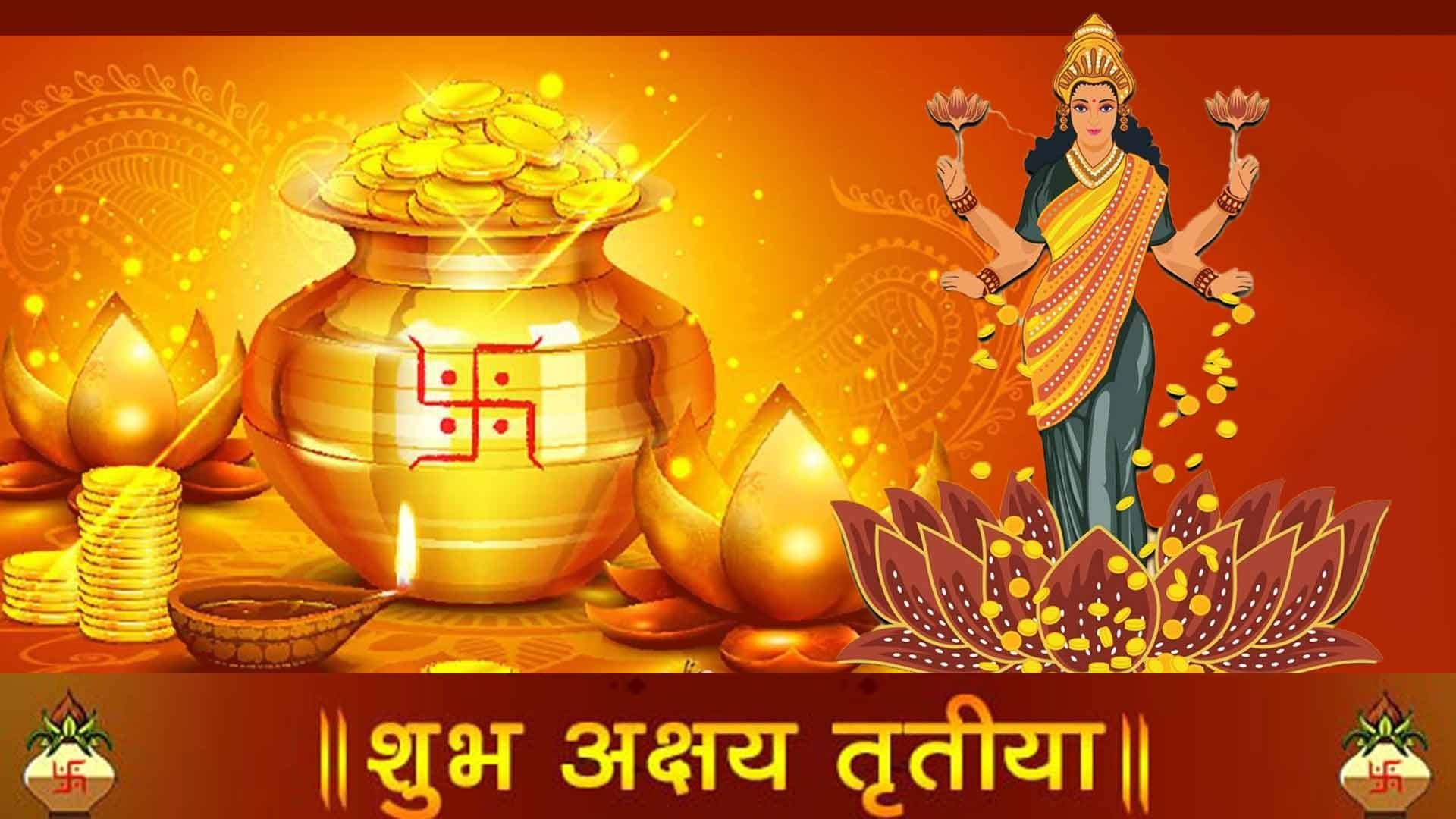
The word Akshaya (अक्षय) means “that which never diminishes.” It is the rare tithi when, according to scripture, every act of puja, daan, japa, and darshan yields fruit that never fades. Gold purchased today is said to multiply. Ventures begun today are blessed with longevity. And temple visits made today are believed to carry the weight of a thousand ordinary pilgrimages.
In 2026, Akshaya Tritiya falls on Sunday, April 19. The Tritiya Tithi begins at 10:49 AM and extends into the early hours of April 20. The most sacred Puja Muhurat is from 10:49 AM to 12:20 PM in Delhi - a window of just over 90 minutes that pandits across India consider the spiritual peak of the entire year.
But Akshaya Tritiya is also called an Abujh Muhurat - a day so inherently auspicious that no separate muhurat calculation is needed. Every moment from sunrise to sunrise carries divine weight.
Which is why, for millions of Hindus, this is the day to step into a temple. Not just any temple - but those that have stood for centuries as lighthouses of devotion, places where the energy of sustained prayer has saturated the very stone.
If you are planning a yatra this Akshaya Tritiya, here are seven sacred temples across India where the day takes on a character you will find nowhere else.
1. Jagannath Temple, Puri - Where the Rath Yatra Begins
Why this day matters here: Akshaya Tritiya at Puri is not just a day of worship - it is the day the universe’s grandest chariot festival quite literally begins to be built.
On this morning, master carpenters gather at the Ratha Khala near the 12th-century Jagannath Temple for the ritual of Ratha Anukula - the ceremonial fire worship that inaugurates the construction of three new chariots for the Rath Yatra. These are not symbolic structures. They are towering wooden giants, 45 feet tall, built every single year from scratch using specified sacred wood, without a single nail, following scriptural specifications unchanged for centuries.
Nandighosa for Lord Jagannath, Taladhwaja for Lord Balabhadra, Darpadalana for Devi Subhadra - each with 16 wheels, each waiting to be born.
On this same day begins the Chandan Yatra, the 42-day festival where the utsav murtis of the deities are anointed with cooling sandalwood paste to ease the summer heat, and given ceremonial boat rides on the Narendra Tank accompanied by music, dance, and lamps on water.
What to experience: Arrive early for morning darshan, then walk to the Ratha Khala to witness the Ankuraropana (sowing of sacred seeds) and the start of chariot construction. The Rath Yatra itself will take place on July 16, 2026 - but the spiritual seed is planted today.
Pilgrim tip: Puri gets crowded. Book accommodation near Grand Road for easiest temple access. Non-Hindus are traditionally not permitted inside the main sanctum but can view the temple and rituals from the nearby Raghunandan Library rooftop.
2. Tirumala Venkateswara Temple, Tirupati - Where Wealth Takes Darshan
Why this day matters here: Lord Venkateswara is synonymous with abundance. The temple itself is reputed to be the wealthiest in the world, and devotees believe that prayers for prosperity offered on Akshaya Tritiya carry unique potency at the feet of Balaji.
Akshaya Tritiya at Tirumala draws lakhs of devotees who climb the seven hills - either on foot via the Alipiri Mettu or by road - to seek blessings from the Kaliyuga Pratyaksha Daivam, the God visibly present in this age. The belief is ancient: that whatever vow (mokku) is made to Venkateswara on this day, He fulfils with infinite generosity.
The day is marked by special archanas, extended abhishekams, and the distribution of laddu prasadam - the GI-tagged Tirupati laddu that is itself considered a form of blessed wealth.
What to experience: Book a Sarva Darshan or Special Entry Darshan slot through the TTD portal well in advance - Akshaya Tritiya slots fill within minutes. Many devotees observe the tradition of gold or silver thulabharam (being weighed against precious metals offered to the Lord) on this day.
Pilgrim tip: Plan to arrive the night before. Free accommodation is available at TTD cottages and choultries, but for Akshaya Tritiya, booking is essential. The climb via Alipiri takes 3-4 hours and is considered especially meritorious.
3. Somnath Temple, Gujarat - The First Jyotirlinga by the Sea
Why this day matters here: Somnath, the first of the twelve Jyotirlingas, has been destroyed and rebuilt seventeen times. That a temple can die and resurrect so many times, and still stand today on the shores of the Arabian Sea, is itself a metaphor for akshaya - the indestructible.
Akshaya Tritiya at Somnath carries a particular fragrance. It is considered one of the most auspicious days to begin a spiritual journey, undertake daan (charitable giving), and perform rituals for ancestors. The temple conducts special abhishekams of the Jyotirlinga with milk, honey, ghee, and sacred waters.
But the real magic is the evening aarti. As the sun sets over the Arabian Sea behind the temple, conches blow, bells ring, and the priests raise flames before the Lord while waves crash just metres away. Few spiritual experiences in India match it.
What to experience: The Somnath Light and Sound Show in the temple complex narrates the temple’s history in Amitabh Bachchan’s voice - a moving addition to any visit. Do not miss the nearby Bhalka Tirtha, where Lord Krishna is believed to have left his mortal body, and Triveni Sangam, the confluence of three rivers meeting the sea.
Pilgrim tip: Veraval is the nearest railhead (7 km). Diu airport is 85 km away. For Akshaya Tritiya, evening aarti timing is the priority - plan your day around it.
4. Banke Bihari Temple, Vrindavan - Where Krishna Plays on Akshaya Tritiya
Why this day matters here: Vrindavan on Akshaya Tritiya is a different world. The temple of Banke Bihari - Krishna in his most playful, bent-in-three-places form - hosts one of the rarest darshans of the Hindu year: Charan Darshan.
On every other day of the year, the Lord’s feet remain covered. Only on Akshaya Tritiya are the sacred feet of Thakur Banke Bihari revealed to devotees. For believers, to witness those feet even once in a lifetime is considered liberation itself.
The temple opens earlier than usual. Devotees begin queuing before dawn. Bhajans fill the narrow lanes of Vrindavan from 4 AM. The fragrance of sandalwood, tulsi, and jasmine hangs thick in the air. By mid-morning, the darshan line can stretch for kilometres through the town’s winding alleys.
What to experience: Beyond Banke Bihari, Vrindavan on Akshaya Tritiya comes alive at Radha Raman Temple, ISKCON Vrindavan, and the Prem Mandir. Many devotees perform parikrama of the 7-km Vrindavan circumambulation route on this day.
Pilgrim tip: Reach at least 2 hours before scheduled darshan time. Leave your phone and camera at your hotel - the temple strictly prohibits photography, and the crowd can be overwhelming. Mathura is the nearest railhead, 15 km away, well-connected to Delhi.
5. Mahalakshmi Temple, Kolhapur - One of the 51 Shakti Peethas
Why this day matters here: Among the Shakti Peethas - the 51 sacred sites where parts of Devi Sati’s body fell to earth - the Mahalakshmi Temple of Kolhapur holds a rare distinction. This is believed to be the eye of the Goddess. And Akshaya Tritiya, as a day ruled by divine feminine abundance, finds no more fitting home than here.
The 7th-century temple, built by the Chalukya dynasty, houses a swayambhu (self-manifested) idol of Mahalakshmi carved from a single black stone. Unlike most temples where the deity faces east, Mahalakshmi here faces west - a rarity that pandits attribute to Her role as the protector of travellers and those seeking to begin new journeys.
On Akshaya Tritiya, the goddess is adorned in gold, red silk, and flowers from across Maharashtra. Thousands of women offer haldi-kumkum, coconut, and glass bangles. The evening Alankar Darshan shows Her in full ceremonial form - a sight devotees compare to witnessing Lakshmi Herself step out of the Kshirasagara.
What to experience: Twice a year, at the equinoxes, a phenomenon called Kiranotsav occurs where the setting sun’s rays fall directly on the deity. While this does not align with Akshaya Tritiya, the temple’s Utsav Murti procession in the evening is unmatched.
Pilgrim tip: Kolhapur is well-connected by rail to Mumbai and Pune. Combine the visit with nearby Jyotiba Temple (hilltop Shiva-Kartikeya shrine) and the Rankala Lake for a complete Kolhapur pilgrimage.
6. Badrinath Temple, Uttarakhand - The Gates of Heaven Open
Why this day matters here: Here lies a sacred coincidence most pilgrims do not know: the doors of Badrinath, one of the four Char Dhams, traditionally open for the pilgrimage season on or around Akshaya Tritiya every year.
In 2026, the Kapat Khulne (door opening) ceremony of Badrinath takes place within days of Akshaya Tritiya, beginning the six-month summer pilgrimage window before the Himalayan gates close again for the winter. For devotees, reaching Badrinath in this opening week is the highest form of spiritual merit.
The temple, dedicated to Lord Vishnu in his Badrinarayan form, sits at 10,170 feet in the Garhwal Himalayas, flanked by the Nar and Narayan peaks, with the Alaknanda River rushing past. The nearby Tapt Kund - a natural hot spring where pilgrims bathe before darshan - is considered one of the most purifying waters in all of Sanatana Dharma.
What to experience: The first aarti of the season after the temple reopens is unlike any other. The priest, who has kept the ghee lamp burning inside the closed temple through the entire winter (Akhand Jyoti), reveals it to the waiting devotees - a flame that has burned uninterrupted for six months.
Pilgrim tip: Badrinath requires serious preparation - medical fitness, warm clothing, advance registration on the Uttarakhand Char Dham portal, and a helicopter or road booking. The nearest airport is Dehradun (317 km). Those unable to travel physically can observe the opening via official live streams.
7. Mahakaleshwar Temple, Ujjain - Where Time Itself Bows
Why this day matters here: Among the twelve Jyotirlingas, Mahakaleshwar is unique - the only dakshinamukhi (south-facing) Shiva, the lord of time, and the deity who grants freedom from the fear of death itself.
Akshaya Tritiya at Ujjain carries a power that is different from other temples on this list. This is a Shiva temple on the day of Vishnu - and this duality is precisely what makes it sacred. The belief is that on Akshaya Tritiya, devotees who seek Mahakal receive blessings for both Bhukti (worldly abundance) and Mukti (liberation) - a combination rarely granted together.
The day begins with the famous Bhasma Aarti at 4 AM, where the Jyotirlinga is anointed with sacred ash. On Akshaya Tritiya, this aarti takes on a ceremonial grandeur, with special abhishekams and rudra pujas extending through the day.
What to experience: Beyond Mahakaleshwar, Ujjain on Akshaya Tritiya is rich with pilgrimage energy - the Kal Bhairav Temple (where alcohol is offered to the deity), the Harsiddhi Temple (Shakti Peetha), and the banks of the Shipra River, one of the seven holy rivers of Hinduism.
Pilgrim tip: Bhasma Aarti requires advance booking (usually 1-2 months) through the official Mahakaleshwar temple portal. Indore is the nearest airport, 55 km away, with frequent connections to Delhi, Mumbai, and Bangalore.
The Deeper Significance: Why Akshaya Tritiya Matters
For those unfamiliar with the tithi, here is what makes it different from every other auspicious day in the Hindu calendar:
Yugadi Tithi: According to scripture, Akshaya Tritiya marks the end of Satya Yuga and the beginning of Treta Yuga - the turning of cosmic time itself.
Birth of Parshurama: The sixth incarnation of Lord Vishnu was born on this day.
Ganga’s descent to earth: Maa Ganga is believed to have descended from Devaloka to the mortal world on Akshaya Tritiya.
Sudama and Krishna: Dwarkadhish Krishna alleviated the poverty of his childhood friend Sudama on this day, the origin of the belief that friendship and generosity offered today yield infinite returns.
The Akshaya Patra: The Sun God gave the Pandavas the bottomless vessel that never ran out of food on this tithi - the original symbol of akshaya abundance.
Opening of Char Dham: The kapat of Badrinath, Kedarnath, Gangotri, and Yamunotri traditionally open in this season, connecting Akshaya Tritiya to the very inauguration of Himalayan pilgrimage.
Rituals for Akshaya Tritiya 2026
If you cannot travel to any of these temples, the day carries power wherever you observe it. Here is what traditional practice recommends:
Wake before sunrise. Bathe in water with a few drops of Ganga jal, if available.
Perform Lakshmi-Narayan puja between 10:49 AM and 12:20 PM (the day’s peak muhurat).
Donate generously - food, clothes, water pots, gold, or money. Akshaya Tritiya is the day when daan yields multiplied merit. Donations to temples, Brahmins, or the needy are equally valued.
Purchase gold or silver, even a small amount. This is not superstition but a tradition rooted in the belief that wealth invited today never fully departs.
Read or listen to the Vishnu Sahasranama or chant “Om Namo Bhagavate Vasudevaya” 108 times.
Prepare kheer, halwa, or sattu and offer it first to the deities, then share with family.
Avoid anger, arguments, and unethical decisions. The day’s spiritual weight amplifies both positive and negative intentions.
Akshaya Tritiya is not about gold. It is not even about temples. At its deepest, it is about intention - the understanding that certain moments in time are thresholds, and that how we cross them shapes the years that follow.
The temples in this guide are not tourist destinations. They are living, breathing centres of energy where generations have stood exactly where you will stand, prayed for exactly what you will pray for, and received exactly what you are seeking today.
This Akshaya Tritiya, whether you are at the feet of Banke Bihari in Vrindavan, at the sea-facing lingam of Somnath, or in a quiet corner of your own home lighting a single diya - may your prayers find wings, and may the abundance you invite today truly know no end.
Har Har Mahadev. Jai Shri Ram. Jai Mahalakshmi. 🙏
Planning a sacred yatra for Akshaya Tritiya or any festival of 2026? DharmikVibes connects devotees with verified DharmikGuides, curated temple experiences, and authentic rituals across India’s most revered pilgrimage destinations. Explore dharmikvibes.com
Subscribe to DharmikVibes for weekly guides on temples, festivals, rituals, and the living heritage of Sanatana Dharma.