

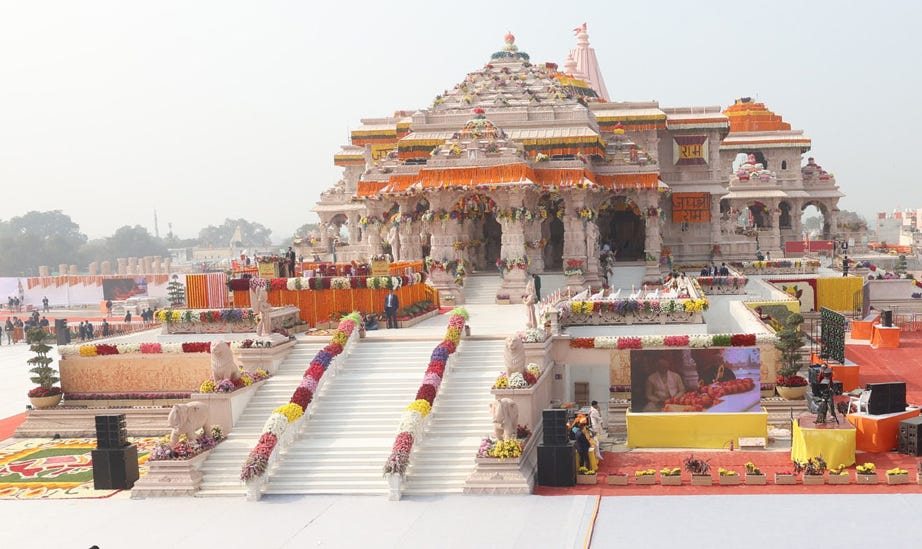
Photo: Prime Minister's Office, GODL-India, via Wikimedia Commons
Since the Pran Pratishtha of Ram Lalla on 22 January 2024, Ayodhya has become one of the most-visited sacred cities in India. Lakhs of devotees now come every month for darshan at the Ram Janmabhoomi Mandir, many of them visiting a newly built temple town for the first time. This guide covers what darshan actually looks like today: the timings, the passes, the security, and how to shape a calm day in Ayodhya.
Darshan timings, from the trust itself
The Shri Ram Janmbhoomi Teerth Kshetra trust publishes free darshan slots on its official site. As of the current schedule (in effect from 18 April 2026), darshan runs in timed blocks through the day:
7:00 AM to 9:00 AM
9:00 AM to 11:00 AM
11:00 AM to 12:00 PM
1:00 PM to 3:00 PM
3:00 PM to 5:00 PM
5:00 PM to 7:00 PM
7:00 PM to 9:00 PM
Aarti darshan is separate: Mangala Aarti at 4:00 AM, Shringar Aarti at 6:00 AM, and Shayan Aarti at 10:00 PM. Timings can change on festival days, so check the trust's site again the week you travel.
Passes: free, but book ahead
Darshan is free. The trust issues passes through its own online booking, and aarti darshan in particular is pass-controlled. The golden rule: use only the trust's official website for bookings. Middlemen and unofficial "VIP darshan" offers targeting pilgrims have been reported around Ayodhya, as around every major temple. Follow the instructions printed on your pass carefully; the trust explicitly asks yatris to do so, because entry batches are timed.
What to expect on the ground
Expect airport-style security and long, well-managed queues. Carry a valid photo ID and your pass, travel light, and check the trust's current list of prohibited items before leaving your hotel; large temples commonly restrict phones, cameras, bags and leather items inside the complex. Comfortable footwear you can slip on and off helps, and mornings are cooler and calmer than afternoons.
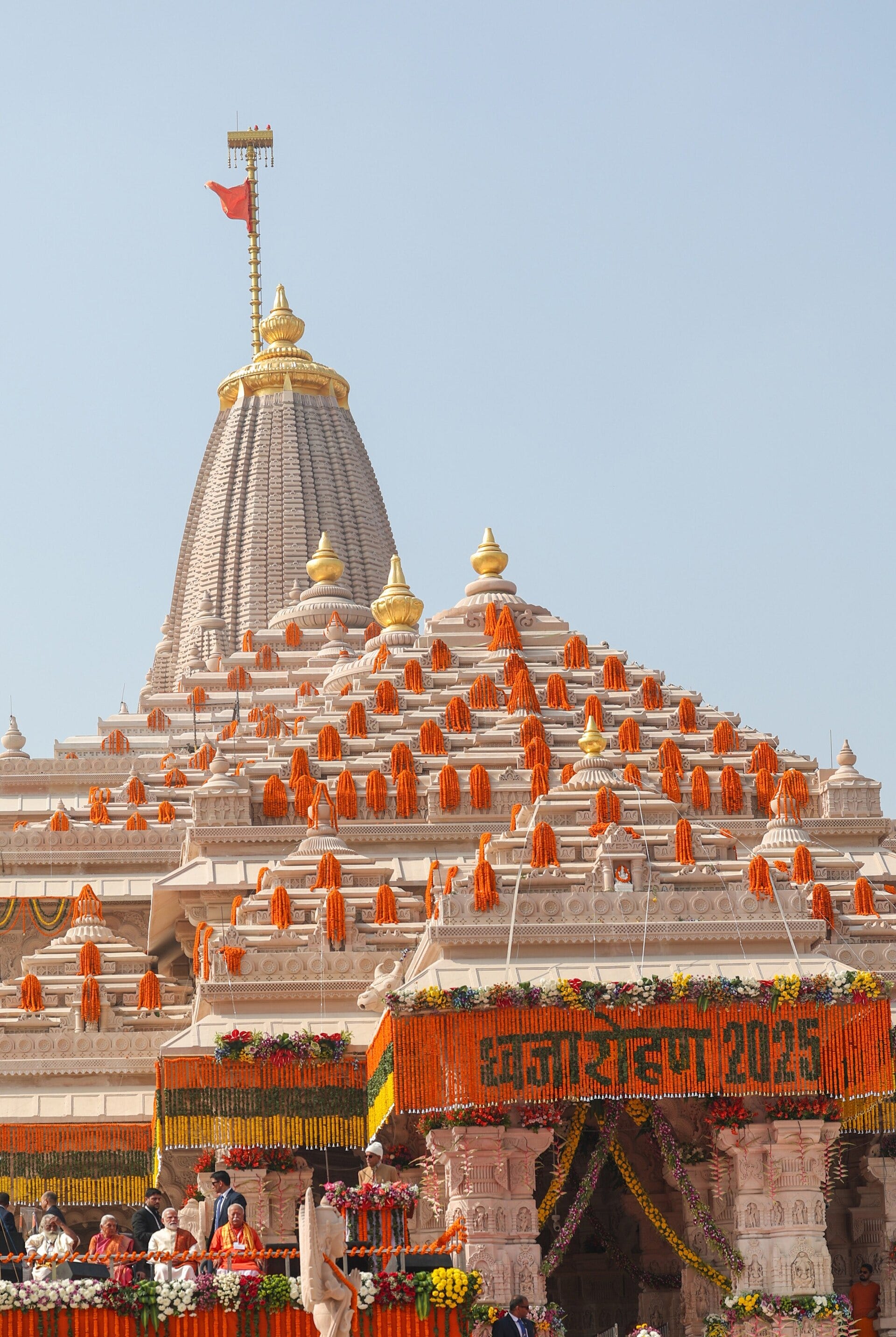
Photo: Prime Minister's Office, GODL-India, via Wikimedia Commons (the mandapa and shikhara of the new mandir)
Reaching Ayodhya
Ayodhya has its own airport (Maharishi Valmiki International Airport, Ayodhya Dham) with connections to major Indian cities, and two busy railheads: Ayodhya Dham Junction and Ayodhya Cantt. Trains to Ayodhya fill fast around Ram Navami, Deepotsav and weekends; book as early as the reservation window allows. From the station or airport, local autos, e-rickshaws and taxis run to the temple area; the last stretch near the mandir is largely pedestrianised, so expect a short walk.
Shaping the day
A good first-timer's day looks like this: reach the mandir for a morning darshan slot, then walk up to Hanuman Garhi, the hilltop Hanuman temple that tradition says guards the city, before the midday heat. Rest in the afternoon. Return to the Saryu ghats by evening for the aarti at Naya Ghat, when lamps and bhajans fill the riverfront, and end at Kanak Bhawan, the beautiful temple of Sita and Ram near the main complex. If you have a second day, the older kunds, mathas and lanes of the city reward slow walking.
When to come
October to March brings the kindest weather. Deepotsav around Diwali, when the ghats are lit with lakhs of diyas, and Ram Navami in spring are the most crowded and the most spectacular; darshan slots on those days need to be booked the moment they open. Ordinary weekdays are the quietest.
A city older than its headlines
However you arrive, Ayodhya rewards the pilgrim who slows down. The new mandir is the destination, but the city's older rhythm, the Saryu at dawn, the small shrines in every lane, the unhurried faith of its residents, is what most visitors carry home. At DharmikVibes, our vision is to enable every devotee to experience Ayodhya with both devotion and confidence.
Sources
Practical notes that make the day smoother
Stay close, walk more. Staying within a kilometre or two of the mandir area saves real time, because vehicles cannot enter the inner zone anyway and you will end up walking the last stretch regardless.
Dress simply. Modest, comfortable clothing and slip-on footwear keep the security line and the shoe counters painless.
Carry little. The less you bring, the faster security moves. A small pouch with ID, your pass, some cash and a phone (if permitted that day) is enough.
Water and sun. Outside the winter months, the queue areas are exposed. A cap, water and patience matter more than any planning app.
Prasad and bhog. Take prasad only from the official counters inside the complex. Outside, choose busy, clean shops; Ayodhya's khurchan and peda are local favourites.
Elders and children. Wheelchairs and assistance are commonly available at large new temple complexes, but arrangements change; ask at the helpdesk near the entry rather than assuming. Keep a meeting point agreed with family in case anyone gets separated in the crowd.
What not to fall for
Wherever lakhs of pilgrims gather, touts follow. Be politely firm with anyone offering special-entry darshan, instant aarti seats or "trust-approved" hotel deals on the street. The temple's darshan is free and its only booking channel is the trust's own site. A genuine priest will never need to stop you on the road to prove it.
And a gentle reminder about money: offerings are personal. Give at the official daan counters or hundis if you wish, keep receipts for donations, and never feel pressured by anyone invoking urgency in God's name.