

Somewhere in the last weeks of winter, the mustard fields of North India turn a yellow so bright it seems lit from inside. The air still bites in the morning, but the afternoons soften, and the calendar turns to Magha Shukla Panchami: Basant Panchami, the festival that welcomes spring and honours Saraswati, the goddess of learning, music and the arts.
It is one of the gentlest festivals of the year. There are no lamps to light at scale, no fasts that test the body, no noise that fills the night. Instead there is yellow: yellow clothes, yellow sweets, yellow marigolds, and in Bengal the great clay images of the goddess with her veena and her swan. For students it is something close to a birthday of their own lives, because this is the day of books, pens, instruments and first letters.
Here is everything for Basant Panchami 2027: the date and the puja time, who the goddess is and why she wears yellow, how the day is kept at home, how it looks across India, what lands on the table, and the questions families ask every year.

When is Basant Panchami 2027
In 2027, Basant Panchami falls on Thursday, February 11. The festival is kept on the fifth day, Panchami, of the bright half of the month of Magha. This year the Panchami tithi begins in the early hours of February 11, at about 3:04 AM, and lasts until about 3:18 AM on February 12, as calculated for New Delhi.
Saraswati Puja is traditionally done in the forenoon, from sunrise to midday, while the Panchami prevails. For Delhi that window runs roughly from 7:03 AM to 12:36 PM. The window follows your local sunrise, so it shifts a little from city to city: earlier in Kolkata, later in Mumbai. If you are keeping the festival outside India, use the sunrise-to-midday window where you are rather than converting Indian times; many temples abroad also hold a public Saraswati Puja on the following weekend for working families.
A small note on names: Basant Panchami, Vasant Panchami, Shri Panchami and Saraswati Panchami all name the same day. In much of the South, Saraswati is also worshipped during the final days of Navratri, so families there may know her autumn festival better; the spring date is the one marked across the North and the East.
For pilgrims, the date carries one more meaning. Basant Panchami falls within the Magh Mela season at Prayagraj, and it is one of the important bathing days at the Sangam, when the kalpvasis and visiting pilgrims take their holy dip before the goddess is worshipped through the day. In years of the Kumbh, the same date draws the great processions. If you are combining a yatra with the festival, plan for crowds at the river towns and book early.

The goddess of the day
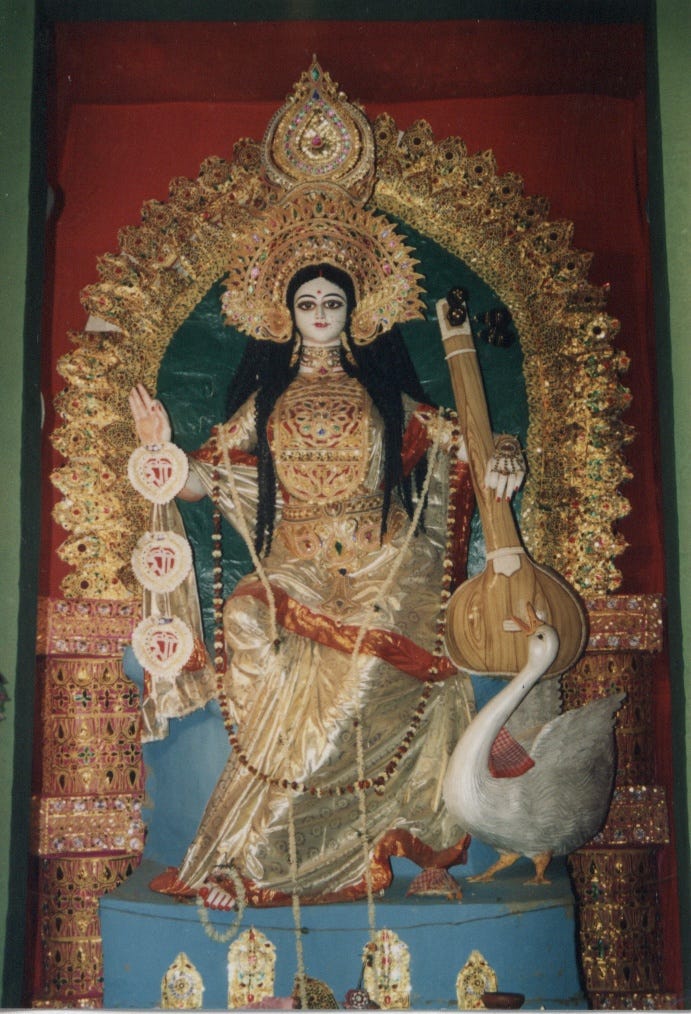
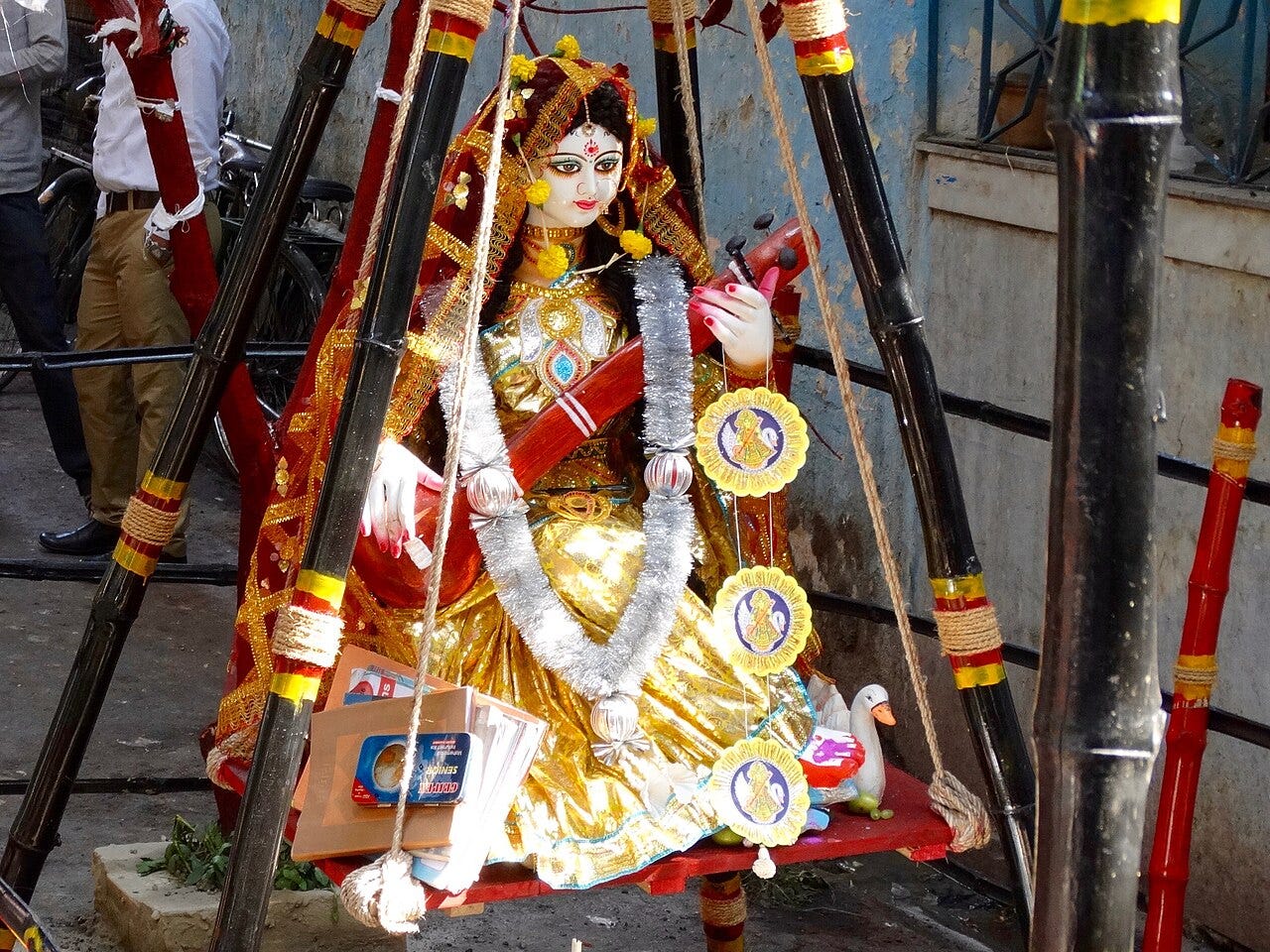
Saraswati is the goddess of vidya: knowledge in all its forms, from the alphabet a child first traces to the raga a musician spends a lifetime learning. She is pictured in white and yellow, seated with the veena in her hands, a book and a mala in her other hands, and the hamsa, the swan, beside her. The swan, the tradition says, can separate milk from water: a picture of discernment, the heart of learning.
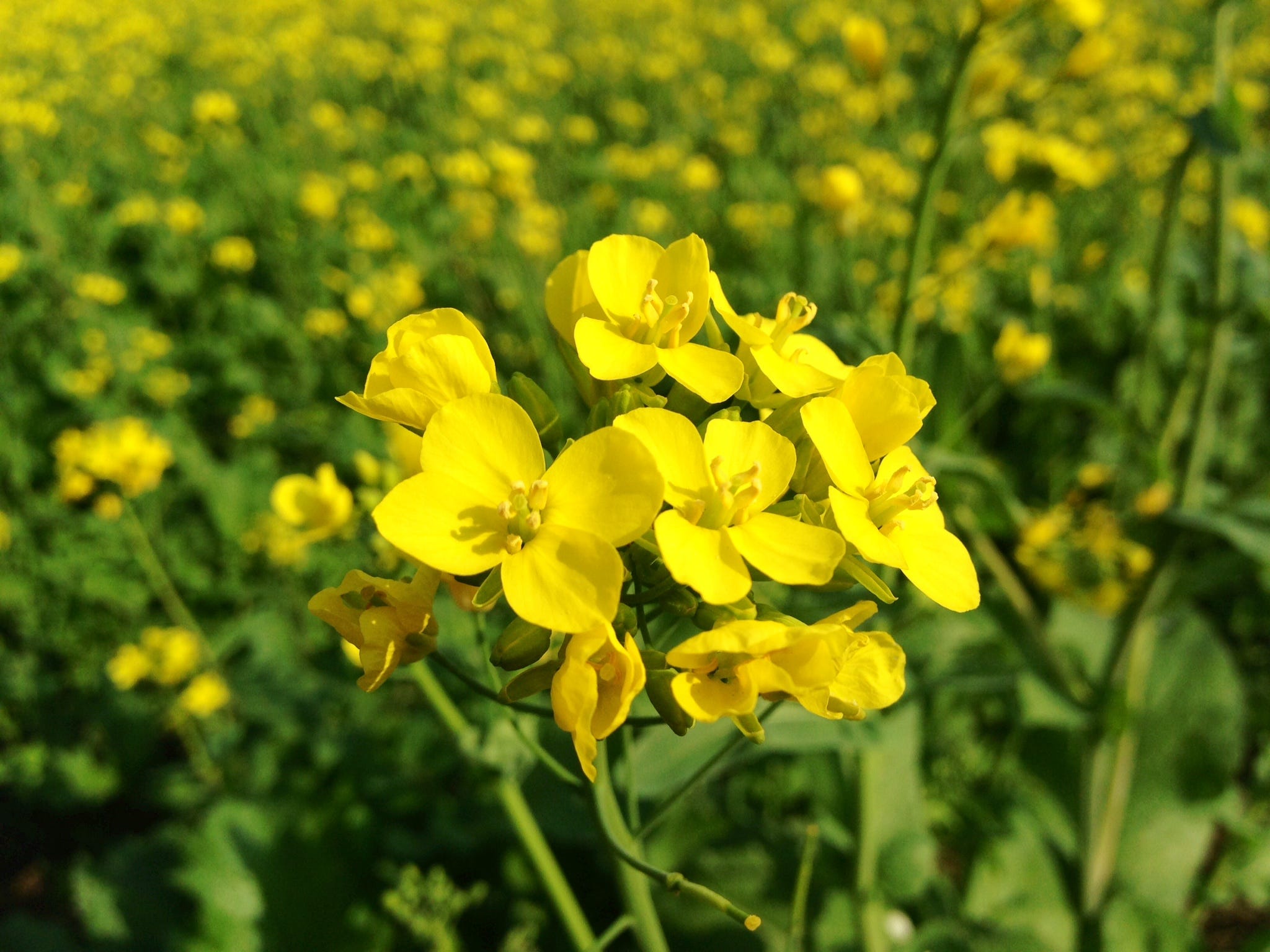
Her festival belongs to the turning season. Basant means spring, and the yellow that fills the day is the yellow of the mustard flower and the marigold, the colour of fields and sunshine returning. Wearing yellow, offering yellow flowers and cooking yellow food are all ways of keeping step with the season. The goddess is commonly dressed in yellow or white on this day, with variations from home to home and region to region.

How the day is kept
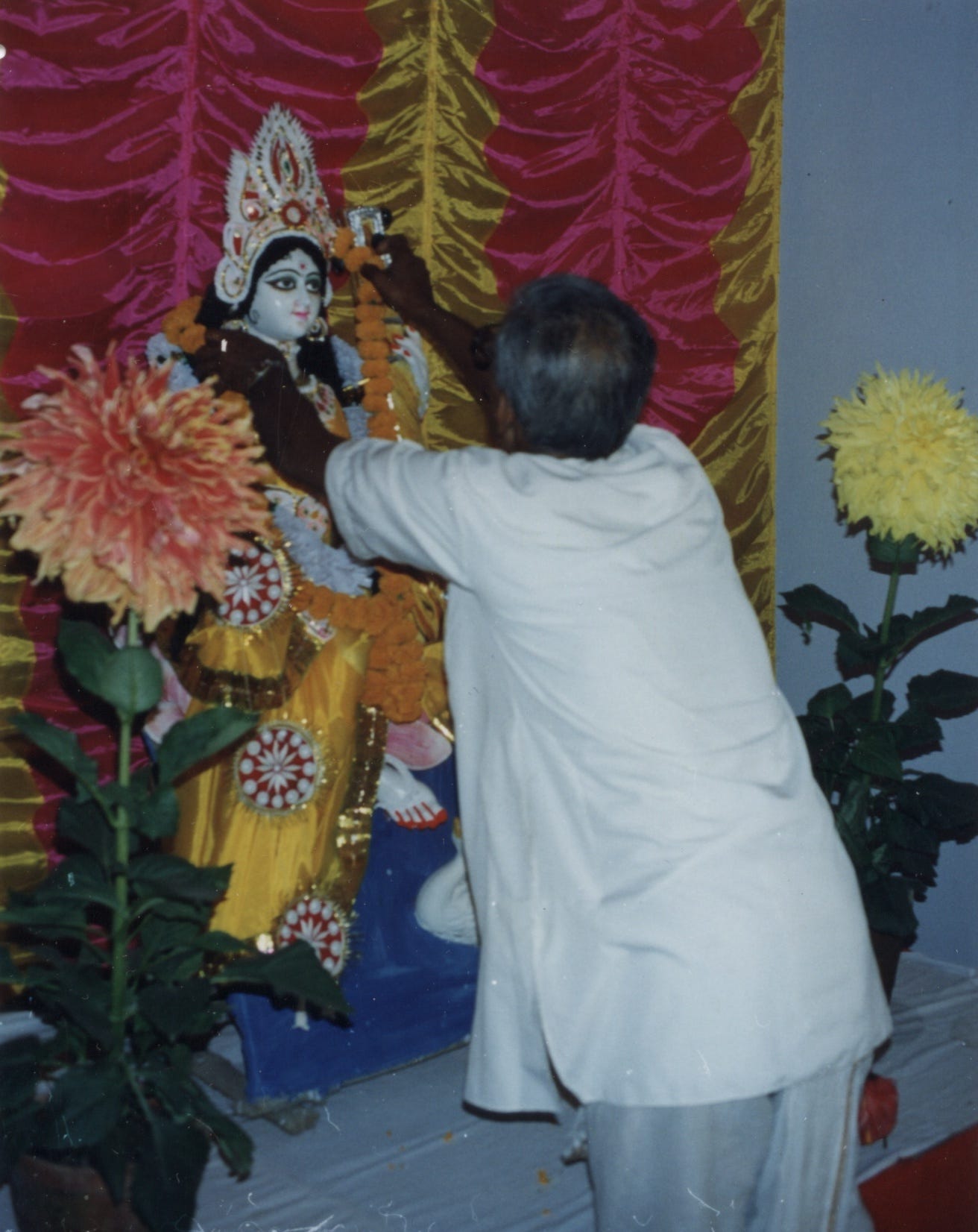
The home observance is simple, which is part of its charm. Families clean the puja corner in the morning, bathe and put on something yellow or white. An image or picture of the goddess is set with flowers, and the puja is done in the forenoon window with the usual offerings: flowers, fruits, sweets and incense, with a prayer for wisdom and right speech.
Then comes the part that makes this festival different from every other. The tools of learning are placed at the goddess's feet: the children's schoolbooks, the household's account books, pens and pencils, the harmonium or the tanpura, and these days more than a few laptops. They are offered to her, and in many homes they are then left untouched for the rest of the day. Students get a sanctioned holiday from study, which may be why generations of children have loved this festival with unusual sincerity.
It is also a day of beginnings. Little children are commonly given their first letters on Basant Panchami, a rite called Vidyarambham or Aksharabhyasam in the South and Hathe Khori in Bengal: a parent or elder guides the small hand to write its first letter, often on a slate or a plate of rice. Many families consider the day auspicious for starting anything to do with learning, music or a new school term, and some begin it without consulting the calendar further, since the day itself is considered wholesome.
Temples dedicated to the goddess fill early on this morning. The most famous of them, the Gnana Saraswati temple at Basara on the banks of the Godavari in Telangana, is a beloved destination for Aksharabhyasam, and families travel from across the two Telugu states and Maharashtra to write their child's first letters there. Saraswati temples elsewhere see their busiest day of the year. If you plan to visit one, go early and expect a queue of very small, very well-dressed children.
If you keep one practice, let it be this: gather the children, place the books before the goddess, say the prayer together, and let the day be unhurried. The rest is decoration, lovely but optional.

Across India: one festival, many colours
In Bengal, Basant Panchami is Saraswati Puja, and it is enormous. Schools, colleges and neighbourhoods set up pandals with beautifully dressed clay images of the goddess, students organise the offerings and the cultural programmes, and the day has an air that old students describe with a smile, half devotion and half festival of youth. The goddess is dressed in yellow, the prasad is khichuri and sweets, and Hathe Khori ceremonies fill the morning.
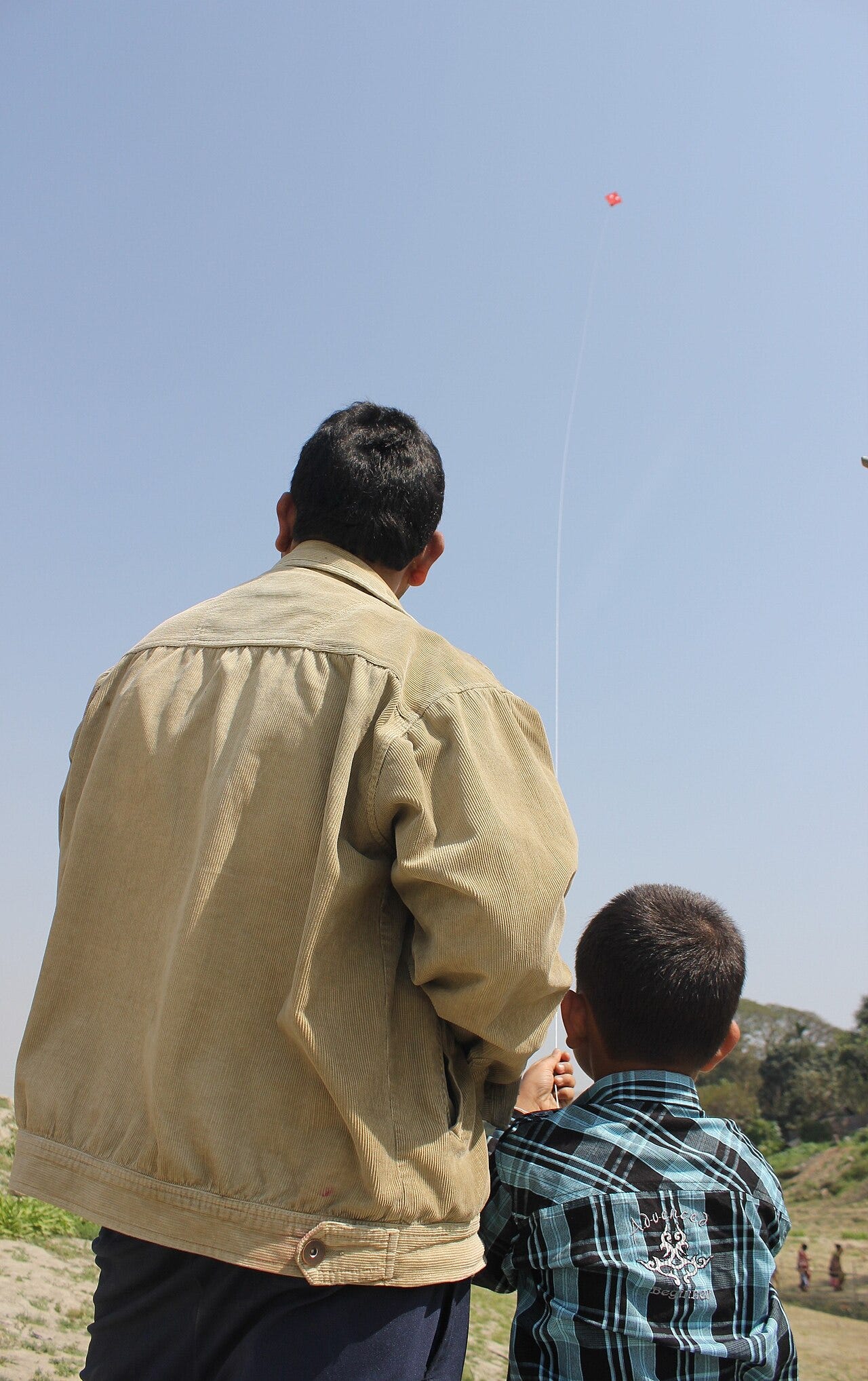
In Punjab, the festival belongs to the sky. Basant there means kites, and rooftops fill with families flying patangs until the evening, a tradition shared across the undivided Punjab for centuries and tied to the same mustard-yellow season. In Delhi, the dargah of Hazrat Nizamuddin Auliya has kept its own Basant for centuries: qawwals in yellow sing in honour of the saint, carrying mustard flowers, a tradition that remembers Amir Khusrau cheering his grieving master with a spring song. It is one of those Indian occasions that quietly belongs to everyone.
In the South, families mark the day more quietly, with prayers to Saraswati at home and Aksharabhyasam for children beginning their letters; the great public worship of the goddess there comes at Navratri. In Maharashtra, Gujarat and the Hindi belt, the day is kept with yellow clothes, sweet rice, visits to the temple and, for many, the first sense that winter is over. The details vary, as they always do, and each region is sure its own way is the natural one.

The yellow table: what families cook
The food of the day follows the colour. Sweet yellow rice, called kesari bhat in the South, meethe chawal in the North and basanti pulao in Bengal, is the dish most homes agree on, coloured with saffron or turmeric and sweetened with jaggery or sugar. Bengal adds its khichuri bhog and rajbhog, the plump saffron sweet that appears on every puja table. Boondi and boondi laddoo, yellow dhokla in Gujarat, kesar kheer, and in Punjab the season's own sarson ka saag with makki di roti, all find their way to the table, with every household keeping its own combination.
The offering is usually simple: the sweet rice or sweets, some fruit, and in Bengal the ber, the jujube fruit that appears with the season and is traditionally tasted first after it is offered to the goddess. Children are often told they may not eat ber before Saraswati Puja, a rule remembered with great fondness by adults who once obeyed it badly.
Questions families ask
Why are the books put away for the day? The idea is that the tools of learning belong to the goddess first, so they rest at her feet and are taken up again with her blessing. In practice it is also a rare day of rest for students, and nobody has ever complained.
Is it an auspicious day for new beginnings? Yes, Basant Panchami is commonly counted among the days considered naturally auspicious, especially for anything to do with learning: a child's first letters, joining a music class, or starting a new course of study.
What should we wear? Yellow if you have it, white if you do not. The colour is the point, not the wardrobe.
Is there a mantra or a simple prayer for the day? Any sincere prayer to the goddess will do. Many homes recite the well-known verse to Saraswati beginning Ya Kundendu, and children are often taught the short invocation Om Aim Saraswatyai Namaha, Aim being the seed syllable of the goddess of speech. A simple request for wisdom, spoken together, keeps the day as well as anything longer.
Is Basant Panchami a public holiday? It is not a national holiday in India, though schools and colleges in many states, especially in the East, keep their own Saraswati Puja holiday, and several state calendars mark the day. Check your local calendar if the day matters for work or school.
Can the puja be done in the evening? The forenoon is the traditional window, while the Panchami tithi prevails in the morning light. Families who cannot manage the morning, especially those abroad on a working Thursday, often keep a simple puja in the evening or join a temple's weekend observance, and consider the day kept.
Is this the same Saraswati Puja that comes during Navratri? Both honour the same goddess. The spring puja on Basant Panchami is the older and the pan-Indian one; the autumn worship during the last days of Navratri is especially loved in the South, where Ayudha Puja sees tools, vehicles and instruments decorated and worshipped. Families from both traditions simply get two days with her each year.
Basant Panchami asks very little of us: a morning, a marigold, a yellow sweet, a child's first letter. In return it gives back the promise that the cold is ending, the light is returning, and that learning, like spring, begins again. May the goddess of the veena bless every student in your home.