

After the lamps of Diwali, the festival of lights ends the way Indian festivals so often do: not with a bang, but with a blessing exchanged between brother and sister. Bhai Dooj falls on Wednesday, 11 November in 2026, the second day of the bright fortnight of Kartik, and it honours the oldest partnership most of us ever know.
The story behind the day
Tradition tells of Yamuna, who longed for her brother Yama, the god of death, to visit her. When he finally came to her home, she welcomed him with a tilak on his forehead, aarti, sweets and a meal cooked with her own hands. Yama, moved, declared that any brother who receives his sister's tilak on this day need not fear an untimely end. The day is therefore also called Yama Dwitiya, and its message is simple: on this day, a sister's prayer is believed to protect her brother, and a brother's promise is to protect her right back.
In Bengal the festival is Bhai Phonta, where sisters fast until the tilak is applied. In Maharashtra it is Bhau Beej. In Nepal, Bhai Tika, with its famous seven-coloured tilak and garlands of marigold and dubo grass. The names change; the heart of the day does not.
How the day is observed
The tilak. Sisters apply a tilak of roli or sandalwood paste to their brothers' foreheads, often with a few grains of rice.
The aarti. A small thali with a lit diya, sweets and the tilak is circled before the brother.
The meal. The brother is fed first, and often something sweet he has loved since childhood.
The gift. Brothers give gifts or blessings in return, and in many families, a promise renewed out loud.
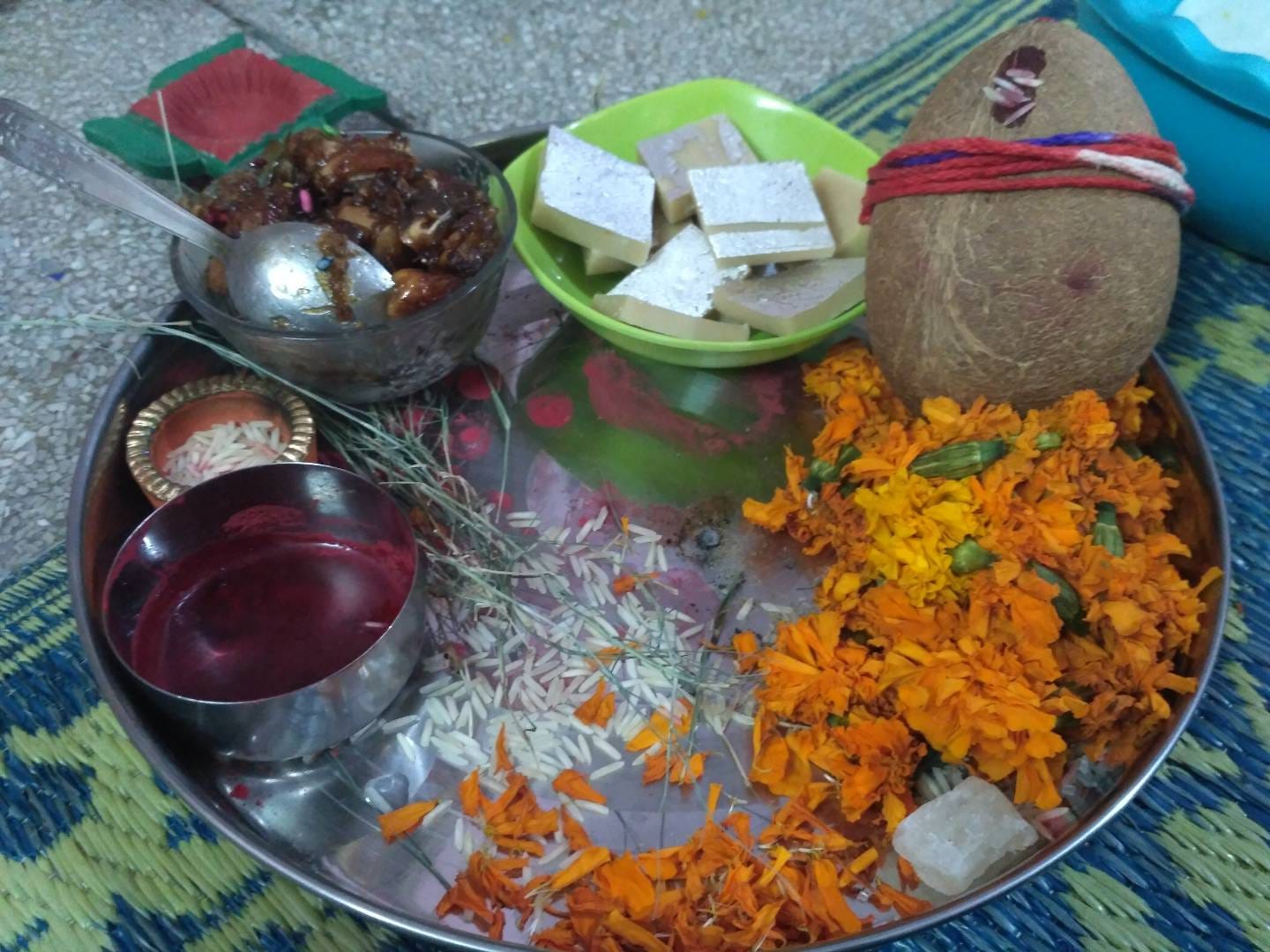
The Bhai Dooj tilak thali. Photo: Khushboo Goel, CC BY-SA 4.0

For brothers and sisters far apart
Bhai Dooj has always adapted to distance. Sisters send tilak kits and sweets by post, brothers join on video calls, and the aarti thali is held up to the camera with the same seriousness as in any living room. What matters, the tradition insists, is not the touch of the tilak but the intention behind it. Many families also use the day to bless cousins, friends and anyone who has been a sibling in spirit.
The meaning of the tilak
The tilak on Bhai Dooj is placed at the ajna point between the eyebrows, the seat of clarity and courage in Indian tradition. Many sisters add a few grains of rice, a symbol of abundance, and a short prayer whispered while applying it. In Bengal the Bhai Phonta ceremony adds its own incantation, asking that the brother live as long as the legendary figures of the epics. The specifics differ from home to home; the wish underneath never does.
If you are celebrating this year
Keep it simple and personal. Cook his favourite dish, or her favourite sweet. Write the letter you have been meaning to write. If you are the brother, the tradition of the day says the gift matters less than the promise. If you are the sister, the tilak you apply is believed to carry your prayer with it.
And perhaps that is why Bhai Dooj endures as the perfect close to Diwali. After five days of gods and goddesses, lamps and feasts, the festival ends by honouring something entirely human: the people who knew you before you were anyone at all.
Happy Bhai Dooj, from all of us at DharmikVibes.
A little history of the sibling bond in Indian tradition
India has always made room for the sibling bond in its calendar. Raksha Bandhan in Shravan is the sister's thread of protection; Bhai Dooj in Kartik is her blessing returned, and the brother's answer. Where Rakhi centres the thread, Bhai Dooj centres the forehead: the tilak is placed where tradition locates clarity and courage, the ajna point between the brows. Some households add a small square of paper with a swastika or an om drawn in roli; others keep it to rice, roli and a diya. There is no single correct thali, only a personal one.
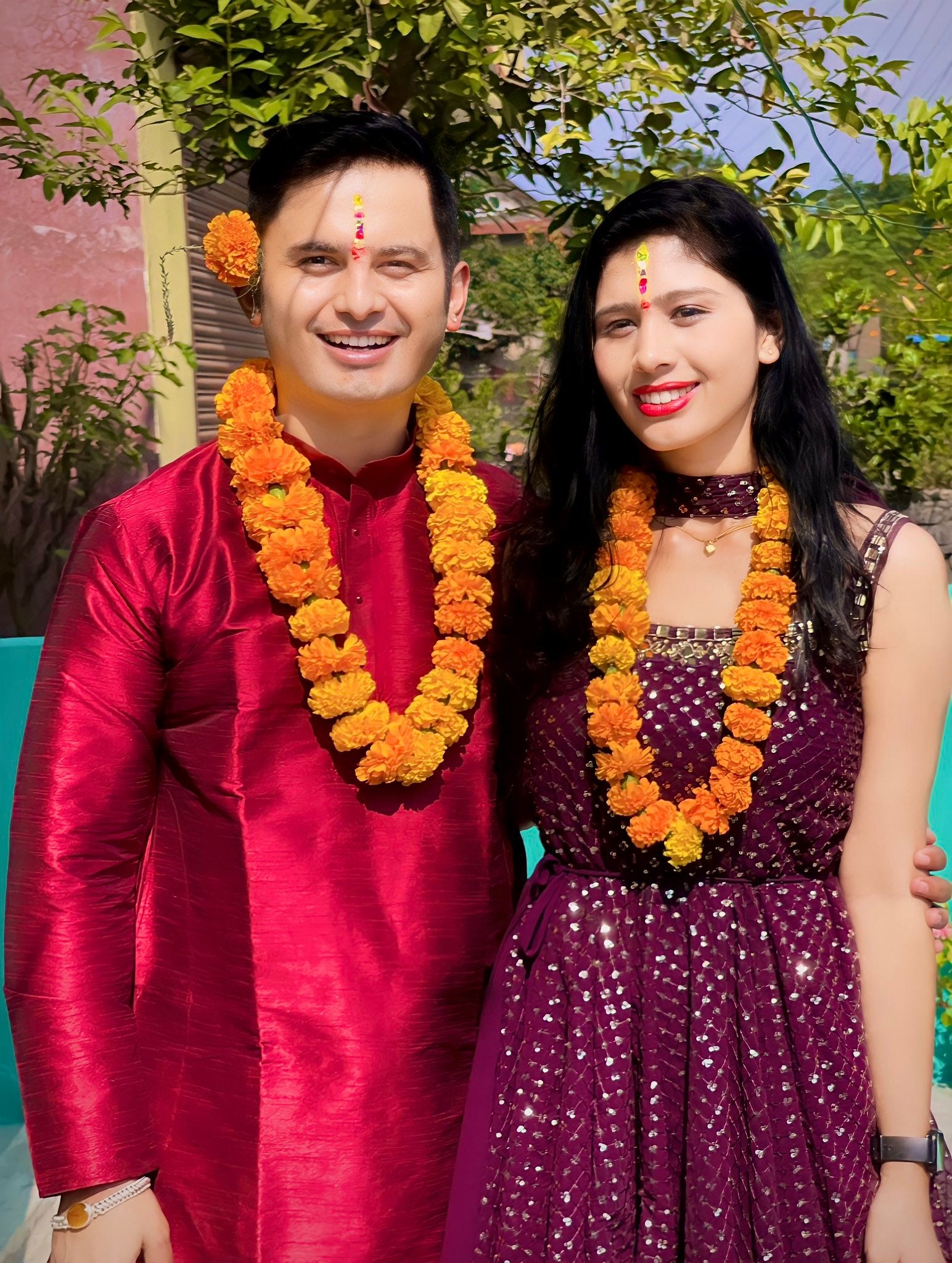
Bhai Tika celebrations in Nepal. Photo: SandeshLamsalNepal, CC BY-SA 4.0
