

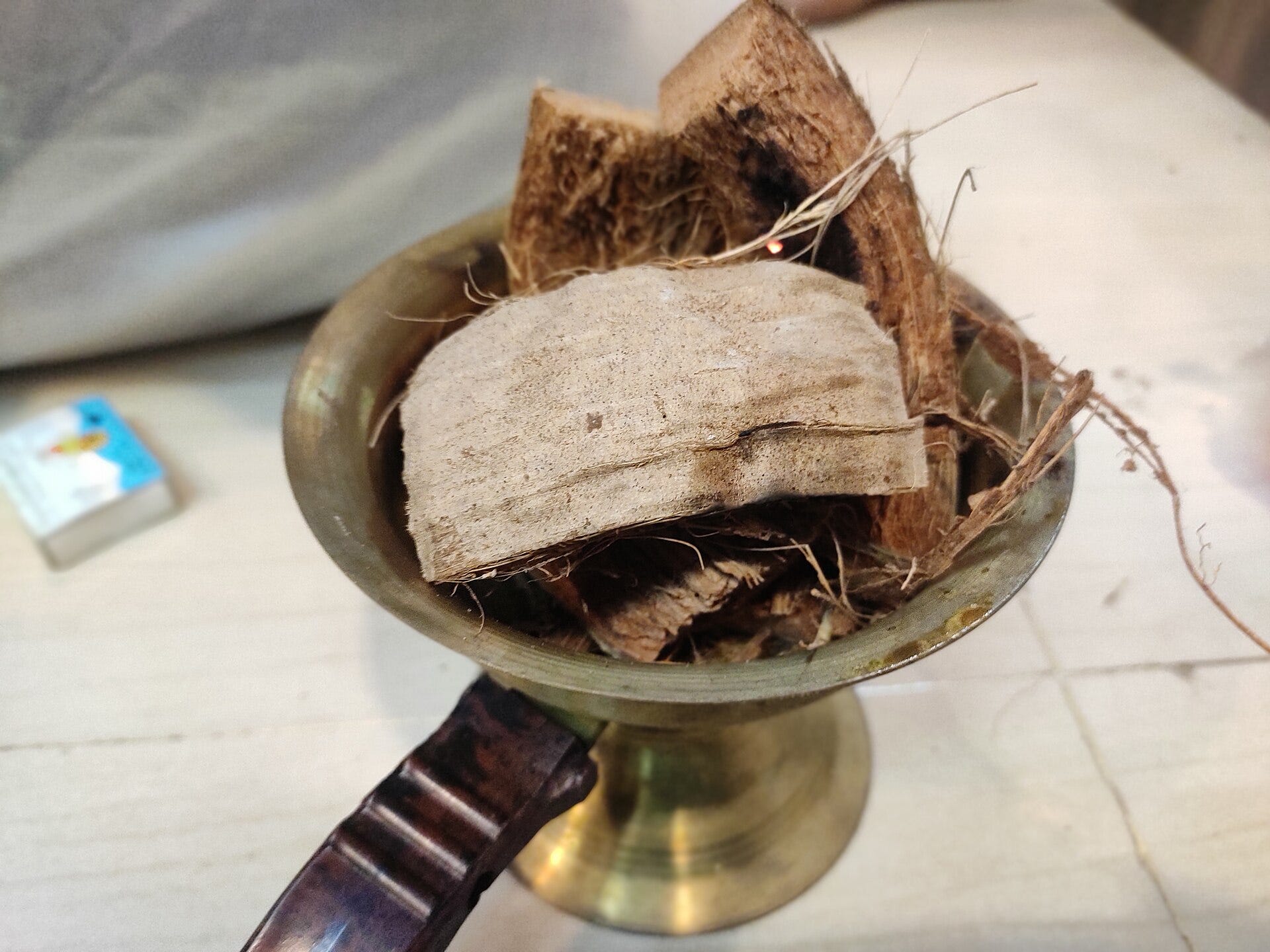
Photo: Goutam1962, CC BY-SA 4.0, via Wikimedia Commons
Someone in your family is buying a house in Pune. Your parents have an anniversary coming up. You want a Satyanarayan puja done at your ancestral home, or a Rudrabhishek in your name at a temple you grew up visiting. And you are thousands of kilometres away.
This is one of the most common situations in the Indian diaspora, and it has a genuinely workable solution: booking the puja to be performed in India on your behalf, with your sankalp taken in your name. Done right, it is authentic, scripturally accepted and deeply moving. Done carelessly, it becomes an expensive video of strangers. The difference is a checklist.
First, a word on whether it "counts"
Tradition is clear on this. A puja performed by a qualified pandit with your name and gotra in the sankalp is your puja, wherever you are. Families have arranged rites through priests in their hometowns for generations; video calling has only made your presence more real. You do not need to feel that you are settling for less. You do need to organise it properly.
Step 1: Decide exactly which puja, and where
"Do a puja for the family" is too vague to book. Fix three things before you speak to anyone:
The specific puja. Satyanarayan katha, Griha Pravesh, Rudrabhishek, Navagraha shanti, Mahalaya or shradh rites, a personal vow (mannat) fulfilment. Each has its own duration, samagri and priest specialisation.
The location. Your family home, a specific temple, or a kshetra with special significance for that rite (for example, certain abhisheks at a Jyotirlinga). Some temples have their own official booking counters for sevas and abhisheks; that is often the cleanest route for temple-based rituals.
Who attends in person. If parents or relatives will be physically present, the puja becomes a hybrid: you join by video, they are there. That changes seating, timing and who holds the phone.
Step 2: Fix the date across two time zones
Muhurat is calculated for the place where the puja happens, so the tithi and lagna will be given in Indian time. Your part is checking that the muhurat lands at a humane hour in your time zone if you want to attend by video. A 10 AM muhurat in India is 5:30 AM in London during British Summer Time and 9:30 PM the previous evening in California during Pacific Daylight Time; the gap shifts by an hour when either side changes clocks, so check the conversion for your date.
Practical approach: give the pandit or service two or three acceptable dates and ask which muhurats fall on them, then pick the one you can actually attend. Festival days book out early, so for occasions like Diwali Lakshmi puja or Satyanarayan on Purnima, fix dates well in advance.
Step 3: Choose the format
Temple seva or abhishek booked directly with the temple. Many major temples accept bookings for specific sevas, sometimes with an official prasad-by-post option. Check the temple's own website or trust office rather than third-party resellers.
A pandit at your family home in India. Best for Griha Pravesh, Satyanarayan and family rites. Needs someone local to host and manage samagri unless the pandit brings everything.
A fully arranged ePuja with live video. The puja is performed at a temple or a dedicated location while you watch and participate by video call. This is the format to choose when nobody in India can host. Ask explicitly what you will see: a live, unedited video of your specific puja, with your sankalp audible, is the standard to expect.
Step 4: Vet whoever performs it
This is where most arrangements succeed or fail. Before confirming, establish: the pandit's training and sampradaya (different regions perform the same puja differently, and the vidhi should match your family's tradition), experience with your specific puja, and a clear agreement on what is included. We have written a separate detailed guide on verifying a pandit online, and every check in it applies double when you cannot meet in person.
Step 5: Get the money completely clear, in writing
Total figure, broken down: pandit dakshina, samagri, flowers, any temple fee, and prasad or courier costs.
What happens if the date changes. Muhurat shifts happen; know the rescheduling terms before paying.
Payment trail. Pay through a channel that produces a record. For temple sevas booked officially, keep the receipt; some temple trusts also issue donation receipts, so check their terms.
Step 6: Prepare your sankalp details
At the start of the puja, the pandit recites the sankalp: the formal statement of who is doing the puja and why. You will typically be asked for your name, gotra, and sometimes janma nakshatra and rashi. If you do not know your gotra, ask family elders well before the date; do not guess it on the call. For family pujas, decide whose names go in, and have them written down exactly.
Step 7: The day itself
Test the video link before the muhurat, not at it. Keep your phone or laptop charged and propped up so your hands are free for the moments the pandit asks you to join in: holding flowers during a pushpanjali, repeating the sankalp line, or simply bowing at the aarti. Many families dress as they would for a temple visit, and find it changes how the hour feels. If you are fasting for the puja, remember the fast follows the Indian tithi, not your local date.
Step 8: After the puja
A proper arrangement ends with evidence and closure: photos or a recording of the key moments, and prasad or the puja's sacred items (raksha sutra, vibhuti, kumkum, a small amount of the abhishek offerings where customary) couriered to you or to your family in India. Confirm the courier address and expected time before the puja day, not after.
The short checklist
Puja, place and format decided
Date fixed from the panchang, workable in your time zone
Pandit vetted: tradition, experience, live video standard
Full cost in writing, payment with a record
Gotra and names for the sankalp confirmed with family
Video link tested, fasting and dress decided
Prasad and photos arranged with an address and date
At DharmikVibes, this is exactly the gap we are building for: our vision to enable every seeker, wherever they live, to reach authentic rituals and Divine Experiences with trust on both sides. Distance should change the logistics of devotion, never its depth.
Sources: Tirumala Tirupati Devasthanams official booking portal, ttdevasthanams.ap.gov.in; Shri Kashi Vishwanath temple official portal, shrikashivishwanath.org; drikpanchang.com for city-wise tithi and muhurat timings, drikpanchang.com. Ritual details vary by region and family tradition; confirm specifics with your pandit.