
Can Spiritual Tourism Help Shape India’s Economy?
As faith meets Gen Z, technology, and experience-driven travel, can spirituality become India’s next economic catalyst?

In recent years, spiritual tourism in India has undergone a remarkable transformation. Once perceived as the domain of the elderly or the deeply religious, it has now evolved into a mainstream, experience-driven movement attracting people across age groups, nationalities, and cultures. Fuelled by social media, wellness trends, and a growing global appetite for meaning and mindfulness, spiritual tourism is no longer just about faith-it is about identity, experience, and connection.
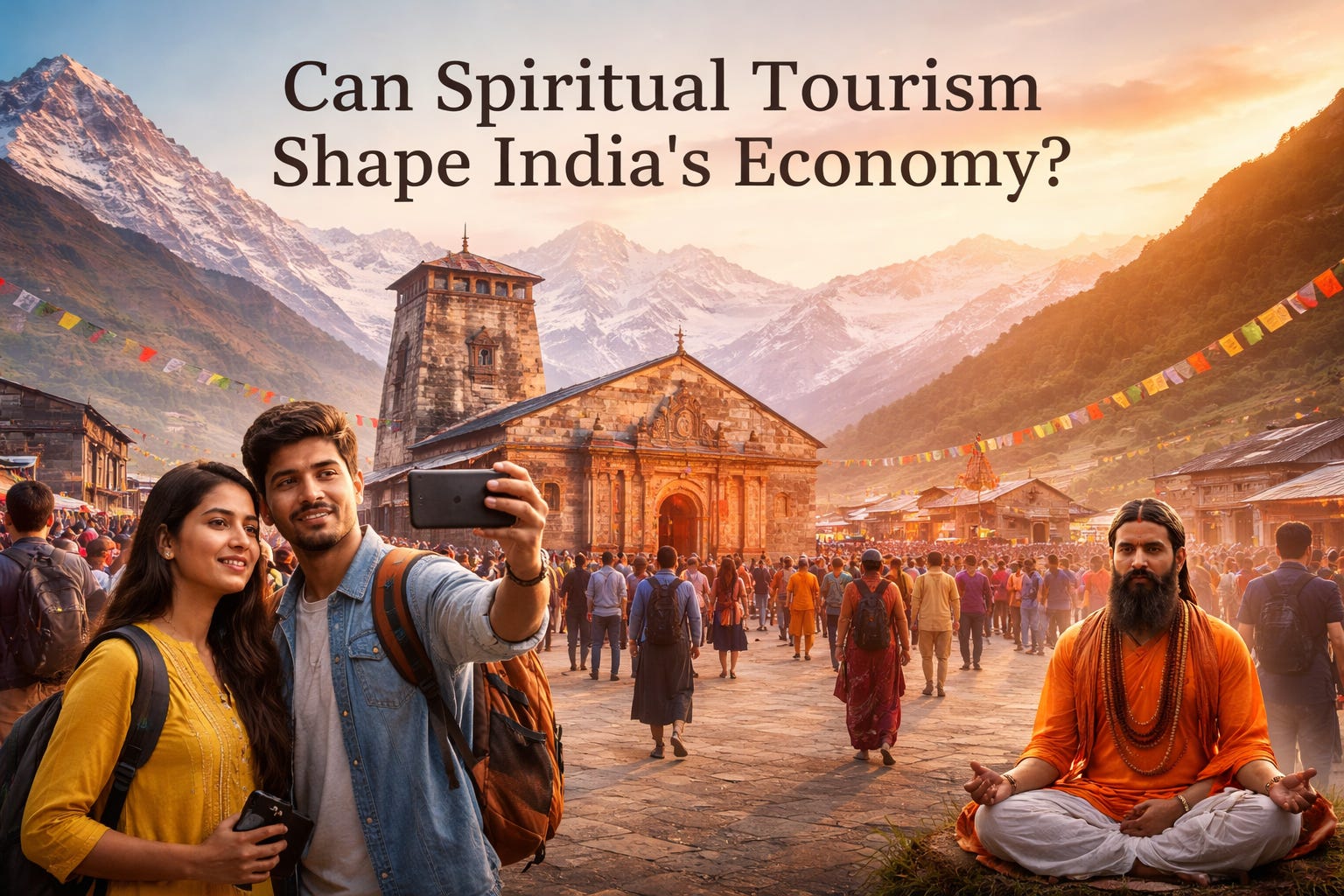
India, the cradle of several ancient spiritual traditions, has emerged as the epicentre of this shift. With an estimated market size of nearly $40 billion, expected to touch $59 billion by 2028, the sector is being closely watched by policymakers and economists alike. The key question, however, remains: can spiritual tourism move beyond cultural significance and become a genuine driver of India’s economic growth?
The Rise of Spiritual Tourism: From Pilgrimage to Experience
Traditionally, spiritual tourism in India revolved around pilgrimage - structured, ritualistic, and largely seasonal. Destinations like Varanasi, Tirupati, Vaishno Devi, Kedarnath, Rameswaram, and Bodh Gaya attracted millions, but the engagement was often brief and purpose-specific.
Today, that definition has expanded.
Spiritual tourism now includes:
Wellness and yoga retreats
Meditation and mindfulness programs
Ashram stays and immersive learning
Cultural-spiritual festivals
Heritage walks and sacred geography tours
This evolution has made spirituality more inclusive, experiential, and aspirational, especially for younger travellers.
Gen Z and the Rebranding of Faith
One of the most significant drivers of this boom is Gen Z. Contrary to stereotypes that paint younger generations as disconnected from tradition, today’s youth are actively seeking experiences that blend:
Inner growth
Adventure
Sustainability
Cultural authenticity
Social media platforms have played a pivotal role. Sacred destinations are now:
Instagrammable
Vlog-worthy
Story-driven
A sunrise at Kedarnath, a Ganga aarti reel in Kashi, or a yoga retreat in Rishikesh has become both a personal and digital expression. Spiritual travel is no longer silent - it is shared, narrated, and amplified.
This shift has rebranded spirituality from obligation to choice, from ritual to experience.
Economic Impact: More Than Just Tourism Revenue
1. Employment Generation at Scale
Spiritual tourism is labour-intensive and locally rooted. It supports:
Priests and ritual specialists
Local guides and storytellers
Transport providers and porters
Small hotels, dharamshalas, and homestays
Handicraft sellers, flower vendors, and food suppliers
Unlike luxury tourism, the economic benefits are widely distributed, particularly in Tier 2, Tier 3, and rural regions. Estimates suggest the sector could employ over 100 million people by the end of the decade, making it a powerful tool for inclusive growth.
2. Infrastructure Development
The surge in footfall has accelerated investments in:
Roads, railways, and regional airports
Public sanitation and waste management
Digital connectivity
Urban renewal projects in heritage cities
Projects in Ayodhya, Kashi, Ujjain, and Kedarnath are prime examples of how spiritual tourism is reshaping urban planning and infrastructure priorities.
3. Strengthening Domestic Tourism
Spiritual tourism is predominantly domestic-demand driven, making it resilient to global shocks such as pandemics or geopolitical instability. Repeat visits and annual pilgrimages ensure consistent revenue streams, unlike seasonal leisure tourism.
FaithTech: When Tradition Meets Technology
A new and powerful layer has emerged in this ecosystem - FaithTech.
Startups and platforms are digitising spiritual engagement through:
Online puja bookings
Ritual kits and subscriptions
Virtual darshan and consultations
Travel + ritual + accommodation bundles
Companies like Pujashree have simplified access to daily puja essentials, making spiritual practices portable and convenient. Beyond products, such innovations are building digital faith ecosystems, enabling scalability, transparency, and global reach.
This opens doors for India to export not just tourism, but spiritual services and experiences, positioning itself as a global hub for faith-driven wellness and meaning.
Living Heritage: Cities as Cultural Economies
Destinations such as:
Kashi
Ayodhya
Amritsar
Somnath
Bodh Gaya
are no longer just religious centres - they are living cultural economies. Festivals, rituals, architecture, music, and oral traditions form a continuous economic cycle rooted in heritage.
When managed responsibly, these cities can generate sustainable income while preserving civilisational identity.
The Challenges: Growth Without Governance
Despite its promise, spiritual tourism faces serious challenges.
Unregulated expansion has led to:
Overcrowding and stampede risks
Environmental degradation, especially in ecologically fragile zones
Strain on local infrastructure
Loss of spiritual authenticity
Tragic incidents caused by inadequate crowd control, poor emergency response, and lack of medical facilities highlight the urgent need for systemic planning.
What India Needs Going Forward
To ensure long-term success, spiritual tourism must be guided by:
Carrying-capacity–based planning
AI-driven crowd management systems
Robust emergency and healthcare infrastructure
Eco-sensitive construction norms
Trained destination managers
Community participation and benefit-sharing
Growth must be sustainable, safe, and culturally respectful.
Can Spiritual Tourism Be a Driving Force for India’s Economy?
The answer lies in balance.
Spiritual tourism alone cannot replace manufacturing, technology, or exports. However, it can serve as a powerful economic accelerator -one that:
Generates inclusive employment
Revitalises heritage cities
Strengthens domestic demand
Enhances India’s global soft power
Handled wisely, spiritual tourism offers India a unique opportunity to convert its civilisational wealth into a modern economic asset - without losing its soul.
In a world increasingly marked by stress, speed, and disconnection, India’s spiritual legacy offers something rare: meaning. If nurtured responsibly, spiritual tourism can do more than boost GDP- it can position India as a global destination for reflection, resilience, and renewal.
And in doing so, it may help shape not just the economy, but the future narrative of the nation itself.