
Chaitra Navratri 2026: Complete Guide - Day-by-Day Colors, Puja Vidhi, Fasting Rules & Ram Navami
The definitive guide to Chaitra Navratri 2026 (March 19–27) - with Ghatasthapana muhurat, day-wise Navdurga puja, Navratri colors, fasting rules, mantras, and Ram Navami celebration guide.

Quick Answer: Chaitra Navratri 2026 began on Thursday, March 19 and concludes on Friday, March 27 with Ram Navami. This year is especially rare — Durga Ashtami and Ram Navami both fall on Thursday, March 26, making it an extraordinarily auspicious alignment. The Ghatasthapana muhurat was 6:52 AM to 7:43 AM on March 19. Today (Day 2, March 20) is Maa Brahmacharini Puja, and the auspicious color is Green. The nine days worship the nine forms of Goddess Durga (Navdurga), culminating in the birth celebration of Lord Rama. Navratri fasting parana (fast-breaking) falls on March 27 after 10:08 AM.
✅ Chaitra Navratri 2026 - At a Glance
Start Date: March 19, 2026 (Thursday) End Date: March 27, 2026 (Friday, Ram Navami) Ghatasthapana Muhurat: 6:52 AM – 7:43 AM, March 19 Abhijit Muhurat: 11:20 AM – 12:09 PM, March 19 Navratri Duration This Year: 8 days (Ashtami & Ram Navami coincide on March 26) Ram Navami: March 26, 2026 (Thursday) Ram Janma Muhurat: 11:13 AM – 1:41 PM, March 26 Navratri Parana (Fast-Breaking): March 27 after 10:08 AM Hindu New Year (Vikram Samvat 2083): March 19, 2026
What Is Chaitra Navratri?
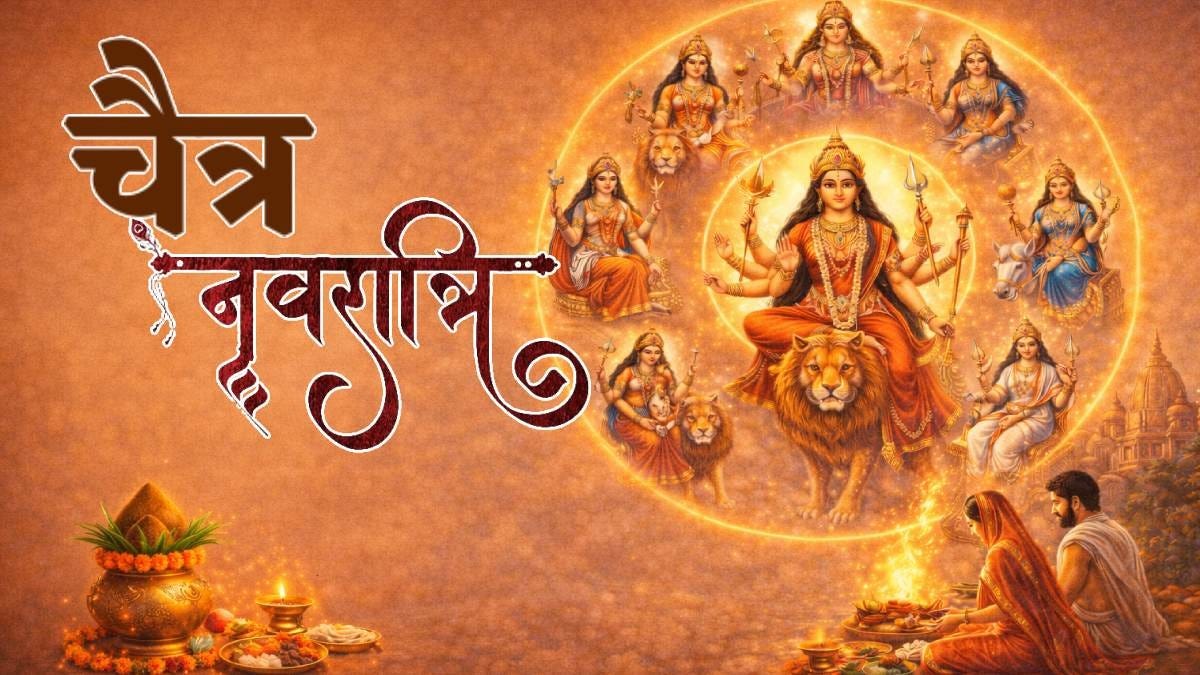
Chaitra Navratri is a nine-day Hindu festival dedicated to the worship of Goddess Durga and her nine divine forms, collectively known as Navdurga. Celebrated in the Hindu month of Chaitra (March–April), it marks the beginning of the Hindu New Year and the arrival of Vasant Ritu (spring season).
The word “Navratri” comes from two Sanskrit words - “Nav” (nine) and “Ratri” (nights). During these nine sacred nights, devotees invoke the divine feminine energy (Shakti) through fasting, prayer, mantra chanting, and elaborate pujas.
Chaitra Navratri holds a unique significance because it concludes with Ram Navami — the birth anniversary of Lord Rama, the seventh incarnation of Lord Vishnu. This is why Chaitra Navratri is also called Rama Navratri. The nine days of Shakti worship culminating in Rama’s birth symbolize a profound spiritual truth: divine power (Shakti) and divine righteousness (Dharma) are inseparable.
Chaitra Navratri vs Sharad Navratri
While Sharad Navratri (September–October) is the more widely celebrated festival - especially in North India, Bengal, and Gujarat - Chaitra Navratri holds equal scriptural importance. Both follow identical rituals (Ghatasthapana, Navdurga worship, Kanya Pujan), but Chaitra Navratri is specifically associated with the Hindu New Year and Lord Rama’s birth, giving it a dual spiritual significance.
Why 2026 Is an Extraordinarily Rare Navratri
This year’s Chaitra Navratri carries a rare cosmic alignment that makes it exceptionally auspicious. On Thursday, March 26, 2026, four sacred events converge on a single day:
Chaitra Durga Ashtami — The most powerful day of Navratri
Sandhi Puja — The sacred junction between Ashtami and Navami (11:24 AM – 12:12 PM)
Annapurna Ashtami — Worship of Goddess Annapurna
Ram Navami — The birth of Lord Rama during Madhyahna Muhurat (12:27 PM)
This four-fold convergence on a single day is extremely rare and is considered to multiply the spiritual merit of any worship, donation, or sadhana performed on this date.
Complete Day-by-Day Guide: 9 Forms of Navdurga, Colors & Mantras
Each day of Chaitra Navratri 2026 is dedicated to one of the nine forms of Goddess Durga. Below is the complete guide with the auspicious color for each day, the Devi worshipped, and the specific mantra.
Day 1 — Thursday, March 19: Maa Shailputri
Color: Yellow 🟡 Meaning: Daughter of the Mountains. She is the first form of Durga, representing the power of Brahma, Vishnu, and Mahesh combined. Mantra: ॐ देवी शैलपुत्र्यै नमः (Om Devi Shailaputryai Namah) Significance: Marks Kalash Sthapana (Ghatasthapana) — the formal beginning of Navratri worship. Ghatasthapana Muhurat: 6:52 AM – 7:43 AM. Offering (Bhog): Pure Desi Ghee
Day 2 — Friday, March 20: Maa Brahmacharini (Today)
Color: Green 🟢 Meaning: The one who practices devout austerity. She represents penance, devotion, and determination. Mantra: ॐ देवी ब्रह्मचारिण्यै नमः (Om Devi Brahmacharinyai Namah) Significance: Maa Brahmacharini walked barefoot for thousands of years in deep penance to win Lord Shiva as her husband. She teaches that great rewards come from persistent effort and unwavering faith. Offering (Bhog): Sugar or Mishri
Day 3 — Saturday, March 21: Maa Chandraghanta
Color: Grey 🩶 Meaning: The one who wears a half-moon on her forehead shaped like a bell. She represents bravery and grace. Mantra: ॐ देवी चन्द्रघण्टायै नमः (Om Devi Chandraghantayai Namah) Significance: She is the fierce yet graceful warrior goddess who fought demons while maintaining serene composure. Worshipping her removes fear and grants courage. Offering (Bhog): Milk or Kheer
Day 4 — Sunday, March 22: Maa Kushmanda
Color: Orange 🟠 Meaning: The one who created the universe with her divine smile. “Ku” means little, “ushma” means warmth, and “anda” means cosmic egg. Mantra: ॐ देवी कूष्माण्डायै नमः (Om Devi Kushmandayai Namah) Significance: She resides in the core of the Sun and provides energy and warmth to the entire universe. She is considered the source of all creation. Offering (Bhog): Malpua
Day 5 — Monday, March 23: Maa Skandamata
Color: White ⚪ Meaning: Mother of Skanda (Lord Kartikeya, the god of war). She carries baby Kartikeya on her lap. Mantra: ॐ देवी स्कन्दमातायै नमः (Om Devi Skandamatayai Namah) Significance: She symbolizes motherly love and protection. Worshipping her grants wisdom, salvation, and prosperity. She is especially revered by mothers seeking blessings for their children. Offering (Bhog): Banana
Day 6 — Tuesday, March 24: Maa Katyayani
Color: Red 🔴 Meaning: Born to Sage Katyayana, she is the fierce warrior form of Durga who destroyed the demon Mahishasura. Mantra: ॐ देवी कात्यायन्यै नमः (Om Devi Katyayanyai Namah) Significance: She is worshipped for removal of obstacles in marriage and for courage against enemies. Unmarried women especially pray to Maa Katyayani for a good spouse. Offering (Bhog): Honey
Day 7 — Wednesday, March 25: Maa Kalaratri
Color: Royal Blue 🔵 Meaning: The most fierce form of Durga — she is the destroyer of darkness, ignorance, and all evil forces. Mantra: ॐ देवी कालरात्र्यै नमः (Om Devi Kalaratryai Namah) Significance: Despite her terrifying appearance, Maa Kalaratri blesses her devotees with fearlessness. She annihilates all demonic forces and negative energies. She is “Shubhankari” — the one who brings auspiciousness. Offering (Bhog): Jaggery (Gur)
Day 8 — Thursday, March 26: Maa Mahagauri (Also Durga Ashtami + Ram Navami)
Color: Pink 🩷 Meaning: The extremely fair and beautiful form of Goddess Durga — symbolizing purity, serenity, and compassion. Mantra: ॐ देवी महागौर्यै नमः (Om Devi Mahagauryai Namah) Significance: This is the MOST POWERFUL day of this Navratri — Durga Ashtami, Sandhi Puja, Annapurna Ashtami, and Ram Navami all converge. Perform Kanya Pujan on this day. The Sandhi Puja window is 11:24 AM – 12:12 PM. Lord Rama was born during Madhyahna Muhurat at 12:27 PM — perform the Ram Janma celebration at this time. Offering (Bhog): Coconut
Day 9 — Friday, March 27: Maa Siddhidatri
Color: Purple 🟣 Meaning: The bestower of all Siddhis (supernatural powers). She grants devotees all eight types of Siddhis. Mantra: ॐ देवी सिद्धिदात्र्यै नमः (Om Devi Siddhidatryai Namah) Significance: Final day of Navratri. Perform Navratri Havan and Parana (fast-breaking) after 10:08 AM. She represents spiritual perfection and divine completion. Offering (Bhog): Sesame seeds (Til)
Navratri Fasting Rules: What to Eat and What to Avoid
Fasting during Chaitra Navratri is considered a practice of self-purification — cleansing the body while the mind focuses on devotion.
What You CAN Eat During Navratri Fast
Fruits (all types) and fruit juices
Sabudana (tapioca), kuttu ka atta (buckwheat flour), singhare ka atta (water chestnut flour)
Potatoes, sweet potatoes, arbi (colocasia), raw banana
Milk, curd, paneer, and ghee
Rock salt (sendha namak) only — NOT regular table salt
Dry fruits: almonds, cashews, walnuts, raisins, foxnuts (makhana)
Samak rice (barnyard millet) and rajgira (amaranth)
Tea, coffee, and coconut water
What to AVOID During Navratri Fast
Regular grains: rice, wheat, maida, ragi, jowar, bajra
Onion, garlic, and all non-vegetarian food
Regular table salt (iodized salt) — use sendha namak instead
Alcohol, tobacco, and processed/packaged foods
Lentils (dal), chickpeas, and legumes
Spices like turmeric (haldi), asafoetida (hing), coriander, and mustard seeds
Types of Fasting
Nirjala Vrat (most strict): No food or water for the entire day. Typically observed on specific days, not all nine.
Phalahari Vrat (most common): One meal of fruits, milk, and vrat-specific foods per day. This is the standard Navratri fast most devotees observe.
Partial Fast: Some devotees eat one sattvic meal per day using vrat ingredients. This is acceptable for elderly devotees, pregnant women, and those with health conditions.
Ram Navami 2026: Celebrating the Birth of Lord Rama
Ram Navami, the birth anniversary of Maryada Purushottam Lord Rama, falls on Thursday, March 26, 2026 — coinciding with Durga Ashtami in this rare alignment.
Key Timings for Ram Navami 2026
Navami Tithi Begins: 11:48 AM, March 26 Navami Tithi Ends: 10:06 AM, March 27 Ram Janma Muhurat (Most Auspicious): 11:13 AM – 1:41 PM Exact Madhyahna Moment (Birth Time): 12:27 PM
How to Celebrate Ram Navami at Home
Morning Bath & Puja Setup: Take an early morning bath. Clean the puja space and place Lord Rama’s idol or image alongside Sita, Lakshman, and Hanuman.
Sankalp & Puja: Light a diya, offer flowers, and take sankalp (resolution) for the puja. Offer panchamrit (mixture of milk, curd, honey, sugar, and ghee) to the idol.
Sunderkand or Ramcharitmanas Path: Read Sunderkand or selected sections of Ramcharitmanas (Balkand is ideal for Ram Navami as it describes Rama’s birth).
Ram Janma Celebration at 12:27 PM: This is the most sacred moment. Rock a small cradle (jhula) with baby Rama’s image, sing bhajans, and distribute prasad. Many temples perform elaborate cradle ceremonies at this exact time.
Aarti & Prasad Distribution: Perform aarti with “Shri Ramchandra Kripalu Bhaj Man” and distribute prasad to family and neighbors.
The Ayodhya Surya Tilak Phenomenon
The Ayodhya Ram Mandir features a remarkable Surya Tilak mechanism where sunlight is channeled through a series of lenses and mirrors within the temple structure. On Ram Navami, around the Madhyahna moment, a beam of sunlight falls directly on the forehead of the Ram Lalla idol, creating a natural divine tilak. This is a stunning blend of ancient astronomical knowledge and modern temple engineering.
Best Temples to Visit on Ram Navami
Ayodhya Ram Mandir — The grandest celebrations in India, with the Surya Tilak ceremony
Sitamarhi (Bihar) — Believed to be the birthplace of Goddess Sita
Rameshwaram (Tamil Nadu) — Where Lord Rama worshipped Lord Shiva before the Lanka war
Bhadrachalam (Telangana) — Famous for the Sitarama Kalyanam (divine wedding ceremony)
Orchha (Madhya Pradesh) — The only temple where Rama is worshipped as a king
Temples to Visit During Chaitra Navratri
Chaitra Navratri is an ideal time to visit Devi temples and Shakti Peeths across India. Here are the most significant destinations:
North India
Vaishno Devi (Jammu & Kashmir): The most visited Devi temple in India. Special Navratri darshan arrangements with extended hours.
Naina Devi & Jwala Devi (Himachal Pradesh): Twin Shakti Peeths in the Shivalik hills.
Vindhyavasini Devi (Vindhyachal, UP): One of the most powerful Shakti Peeths, especially revered during Navratri.
Kalighat & Dakshineswar (Kolkata): Grand Navratri pujas in the Bengali tradition.
Central & West India
Ambaji Temple (Gujarat): Famous for Garba celebrations during Navratri.
Mahalaxmi Temple (Kolhapur, Maharashtra): One of the Shakti Peeths associated with Devi’s power.
Harsiddhi Mata Temple (Ujjain): A powerful Shakti Peeth in the holy city of Ujjain.
South India
Chamundeshwari Temple (Mysuru): Especially grand during Navratri with the Mysore Dussehra procession tradition.
Kanaka Durga Temple (Vijayawada): Massive Navratri celebrations with lakhs of devotees.
Meenakshi Amman Temple (Madurai): One of the most magnificent Devi temples in South India.
How to Perform Ghatasthapana (Kalash Sthapana) at Home
Ghatasthapana marks the formal beginning of Navratri worship. If you started on March 19, your Kalash is already established. If you missed Day 1, you can still begin worship from any day with devotion — consistency and sincerity matter more than perfection.
Ghatasthapana Puja Vidhi
Prepare the base: Place clean soil in an earthen pot or on a flat plate. Sow barley (jau) seeds in the soil.
Fill the Kalash: Take a copper or brass Kalash, fill it with clean water. Add a betel nut (supari), a coin, and some rice grains. Place 5 mango leaves around the rim.
Place the coconut: Set a whole coconut wrapped in red cloth on top of the Kalash.
Invoke the Goddess: Light a diya and incense. Chant the Durga mantra and invoke Maa Durga into the Kalash.
Daily worship: Offer fresh flowers, light the diya morning and evening, and chant the day’s specific Navdurga mantra.
Barley sprouts: By the ninth day, the barley will have sprouted — these green shoots (Navratri ki jyoti) are considered extremely auspicious and are distributed as prasad.
Navratri Mantras for Daily Chanting
Universal Durga Mantra (for all 9 days)
ॐ ऐं ह्रीं क्लीं चामुण्डायै विच्चे Om Aim Hreem Kleem Chamundayai Vichche
Durga Gayatri Mantra
ॐ कात्यायनाय विद्महे कन्याकुमारि धीमहि तन्नो दुर्गिः प्रचोदयात् Om Katyayanaya Vidmahe Kanyakumari Dhimahi Tanno Durgih Prachodayat
Durga Saptashati Path
Reading the Durga Saptashati (also known as Devi Mahatmyam or Chandi Path) during Navratri is considered one of the most powerful spiritual practices. It can be read over the nine days — typically three chapters per day.
🙏 Celebrate Navratri & Ram Navami with DharmikVibes
Whether you’re looking for a Devi temple yatra, want to book an online Navratri puja, or plan a Ram Navami darshan at Ayodhya — DharmikVibes is here to make your spiritual experience seamless and divine.
Book Navratri Pujas: dharmikvibes.com/pujas-chadava-online
Plan an Ayodhya Ram Navami Darshan: dharmikvibes.com/ayodhya-darshan
Explore Devi Temple Yatras: dharmikvibes.com/dharmik-tours
Chat on WhatsApp: +91 9220352244
Frequently Asked Questions
Q: When is Chaitra Navratri 2026? Chaitra Navratri 2026 begins on Thursday, March 19 and ends on Friday, March 27. The Ghatasthapana muhurat was 6:52 AM – 7:43 AM on March 19. This year is rare as Navratri spans 8 days, with Ashtami and Ram Navami both falling on March 26.
Q: What is today’s Navratri color? (March 20) Today is Day 2 of Chaitra Navratri 2026, dedicated to Maa Brahmacharini. The auspicious color is Green.
Q: When is Ram Navami 2026? Ram Navami falls on Thursday, March 26, 2026. The most auspicious Ram Janma Muhurat is 11:13 AM – 1:41 PM, with the exact Madhyahna birth moment at 12:27 PM.
Q: Is Navratri 8 days or 9 days in 2026? This year, Chaitra Navratri spans 8 calendar days because Durga Ashtami (Day 8) and Ram Navami (Day 9) both fall on March 26. The Navami tithi begins at 11:48 AM on March 26 and ends at 10:06 AM on March 27, making March 26 the date for both celebrations.
Q: What are the Navratri fasting rules? Devotees eat only vrat-compatible foods: fruits, sabudana, kuttu ka atta, singhare ka atta, potatoes, milk products, and dry fruits. Use sendha namak (rock salt) instead of regular salt. Avoid grains, onion, garlic, non-veg, and alcohol.
Q: Can I start Navratri fast from the middle if I missed Day 1? Yes. While starting from Day 1 is ideal, you can begin worship and fasting from any day with sincere devotion. There is no scriptural restriction against joining the celebration mid-way.
Q: When can I break the Navratri fast in 2026? The Navratri Parana (fast-breaking) falls on March 27, 2026, after 10:08 AM — once the Navami tithi has concluded.
Q: What is the Surya Tilak at Ayodhya Ram Mandir? The Ayodhya Ram Mandir has a Surya Tilak mechanism where sunlight is channeled through lenses and mirrors to fall on Ram Lalla’s forehead at the exact Madhyahna moment on Ram Navami, creating a natural divine tilak.
Q: Which temples should I visit during Navratri? Major Devi temples include Vaishno Devi (J&K), Vindhyavasini (UP), Ambaji (Gujarat), Kamakhya (Assam), Chamundeshwari (Mysuru), and Kalighat (Kolkata). For Ram Navami, Ayodhya Ram Mandir is the most significant destination.
About DharmikVibes: India’s guided spiritual and wellness platform by DIVVIB Lifestyle Pvt Ltd, serving devotees, NRIs, and senior pilgrims with curated yatras, online pujas, and darshan experiences across 100+ sacred sites.
Chaitra Navratri isn't just a ritual; it's a rhythm of renewal that underpins India's social fabric. As the country digitises, maintaining these cultural anchors is what keeps the 'Indian' in The Indian Dream