

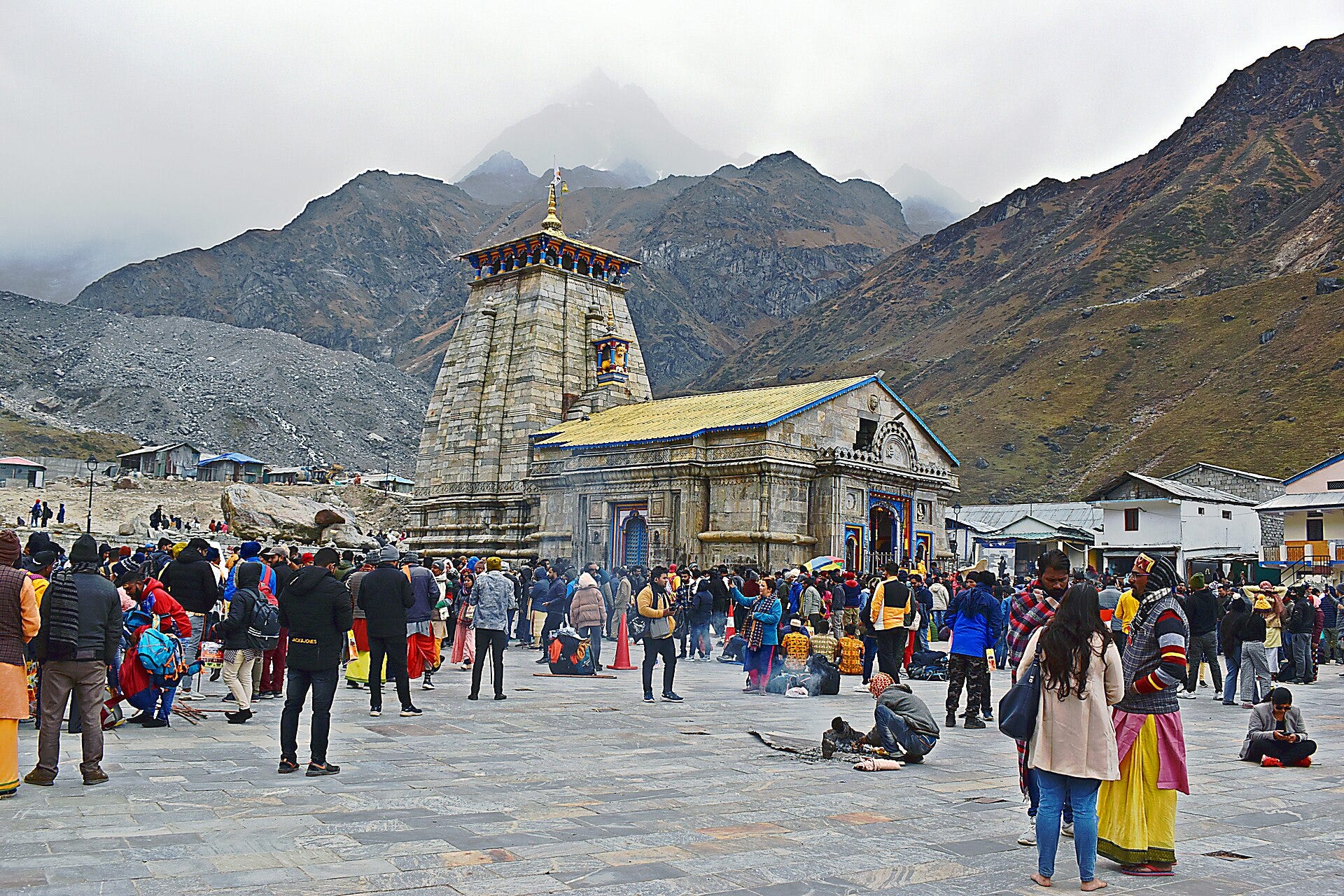
Photo: Rohit Sharma, CC BY-SA 4.0, via Wikimedia Commons
For many parents and grandparents, Char Dham is not a trip. It is a promise made decades ago. The four Himalayan shrines of Uttarakhand, Yamunotri, Gangotri, Kedarnath and Badrinath, draw lakhs of yatris every season, and a large share of them are seniors. With honest planning, the yatra is very doable at seventy. Without it, the mountains will test anyone.
This guide is written for the senior yatri and, just as much, for the adult child planning it for them.
Understand the season first
The Char Dham temples open in late April or early May (the exact opening dates are announced each year) and close around Diwali, when the deities move to their winter seats. For seniors, the most comfortable windows are usually May to mid-June and mid-September to October: the monsoon weeks of July and August bring rain, landslide risk and slippery paths and are best avoided by older yatris.
Registration is mandatory and free
Every yatri must register for the Char Dham yatra on the Uttarakhand government's official portal before travelling. Registration is free, done online, and generates a yatra letter with a QR code that is checked on the route. Do this weeks ahead, and carry a printed copy plus a phone copy. Register only on the official government portal; fake registration sites exist.
Choose the route honestly
The four dhams are not equally demanding:
Badrinath is reached entirely by road. The most senior-friendly of the four.
Gangotri is also reachable by road, with a short walk at the temple end.
Yamunotri involves a mountain path of about 6 km from Janki Chatti; palkis (palanquins), pitthus (carriers) and mules are available for hire at regulated rates.
Kedarnath has a 16 km uphill path from Gaurikund. Palkis, pitthus and mules are available, and helicopter services run from Phata, Guptkashi and Sirsi, bookable only through the official IRCTC heliyatra portal.
Many senior yatris today do Kedarnath by helicopter and the other three by road. There is no virtue in struggling: the darshan is the same.
Documents and bookings to settle before you leave
Yatra registration for every traveller, done on the official portal, with the QR letter printed and saved offline.
ID for everyone: Aadhaar or passport, plus photocopies in a separate bag.
Helicopter tickets for Kedarnath booked only on the official IRCTC heliyatra portal, the moment bookings open for your dates; seats for the season go quickly.
Stays booked in advance for May-June and festival weeks, when beds near the dhams fill up.
A written medical summary for each senior: conditions, medicines with doses, allergies, doctor's phone number, and one emergency contact who is not on the yatra.
A realistic shape for the yatra
A comfortable senior itinerary takes ten to twelve days, not six. It looks roughly like this: arrive in Haridwar or Dehradun and rest a full day; drive to the Yamunotri road head with a night at Barkot; Yamunotri darshan with a palki; drive to Uttarkashi; Gangotri darshan; a full rest day; Guptkashi; Kedarnath by helicopter with same-day return; Joshimath; Badrinath darshan; return with a buffer day. Every extra night feels unnecessary when you plan it and essential when you are there.
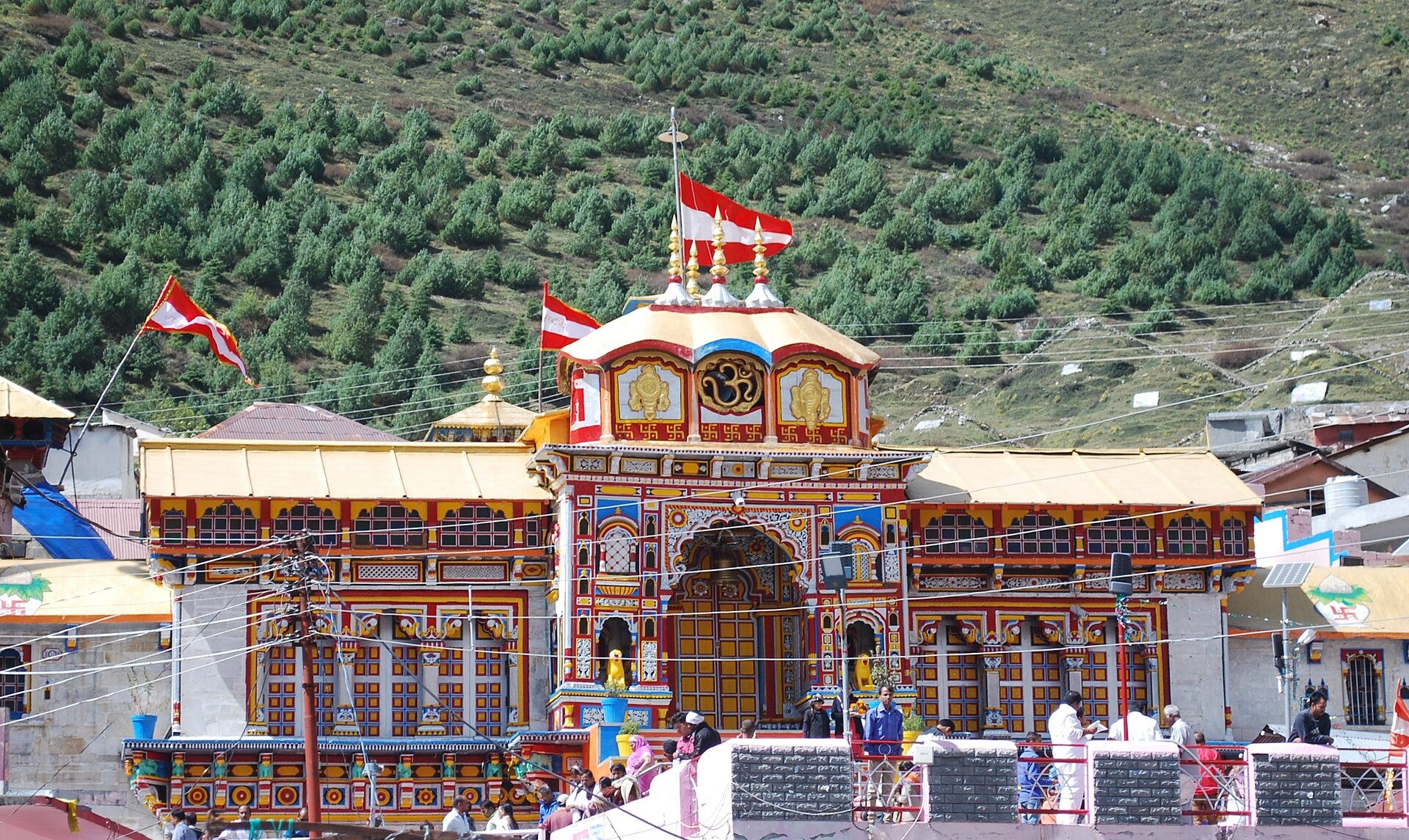
Photo: Vishwanath Negi, CC BY 4.0, via Wikimedia Commons
Health preparation that actually matters
A check-up before you book. Heart, blood pressure and lungs, plus a frank conversation with the family doctor about altitude. The dhams sit between roughly 3,000 and 3,600 metres.
Acclimatise. Plan nights at intermediate towns like Guptkashi, Uttarkashi or Joshimath before going higher. Rushing the ascent is the most common mistake.
Medication. Carry the full course plus a buffer, in the original strips, with a written list. Pharmacies exist along the route but stock varies.
Walk slowly, eat light, drink water. The traditional yatra pace is unhurried for a reason.
Medical posts. The route has government medical relief posts, and larger towns have hospitals; know where they are on your itinerary before you need one.
If a doctor advises against high altitude, listen. The dhams will wait, and darshan done through a live stream or a later, healthier season is not a smaller darshan.
Practical comforts worth arranging
Book stays near the road head rather than high on the path; a hot, quiet night matters more than saving an hour.
Keep the itinerary loose: one dham a day with rest days between, not four dhams in three days.
Warm layers even in May, rain covers, a walking stick, and shoes already broken in.
Travel insurance that covers seniors and evacuation is worth reading carefully before buying.
For the son or daughter planning this
The best gift is not a booking but an unhurried plan: registration done early, helicopter seats reserved where the path is long, rest days protected, and a family member along if possible. At DharmikVibes, our vision is to enable yatras that honour both the devotion and the devotee, especially the ones who have waited longest to go.