

On Wednesday, 23 December 2026, Dattatreya Jayanti falls on Margashirsha Purnima. The Purnima tithi runs from late morning on 23 December to the morning of 24 December (New Delhi). In Maharashtra, Karnataka, Telangana and Gujarat, the day fills the temples of the Lord with three faces and four dogs: Dattatreya, the son of Atri and Anasuya, in whom Brahma, Vishnu and Shiva are one.
His name is a biography: Datta, "given", because the Trinity gave itself to the sage Atri's line; Atreya, the son of Atri. He is called the Adi Guru, the first Guru, and the Guru of the Nath sampradaya. But the most radical thing about him is not his birth. It is his education.
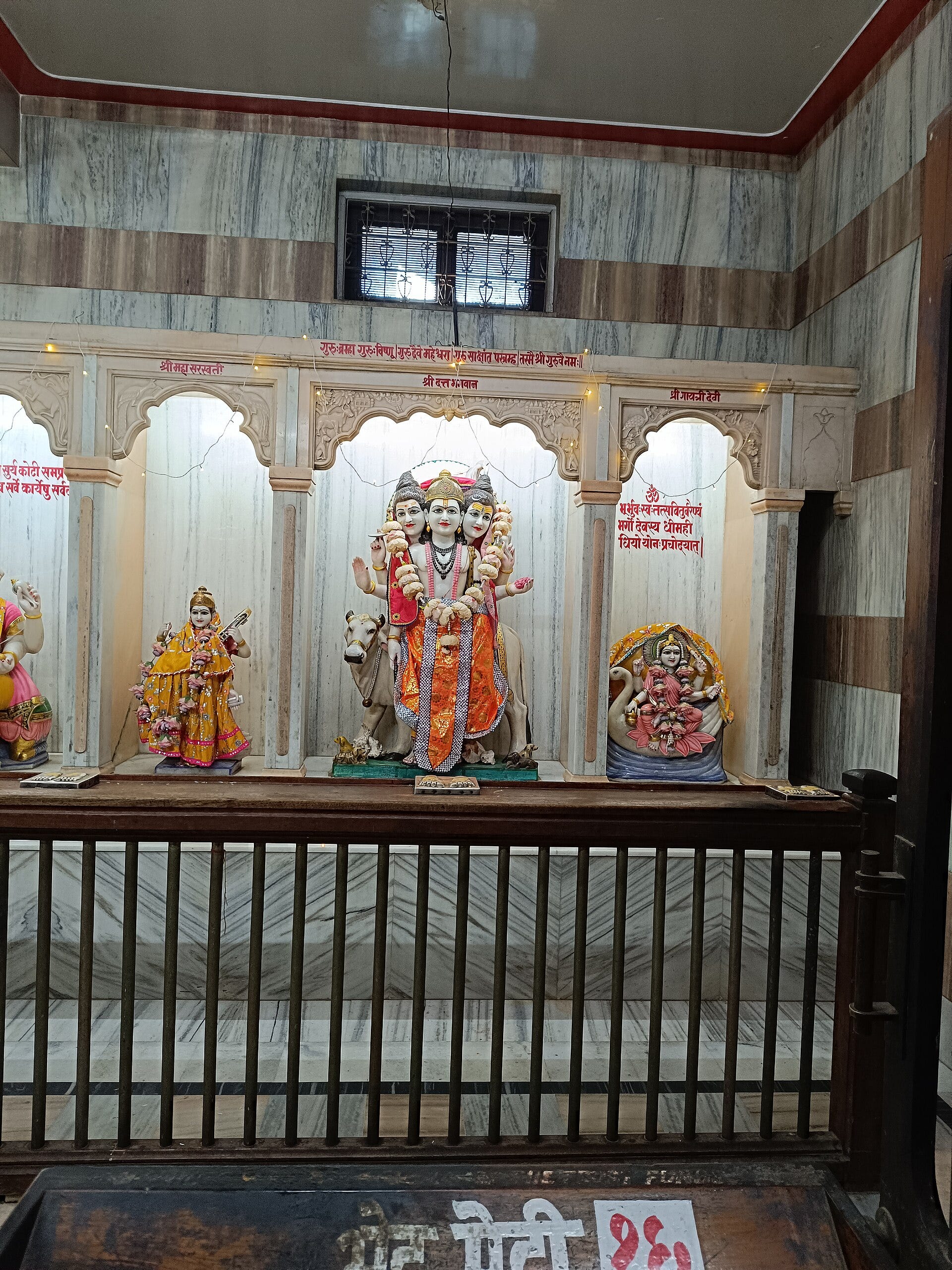

Twenty-four gurus, none of them human
The Bhagavata Purana records the strangest list of teachers in scripture. When King Yadu asked Dattatreya who his guru was, the Lord answered: twenty-four. The earth, which teaches patience under every burden. The wind, which touches everything and is bound by nothing. Water, fire, sky, moon and sun. A python, which takes what comes. A spider, a honeybee, a fish caught by desire, a moth drawn to flame, a deer deceived by music, an elephant trapped by lust. A child, free of worry. A courtesan, who taught detachment from what the world gives and takes. A maiden's bangles, whose clinking taught that one who lives alone lives in peace.
The list is the teaching. The whole world is a gurukul for the one who has eyes. Dattatreya did not sit at twenty-four feet. He walked through life awake, and life itself instructed him.
The form and the places
The iconography carries the theology: three faces for the three functions of creation, preservation and dissolution; six hands holding the emblems of all three Gods; the cow Kamadhenu behind him, and four dogs at his feet, read by the tradition as the four Vedas. He is the deity of the wandering ascetic and the householder at once, the Avadhuta who owns nothing and lacks nothing.
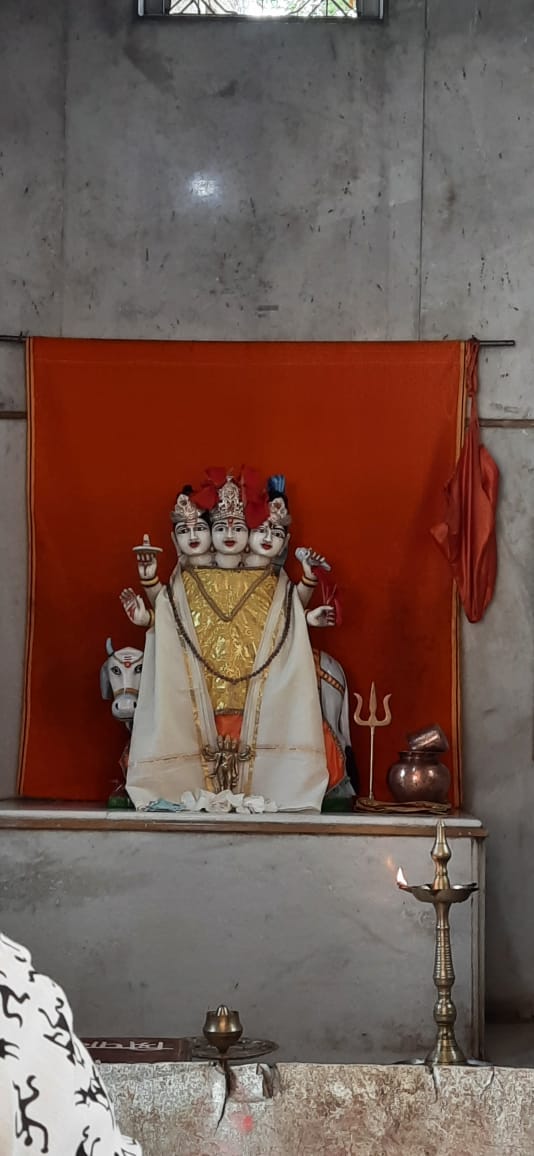

Ganagapur in Karnataka, where he is believed to have lived, is the seat of the Jayanti's largest celebrations, with the Madhukari alms tradition alive to this day: every pilgrim is fed, and taking bhiksha there is a blessing, not a want. Girnar in Gujarat, where he did tapas, and countless Datta mandirs across Maharashtra keep the day with abhisheka, palakhi processions and the singing of the Gurucharitra, the text of his life, often read through seven days ending on the Jayanti.
How to observe the day
- Fast or eat simply on 23 December; the day is a Purnima vrat as much as a Jayanti. - Read or listen to a chapter of the Gurucharitra or the Bhagavata's account of the twenty-four gurus. - Visit a Dattatreya temple if one is near; offer abhisheka and prasad. - Feed someone. In the Datta tradition, feeding the pilgrim and the stranger is the Lord's own worship. - Ask the day's question: what is life teaching me right now that I keep refusing to learn?
The lesson that outlives the festival
Dattatreya's gift to the tradition is the end of spiritual snobbery. If the earth, the wind and a spider can be gurus, then the office, the traffic, the difficult relative and the failed plan are gurus too. The Jayanti celebrates a birth. The teaching asks for a second one: the birth of the student who learns from everything.
At DharmikVibes, our vision is to enable Divine Experiences for every seeker, on every yatra. May the Adi Guru open your eyes to the teachers already around you.