

Scattered across the villages around Pune, in three districts of Maharashtra, stand eight small temples of Ganesha that together form one of India's most loved pilgrimage circuits: the Ashtavinayak, the eight Ganapatis. Each temple keeps its own murti, its own legend, its own distinct turn of the trunk, and all eight murtis are revered as swayambhu: self-manifested, not carved by any human hand.
The yatra that links them has one rule. You begin at Morgaon, at the temple of Mayureshwar, and after darshan at all eight you return to Morgaon to close the circuit. The loop runs roughly 700 kilometres door to door from Pune, and most families drive it in two or three unhurried days. Winter, from November to February, is the finest season for it: cool mornings on the Deccan plateau, clear roads through the ghats, and darshan without the festive-season rush.
This is a guide to the Ashtavinayak: the eight temples in their traditional order, what makes each one unlike the others, how to plan the drive, and the dates that matter this winter.
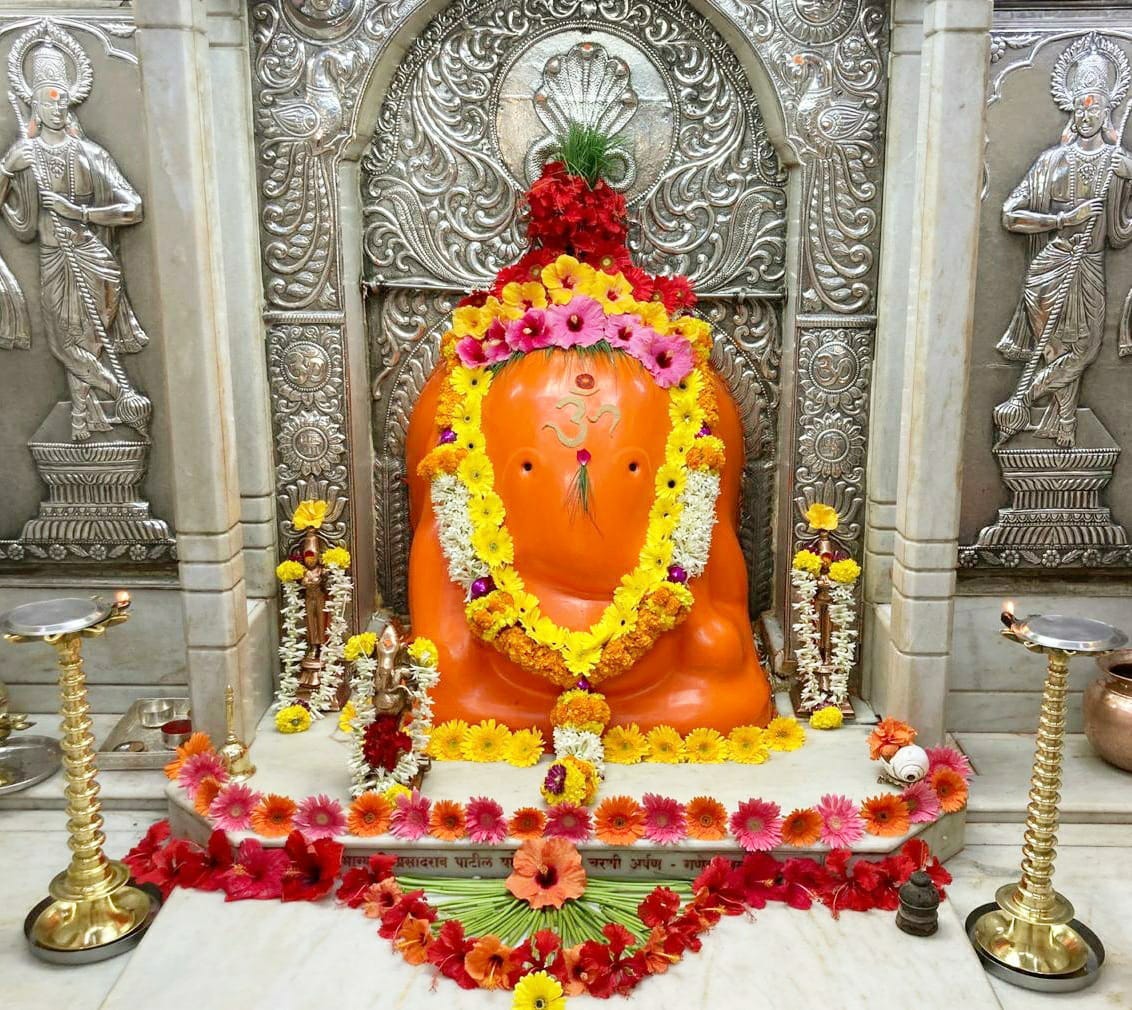

A circuit with a single rule
Ganesha is worshipped first, before any other deity and before any new undertaking, and the Ashtavinayak is Maharashtra's grand way of honouring that first worship. The traditional sequence is fixed by the scriptures: Morgaon, Siddhatek, Pali, Mahad, Theur, Lenyadri, Ozar, Ranjangaon, and then back to Morgaon. The closing darshan at Mayureshwar is not an optional extra. The yatra is considered complete only when you return to where you began, the way a mala is complete only when the thread meets the guru bead again.
What surprises first-time yatris is how different the eight temples are from one another. These are not eight copies of one shrine. One hides behind fortress walls and minarets, one sits inside a Buddhist-era cave, one keeps a lamp that has burned for well over a century, and one is named not for the god but for a devotee boy. The circuit is less a repetition than a garland: eight beads, eight colours.
The eight, in their traditional order
1. Shri Mayureshwar, Morgaon. The first temple of the circuit and the most important, about 67 kilometres from Pune, in a village said to be laid out in the shape of a peacock. Mayureshwar is the peacock-riding form of Ganapati, worshipped here as the slayer of the demon Sindhu. The temple itself looks like a small fort: high stone walls, four gates, and four corner minarets that give it, from a distance, the silhouette of a mosque, a disguise from the Bahamani era meant to turn raiders' eyes away. In front of the entrance sits a Nandi, Shiva's bull, an oddity in a Ganesha temple. The local explanation is disarmingly simple: the Nandi was being carted to a Shiva temple elsewhere, the cart broke down here, and here he stayed.
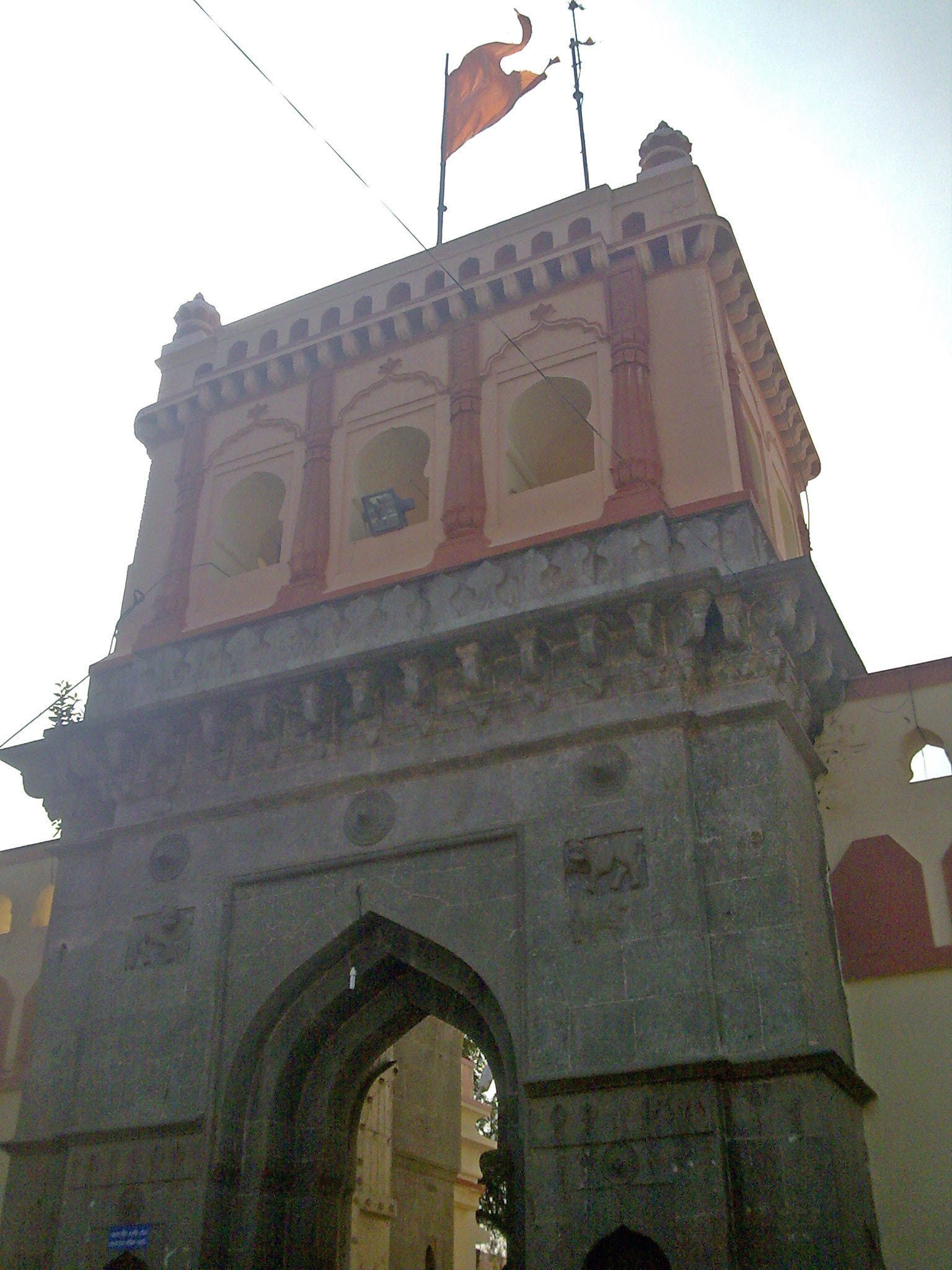

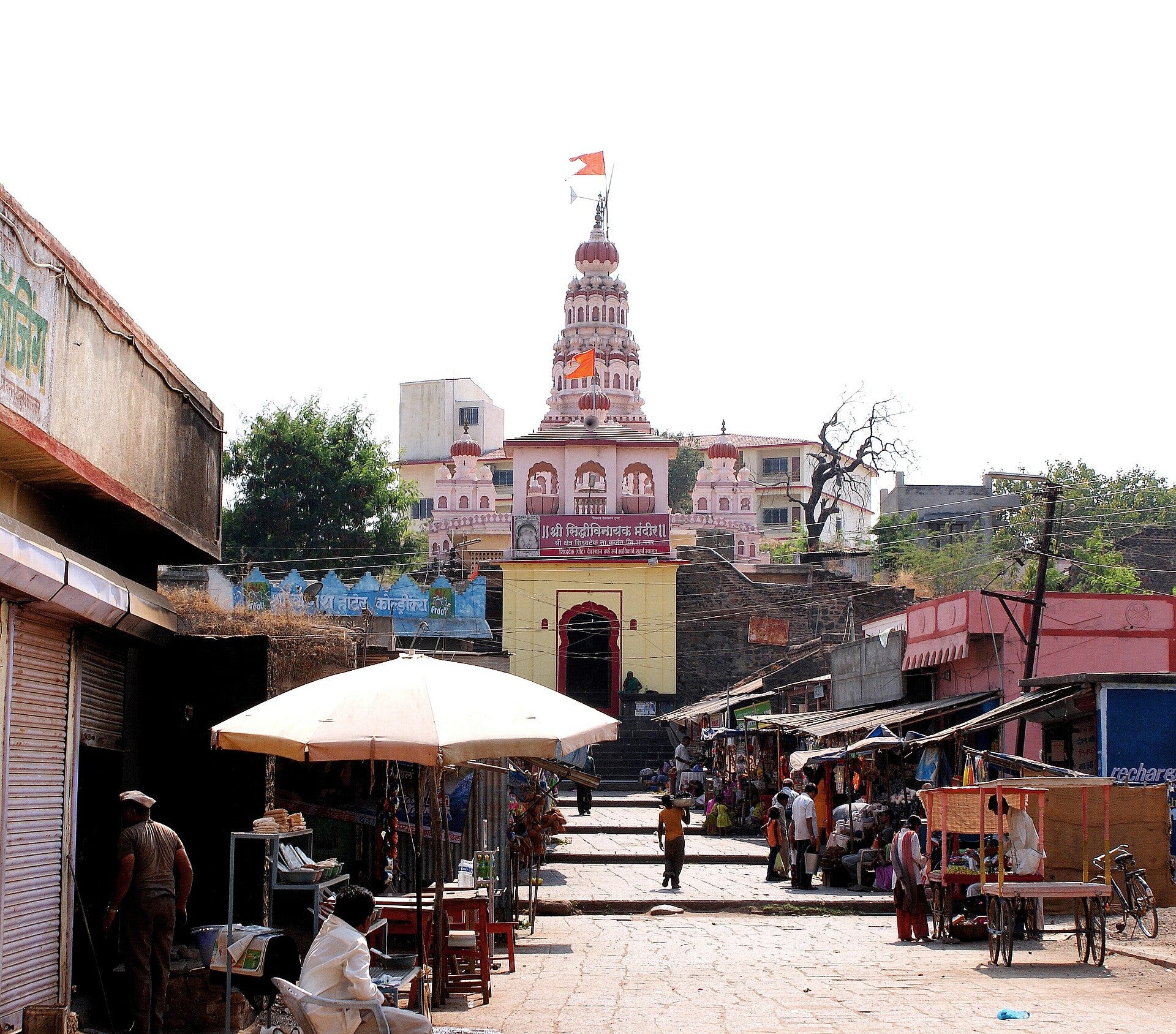
2. Shri Siddhivinayak, Siddhatek. On a small hill above the Bhima river, off the Pune-Solapur road, stands the only one of the eight murtis with its trunk turned to the right. The right-trunked Ganapati is held to be powerful and particular, worshipped with extra care. Tradition says Vishnu himself worshipped Ganesha here before overcoming the demons Madhu and Kaitabha, and the inner sanctum is credited to Ahilyabai Holkar. A pradakshina here means circling the whole hillock, a half hour's unhurried walk.

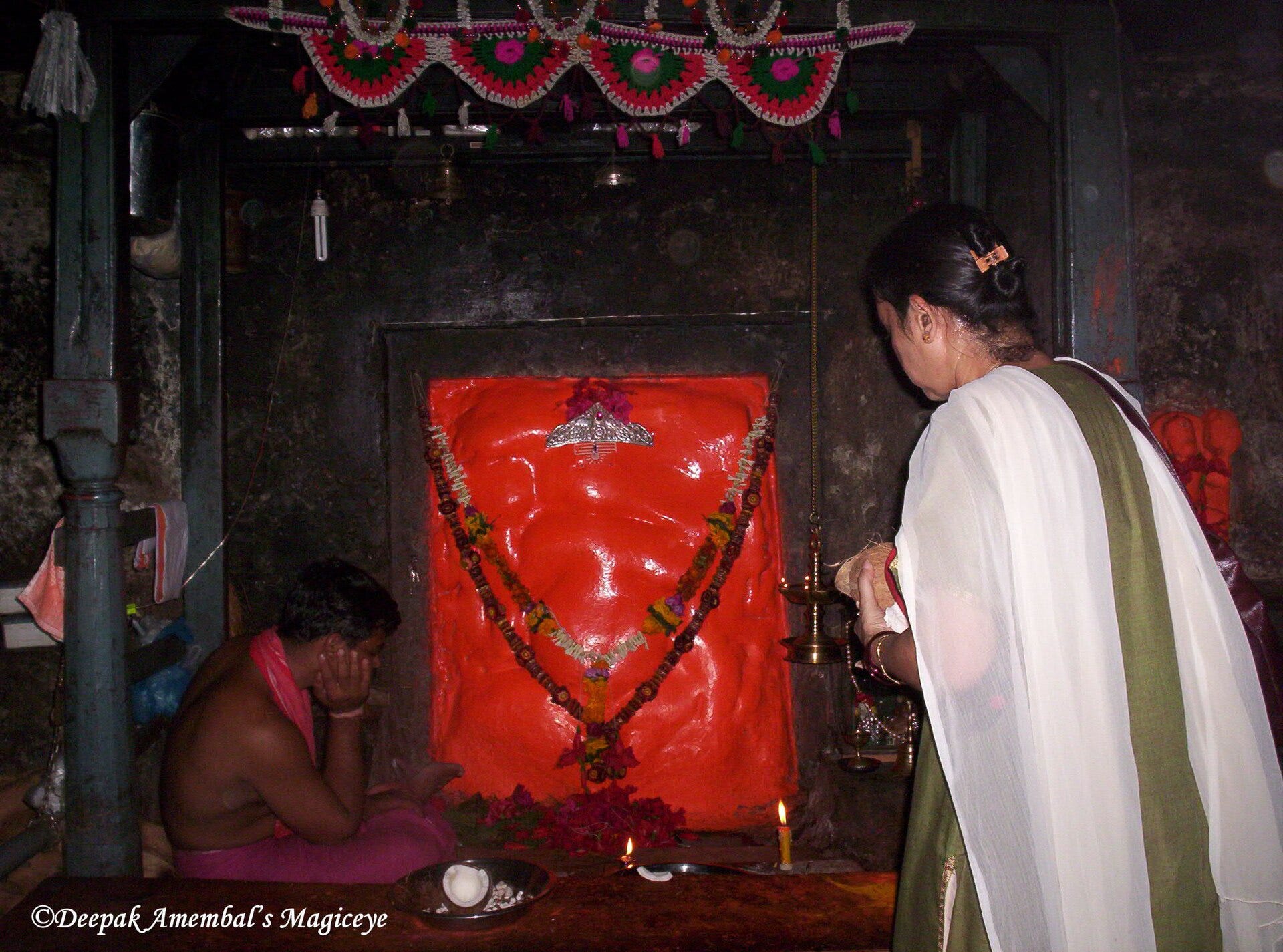
3. Shri Ballaleshwar, Pali. The only Ganapati who takes his name from a devotee. The legend tells of Ballala, a boy of Pali so absorbed in worship that his enraged father destroyed his forest shrine and beat him; Ganesha came to the boy's aid, freed him, and agreed to stay at Pali forever under the boy's name. The stone temple was rebuilt by Nana Phadnavis in 1760. Two things to notice: the prasad here is besan laddu, not the modak offered everywhere else, and the temple is aligned so that after the winter solstice the rays of the rising sun fall directly on the murti at sunrise.4. Shri Varadavinayak, Mahad. The giver of boons, in a village just off the old Mumbai-Pune road near Khopoli, the closest of the eight to Mumbai. The murti was found immersed in a nearby lake in 1690 and the temple was built over it in 1725. In the sanctum burns an oil lamp said to have been kept alight continuously since 1892. Mahad holds one more distinction: this is the one Ashtavinayak temple where devotees are allowed right up to the murti to offer their own prayers.
5. Shri Chintamani, Theur. The nearest of the eight to Pune, about 25 kilometres out on the Solapur road, where the village sits at the meeting of the Mula, Mutha and Bhima rivers. The legend: Ganesha recovered the wish-fulfilling Chintamani jewel from the greedy Guna and returned it to the sage Kapila here, under a kadamba tree, and Theur is remembered in old texts as Kadambanagar. The Chintamani of Theur was the family deity of the Peshwa Madhavrao I, the young administrator who held the Maratha confederacy together; he died at Theur in 1772, only twenty-seven years old.
6. Shri Girijatmaj, Lenyadri. The name means son of Girija, of Parvati, who is believed to have performed her penance on this hill to be blessed with Ganesha. The temple is unlike anything else on the circuit: it is the eighth cave of a complex of eighteen rock-cut caves of Buddhist origin, near Junnar, reached by climbing 307 steps carved into the hill. The hall is cut from a single rock with no supporting pillars, and there is no electric light inside; by day, the sun does the lighting. Shivneri fort, the birthplace of Chhatrapati Shivaji Maharaj, stands a few kilometres away.

7. Shri Vighnahar, Ozar. The remover of obstacles, on the banks of the Kukadi river just off the Pune-Nashik highway. The story explains the name: the demon Vighnasura, created to disrupt King Abhinandan's sacrifice, was subdued by Ganesha and begged mercy, asking only that his name be placed before the god's own. So Vighna comes first: Vighna-har, Vighneshwar. The temple stands behind high stone walls you can walk upon, and its pinnacle is gold, built in Peshwa times after the victories of Chimaji Appa.
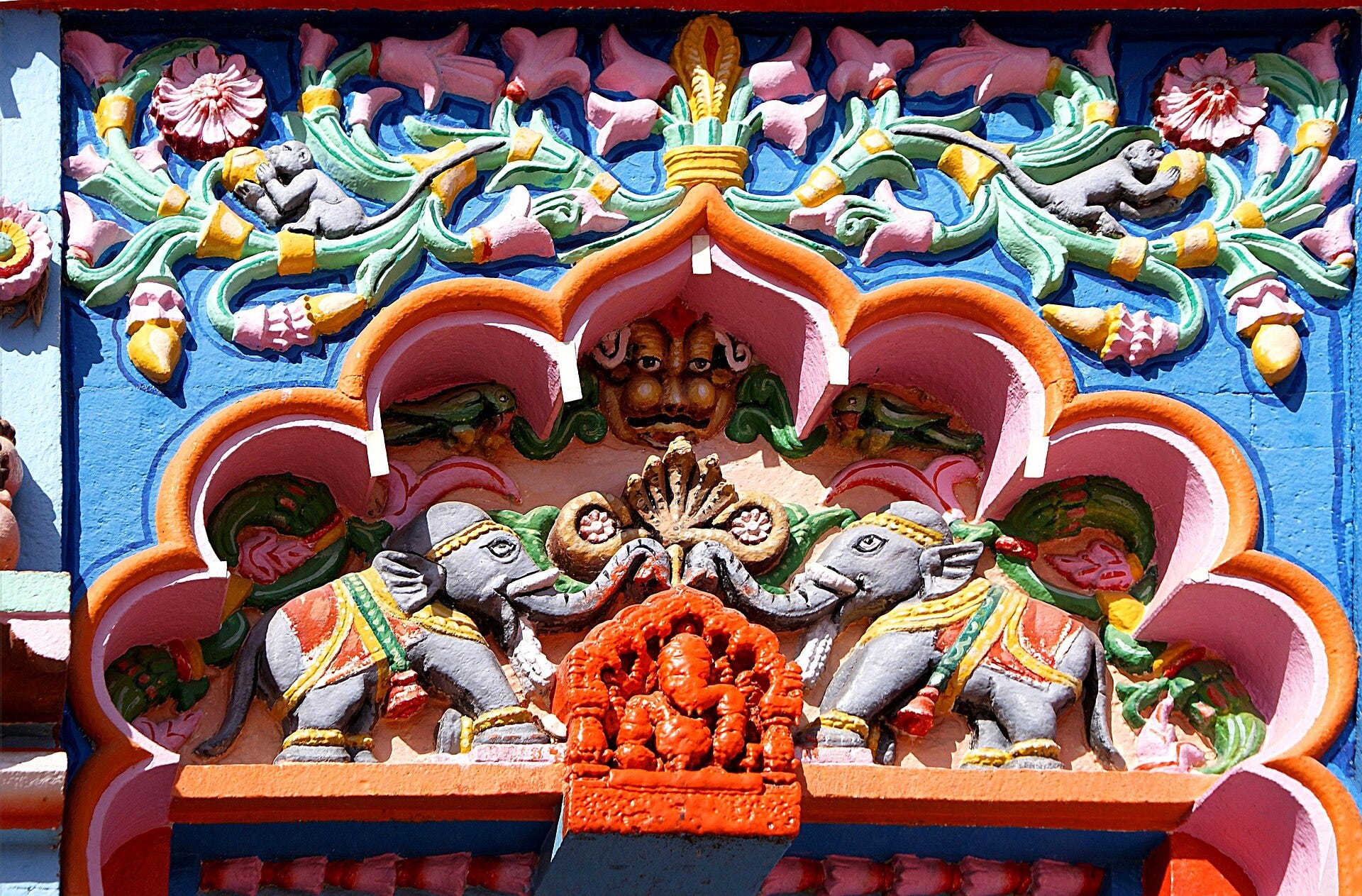

8. Shri Mahaganapati, Ranjangaon. The Great Ganapati, about 50 kilometres from Pune on the Nagar road, and the grandest legend of the eight: Shiva himself worshipped Ganesha here before riding out against the demon Tripurasura, and the temple marks the spot. The present sanctum was built around the swayambhu murti in the time of the Peshwas, and tradition holds that the temple is designed so the sun's rays fall on the deity during the sun's southward course. Local belief speaks of an original murti with ten trunks and twenty arms hidden in a vault below, though the temple authorities themselves say no such idol exists. From here, the circuit turns back to Morgaon for the closing darshan.

Planning the circuit
The eight temples sit in three districts: five in Pune district, two across the ghats in Raigad (Pali and Mahad), and one in Ahilyanagar district (Siddhatek). Pune is the natural base, and the full loop from the city runs about 690 to 715 kilometres depending on the order you drive.
There are two sensible ways to do it. The scriptural route keeps the traditional order, first to eighth, over three days, which means crossing the Sahyadri ghats twice. The road-friendly route takes two days: Morgaon, Siddhatek, Theur and Ranjangaon on day one with a night halt near Ozar, then Lenyadri and Ozar in the morning, down the ghats to Pali and Mahad, and home by the expressway. Purists take the first; families with elders often prefer the second, stretched over a gentler third day. Either way, hold the one rule: begin at Morgaon, end at Morgaon.
For devotees flying in from abroad, Pune's airport is the convenient landing, and Mumbai works nearly as well; the two Raigad temples are in fact closer to Mumbai than to Pune. The Christmas and New Year school break falls squarely in the best season for this drive, which makes the Ashtavinayak a natural year-end yatra for NRI families visiting home.
Why winter is the season
The Deccan summer is harsh, and the monsoon slows the ghat roads. From November to February the plateau is at its kindest: cool mornings, mild afternoons, clear skies, and driving conditions as easy as they get. The crowds are gentler too, once the Ganesh festival season has passed.
Winter also has its own geometry in these temples. At Pali, the alignment of the temple brings the rising sun onto the murti in the months after the winter solstice; at Ranjangaon, the design is traditionally said to catch the sun during its southward course. Whether you plan around them or simply notice them, these are details the season gives you for free.
The winter calendar carries its own Ganesha days. Every month's Sankashti Chaturthi, the monthly vrat of Ganapati, draws devotees to all eight temples: this winter's dates include 27 November 2026 and 25 January 2027, the latter being Sakat Chauth. The next Angarki Chaturthi, the Tuesday Sankashti that Maharashtra holds dearest, falls on 22 June 2027. On these days expect bigger, joyful crowds, and plan darshan for the morning.
On the road: practical notes
No bookings, passes or registrations are needed: darshan at all eight temples is free and open to everyone. The temples generally open early in the morning and stay open into the evening, with variations by temple and by day, and some close for a few afternoon hours, so check the temple's current timings before fixing your drive order. Dress modestly, and expect photography to be restricted inside the sanctums.
The only real climb on the circuit is Lenyadri's 307 steps; take them slowly in the morning cool, and note that elders who cannot climb can comfortably wait at the base, where there is plenty to see. Everywhere else, the walking is measured in minutes. Accommodation is easiest in Pune itself, with a night halt around Ozar, Lenyadri or Narayangaon on the two-day plan; food along the highways is the dependable Maharashtrian mix of dhabas and small-town thali houses. Self-drivers will find the roads good; those who prefer not to drive will find no shortage of Pune cabs that know this circuit by heart.
Questions first-timers ask
Can the Ashtavinayak be done in one day? Not honestly. Even the fastest circuit plans run to two days, and the drive alone totals some 700 kilometres. Give it two days at the least, three if you want the scriptural order or an unhurried pace.
Must I keep the traditional order? The order, and the return to Morgaon, are the tradition. Many modern travellers drive the geographic order to save hours on the road and keep only the Morgaon return. If the shastrokta sequence matters to you, follow it and take the third day; if it does not, the road order with the closing darshan is a commonly kept practice, with variations from family to family.
Is it suitable for children and elders? Yes, more than most yatras. Seven of the eight temples are reached with barely any walking, and the drives between them are one to three hours. Lenyadri's steps are the one exception to plan around.
When is it most crowded? During the ten days of Ganesh Chaturthi, and on Sankashti Chaturthi evenings, especially Angarki. A plain winter weekend is the quietest darshan of all.
Do I need a guide or a package? Not necessarily. The circuit is well marked and the temples well known to every cab driver in Pune. What a good driver adds is sequence: he knows which temple closes for the afternoon and orders your day around it.
Eight small temples in eight ordinary villages, and between them some of the most pleasant driving in Maharashtra. The Ashtavinayak asks for no great preparation: a free weekend, a full tank, and the old rule of beginning and ending at Morgaon. At DharmikVibes, our vision is to enable Divine Experiences for every seeker, on every yatra, and this one is among the most welcoming we know: eight doorways to the remover of obstacles, open all winter.