

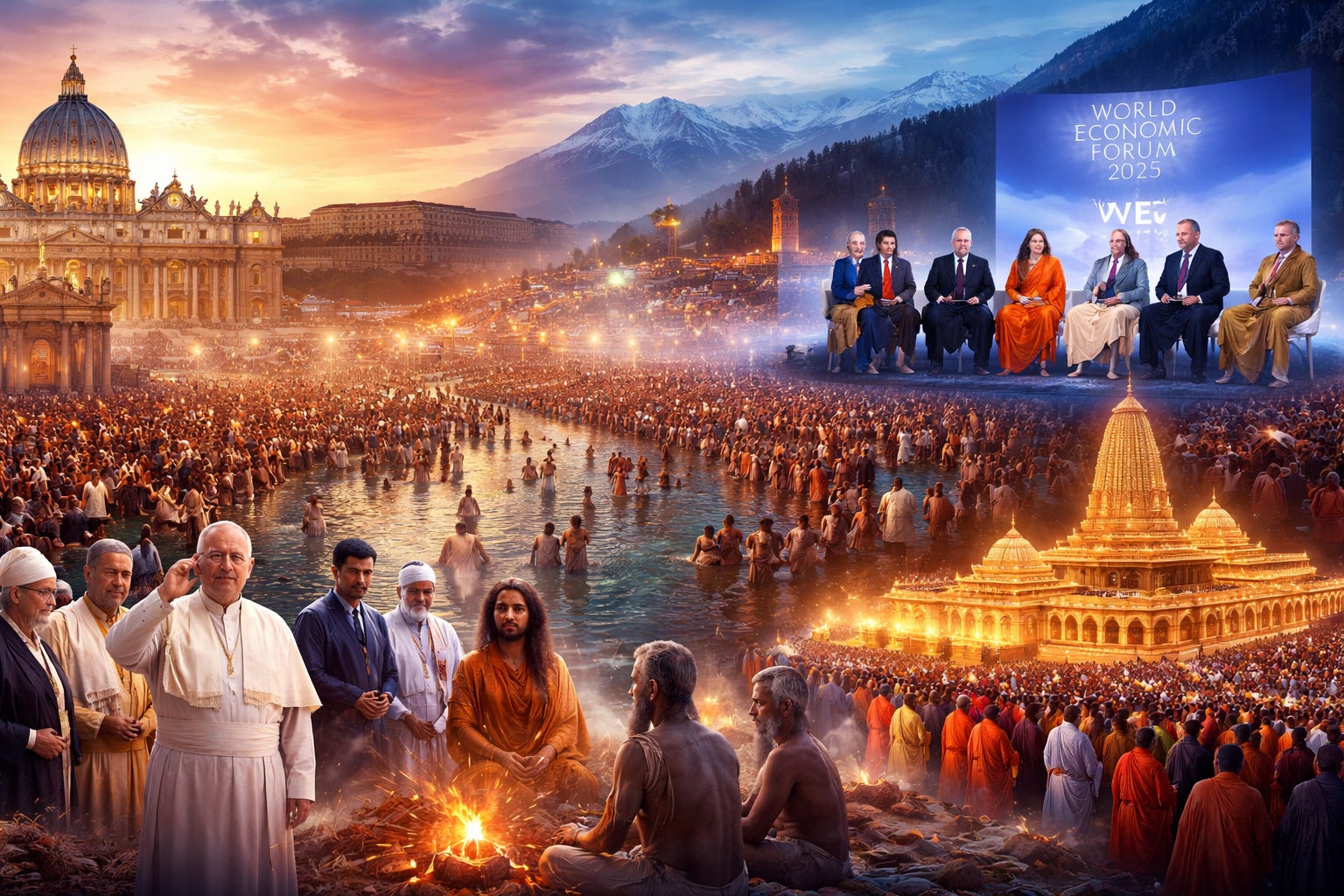
As 2025 comes to a close, the global religious and spiritual landscape reflects a year of extraordinary gatherings, intense debates, digital transformations, and renewed engagement with faith. From ancient pilgrimages in India to interfaith dialogues on international platforms, religion remained deeply intertwined with social change, identity, and global conscience throughout the year.
Mahakumbh 2025: Faith on an Unprecedented Scale
One of the most defining religious events of 2025 was Mahakumbh in Prayagraj, India. Held during January and February, the grand congregation at the Triveni Sangam witnessed participation on a scale rarely seen in human history. According to official and administrative estimates, over 600 million devotees took the sacred dip during the course of the event.
Beyond rituals, Mahakumbh 2025 symbolized the fusion of tradition with technology. Social media platforms amplified stories of saints, ascetics, and pilgrims, turning local spiritual narratives into global conversations. Figures like the much-discussed “IIT Baba,” who left a modern academic path for renunciation, became symbols of spiritual transformation in the digital age. Similarly, ordinary devotees - including young participants who gained online recognition - highlighted how faith spaces are now influencing identity, aspiration, and visibility in new ways.
Religion in the Digital and Social Sphere
Throughout 2025, religion increasingly found expression in digital spaces. Temples, churches, and spiritual leaders expanded their online presence through live-streamed sermons, virtual darshans, and social media outreach. This digitalization of faith not only widened access but also reshaped how younger generations engage with spirituality.
Debates emerged around authenticity, influence, and commercialization of faith online, yet the trend clearly demonstrated that religious expression is no longer confined to physical spaces.
Global Platforms and Spiritual Dialogue
Religion also entered high-level global discussions. During World Economic Forum (WEF) meetings in Davos, multiple sessions explored the role of religion and ethics in addressing global challenges such as climate change, inequality, war, and mental health. Thought leaders emphasized that religious values could complement economic and political frameworks by promoting compassion, sustainability, and responsibility.
At the Vatican, 2025 marked a significant year under the Catholic Jubilee celebrations, focusing on hope, renewal, and service. Interfaith meetings hosted during the year brought together Christian, Jewish, Hindu, Buddhist, and other religious leaders, reinforcing the importance of dialogue in a divided world.
Interfaith Movements and Religious Freedom
Across continents, interfaith initiatives gained momentum in 2025. Global forums highlighted the importance of religious tolerance, minority rights, and peaceful coexistence. Conferences in Europe, Central Asia, and the Middle East addressed rising concerns around religious freedom, state control, and communal harmony.
Reports and discussions emphasized that while faith can be a force for unity, it also requires safeguards to prevent exclusion and conflict. These conversations shaped policy debates and public discourse in several countries, including India, the United States, and parts of Europe.
India: Tradition, Identity, and Modernity
Within India, religious discussions remained deeply intertwined with questions of identity and modern life. Debates around Sanatan Dharma, reform, gender roles, and generational change gained prominence across spiritual forums, books, podcasts, and public lectures.
Major religious sites such as Ayodhya, Kashi, and Ujjain continued to draw large crowds, not only for worship but also as centers of cultural resurgence. Sikh religious commemorations, Jain gatherings, and Sufi festivals across the country also reinforced India’s plural spiritual heritage.
At the same time, religious leaders increasingly spoke about education, environment, and social responsibility, attempting to align ancient teachings with contemporary challenges.
Changing Faith Patterns Worldwide
Globally, 2025 highlighted contrasting trends. In some Western nations, the number of people identifying as religiously unaffiliated continued to rise, reflecting changing attitudes toward organized religion. Yet paradoxically, there was also a visible increase in spiritual curiosity — through meditation, mindfulness, pilgrimage tourism, and alternative faith practices.
In parts of Europe and Asia, younger generations showed renewed interest in religion, often blending tradition with personal interpretation rather than institutional allegiance.
Controversies and Challenges
Not all religious developments were harmonious. In several regions, restrictions on religious practice, disputes over religious speech, and concerns about state interference remained contentious issues. Social debates around religious influence in politics, education, and family structures intensified, reflecting the complex role faith plays in modern governance.
A Year That Redefined Religion’s Role
By the end of 2025, it became evident that religion is no longer seen only as a custodian of rituals and traditions. It has emerged as a dynamic force influencing social dialogue, cultural identity, ethical debates, and even global policymaking.
From the sacred waters of Prayagraj to global conference halls, from age-old chants to viral digital narratives, religion in 2025 demonstrated its enduring ability to adapt, inspire, and provoke reflection. As the world moves forward, the evolving relationship between faith, society, and modern life is set to remain a powerful and defining conversation.