

There are cities you visit… and then there are cities that quietly enter your spirit.
Amritsar is not just a place on a map - it is a feeling, a prayer whispered through golden domes, a hymn floating over sacred water, a lesson in humility served on a steel plate, and a memory that stays warm in your heart long after you leave.
I walked into Amritsar expecting beauty, heritage, and legendary food.
But what I found was something deeper - a city that teaches you how to slow down, bow your head, soften your ego, and listen.
Even today, when I close my eyes, I can still hear the kirtan echoing through the air, like the city is always in worship - whether it is dawn or midnight.
When to visit Amritsar - when the city feels like a blessing
From what I gathered during my time there, October to March is when Amritsar feels most gentle to travellers. The days are cooler, the skies clearer, and walking through the old lanes feels almost meditative.
During festivals, the city becomes even more luminous. The Golden Temple glows during Diwali, and in November, the air feels spiritually charged with the reverence of Guru Nanak Jayanti.
And then there is April, when Baisakhi arrives like a drumbeat of joy - colour, faith, folk spirit, and gratitude for harvest.
Even the hotter months have their truth. The summer teaches you how to move slowly, how to seek shade, how to travel with care. And the monsoon arrives like a soft cleansing, washing the city’s stone and sky with quiet renewal.
Reaching Amritsar - like being called home
Whether you arrive by air, train, or road, there’s a certain warmth in the city that makes you feel received.
Fly into Sri Guru Ram Das Ji International Airport, or take a train into Amritsar Junction, and you’ll sense it immediately - Amritsar doesn’t rush you. It welcomes you the way Punjab often does: with generosity, laughter, and the promise of good food.
Sacred, historic, unforgettable: the top tourist places in Amritsar
Amritsar isn’t a city of “attractions.”
It is a city of pilgrimage, even if you come only as a traveller.
Here are the places that left the deepest imprint on me.
1) Golden Temple (Harmandir Sahib) - where the heart becomes quiet
If Amritsar has a soul, it lives here.
The first thing you learn at the Golden Temple is humility.
You cover your head. You leave your shoes behind. You step barefoot onto marble that feels cool like truth. And somehow, without anyone telling you, your voice naturally softens.
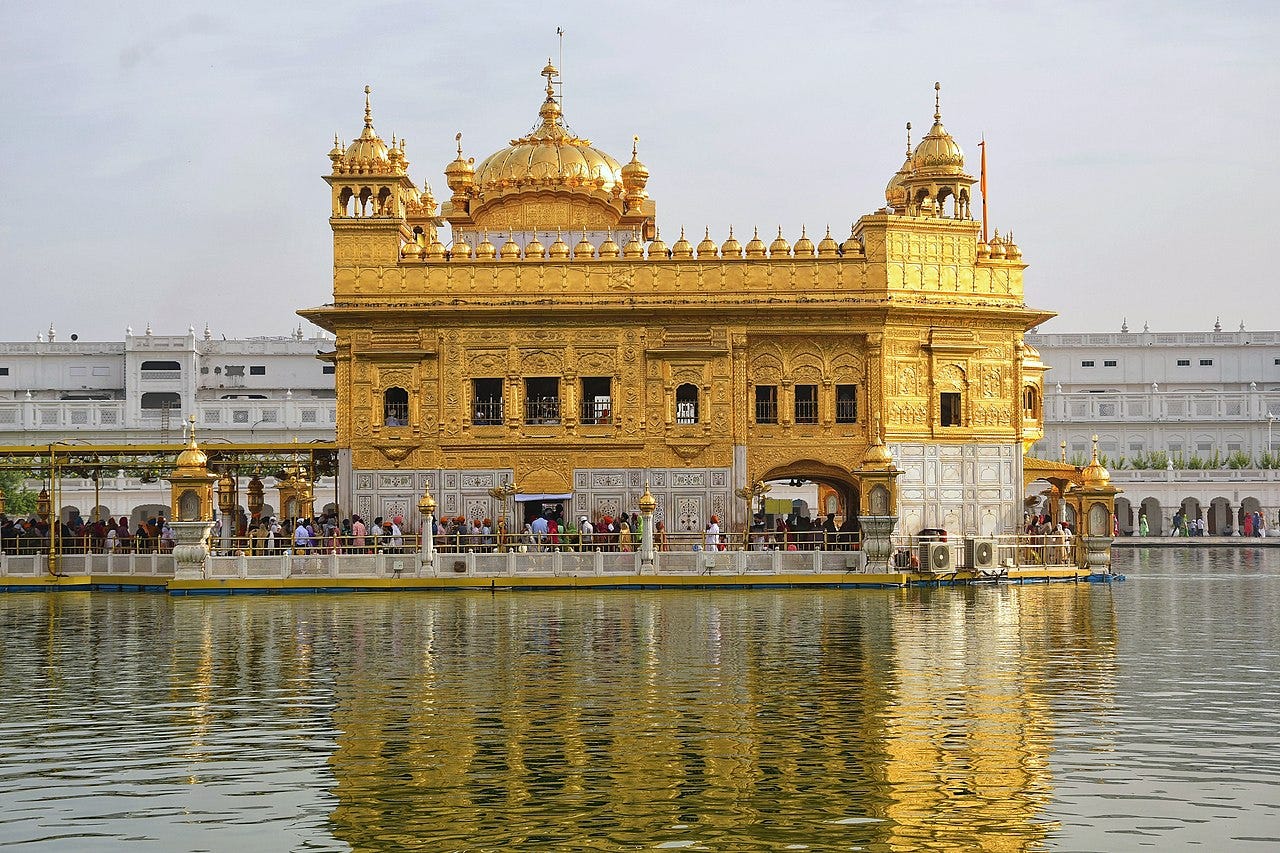
The Harmandir Sahib, shimmering in gold, does not just look magnificent - it feels alive. It sits in the centre of the Amrit Sarovar, the holy pool, as if it is reminding every visitor:
Stay calm. Stay pure. Stay devoted.
The most sacred time: Amrit Vela
The best time to visit is early morning, during Amrit Vela (4–6 AM), when the world is still asleep but the temple is awake in prayer.
In those hours, the air feels rare. Almost holy.
The kirtan flows across the water like a lullaby for the restless mind. And even if you don’t understand every word, you understand the feeling - because devotion has a language beyond language.
Darshan - not just seeing, but receiving
Inside the sanctum, where the Guru Granth Sahib is placed, people bow in silence. Foreheads touch the marble. Hands fold. Eyes close. Some cry. Some smile softly. Some stand still like they’ve finally reached a place they didn’t know they were searching for.
I remember standing there, overwhelmed - not by grandeur, but by peace.
A peace that didn’t feel dramatic. It felt… gentle.
Sitting by the Sarovar - the most healing ritual
After darshan, I sat by the water for a long time.
And that, I realised, is also a form of prayer - just sitting, just breathing, just letting the mind become quiet in the presence of something sacred.
The temple reflects in the water, and you begin to see that reflection inside yourself too.
Karah Prashad - sweetness of surrender
The warm karah prashad, rich and fragrant, is served like grace. You receive it in your palms, and it tastes like something you can’t explain - like comfort… like belonging… like being cared for.
Langar - the most powerful devotion of all
If the Golden Temple teaches you spirituality, the langar teaches you humanity.
Hundreds of people sit together on the floor, shoulder to shoulder, without any difference of status. Volunteers serve food not with pride - but with seva, with love. And you realise in that moment:
Devotion isn’t only in prayer. Devotion is also in service.
The clang of steel plates, the quiet rhythm of serving, the simplicity of the meal - it all feels sacred.
This is not charity.
This is equality in practice.
A gentle tip
Don’t miss the Central Sikh Museum inside the complex. It holds the spirit of Sikh history - stories of courage, sacrifice, and faith that stood tall even in the darkest times.
2) Jallianwala Bagh - where history asks you to be silent
Just a short walk away from the Golden Temple is Jallianwala Bagh.
The lane leading into it is narrow, almost ordinary - until you remember what happened there. You step inside, and the garden looks calm, neat, green.
But the silence in this place is different.
It is not peaceful.
It is heavy.
You see bullet marks on walls. You stand by the Martyrs’ Well. And suddenly, history stops being something you studied - it becomes something you feel.
Here, Amritsar doesn’t entertain you.
It humbles you.
Tip
Visit early in the morning (it opens at 6:30 AM). In the quiet hours, the grief is clearer, and the respect feels more natural.
3) Partition Museum - when pain becomes personal
Located inside the Town Hall, the Partition Museum is not easy to walk through.
It’s not because the museum is intense in design - it’s because the stories are deeply human.
Letters written in fear. Trunks packed overnight. Photographs of families who didn’t know they were seeing each other for the last time.
You don’t just see Partition here - you hear it, you read it, you carry it.
I didn’t expect to leave shaken. But I did.
There’s something about hearing survivor testimonies in low light that makes you understand how fragile life is, and how powerful memory can be.
Tip
Open from 10 AM to 5 PM. Spend at least two hours here - because this isn’t a place to rush.
4) Gobindgarh Fort - pride, culture, and celebration
After the emotional intensity of Amritsar’s historic sites, Gobindgarh Fort feels like a shift into energy and colour.
Once the stronghold of Maharaja Ranjit Singh, it carries stories of Punjab’s strength and sovereignty. Today it’s more interactive and polished, almost like heritage dressed in festive clothes.
Inside, you’ll find museums, shows, stalls, and even food lanes where kulchas and jalebis meet history in the most Punjabi way possible.
The light and sound show at night is a beautiful reminder that Punjab’s story is not just about pain - it’s also about resilience, pride, and spirit.
5) Wagah Border - when emotion becomes thunder
About 30 km from Amritsar lies Wagah Border, where patriotism is performed like theatre.
The marching is precise, dramatic, almost larger than life. The crowd cheers. Slogans rise. The air vibrates with adrenaline.
And then, as the flags are lowered at sunset, a strange stillness arrives.
For a moment, the noise turns into reflection - about borders, identity, and the weight of history that continues to shape lives.
Walking through Amritsar - where streets feel like scripture
Amritsar is best explored slowly.
The old city lanes are alive with small miracles:
the smell of masalas
the sparkle of bangles
the glow of phulkari cloth
the sound of Punjabi spoken like music
the sight of families moving together, laughing loudly, living fully
Walk down Heritage Street, from Town Hall to the Golden Temple, and you’ll understand: the city doesn’t just preserve heritage - it lives it.
Shopping in Amritsar - take a piece of its warmth home
Shopping here feels less like retail therapy and more like collecting memories.
Look for:
phulkari threadwork
Punjabi juttis
salwar suits & dupattas
wooden crafts
masalas & wadis
pinni, patisa, laddoos
Best markets to wander:
Hall Bazaar
Katra Jaimal Singh
Guru Bazaar
Lawrence Road (for premium shopping)
Amritsar’s food - devotion, but delicious
Amritsar feeds you like family.
There’s something spiritual about Punjabi food here - maybe because it is served with such abundance that it feels like love.
Must-visit places:
Kesar Da Dhaba - comfort on a plate
Brothers Dhaba - hearty classics
Pal da Dhaba - for meat lovers
Makhan Fish & Chicken Corner - iconic Amritsari fish
For snacks and sweetness:
Santosh - chaat and golgappas
Kulcha Land - crisp kulchas drenched in butter
Kanha Sweets - giant puris + thick lassi
Gurdas Ram Jalebian Wale - jalebis like golden spirals of joy
Bansal’s Sweets - perfect souvenirs
Even eating here feels like a celebration.
Where to stay in Amritsar
If you want comfort after long walks and full plates:
The Earth Amritsar (Wyndham)
Welcomhotel by ITC Hotels
Le Meridien Amritsar
Ranjit’s Svaasa (heritage boutique)
Insider tips - travel like a respectful pilgrim
Wear modest clothes, especially for gurudwaras
Carry a scarf/head covering
Visit the Golden Temple early morning or late night for quieter energy
Walk slowly, be mindful, and let the city come to you
Keep a little extra time for sitting by the Sarovar - Amritsar isn’t meant to be rushed
Final thoughts: Amritsar isn’t just visited… it’s felt
Amritsar gives you what many places don’t:
Silence that heals.
History that humbles.
Food that comforts.
Faith that softens the heart.
People who make you feel like you belong.
And the most beautiful part?
Even if you come as a tourist, you leave with the heart of a pilgrim.
Because Amritsar doesn’t just show you a city.
It shows you how devotion can live in architecture, in service, in remembrance, in warmth, and in the simplest act of sharing a meal.
And once you’ve felt that… you will want to return.