

India’s spiritual landscape has always been more than a collection of sacred sites. It is a living ecosystem where faith, art, food, music and community life intersect. As spiritual tourism experiences a renewed surge, this ecosystem is finding fresh relevance - breathing new life into traditions that have endured for centuries.
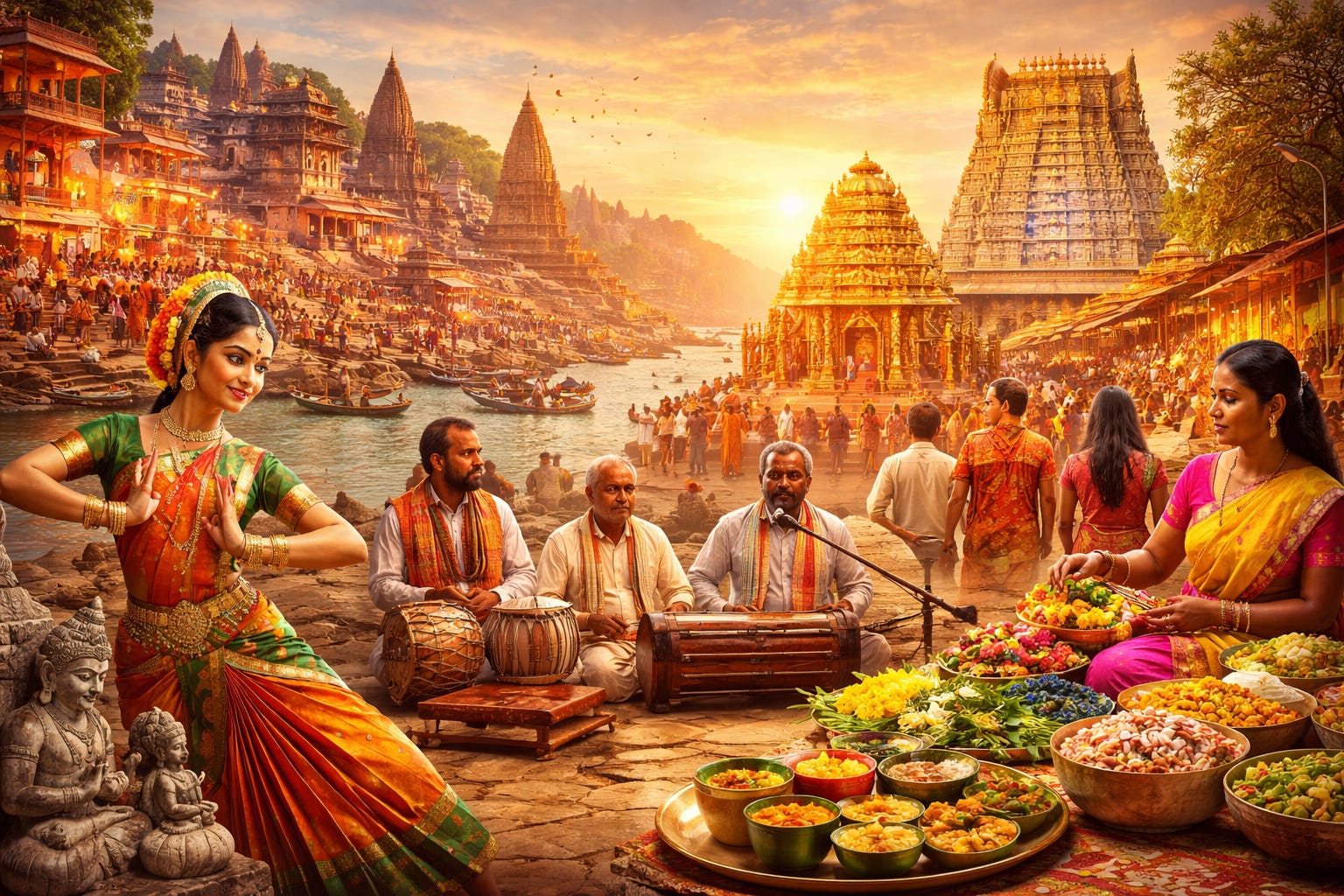
From the bustling ghats of Varanasi to the serene hills of Tirupati, pilgrims today are travelling not only to seek blessings but also to reconnect with cultural roots. This mindful form of travel, grounded in values rather than spectacle, is quietly becoming one of the strongest forces sustaining India’s artistic and cultural heritage.
A growing movement rooted in faith and culture
Spiritual tourism is among the fastest-growing yet most under-recognised segments of travel. Events like the Kumbh Mela demonstrate its immense scale and influence, drawing millions from India and across the world. Yet its true impact lies beyond numbers. These journeys act as a bridge between devotion and daily life, turning ancient practices into lived experiences rather than museum pieces.
As pilgrims visit sacred towns such as Vrindavan, Puri, Varanasi and Tirupati, they arrive with curiosity — about rituals, local customs, food traditions and art forms. This curiosity fuels a sustainable cultural exchange, ensuring that regional identities continue to thrive.
Restoring sacred spaces and traditional craftsmanship
The steady flow of devotees encourages the restoration and upkeep of temples, ghats and monastic institutions. Unlike commercial construction, spiritual spaces demand authenticity. This creates livelihoods for stone carvers, sthapatis, mural artists and woodworkers who adhere to classical shilpa shastra traditions.
Rather than modern shortcuts, these artisans preserve time-honoured techniques, ensuring that sacred architecture remains faithful to its spiritual and aesthetic roots.
Sustaining artisan communities around holy towns
Most pilgrimage centres are surrounded by small craft clusters — families producing diyas, incense, prayer beads, paintings, handloom shawls and ritual objects. Pilgrims purchasing souvenirs for home shrines or gifts provide direct support to these local economies.
This demand allows artisans to remain rooted in their hometowns instead of migrating to cities for factory work, helping preserve both skills and community structures.
Keeping devotional music and folk traditions alive
Temple courtyards and festival grounds resonate daily with aartis, bhajans, kirtans and regional folk music. These performances are not staged attractions but integral parts of worship.
Through festivals and temple rituals, vernacular music traditions are passed down, adapted and even carried across borders as devotees take these sounds back to their homes and communities worldwide.
Renewed visibility for classical dance and storytelling
Spiritual tourism also creates platforms for India’s classical and folk performance arts. Forms such as Bharatanatyam, Odissi, Koodiyattam and Yakshagana often accompany religious festivals and yatras.
For young practitioners, these spaces offer both spiritual fulfilment and professional opportunity, inspiring a new generation to pursue traditional arts as a form of devotion as well as livelihood.
Preserving sattvic food and temple kitchen traditions
Food is central to the spiritual journey. Pilgrims typically seek simple, vegetarian, sattvic meals rooted in regional recipes. Temple kitchens and community prasadam systems sustain traditional cooking methods — from millet-based dishes and seasonal vegetables to ghee-rich preparations cooked over wood fires.
These kitchens, often feeding thousands daily through collective service (seva), keep ancient culinary wisdom alive in an era dominated by fast food.
A quiet movement with lasting impact
When spiritual travel is approached with mindfulness rather than mere sightseeing, it fosters cultural confidence. Each pilgrim who chooses local crafts, listens to devotional music, attends a classical performance or eats a traditional meal becomes part of a quiet but powerful movement.
In nurturing these everyday choices, spiritual tourism does more than preserve heritage - it ensures that India’s art, music and culture remain living, evolving traditions for generations to come.