

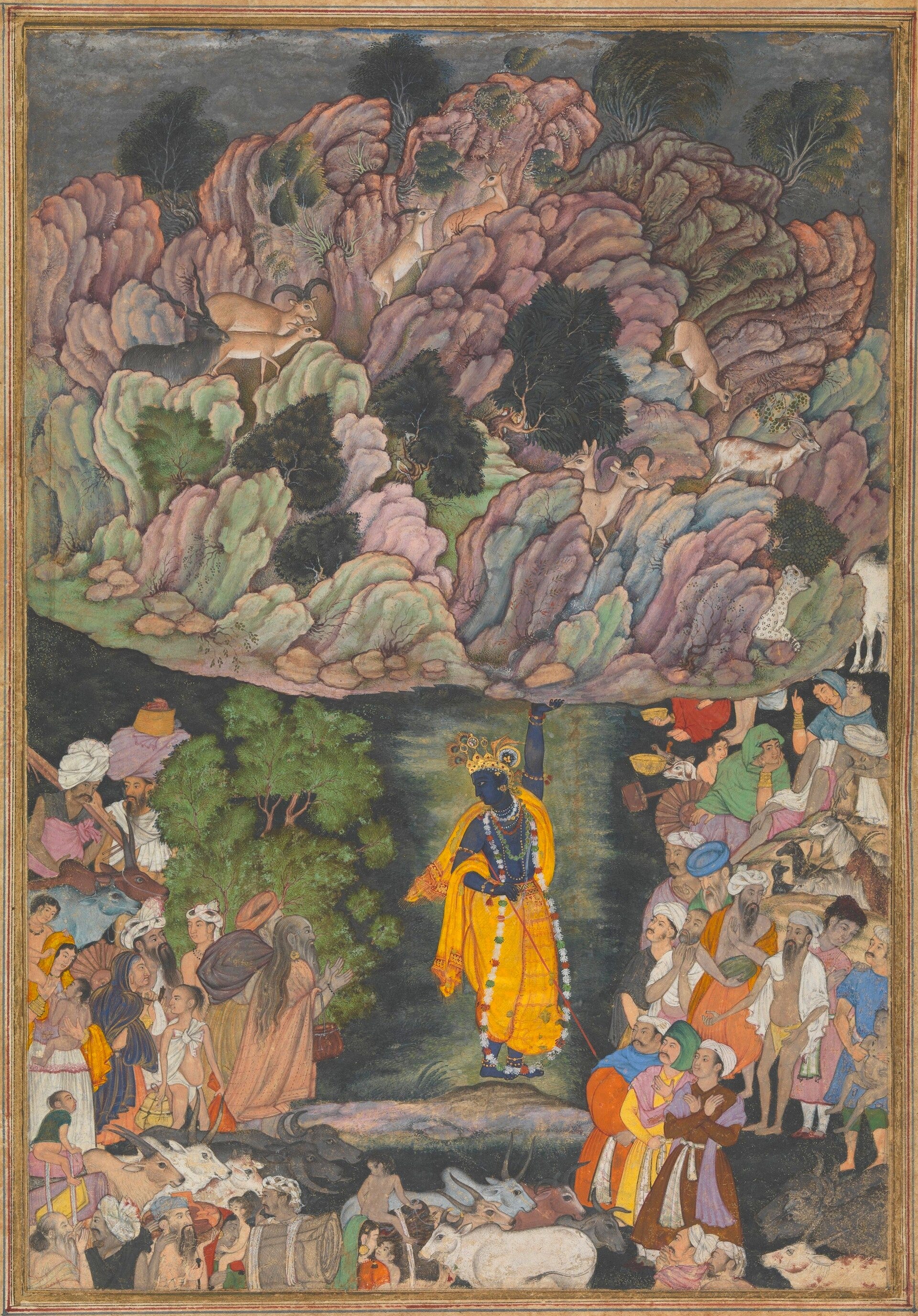
Two days after the diyas of Diwali, much of India builds a second mountain, and this one is made of food. On Govardhan Puja, Krishna temples from the lanes of Braj to the suburbs of Sydney heap rice, dal, sweets and savouries into a hill before the deity: the Annakut, the mountain of food. It remembers the day, the tradition says, when Krishna lifted a hill on the little finger of one hand and held it for seven days, sheltering every person and animal of Braj beneath it.
In 2026 the festival falls on Tuesday, November 10. This guide covers the date and the day's timings, the story in brief, how the Annakut works, the 21 kilometre parikrama around the hill itself, the great darshans from Nathdwara to New Delhi, and how to keep the day at home.

When is Govardhan Puja 2026
In 2026, Govardhan Puja falls on Tuesday, November 10, two days after Diwali night. The festival is kept on the first day, Pratipada, of the bright half of the month of Kartik. This year the Pratipada tithi begins at about 12:31 PM on November 9 and lasts until about 2:00 PM on November 10, as calculated for New Delhi. Because the tithi straddles two civil days, a few communities and temples observed the festival on November 9 this year, while most keep it on November 10. If you are visiting a temple, check which day it follows.
The morning is the main puja window. For New Delhi, the pratahkala muhurat runs from about 6:40 AM to 8:50 AM. Temple schedules vary, and the great Annakut darshans are mostly evening affairs, once the day's cooking is done and the full offering is arranged before the deity.
The same calendar day carries two more festivals. In Maharashtra and Karnataka it is Bali Pratipada, remembering the generous King Bali and Vishnu's Vamana avatar. For Gujarat it is Bestu Varas, the first day of the new year, Vikram Samvat 2083. One date, three thanksgivings.
The hill Krishna lifted
The story comes from the Bhagavata Purana. In Gokul, the cowherds prepared their annual offering to Indra, the storm god who sends the rain. The young Krishna asked a simple question: why thank the distant sky, when it is Govardhan hill before you that feeds your cattle, shades your homes and waters your fields? The village offered its gratitude to the hill instead. Indra, insulted, sent a deluge that would have drowned Braj, and Krishna lifted the entire hill on one little finger, holding it like an umbrella for seven days until the storm god's pride was spent.
The teaching the festival carries is quiet and direct: honour what actually sustains you. The land, the cattle, the food on the plate, the people nearby. To worship Govardhan is to worship nature itself, and the hill is not merely a symbol in Braj. Devotees greet it as a form of Krishna, which is why they circle it rather than climb it.

Annakut: the mountain of food
Annakut means exactly that: a mountain of food. On this day, temples cook without pause and arrange the entire offering before the deity in rising tiers: rice, dals, vegetables, sweets, savouries, milk and more. The traditional count is chhapan bhog, the fifty-six offerings. The tradition's own arithmetic is tender: Krishna, who ate eight times a day, held the hill for seven days without eating, so his people offer him fifty-six meals at once, eight for every day he went without.
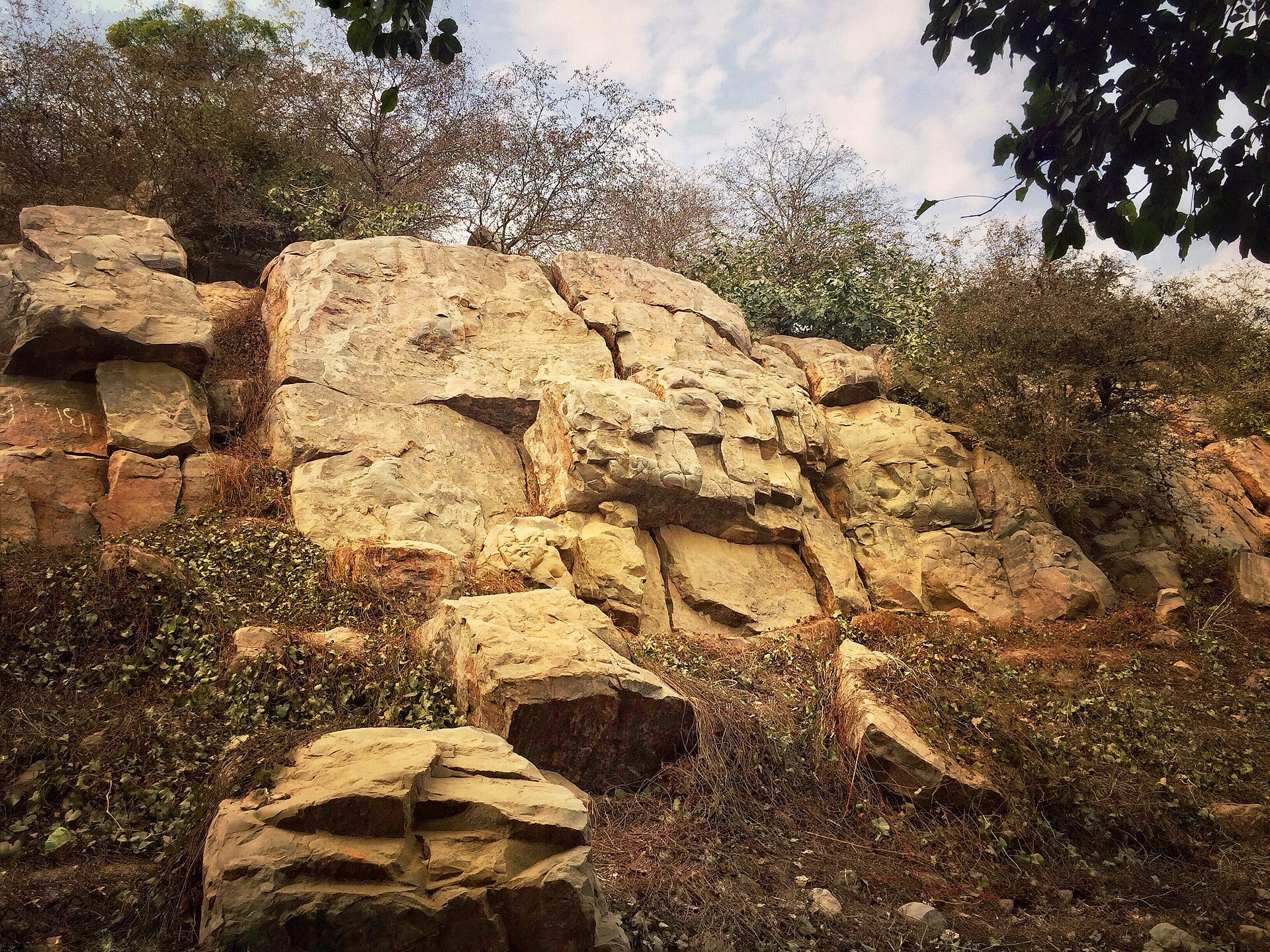
Everything offered is then shared. The Annakut is not a display to admire from a distance; by night it becomes prasad, handed to everyone who comes, rich or poor, local or stranger. At Nathdwara this year the offering included some fifty quintals of rice, and the night ended with the old Pushtimarg custom known simply as the loot, in which members of the Bhil community carry off the offering in a joyful rush, a ritual privilege centuries old. In many towns devotees hold out cloths to catch prasad showered from above.

Walking the hill: the Govardhan parikrama
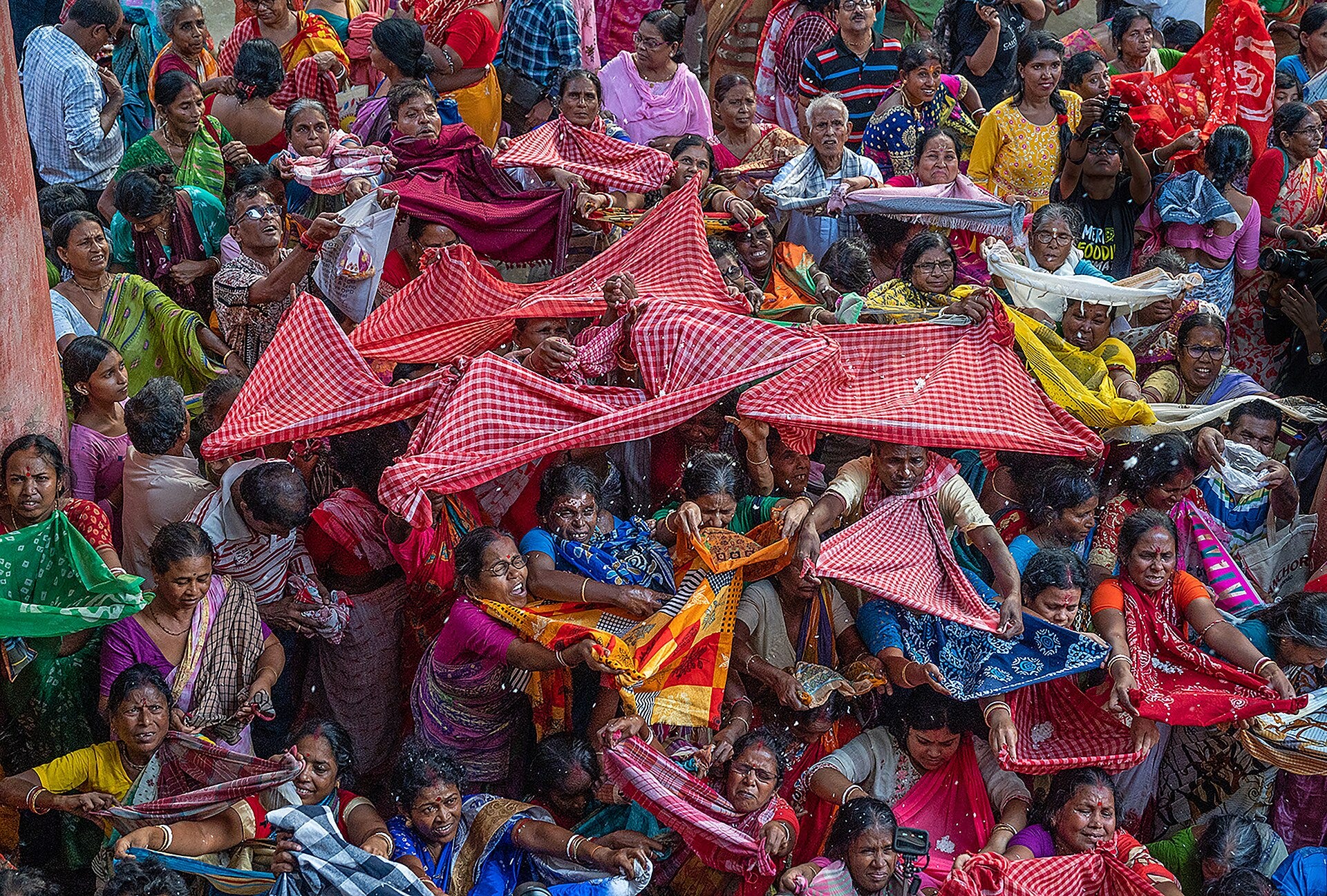
For many pilgrims, Govardhan Puja is not only seen but walked. Govardhan town lies about 25 kilometres from Mathura on the Mathura-Deeg road, and the low rocky ridge beside it is the hill of the story. The parikrama, the clockwise walk around the hill, covers 21 kilometres, traditionally counted as seven kos, and on this day the path fills with pilgrims from well before dawn.
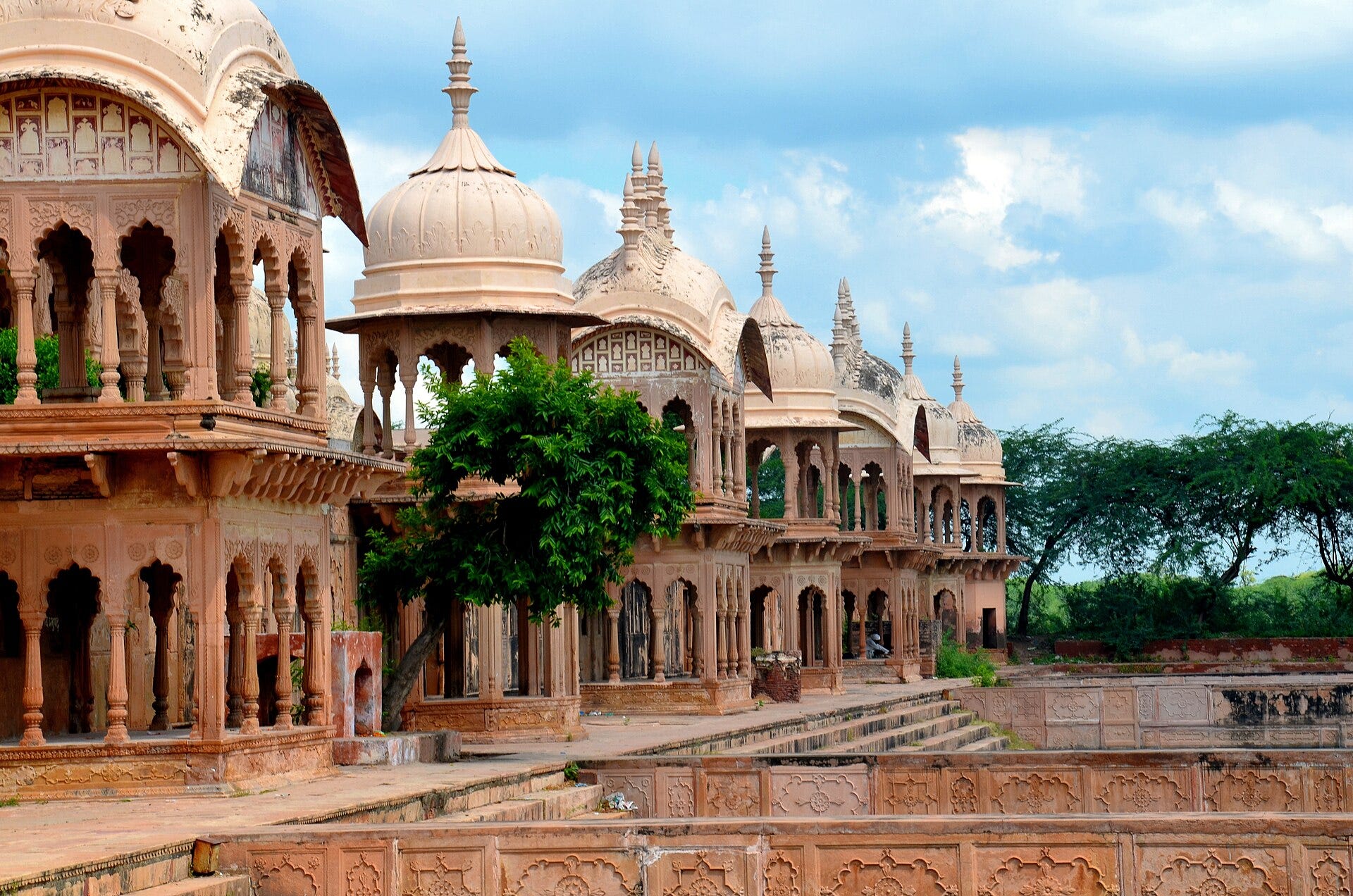
The walk begins, by custom, at Mansi Ganga, the kund in Govardhan town, after a dip or a sprinkle of its water. From there the path leads past the Danghati temple at Jatipura, where the hill is worshipped face to face, on to Poonchri Kalotha at the far tail of the ridge, then back along the other side through Kusum Sarovar, with its quiet sandstone chhatris, the sacred twin tanks of Radha Kund and Shyam Kund, and Govind Kund, before closing the circle at Mansi Ganga again.
A few practical notes. Start before sunrise in the cool; carry water; dress modestly and keep the hill on your right at all times. Many walk barefoot, and some undertake the dandavat parikrama, covering the whole distance with prostrations over days; ordinary walkers in shoes are a common sight too. The parikrama is free, open to all, and kept year-round, though Poornima, Ekadashi, Guru Poornima, Adhik Maas and Govardhan Puja itself draw the largest numbers. Those with weeks rather than days sometimes take on the full 84-kos Braj yatra, 252 kilometres through the twelve forests of Krishna's land, of which Govardhan is one stop.

Braj: Vrindavan and Mathura on the day
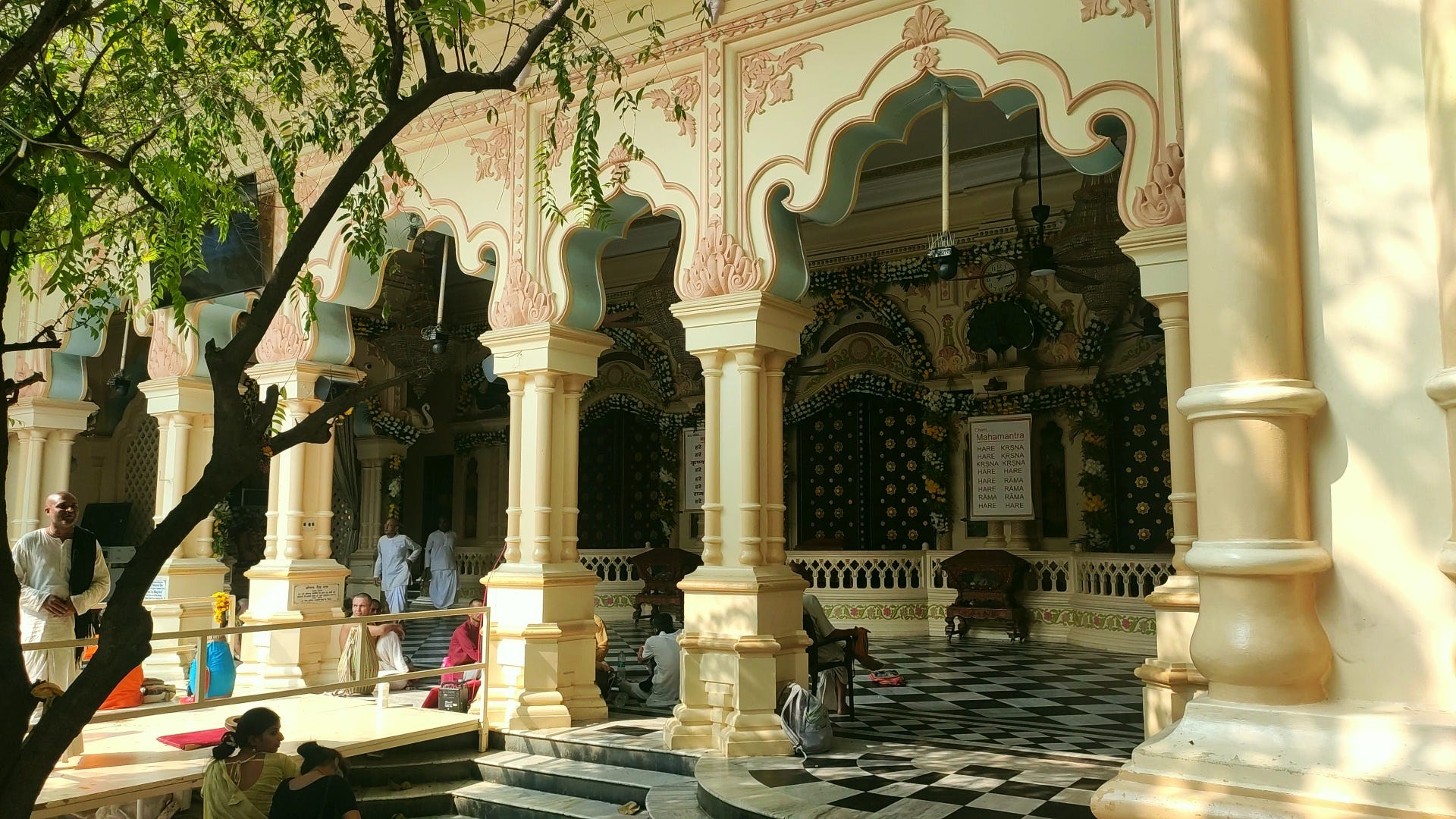
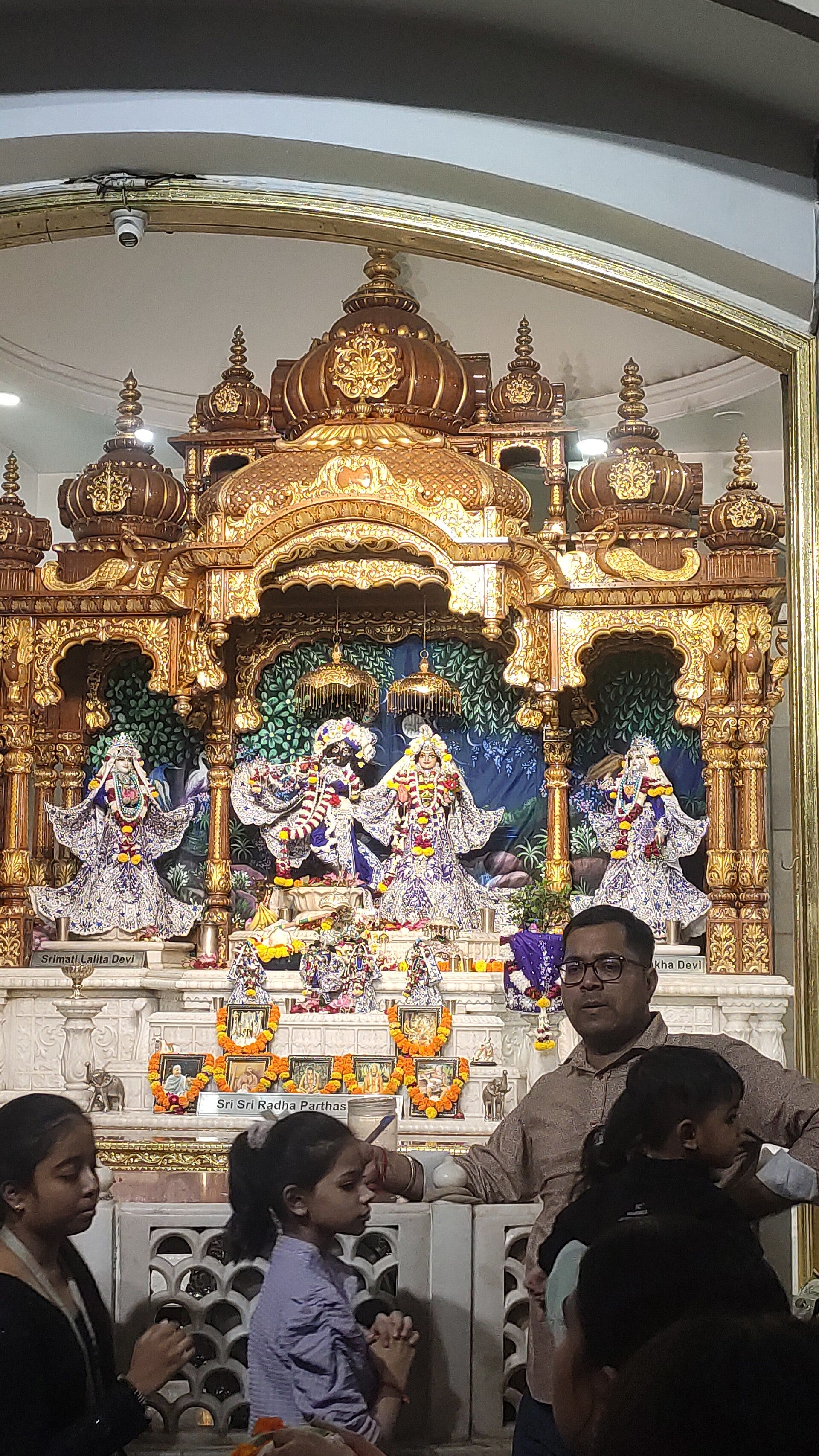
Vrindavan keeps the festival with particular feeling, because the whole town is the landscape of the story. At the Sri Krishna Balaram Mandir, better known as ISKCON Vrindavan, kirtan runs through the day and the Annakut offering takes centre stage before the deities. Temples across the town keep their own special prayers and bhog, and the lanes fill with pilgrims who have come from every corner of the country.
Mathura, the birthplace city, celebrates across the Krishna Janmasthan complex and the temples of the wider Braj region, and Govardhan hill itself lies within easy reach for those who want to add the parikrama. Devotees commonly greet the hill with darshan at the Danghati temple and offer their prayers to Giriraj, the king of mountains.

Nathdwara, Delhi and the wider world
At Nathdwara in Rajasthan, the principal seat of the Pushtimarg, the festival is perhaps the grandest of the year. The image of Shrinathji himself shows Krishna with Govardhan held aloft on his left hand, so the day belongs to this temple in a special way. This year the temple celebrated its Annakut on Monday, November 9, following its own panchang. According to the temple's announced schedule for that day, the observances opened with Mangala darshan from about 5:45 in the morning, the Govardhan Puja itself in the late afternoon between about 4:30 and 5:30, and the Annakut darshan for all devotees from 9 at night, ending with the traditional loot darshan near 10:30. Timings shift each year and with the crowds, so check the temple's announcements before you travel.
In New Delhi, ISKCON Dwarka keeps one of the capital's largest celebrations: the day begins with a Bhagavatam class at 8 in the morning and unfolds through kirtans, special pujas and a grand Annakut. Swaminarayan temples, for whom Annakut is one of the biggest days of the year, arrange their own celebrated displays. And across the ISKCON world, from Sydney to the cities of Europe and America, diaspora devotees keep the same festival with kirtan, Govardhan worship and a shared vegetarian feast, thousands of miles from Braj and very close to its heart.

Keeping the day at home
At home the day is kept simply. Families make a small mound of rice or sweets to stand for Govardhan, decorate it with flowers, light a diya and offer the evening puja, then share the food as prasad. Many homes and gaushalas also worship cows on this day, bathing and decorating them and offering them special feed, in memory of the cattle Krishna sheltered. Some families read or hear the Govardhan katha from the Bhagavata Purana. These customs are commonly kept, with variations from family to family and region to region.
Questions about Govardhan Puja
Is Govardhan Puja on November 9 or 10 in 2026? Both dates appear this year, and which one applies depends on tradition, not preference. The Pratipada tithi runs from midday on November 9 to mid-afternoon on November 10. Most panchangs and North Indian temples keep the festival on Tuesday, November 10. Pushtimarg temples such as Nathdwara, which calculate ritual dates by their own panchang, celebrated on Monday, November 9. Follow the day your family tradition or your temple keeps.
What is chhapan bhog? It is the set of fifty-six food offerings prepared for Krishna on this day. The tradition explains the number through the story: Krishna ate eight times a day, and while he held the hill for seven days he took nothing, so devotees offer him the fifty-six meals together.
Can anyone walk the Govardhan parikrama? Yes. The 21 kilometre path is open to all and needs no ticket or registration. Start early, carry water, and keep the hill on your right. The hill itself is worshipped, so the tradition circles it rather than climbing it.
What is the loot at Nathdwara? It is an old Pushtimarg custom in which members of the Bhil community carry off the Annakut offering after the night's darshan, a ritual right passed down for centuries, received with devotion and joy.
Is Govardhan Puja the same as Bali Pratipada and the Gujarati New Year? They share one calendar day but are three observances: Govardhan Puja honours Krishna and the hill, Bali Pratipada honours King Bali, and Bestu Varas opens the new year for Gujarat. Many families keep more than one of them on the same morning.