

On Tuesday, 24 November 2026, gurdwaras across India and the world will glow with light for Guru Nanak Jayanti, the birth anniversary of Guru Nanak Dev Ji, the founder of the Sikh faith. Known also as Gurpurab or Guru Nanak's Prakash Utsav, the festival of the "festival of light" of the first Guru is one of the most sacred days in the Sikh calendar.
Who was Guru Nanak?
Guru Nanak was born in 1469 at Talwandi, now Nankana Sahib in Pakistan. From childhood he questioned empty ritual and social division. His life was a long journey: he travelled across India, to Tibet, Sri Lanka, Mecca and Baghdad, speaking with saints, scholars and ordinary people, always returning to the same luminous truths. Ik Onkar: there is one God. No one is Hindu or Muslim; we are all human. Honest work, sharing what you have, and remembering the Divine are the substance of a spiritual life.
His hymns, collected in the Guru Granth Sahib, remain the living centre of Sikh worship. When he named Guru Angad as his successor, he began the line of ten Gurus who shaped the Sikh path.
How Gurpurab is celebrated
Akhand Path. Two days before the Jayanti, gurdwaras begin a continuous, unbroken reading of the Guru Granth Sahib, 1,430 pages read in relay for about 48 hours.
Nagar Kirtan. On the day before, processions move through the streets led by the Panj Pyare, the five beloved ones, with the Guru Granth Sahib carried in a palanquin, as devotees sing shabad kirtan.
Prabhat Pheri. Early-morning processions of hymn-singing devotees wind through neighbourhoods before dawn on the day itself.
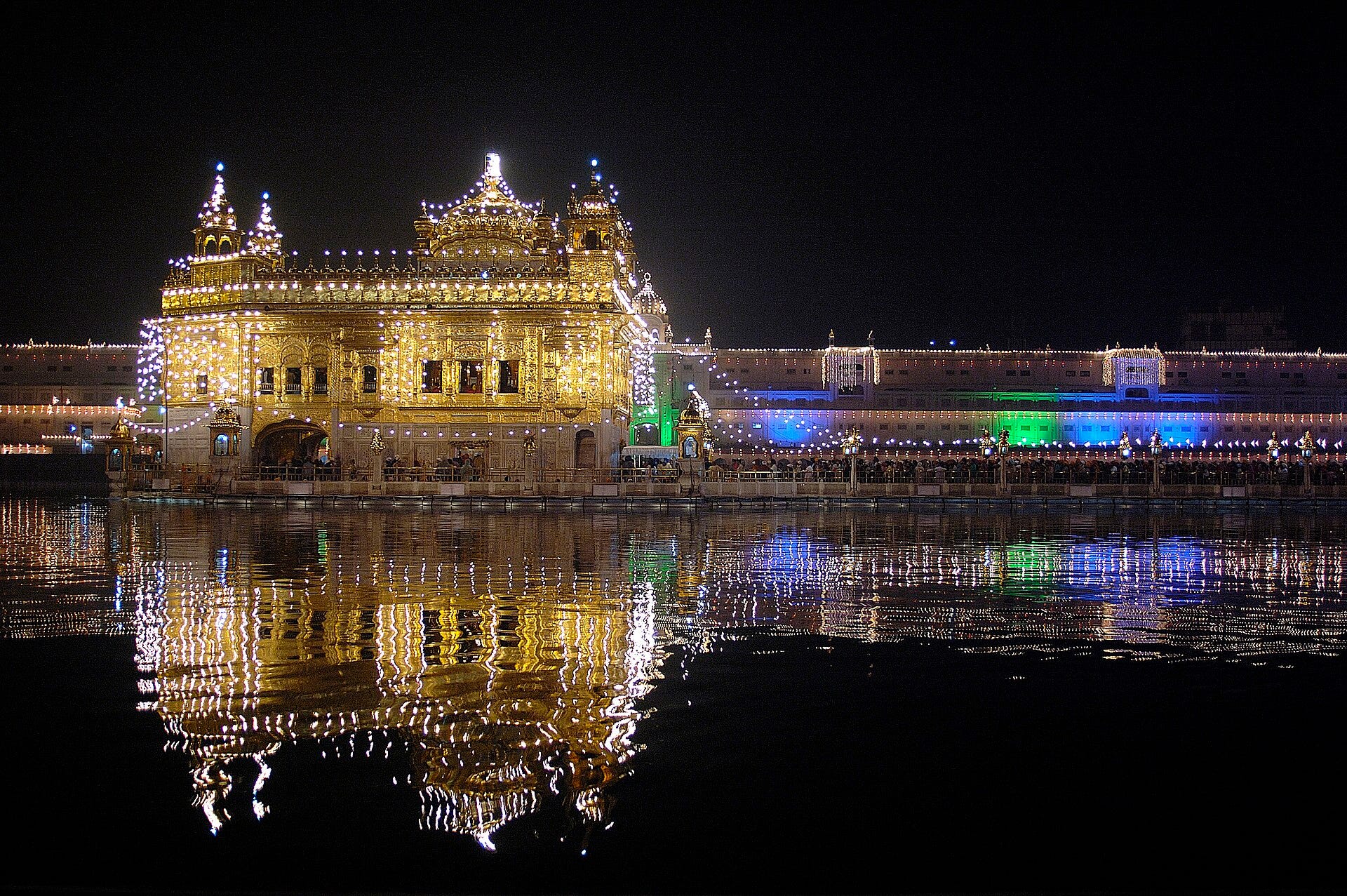
The Golden Temple lit up on Guru Nanak Jayanti. Photo: Giridhar Appaji Nag Y, CC BY 2.0

Langar. The community kitchen at the heart of every gurdwara runs all day, serving free food to everyone who comes, regardless of faith, caste or means. Langar is Guru Nanak's teaching made edible: all sit together, all eat the same food, all are equal.
Kirtan and Katha. Hymns are sung and stories of the Guru's life told through the day and often late into the night, culminating around 1:20 AM, the traditional hour of his birth.
The Golden Temple on Gurpurab
Nowhere is the day more breathtaking than at Sri Harmandir Sahib in Amritsar, the Golden Temple, which is lit with lamps and fireworks and reflected in the sarovar's still water. Hundreds of thousands gather there each year. Sultanpur Lodhi in Punjab, where Guru Nanak lived and received enlightenment by the Kali Bein river, hosts celebrations of equal devotion.
Around the world
Gurpurab is a global Sikh day. Nankana Sahib in Pakistan, the Guru's birthplace, welcomes pilgrims from every continent, and gurdwaras in London, Toronto, Vancouver and Singapore hold some of their largest nagar kirtans of the year. In India the day is a public holiday, and in many cities the nagar kirtan passes through streets lined with stalls offering free chai and langar to anyone, Sikh or not. That open door is the point: Guru Nanak's table never had a guest list.
What Guru Nanak teaches us now
"Vand Chakko," share with others. "Kirat Karo," work honestly. "Naam Japo," remember the Divine. Three short instructions, given five centuries ago, that read today less like rules and more like a complete answer to a distracted age. Guru Nanak also insisted that spirituality has no address in a monastery: live in the world, raise a family, earn your bread, and let your work itself be worship.
At DharmikVibes, our vision is to enable Divine Experiences for every seeker, on every yatra. On this Gurpurab, may Guru Nanak's light find you wherever you are.
Waheguru Ji Ka Khalsa, Waheguru Ji Ki Fateh.
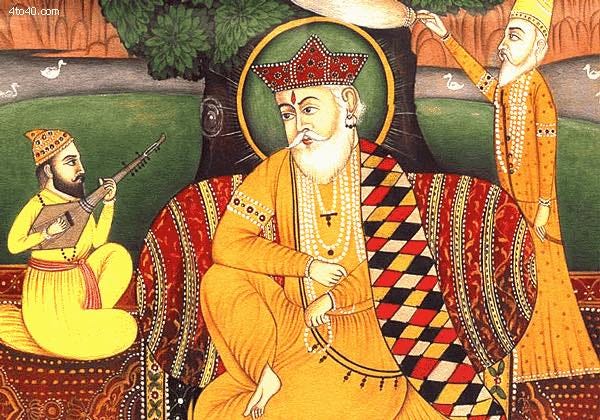
Guru Nanak with Bhai Mardana and Bhai Bala. Janamsakhi painting, public domain
