

On Tuesday, 24 November 2026, Sikhs across the world observe the Shaheedi Diwas of Guru Tegh Bahadur, the ninth Guru. On this day in 1675, in the heart of Delhi, the Guru was executed on the orders of Aurangzeb. He was not killed for his own faith. He was killed for defending the right of others to keep theirs.
It is one of the most unusual sacrifices in the history of religion anywhere: a spiritual master who laid down his life not for his own community's survival, but for the freedom of a community not his own.

The Kashmiri Pandits at Anandpur
In 1675, a delegation of Kashmiri Pandits, led by Pandit Kirpa Ram, arrived at Anandpur Sahib. They came with a terrible account: under Aurangzeb's rule they faced forced conversion, the destruction of their temples, and the loss of the sacred thread that marked their way of life. They had come to ask the Guru what a people should do when the state demands they surrender their faith.
The tradition records that the Guru's young son, Gobind Rai, not yet ten years old, asked who was more worthy to answer such a demand than his father. Guru Tegh Bahadur told the Pandits to return and deliver a message: if the emperor could convert Tegh Bahadur, the Pandits would follow; if not, they should be left alone.
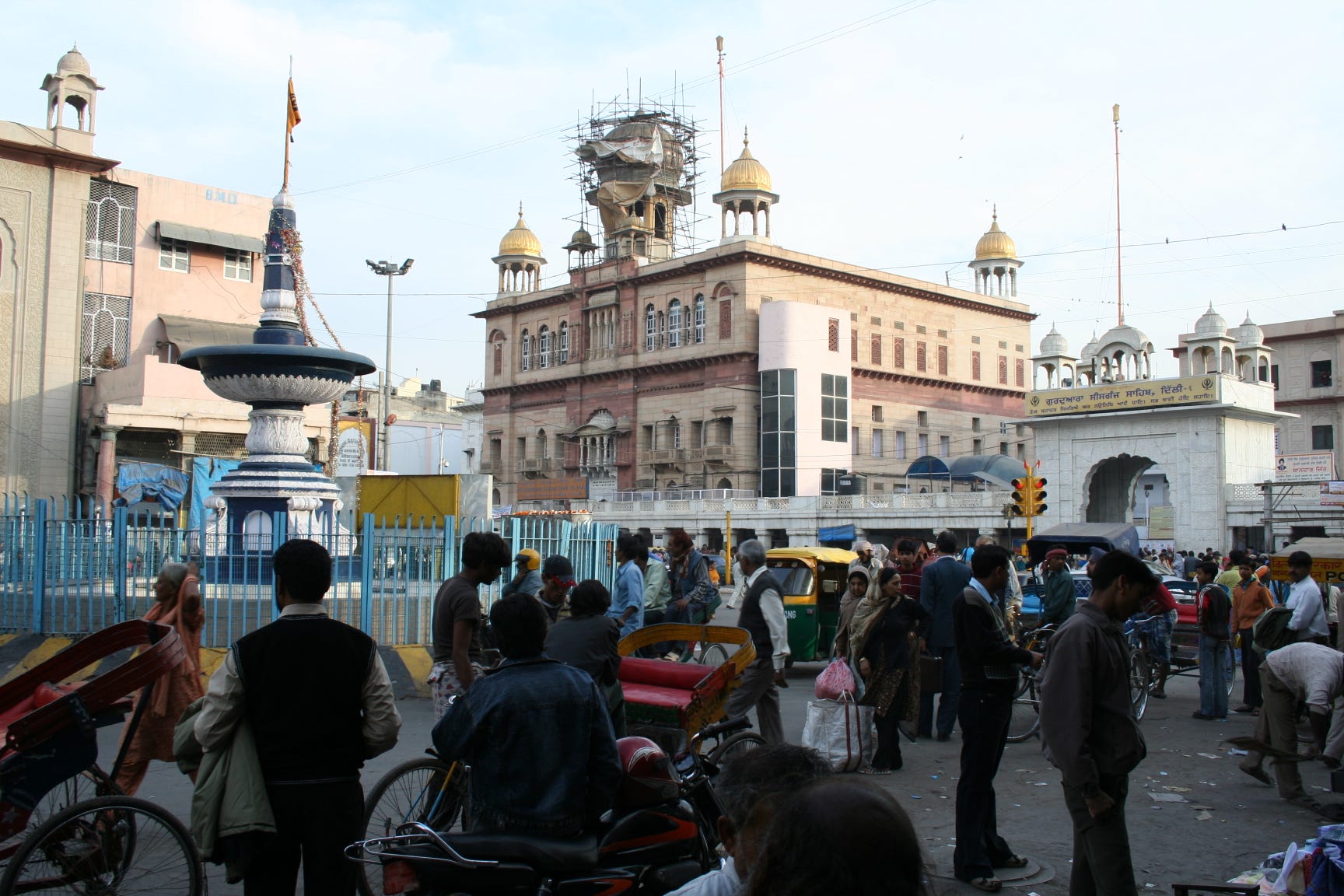
Chandi Chowk
The Guru was arrested, brought to Delhi, and pressed to convert or to prove his holiness through miracles. He refused both. Three of his companions, Bhai Mati Das, Bhai Sati Das and Bhai Dayala, were executed before his eyes with a cruelty meant to break him. It did not. On 24 November 1675, Guru Tegh Bahadur was beheaded at Chandi Chowk, in full public view, in the city that now holds Gurdwara Sis Ganj Sahib on that very spot.
His body was taken by Bhai Jaita through the streets to Anandpur. Another Sikh, Bhai Lakhi Shah Vanjara, burned down his own house to cremate the Guru's remains without drawing the authorities' attention. Gurdwara Rakab Ganj Sahib marks that place today.
Hind Di Chadar
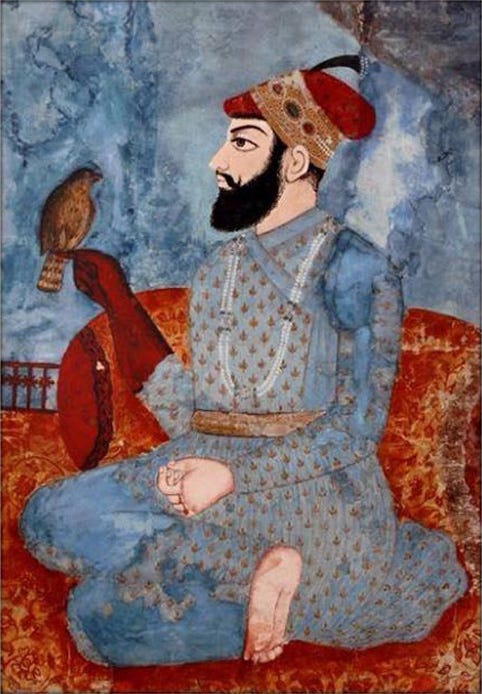

The Guru Granth Sahib carries the title by which he is remembered: Hind Di Chadar, the Shield of India. His young son became Guru Gobind Singh, the tenth Guru, and carried forward the understanding that spiritual life may require standing between power and the powerless.
The teaching is not confined to Sikh history. Guru Tegh Bahadur's stand says that faith is not truly faith if it must be enforced, and that defending another person's freedom to worship is itself a sacred act. In a world where religious identity is again asked to divide more often than to unite, the ninth Guru's example reads less like history and more like instruction.
How the day is observed
Gurdwaras hold special kirtan and katha recounting the Guru's life and sacrifice. At Gurdwara Sis Ganj Sahib and Gurdwara Rakab Ganj Sahib in Delhi, the gatherings are especially large. Many Sikhs mark the day with quiet reflection rather than celebration; some state governments in India have at times declared it a restricted holiday. In homes, the reading of the Guru's bani, especially the contemplative Salok Mahala 9, his fifty-seven verses on detachment and the reality of death, is the day's most personal observance.
What the day asks of us
Shaheedi Diwas is not a call to mourn alone. It is a call to examine what we would stand for when standing costs something. The Guru did not give his life in a battle he could have won. He gave it in a courtroom he could not, because the principle was worth more than the verdict.
At DharmikVibes, our vision is to enable Divine Experiences for every seeker, on every yatra. On this Shaheedi Diwas, may the ninth Guru's courage remind us that the highest form of devotion is the protection of another's right to their own.