
Haridwar Ardh Kumbh 2027: Dates, Shahi Snan, History, Travel Guide, and Special Recommendations

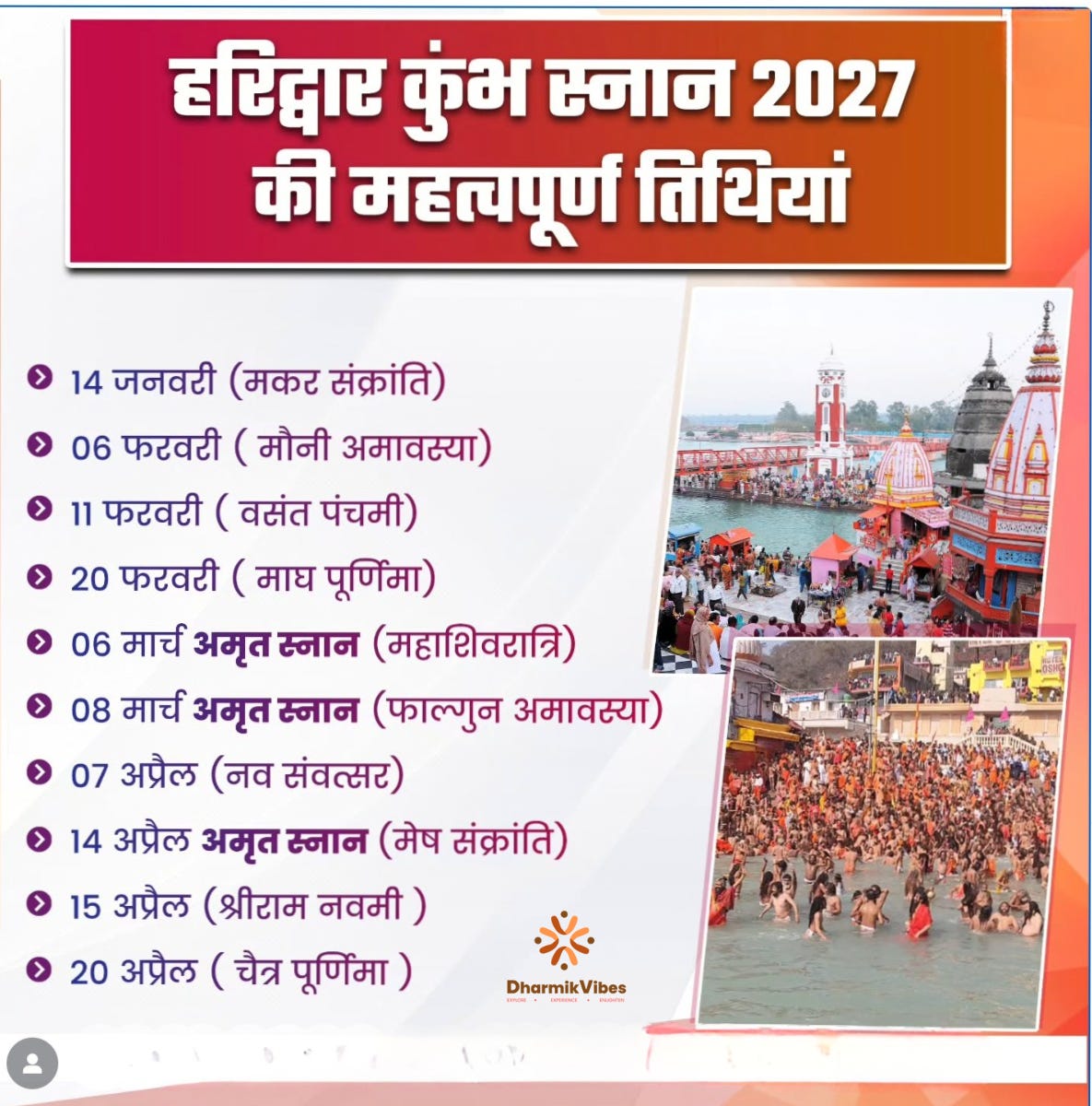
The Ardh Kumbh Mela, one of India’s most sacred and historic religious gatherings, will be held in Haridwar from 14 January to 20 April 2027. This spiritual event attracts millions of devotees, saints, scholars, photographers, and international visitors who come to experience the cultural and divine energy associated with the holy river Ganga. The 2027 edition is significant not only because of its scale but also because, for the first time, it will feature four Shahi Amrit Snan events.
This article presents a detailed overview of the dates, rituals, history, travel planning, and special arrangements for NRIs, senior citizens, women travelers, and first-time visitors.
1. Introduction to Haridwar Ardh Kumbh 2027
The Ardh Kumbh Mela, held every six years, is an integral part of India’s religious landscape. Haridwar, one of the four Kumbh sites, transforms during this period into a vast spiritual city where temporary settlements, akharas, ghats, cultural spaces, and service centers come together to support millions of pilgrims.
The 2027 Ardh Kumbh is expected to be one of the largest events in recent decades, with upgraded infrastructure, advanced crowd-management systems, and extensive administrative coordination. All 13 Akharas have already agreed on the final schedule of the bathing dates and arrangements.
2. Important Bathing Dates of Ardh Kumbh 2027
The Ardh Kumbh includes multiple auspicious bathing days, considered spiritually powerful for cleansing, renewal, and devotion. The important bathing dates for 2027 are:
14 January 2027 – Makar Sankranti
06 February 2027 – Mauni Amavasya
11 February 2027 – Vasant Panchami
20 February 2027 – Magh Purnima
06 March 2027 – Amrit Snan (Mahashivratri)
08 March 2027 – Amrit Snan (Phalguna Amavasya)
07 April 2027 – Nav Samvatsar
14 April 2027 – Amrit Snan (Mesh Sankranti)
15 April 2027 – Shri Ram Navami
20 April 2027 – Chaitra Purnima
Each date is associated with ancient astrological and spiritual significance, which is why large crowds gather at Har-ki-Pauri and various ghats across the city.
3. Shahi Snan: The Royal Bath
The Shahi Snan is considered the most important ritual during the Kumbh. It is a ceremonious holy bath performed by saints and sadhus of the various Akharas. The royal processions that precede each bath are among the most visually remarkable cultural traditions in the world.
For the 2027 Ardh Kumbh, four Shahi Amrit Snan events will be organized. These include elaborate processions featuring Naga Sadhus, revered Mahamandaleshwars, spiritual leaders, decorated chariots, traditional music, and elaborate rituals. The Shahi Snan is not only a central religious act but also a symbol of unity among different spiritual traditions of Hinduism.
The exact dates of the Shahi Snan will correspond to the Amrit Snan days mentioned above, and an official announcement will be made closer to the event.
4. Historical Background of the Kumbh Mela
The Kumbh tradition originates from the ancient tale of the Samudra Manthan, the churning of the cosmic ocean by gods (Devas) and demons (Asuras). During the struggle for the pot of nectar, or “Amrit,” four drops are said to have fallen on Earth at Haridwar, Ujjain, Nashik, and Prayagraj. These four places later became the sites for the Kumbh and Ardh Kumbh Melas.
The belief is that bathing in the holy river during the auspicious Kumbh dates washes away sins, purifies the mind and body, and leads towards spiritual liberation (moksha). Over centuries, the Kumbh has evolved into the world’s largest peaceful human gathering, combining spirituality, culture, commerce, and public administration at an extraordinary scale.
5. Travel Guide to Haridwar for Ardh Kumbh 2027
How to Reach Haridwar
Haridwar is well connected by road, rail, and air.
By Air:
The nearest airport is Dehradun’s Jolly Grant Airport, located about 40 km from Haridwar.
International travelers generally arrive at Delhi’s Indira Gandhi International Airport, which is approximately 220 km away.By Rail:
Haridwar Junction is among northern India’s busiest railway stations, with direct trains from major cities such as Delhi, Mumbai, Kolkata, and Chennai.By Road:
The city is accessible via National Highway NH-58, connecting Delhi to Haridwar and Rishikesh.
6. Accommodation Options
Accommodation during the Kumbh period ranges from simple dharamshalas to luxury hotels and government-managed tent cities. Since the influx of visitors is extremely high, booking in advance is strongly recommended.
Visitors can choose from:
Hotels of varying categories
Ashrams and dharamshalas
GMVN guesthouses
Private cottages and camps
Government-built tent cities near the ghats
During peak snan days, availability can be extremely limited, so planning early is advisable.
7. Suggested Five-Day Itinerary for Kumbh Visitors
Day 1: Arrival in Haridwar and evening Ganga Aarti at Har-ki-Pauri.
Day 2: Holy bath on an auspicious snan day and visits to Mansa Devi and Chandi Devi temples.
Day 3: Visit to Akharas, participation in spiritual discourses, and observation of traditional rituals.
Day 4: Day trip to Rishikesh, including visits to the Lakshman Jhula, Parmarth Niketan, and Beatles Ashram.
Day 5: Morning meditation, shopping for spiritual items and souvenirs, and departure.
8. Guidance for NRIs and International Visitors
International participants often find the Kumbh both overwhelming and transformative. The following recommendations help ensure a smooth experience:
Reserve accommodations well in advance, ideally several months before travel.
Carry an international SIM card or eSIM for uninterrupted communication.
Use official Kumbh applications and websites for real-time updates on crowd density, routes, and announcements.
Avoid peak snan days if traveling with children, elderly parents, or individuals with mobility needs.
Hire registered guides or translators when visiting Akharas or attending rituals.
Carry essential medications, identity documents, and photocopies of travel papers.
For NRIs, special help desks, multilingual support centers, and dedicated transportation facilities are usually made available.
9. Recommendations for Senior Citizens
Senior citizens require thoughtful planning and additional support during the Kumbh. The following suggestions may be helpful:
Choose accommodations close to major ghats or within government-regulated tent cities.
Use shuttle services, battery-operated vehicles, and e-rickshaws within the mela area.
Prefer morning hours for bathing, when crowds are thinner and the environment is calmer.
Carry necessary medical supplies and consult a doctor before traveling.
Utilize government medical stations, rest areas, and assistance centers, which are set up throughout the Kumbh grounds.
10. Safety and Recommendations for Women Travelers
Haridwar’s Kumbh Mela has a well-organized safety framework, but women travelers should take additional precautions for convenience and comfort.
Use dedicated women’s changing areas at the bathing ghats.
Stay in well-secured accommodations with reliable reviews.
Avoid isolated areas after dark and travel in groups on peak days.
Keep emergency numbers and local contacts easily accessible.
Use digital transactions to minimize cash handling.
The administration sets up women-focused help centers, police booths, and support teams, ensuring safety and assistance.
11. Cultural and Spiritual Experiences at the Kumbh
The Kumbh Mela offers a wide range of experiences, including:
The majestic Shahi Snan processions of Akharas.
Spiritual discourses and dialogues with saints and scholars.
Traditional music, devotional performances, and cultural events.
Yoga and meditation camps led by renowned teachers.
Rituals, havans, and religious ceremonies at various ghats.
A vibrant marketplace offering spiritual literature, handicrafts, and cultural artifacts.
For many visitors, the Kumbh is not only a pilgrimage but a deep immersion into India’s ancient spiritual and cultural heritage.
12. Administrative Arrangements and Safety Measures
The Government of Uttarakhand and local authorities are expected to implement significant upgrades in 2027, including:
Advanced crowd-control technology and artificial intelligence systems
Drone surveillance for monitoring
Medical emergency centers across all sectors
Lost-and-found support centers
Expanded roads, footbridges, and barricading for safe movement
Multilingual signboards, information kiosks, and trained volunteers
These arrangements ensure a smooth and safe experience for the millions who visit during the festival.
The Haridwar Ardh Kumbh 2027 is more than a religious gathering; it is a living embodiment of India’s spiritual traditions, cultural continuity, and social harmony. With its sacred bathing rituals, Shahi Snan processions, vast spiritual camps, and vibrant cultural activities, the Ardh Kumbh offers an unforgettable journey into the heart of ancient Indian wisdom.
For devotees, tourists, scholars, NRIs, and international visitors, the 2027 Kumbh presents a rare opportunity to witness one of humanity’s greatest collective expressions of faith and tradition.