

Holi, often called the Festival of Colors, is one of India’s most vibrant and spiritually meaningful festivals. Celebrated in the month of Phalguna (February–March), Holi marks the arrival of spring, the victory of good over evil, and the renewal of relationships, energy, and devotion.
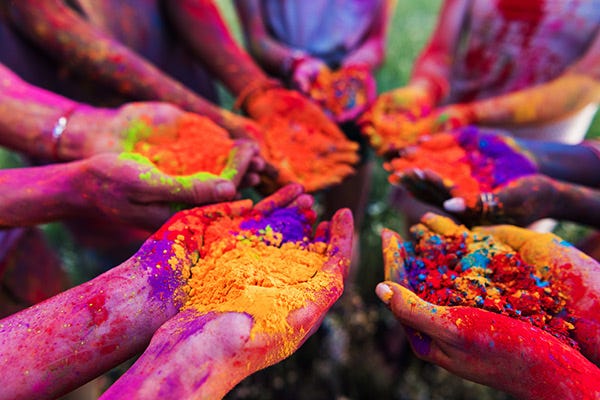
Beyond the playful splashes of color, Holi carries deep spiritual significance rooted in ancient traditions and sacred stories.
The Spiritual Significance of Holi
1. Victory of Good Over Evil
Holi commemorates the story of Prahlad and Holika. Prahlad, a devoted follower of Lord Vishnu, survived the fire set by his father’s sister, Holika, who had a boon making her immune to flames. However, due to her evil intent, Holika was burned while Prahlad remained unharmed.
This symbolizes that faith, righteousness, and devotion always triumph over arrogance and negativity.
2. Celebration of Divine Love
In Mathura and Vrindavan, Holi is associated with the playful love of Lord Krishna and Radha. Krishna, known for his mischievous nature, would play Holi with colors and flowers with Radha and the Gopis.
This represents divine joy, love, and unity beyond social boundaries.
3. Welcoming Spring and Renewal
Holi marks the end of winter and the beginning of spring- a time of renewal, harvest, and abundance. Spiritually, it encourages letting go of past grudges, cleansing emotional burdens, and starting fresh.
How Holi is Celebrated
1. Holika Dahan (The Bonfire Night)
On the evening before Holi, people gather around a bonfire symbolizing the burning away of evil, ego, and negativity. Offerings like coconut, grains, and prayers are made seeking protection and prosperity.
2. Rangwali Holi (Playing with Colors)
The next day is filled with colors, music, dancing, and festive sweets like gujiya and thandai. Friends and families smear gulal (colored powder) on each other and exchange blessings.
Natural and Traditional Ways to Celebrate Holi
In modern times, chemical colors have overshadowed traditional practices. However, celebrating Holi the natural way preserves both health and spirituality.
Use Herbal & Natural Colors
Traditionally, colors were made from flowers and herbs:
Red/Pink – Dried hibiscus or rose petals
Yellow – Turmeric mixed with gram flour
Green – Mehendi (henna) powder or spinach leaves
Orange – Tesu (Palash) flowers soaked in water
Blue – Butterfly pea flowers
These are skin-friendly and environmentally safe.
Celebrate with Flowers (Phoolon Ki Holi)
Instead of water balloons and harsh colors, play Holi with flower petals, just like in Vrindavan temples.
Eco-Friendly Bonfire
Use minimal wood and natural materials for Holika Dahan to avoid environmental harm.
Start the Day with Prayer
Before celebrations, visit a temple, offer prayers, and seek blessings. Holi is as much spiritual as it is social.
Temples to Visit During Holi
If you want to experience Holi in its pure devotional form, these temples are famous:
1. Banke Bihari Temple, Vrindavan
The most iconic Holi celebration happens here. The temple hosts Phoolon Ki Holi and color celebrations in a deeply spiritual atmosphere.
2. Shri Krishna Janmabhoomi, Mathura
Experience traditional Braj Holi filled with bhajans, kirtans, and devotional fervor.
3. Dwarkadhish Temple, Mathura
Known for vibrant celebrations with devotional songs and traditional rituals.
4. Barsana (Radha Rani Temple)
Famous for Lathmar Holi, where women playfully hit men with sticks in a symbolic and traditional celebration.
5. ISKCON Temples (Worldwide)
ISKCON temples celebrate Holi with kirtans, devotional singing, and spiritual gatherings, focusing on Krishna bhakti.
Holi Foods and Festive Delights
No Holi celebration is complete without traditional foods:
Gujiya
Malpua
Puran Poli
Dahi Bhalla
Thandai (prepared traditionally with saffron, almonds, and spices)
Preparing food at home using natural ingredients keeps the celebration healthy and meaningful.
The Deeper Message of Holi
Holi teaches us:
Burn negativity like Holika.
Embrace love like Krishna and Radha.
Forgive and rebuild relationships.
Celebrate diversity and unity.
Welcome new beginnings with joy.
It is not just a festival of colors - it is a festival of faith, forgiveness, harmony, and spiritual awakening.
Holi is a beautiful blend of devotion, culture, and celebration. When celebrated in a natural and mindful way, it becomes more than just a colorful festival - it becomes a sacred opportunity to purify the heart and reconnect with loved ones and the Divine.
This Holi, choose herbal colors, visit a temple, sing bhajans, forgive someone, and celebrate responsibly.
May your life be filled with the vibrant colors of happiness, peace, and prosperity. Happy Holi!