

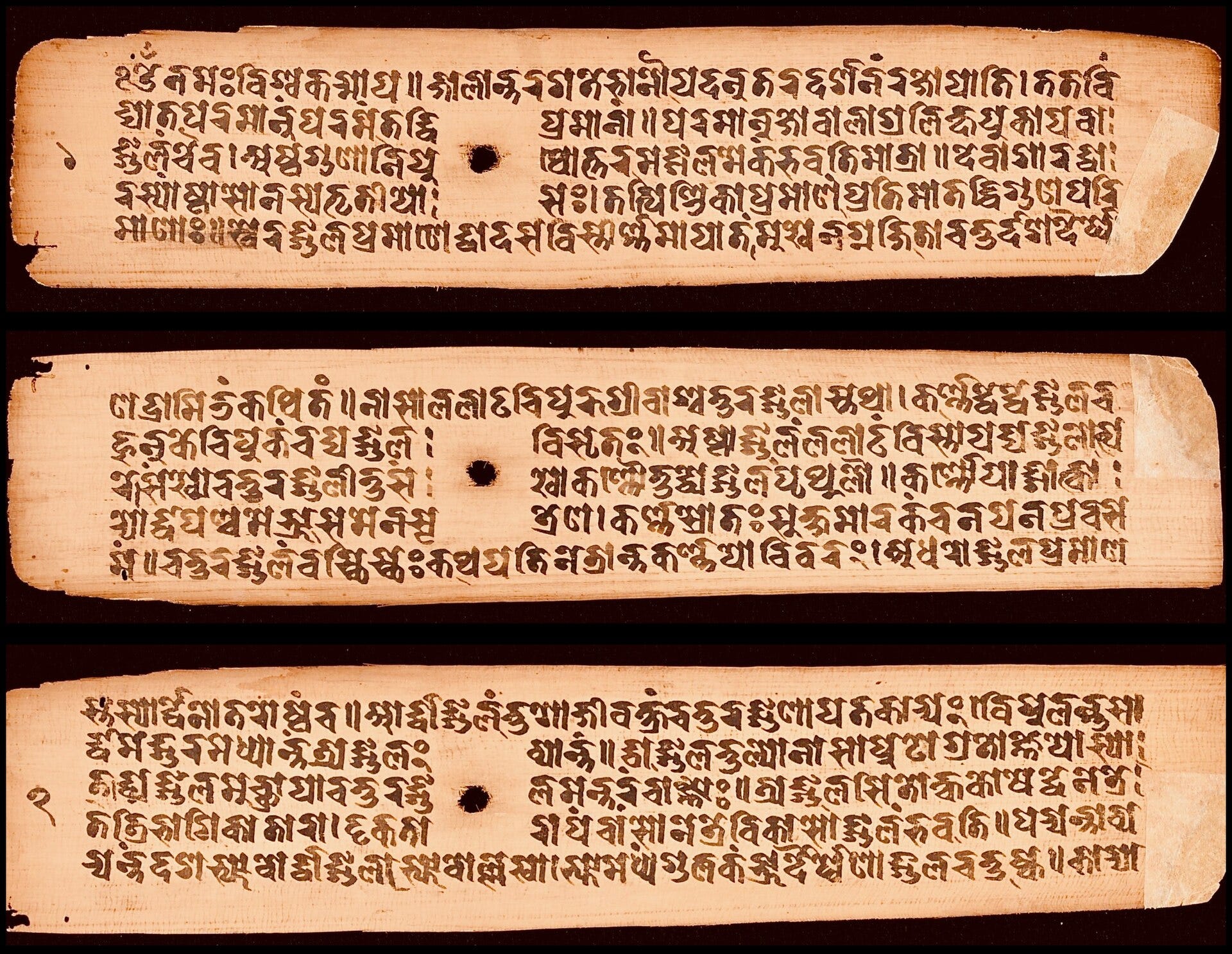
Photo: Ms Sarah Welch, CC BY-SA 4.0, via Wikimedia Commons
In many homes, the day still begins with a glance at one small grid of information before a yatra begins, a puja is scheduled, or an important task is timed. That grid is the panchang, the Hindu almanac, and once you know its five parts, it stops looking like code and starts reading like a daily companion.
The word itself tells you the structure: pancha, five, and anga, limbs. The five limbs of the panchang are tithi, vara, nakshatra, yoga and karana. Here is what each one actually tells you.
1. Tithi: the lunar day
A tithi is a lunar day, measured by the angle between the sun and the moon. Each tithi spans 12 degrees of separation, and 30 tithis make a lunar month: 15 in the waxing half (shukla paksha) and 15 in the waning half (krishna paksha). This is why festival dates move on the Gregorian calendar: Diwali falls on the amavasya (new moon) tithi of the month, Ekadashi on the eleventh tithi, Purnima on the full moon.
The practical detail that confuses everyone: a tithi does not start at midnight. It begins whenever the sun-moon angle crosses the threshold, which can be any hour of the day. That is why two calendars sometimes show a festival on different dates: the rule for most festivals is which tithi prevails at a specific time (often sunrise) at your location. When a panchang says "Ekadashi: 2:14 PM to 11:40 AM next day," it means the tithi begins and ends mid-day, and the vrat is observed on the day tradition assigns to it.
2. Vara: the weekday
Vara is simply the day of the week, but in the panchang each weekday carries a planetary lord: Sunday for Surya, Monday for Chandra, Tuesday for Mangala, and so on through the seven grahas. This is why certain days are traditionally linked to certain deities and practices: Monday to Shiva, Tuesday to Hanuman, Thursday to Guru or Vishnu. For observances like the Monday fast or the Thursday vrat, the vara is the limb you are following.
3. Nakshatra: the moon's address among the stars
The moon's path across the sky is divided into 27 nakshatras, from Ashwini to Revati. The panchang lists which nakshatra the moon occupies today. Two uses matter most. First, your janma nakshatra, the nakshatra at your birth, is central to your birth chart and often asked for in the sankalp of a puja. Second, certain nakshatras are traditionally considered supportive for certain beginnings: some for starting a yatra, some for weddings, some for moving into a new home. When a family pandit suggests "wait two days, the nakshatra is better," this is the limb at work.
4. Yoga: the combined sun-moon quality
The fourth limb, yoga, is computed from the combined longitudes of the sun and moon, giving 27 yogas with names like Shubha, Siddhi and Vyaghata. Each carries a traditional quality, auspicious or otherwise, and classical muhurat selection weighs it alongside tithi and nakshatra. For everyday use, this is the limb you will notice least; for a wedding or griha pravesh muhurat, your pandit is absolutely looking at it.
5. Karana: the half-tithi
Each tithi splits into two karanas, 60 in a lunar month, with repeating names like Bava, Balava and Kaulava, plus four fixed karanas. Like yoga, karana carries a traditional quality used in fine muhurat work. You will rarely act on karana alone, but it explains the extra line in the daily listing.
The extras you see in every daily panchang
Beyond the five limbs, a daily panchang usually lists sunrise and sunset, the rahu kalam (a roughly 90-minute inauspicious window each day, at a different time for each weekday), yamaganda and gulika periods, and often an abhijit muhurat, a short midday window considered generally auspicious. When someone avoids signing papers during rahu kalam, they are reading this part of the day's grid.
Why your city changes the answer
Because tithis and nakshatras begin and end at specific astronomical moments, and days are reckoned from local sunrise, the panchang is location-specific. The same morning can be Trayodashi in Delhi and still Dvadashi for a few hours in New York. This is the single most important habit for anyone outside India: always read the panchang for your city, not for India. Good panchang services let you set any city in the world, and serious festival planning, especially for NRIs, starts with that one setting.
A note on amanta and purnimanta
If you have ever noticed a festival listed under a different month name in North and South Indian calendars, you have met the two month-reckoning systems. Amanta months (common in the South and West) end on the new moon; purnimanta months (common in the North) end on the full moon. The festivals land on the same day; only the month labels differ. Nothing is being celebrated twice.
Putting it to use
For daily life, three lines of the panchang do most of the work: today's tithi (which tells you the vrats and festivals of the day), the rahu kalam (which many people simply avoid for new undertakings), and today's nakshatra (useful for the sankalp of a home puja). For anything bigger, a wedding, a griha pravesh, a major yatra, the full five-limb calculation with a knowledgeable pandit is the traditional and still the wisest route. The panchang does not replace the pandit; it helps you understand what he is weighing.
At DharmikVibes, our vision to enable seekers includes making this everyday wisdom easier to reach: the day's tithi and timings, explained simply, as part of a fuller spiritual wellness practice that begins at home, not only at temples.
Sources: drikpanchang.com for city-wise daily panchang, tithi and muhurat timings, drikpanchang.com; definitions of the five angas as summarised in Wikipedia's Panchangam article, en.wikipedia.org/wiki/Panchangam. Calculations are astronomical; auspiciousness classifications are traditional. For major life events, consult a qualified pandit with your family details.