

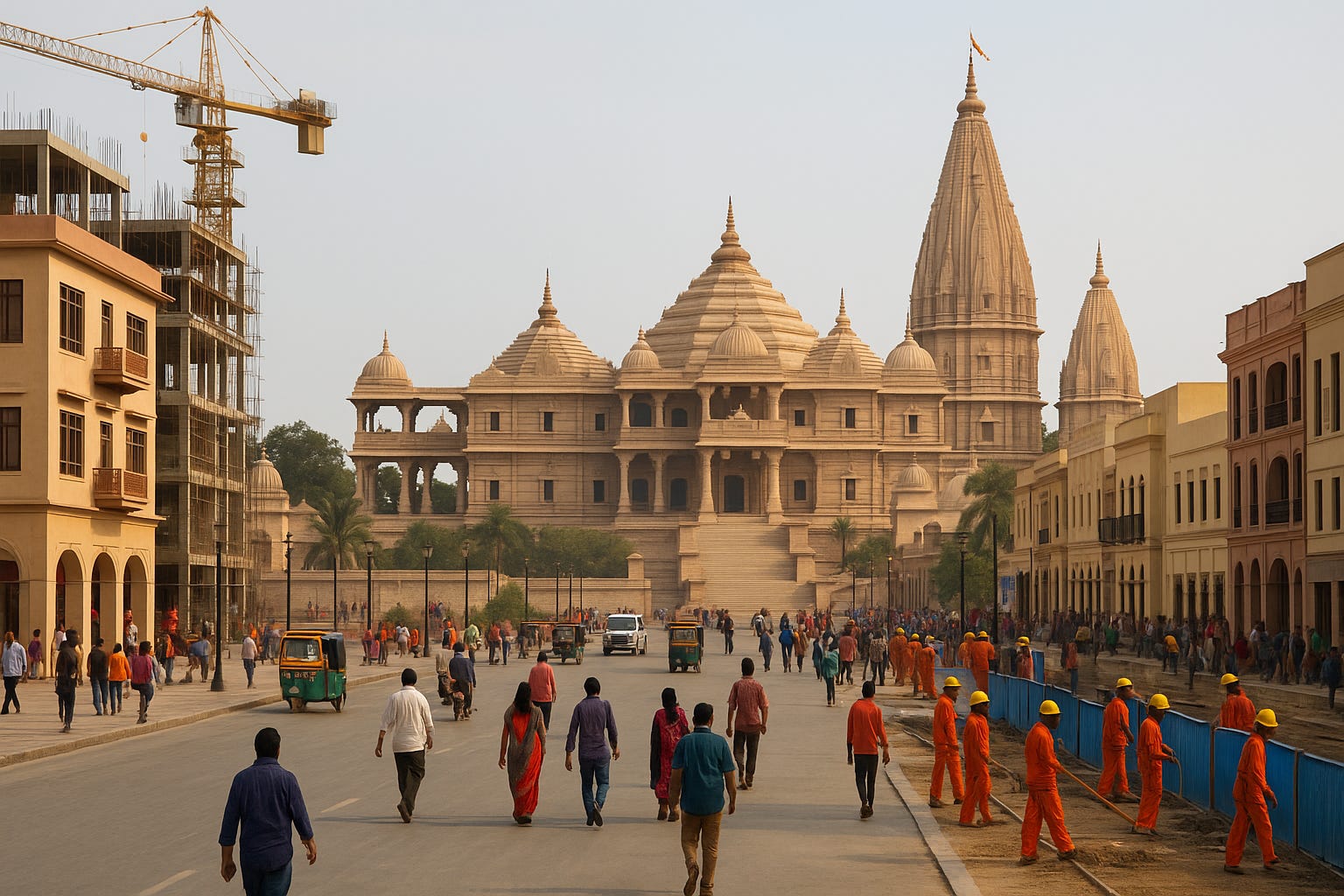
India’s real estate landscape is undergoing a significant transformation, and one of the most unexpected yet powerful forces behind this shift is spiritual tourism. Long associated with faith, culture, and tradition, pilgrimage in India has today become a catalyst for economic expansion, infrastructure development, and a new wave of property investment. As cities such as Ayodhya, Varanasi, Prayagraj, and Vrindavan modernize while preserving their spiritual essence, they are reshaping both the state economy and the national real estate market.
The Rise of Spiritual Tourism as an Economic Engine
Uttar Pradesh exemplifies this trend. In 2022, the state attracted more than 31.8 crore domestic tourists - nearly one-fifth of India’s total internal travel. These visitors collectively contributed close to ₹11,000 crore to the state’s economy. Varanasi alone received more than 8.4 crore tourists, including over 1.30 lakh international visitors, generating an estimated ₹12,000 crore in revenue.
These numbers highlight a fundamental shift: spiritual tourism is no longer confined to religious activity alone. It is now central to how local economies grow, how cities plan infrastructure, and how investors perceive real estate opportunities.
Infrastructure: The Foundation of a New Growth Wave
Recognizing tourism’s potential, Uttar Pradesh has introduced a comprehensive Tourism Policy backed by nearly ₹5,000 crore worth of infrastructure upgrades. Investments include improved road networks, modern public transport, enhanced sanitation facilities, riverfront beautification, and better crowd management systems at major temples and pilgrimage sites.
These upgrades aim not only to elevate the visitor experience but also to enhance the lives of local residents. Public–private partnerships, transparent subsidies, and tourism-oriented development frameworks have created a favourable environment for property investment, helping Uttar Pradesh position itself toward its ambition of becoming a trillion-dollar economy by 2027.
Ayodhya: The New Epicenter of Growth
At the heart of this transformation lies Ayodhya. The recently inaugurated Ram Mandir has positioned the city as a global spiritual landmark. Government estimates suggest that the temple could attract up to five crore visitors annually. This influx is expected to create nearly 25,000 jobs and generate about ₹25,000 crore in revenue.
The impact is already visible:
Rapid construction of hotels, guesthouses, and homestays
Expansion of transport services and last-mile connectivity
Growth of local handicrafts, cultural workshops, and food services
In 2022, homestays and cultural activities alone brought in around ₹3,000 crore, signalling strong demand for both short-term and long-term accommodations. Ayodhya’s real estate market is now considered one of the most promising in the country, drawing attention from national developers, investors, and hospitality chains.
How Spiritual Tourism Is Reshaping Real Estate Markets
The connection between spiritual tourism and real estate is becoming increasingly pronounced. As more travellers arrive, the demand for accommodation, retail spaces, services, and residential housing grows. This demand is significantly influencing property behaviour across major spiritual hubs.
Varanasi
Varanasi has witnessed a surge in new housing supply, which has moderated prices and pushed them down by around 5 percent. The additional inventory indicates developers’ confidence in future growth potential, supported by sustained tourism.
Prayagraj
Prayagraj, in contrast, has seen residential prices rise sharply. In early 2024, rates jumped 122 percent to approximately ₹6,645 per sq ft. The surge can be attributed to limited supply, rising popularity of the city during Kumbh-related developments, and increased interest from retirees and second-home buyers.
Vrindavan, Puri, and Shirdi
These cities are experiencing increased demand for:
Serviced apartments
Mixed-use developments
Premium housing near temple complexes
Short-term rental properties catering to festival seasons
Local homeowners are also converting traditional residences into rental units or homestays, generating steady income and strengthening community-level participation in the real estate boom.
Government Schemes Strengthening the Ecosystem
National initiatives such as PRASHAD (Pilgrimage Rejuvenation and Spiritual Heritage Augmentation Drive) and Swadesh Darshan are playing a pivotal role. These schemes focus on:
Redeveloping major pilgrimage centres
Enhancing roads, riverfronts, and public spaces
Upgrading amenities and safety infrastructure
By raising the quality and appeal of pilgrimage cities, these initiatives have a direct impact on surrounding property values, boosting investor confidence and encouraging sustainable development.
A Cycle of Growth: Tourism, Infrastructure, and Real Estate
What is taking shape is a self-reinforcing growth cycle:
Pilgrims and tourists increase demand for accommodation and services.
Developers respond with new residential, commercial, and hospitality projects.
Infrastructure investment improves accessibility and quality of life.
Enhanced urban environments attract even more visitors and investors.
This cycle is turning cities with deep cultural roots into modern economic corridors, combining heritage preservation with contemporary development.
A Broader Model for India’s Property Boom
Spiritual tourism is not only stimulating real estate but also generating employment, fostering entrepreneurship, and driving balanced regional growth. Cities like Ayodhya, Prayagraj, and Vrindavan show how faith and development can coexist meaningfully. Their transformation reflects a thoughtful approach where cultural identity is preserved while modern opportunities are embraced.
With sustained investments, supportive policies, and growing footfall, spiritual tourism is poised to remain a key contributor to India’s broader property boom. As these cities evolve into year-round destinations with robust economies, they demonstrate how heritage-led development can create long-term value for communities, investors, and the nation.