

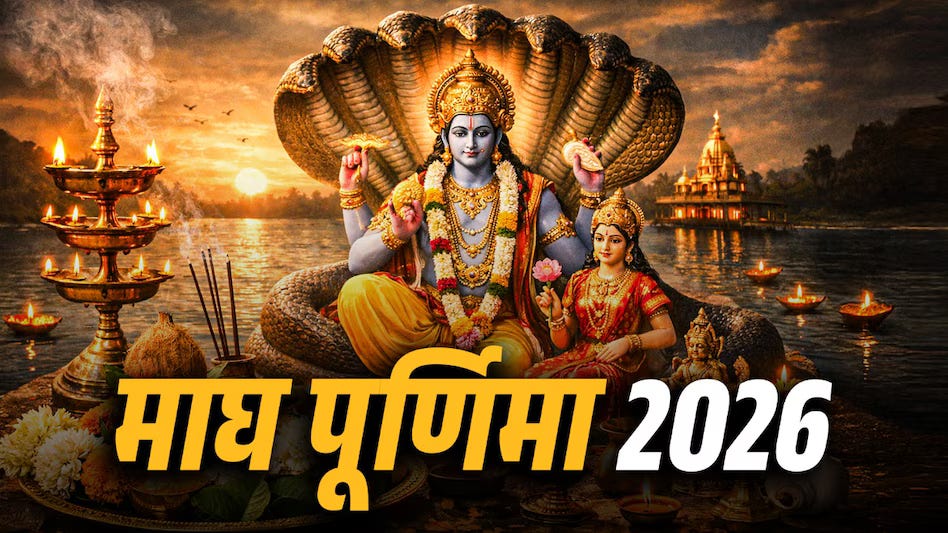
Magha Purnima 2026, observed on Sunday, February 1, marks the sacred culmination of the holy Hindu month of Magha. Falling on the full moon day (Purnima), this occasion is deeply revered for its spiritual potency, emphasis on charity, ritual purity, and disciplined living. The day also coincides with the conclusion of Kalpawas and the observance of Sant Ravidas Jayanti, making it a powerful symbol of spiritual completion, devotion, and social harmony.
Magha Purnima 2026: Date and Timings
Date: Sunday, February 1, 2026
Purnima Tithi Begins: 05:52 AM on February 1, 2026
Purnima Tithi Ends: 03:38 AM on February 2, 2026
Moonrise on Purnima Day: 05:26 PM
Why Magha Purnima Is Considered Highly Auspicious
According to Hindu scriptures, the month of Magha is a time when spiritual merit is easily attained, even through simple acts of devotion. While every day of Magha is sacred, Magha Purnima is regarded as the most powerful, as it represents the spiritual harvest of the month-long discipline observed by devotees.
Rituals performed on this day - such as holy bathing, fasting, prayer, and charity - are believed to yield long-lasting spiritual benefits, bringing clarity, balance, and inner peace.
Holy Bath (Magha Snan) and Sacred Rituals
One of the most important observances of Magha Purnima is the holy bath in sacred rivers, especially the Ganga, Yamuna, and at the Triveni Sangam in Prayagraj (the confluence of the Ganga, Yamuna, and the mythical Saraswati).
Devotees traditionally begin daily ritual bathing from Paush Purnima, concluding it on Magha Purnima.
The ritual bath is believed to purify the body and soul, washing away sins and negative karmas.
At Prayag, devotees also perform Homa (fire rituals), daan (charity), and offer alms, food, grains, and other essentials to the needy.
Importance of Charity During Magha Month
Charity holds a central place throughout the month of Magha, with Magha Purnima being the most significant day for giving. Scriptures emphasize that donations made during this period are easily fructified and bring both spiritual merit and social welfare.
Common acts of charity include:
Donating food, clothes, grains, money, and blankets
Offering cows, essentials, or financial aid according to one’s capacity
Feeding the poor, saints, and pilgrims
Charity during Magha is seen not just as generosity, but as a sacred duty that nurtures compassion and social harmony.
End of Kalpawas at Prayag
Magha Purnima marks the formal conclusion of Kalpawas, a month-long spiritual austerity observed by thousands of devotees on the banks of the Ganga at Prayag.
During Kalpawas:
Devotees live a simple, disciplined life
They follow strict routines of prayer, meditation, fasting, and scriptural study
Worldly comforts are renounced in favor of spiritual focus
The completion of Kalpawas on Magha Purnima signifies spiritual fulfilment, self-control, and devotion.
Sant Ravidas Jayanti on Magha Purnima
Magha Purnima also commemorates Sant Ravidas Jayanti, celebrating the birth of the revered saint-poet Sant Ravidas. His teachings emphasized:
Equality beyond caste and social divisions
Devotion rooted in love and humility
Social justice and harmony
On this day, devotees remember his teachings through prayer meetings, bhajans, and community gatherings, reinforcing the values of inclusiveness and compassion.
Seven Sacred Practices to Welcome Peace, Prosperity, and Harmony
Many devotees observe simple yet meaningful rituals on Magha Purnima to invite balance and well-being:
1. Magha Snan (Holy Bath)
Bathing in sacred rivers or water infused with Ganga jal is believed to cleanse negative energies and invite divine grace.
2. Fasting (Vrat or Upvas)
Observing a fast on Magha Purnima helps cultivate discipline, mental calm, and spiritual focus.
3. Charity and Good Deeds
Offering food, clothes, and essentials to the needy is considered one of the most rewarding acts of the day.
4. Worship of Lord Shiva
Offering water, milk, and bel leaves to the Shivalinga on the full moon is believed to bring peace, stability, and blessings.
5. Chanting the Gayatri Mantra
Regular chanting during Magha is said to purify the mind and bring clarity and positive transformation.
6. Tarpan for Ancestors
Offering tarpan in a river honors ancestors and is believed to bring harmony and prosperity to the family lineage.
7. Tree Plantation
Planting trees during Magha, especially on Purnima, is considered both spiritually meritorious and environmentally beneficial.
Spiritual Significance of Magha Purnima
Magha Purnima symbolizes completion, reflection, and renewal. After a month of restraint and devotion, the full moon serves as a spiritual pause - encouraging gratitude, introspection, and alignment with higher values.
Rather than grand rituals alone, Magha Purnima emphasizes consistency, sincerity, and intention. Even small acts of kindness, devotion, or mindfulness performed on this day are believed to carry lasting meaning.
Magha Purnima 2026 is not merely a ritualistic observance - it is a reminder of the power of discipline, charity, and inner stillness. Whether through a sacred bath, silent prayer, or an act of compassion, the day invites devotees to reconnect with spiritual clarity and social responsibility, carrying the essence of Magha into the rest of the year.