

Maha Shivaratri, falling on February 15, 2026, is one of the most sacred festivals in Hinduism, dedicated to Lord Shiva and Goddess Parvati. The night symbolizes Shiva’s cosmic dance - the Tandava, the triumph over ignorance and darkness, the awakening of inner consciousness, and the divine union of Shiva and Shakti. Devotees observe fasting, perform night-long vigils, chant “Om Namah Shivaya,” meditate, and visit temples to seek spiritual purification and strength.
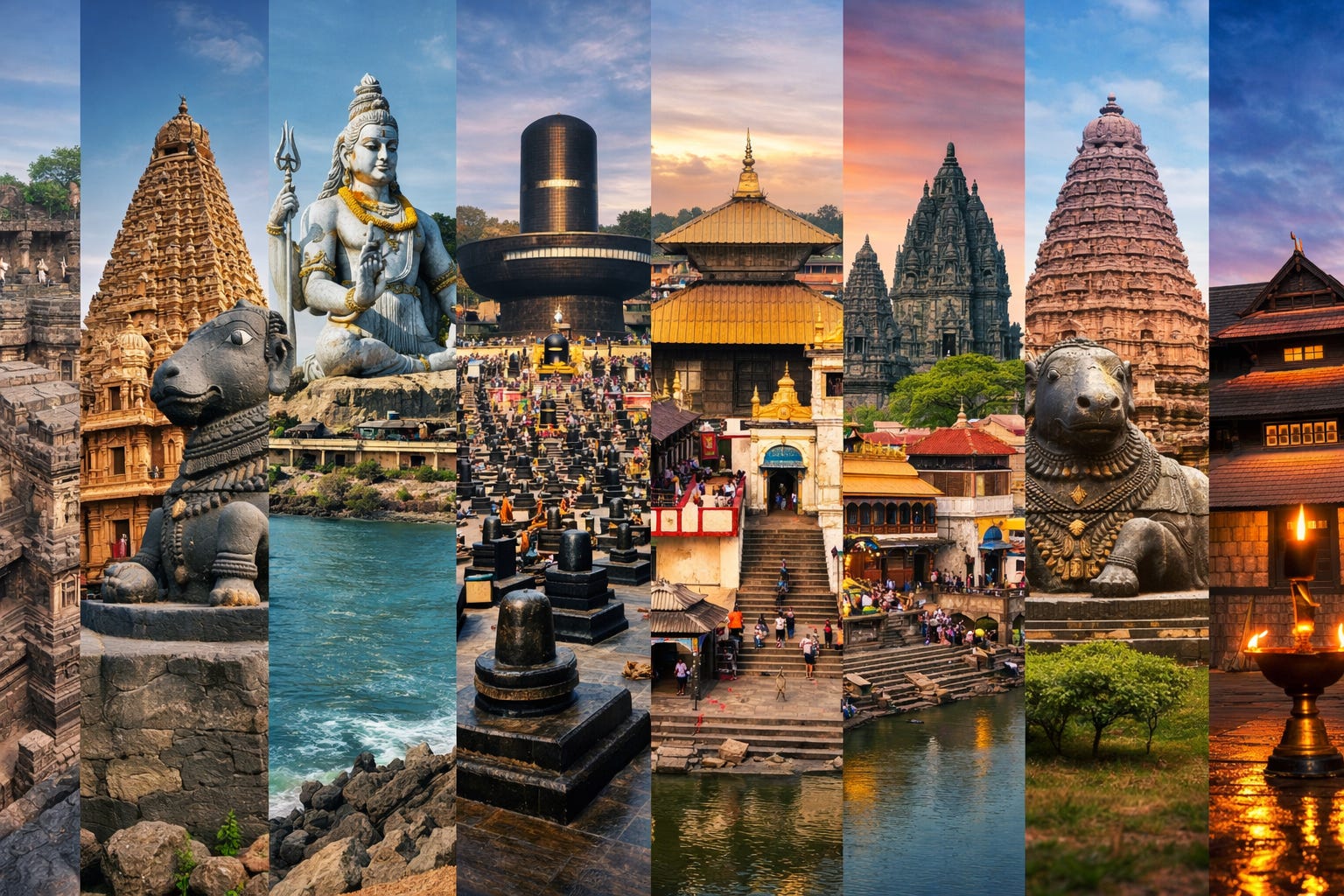
Across the world, magnificent temples stand as timeless tributes to Lord Shiva’s power and grace. These architectural marvels are not only centers of devotion but also masterpieces of art, history, and engineering. Here are eight of the largest and most spiritually significant Shiva temples across the globe.
1. Kailashnath Temple, Maharashtra, India
The Kailashnath Temple at Ellora is one of the most extraordinary architectural achievements in human history. Built in the 8th century during the Rashtrakuta dynasty, this temple is carved entirely from a single monolithic rock.
Unlike traditional construction methods, artisans excavated the temple from top to bottom, sculpting it out of solid basalt rock. The temple complex depicts elaborate scenes from the Ramayana and Mahabharata and features grand pillars, sculpted deities, and detailed carvings.
Dedicated to Lord Shiva as Mount Kailasa—the celestial abode of Shiva—this temple is not merely a structure but a spiritual and engineering marvel that continues to awe historians and pilgrims alike.
2. Brihadeeswarar Temple, Tamil Nadu, India
The Brihadeeswarar Temple, also known as Peruvudaiyar Kovil, stands proudly in Thanjavur as a masterpiece of Chola architecture. Built in the 11th century by Raja Raja Chola I, this UNESCO World Heritage Site reflects the grandeur of the Chola empire.
Its towering vimana (temple tower) rises over 60 meters, showcasing remarkable symmetry and precision. One of its most striking features is the enormous monolithic Nandi statue, carved from a single stone and placed at the entrance.
Dedicated to Lord Shiva as Brihadeeswara, the temple represents devotion fused with architectural brilliance. Even after a thousand years, it remains an active place of worship and a symbol of Tamil Nadu’s rich heritage.
3. Murudeshwar Temple, Karnataka, India
Situated along the scenic coast of the Arabian Sea, Murudeshwar Temple is one of India’s most visually striking Shiva shrines. It is best known for its 123-foot-tall Shiva statue, the second tallest in the world.
The temple’s towering Raja Gopura, standing at 237 feet, offers panoramic views of the coastline. According to legend, the temple enshrines a fragment of the sacred Atma Linga, associated with the Ramayana.
The fusion of natural beauty and divine presence makes Murudeshwar both a spiritual sanctuary and a breathtaking tourist destination.
4. Kotilingeshwara Temple, Karnataka, India
The Kotilingeshwara Temple is unique for housing over a million Shiva Lingams, symbolizing infinite devotion. The temple complex also features a massive 108-foot Shiva Lingam and a giant Nandi statue.
Devotees from across India visit to install personal lingams, believing it brings spiritual merit and blessings. The expansive layout and serene surroundings create an atmosphere of profound devotion.
Kotilingeshwara stands as a testament to collective faith and the boundless manifestations of Shiva.
5. Pashupatinath Temple, Nepal
Located along the sacred Bagmati River in Kathmandu, the Pashupatinath Temple is one of the holiest Shiva shrines in Hinduism. A UNESCO World Heritage Site, it is revered as the abode of Pashupatinath, the Lord of all living beings.
Built in traditional pagoda style, the temple features a golden roof, silver-plated doors, and intricate wood carvings. The temple complex is also a significant site for Hindu cremation rituals.
During Maha Shivaratri, thousands of devotees, ascetics, and sadhus gather here, transforming the temple into a vibrant spiritual epicenter.
6. Prambanan Temple, Indonesia
The Prambanan Temple Complex in Indonesia is the largest Hindu temple site in Southeast Asia. Built in the 9th century, it is dedicated to the Trimurti—Brahma, Vishnu, and Shiva—with the tallest shrine devoted to Lord Shiva.
Rising to 47 meters, the Shiva temple dominates the complex. Its walls are adorned with exquisite bas-reliefs depicting scenes from the Ramayana.
Prambanan highlights the historical reach of Hindu civilization beyond the Indian subcontinent and remains a cultural and spiritual landmark in Indonesia.
7. Gangaikonda Cholapuram Temple, Tamil Nadu, India
Built by Rajendra Chola I in the 11th century, the Gangaikonda Cholapuram Temple was designed to rival the Brihadeeswarar Temple. It features a massive Shiva Lingam and intricate sculptures that reflect refined Chola craftsmanship.
The temple complex includes a grand ritual water tank and beautifully detailed carvings. Although slightly less towering than Brihadeeswarar, its artistic elegance is widely admired.
This temple stands as a symbol of imperial ambition, devotion, and architectural excellence.
8. Vadakkunnathan Temple, Kerala, India
One of the oldest Shiva temples in India, Vadakkunnathan Temple in Thrissur is deeply rooted in Kerala’s spiritual traditions. Built in classic Kerala architectural style, it features wooden gateways, mural paintings, and multi-tiered gopurams.
A unique feature of this temple is the Shiva Lingam, which is covered with centuries-old layers of solidified ghee offered by devotees—an extraordinary symbol of faith.
The temple is also famous for hosting the grand Thrissur Pooram festival, one of Kerala’s most celebrated cultural events.
A Global Celebration of Shiva’s Eternal Presence
These eight temples represent more than physical grandeur. They symbolize faith across centuries, cultures, and continents. From the monolithic wonder of Ellora to the coastal serenity of Murudeshwar, from Nepal’s sacred ghats to Indonesia’s towering shrines, the devotion to Lord Shiva transcends geography.
On Maha Shivaratri 2026, as devotees chant through the night and meditate upon Shiva’s cosmic dance, these temples stand illuminated - both physically and spiritually- reminding humanity of the eternal cycle of creation, preservation, and transformation.
In the stillness of the night, under the vast sky, Shiva’s presence echoes through these sacred spaces—inviting every soul toward awakening, strength, and inner peace.
❓ Maha Shivaratri 2026 & Shiva Temples – FAQs
1. When is Maha Shivaratri in 2026?
Maha Shivaratri will be observed on February 15, 2026. Devotees fast during the day and perform night-long prayers and chanting in honor of Lord Shiva.
2. Why is Maha Shivaratri celebrated?
Maha Shivaratri celebrates:
The divine marriage of Lord Shiva and Goddess Parvati
Shiva’s cosmic dance (Tandava)
The victory of light over darkness and ignorance
It is considered a powerful night for spiritual awakening and inner transformation.
3. What rituals are performed on Maha Shivaratri?
Common rituals include:
Day-long fasting (Phalahar or Nirjala fast)
Abhishekam (ritual bathing) of the Shiva Lingam with milk, honey, water, and bilva leaves
Chanting “Om Namah Shivaya”
All-night vigil (Jaagran)
Meditation and temple visits
4. Which is the largest Shiva temple in the world?
The term “largest” varies by criteria:
Brihadeeswarar Temple (India) is one of the tallest and grandest.
Prambanan (Indonesia) is the largest Hindu temple complex in Southeast Asia.
Kailashnath Temple (Ellora) is the largest monolithic rock-cut temple in the world.
5. Which Shiva temple has the tallest statue of Lord Shiva?
The Murudeshwar Temple in Karnataka, India, features a 123-foot-tall Shiva statue, making it one of the tallest Shiva statues globally.
6. Why is Pashupatinath Temple so important?
Pashupatinath Temple in Nepal is one of the holiest Shiva shrines in Hinduism. It is a UNESCO World Heritage Site and plays a central role in Hindu cremation rituals and Maha Shivaratri celebrations.
7. What makes Kotilingeshwara Temple unique?
Kotilingeshwara Temple in Karnataka houses over one million Shiva Lingams. Devotees can install personal lingams as an act of devotion.
8. Why is the Shiva Lingam in Vadakkunnathan Temple special?
At Vadakkunnathan Temple in Kerala, the Shiva Lingam is covered with centuries-old solidified ghee offerings, creating a rare and sacred feature.
9. Can non-Hindus visit these Shiva temples?
Policies vary:
Some temples like Prambanan (Indonesia) are open to all visitors.
Certain temples such as Pashupatinath restrict entry to practicing Hindus only inside the main sanctum.
Visitors should check local guidelines before planning their visit.
10. What is the spiritual significance of visiting Shiva temples on Maha Shivaratri?
Visiting a Shiva temple on Maha Shivaratri is believed to:
Cleanse past karmas
Grant spiritual growth
Bring inner peace and strength
Help conquer ego and negativity
The night is considered especially powerful for meditation and devotion.
11. What offerings are considered sacred for Lord Shiva?
Sacred offerings include:
Bilva (Bel) leaves
Milk and water
Honey
White flowers
Bhasma (holy ash)
Fruits and seasonal prasad
12. Is Maha Shivaratri celebrated outside India?
Yes. Maha Shivaratri is celebrated in:
Nepal
Indonesia
Mauritius
Sri Lanka
United States, UK, and other countries with Hindu communities
Major Shiva temples worldwide organize special events and night-long prayers.