

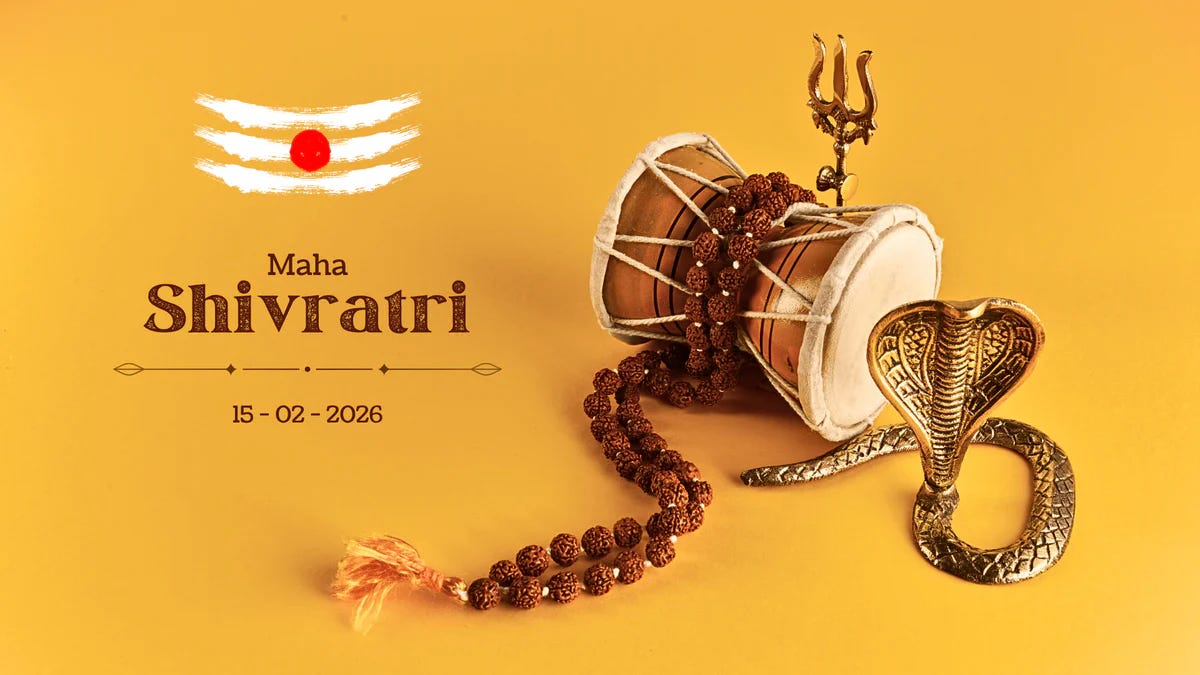
Maha Shivaratri 2026: Date, Puja Vidhi, Fasting Rules, Story & Significance
Mahā Shivaratri is one of the most sacred and spiritually powerful festivals in the Hindu calendar, dedicated to Lord Shiva - the Supreme Destroyer and Transformer in the Trimurti. It is a night of deep devotion, fasting, meditation, mantra chanting, and night-long vigil known as jagaran.
In 2026, this divine festival falls in mid-February, making now the perfect time to prepare spiritually and understand its complete significance.
This is your complete guide to Maha Shivaratri 2026 - covering date, timing, fasting rules, puja method, stories, mantras, benefits, and FAQs.
Maha Shivaratri 2026 Date & Tithi (Exact Timing)
Festival Date: Sunday, 15 February 2026
Main Night of Worship: 15 February → 16 February 2026
Chaturdashi Tithi Begins: 15 February at approximately 5:04 PM IST
Chaturdashi Tithi Ends: 16 February at approximately 5:34 PM IST
Nishita Kaal (Most Auspicious Time):
Approximately 12:09 AM to 1:01 AM on the night of 15–16 February
Night Vigil (Jagaran):
Devotees remain awake and worship through all four prahars from evening until early morning.
Because the Hindu tithi follows the lunar calendar and crosses sunset, the main observance happens during the night of 15 to 16 February, with midnight worship considered the most spiritually powerful.
🙏 Why Is Maha Shivaratri Celebrated?
Mahā Shivaratri is celebrated to honor:
• Lord Shiva’s cosmic dance, the Tandava
• His role as the Supreme Consciousness
• His transcendent and formless nature
It symbolizes:
• The union of Shiva and Shakti (Parvati) - balance of consciousness and energy
• The night of overcoming darkness and ignorance
• Spiritual awakening and inner purification
• Self-discipline and control over senses
Shivaratri is not merely a ritual festival - it is a night of spiritual ascent, where devotees seek self-realization, clarity, and inner peace.
The Story of Shivaratri
1. Samudra Manthan & the Poison
During the churning of the cosmic ocean known as Samudra Manthan, a deadly poison called Halahala emerged. The poison was powerful enough to destroy all of creation.
To protect the universe, Lord Shiva consumed the poison and held it in his throat. His throat turned blue, earning him the name Neelkanth.
This act of sacrifice and protection is deeply revered on Maha Shivaratri.
2. Shiva–Parvati Union
Many traditions believe that Maha Shivaratri marks the divine wedding of Shiva and Parvati.
Their union represents:
• Harmony between masculine and feminine energies
• Balance between stillness and power
• Unity of consciousness and creation
Together, these stories emphasize sacrifice, balance, devotion, and spiritual awareness.
How to Observe Maha Shivaratri Fast (Step-by-Step)
Fasting and night worship are central to Shivaratri observance.
✔️ Before Shivaratri Night
• Cleanse the body with a bath
• Clean the puja area at home
• Set up an altar with Shiva Linga or idol
• Arrange flowers, water, milk, bel leaves, and offerings
• Take a sankalp (spiritual resolution) to observe the fast sincerely
✔️ During the Fast
You may choose one of the following fasting options:
Nirjal Fast
• No food and no water
Phalahar Fast
• Fruits
• Milk
• Water
Maintain:
• Calmness of mind
• Celibacy
• Truthfulness
• Devotional focus
Chant Om Namah Shivaya frequently throughout the day.
✔️ Breaking the Fast
The fast is traditionally broken after sunrise on 16 February, after completing morning puja and offering prayers to Lord Shiva.
4 Prahar Puja Vidhi Explained
The sacred night is divided into four prahars, and devotees ideally worship Shiva in each segment.
1st Prahar
Approximately 6:00 PM to 9:00 PM
• Perform water and milk abhishek
• Offer bel leaves
2nd Prahar
Approximately 9:00 PM to 12:00 AM
• Chant mantras
• Offer flowers and incense
3rd Prahar
Approximately 12:00 AM to 3:00 AM
• Perform main Nishita Kaal Puja
• Deep meditation and mantra chanting
4th Prahar
Approximately 3:00 AM to 6:00 AM
• Silent meditation
• Reflection and final prayers
Nishita Kaal around midnight is considered the most powerful time for worship.
What to Offer to Lord Shiva
Lord Shiva is known as Bholenath - easily pleased by simple offerings made with devotion.
Sacred Offerings
• Water and milk
• Bel or bilva leaves
• White or light-colored flowers
• Datura flowers
• Unbroken rice (akshat)
Do NOT Offer
Traditionally avoided items include:
• Tulsi leaves
• Sindoor and kumkum
• Haldi (turmeric)
• Shankh (conch)
• Ketaki flowers
These are considered unsuitable for Shiva’s ascetic nature.
Powerful Maha Shivaratri Mantras
Chanting mantras is central to this night’s spiritual energy.
ॐ नमः शिवाय (Om Namah Shivaya)
The most powerful and essential Shiva mantra.
Maha Mrityunjaya Mantra
Om Tryambakam Yajamahe Sugandhim Pushtivardhanam
Urvarukamiva Bandhanan Mrityor Mukshiya Maamritat
Rudram Chamakam
A sacred hymn from the Yajur Veda.
Chant with focus, devotion, and awareness rather than mechanical repetition.
Benefits of Observing Shivaratri
Devotees believe sincere observance brings:
• Inner peace and clarity
• Removal of negative karmas
• Strengthened discipline
• Spiritual upliftment
• Divine blessings
• Emotional balance
Maha Shivaratri is ultimately about transforming consciousness.
Things You Should Not Do
• Do not indulge in anger or negative speech
• Avoid non-vegetarian food and intoxicants
• Avoid distractions and idle gossip
• Do not approach the fast with reluctance
Observe with sincerity and joy.
❓ FAQs
When is Maha Shivaratri 2026?
Maha Shivaratri will be observed on 15 February 2026, with night vigil continuing into early morning of 16 February.
Can we drink water during fast?
Yes. Those observing phalahar fast may drink water and milk. Nirjal fast is optional and should be chosen according to health capacity.
What is the 4 prahar puja?
The night is divided into four worship segments called prahars, during which devotees perform abhishek, mantra chanting, and meditation.
Is Shivaratri only for unmarried girls?
No. Maha Shivaratri is for everyone - married, unmarried, men, women, and spiritual seekers of all ages.
Can non-Hindus observe Shivaratri?
Absolutely. Anyone seeking peace, mindfulness, and spiritual growth may observe the night respectfully. Shivaratri is about inner transformation, not exclusivity.
Har Har Mahadev
May this Maha Shivaratri 2026 bring spiritual awakening and divine blessings into your life.