

In the Bhagavad Gita, when Krishna describes how the Divine shows up in the world, he reaches for this month: "Maasaanam Margasheershoham", among the months, I am Margashirsha. No other month receives that word from the Lord himself. What is it about these cold, quiet weeks that made Krishna call them his own?
In 2026 the answer spans two calendars, and it is worth keeping them distinct. The lunar month of Margashirsha runs from Wednesday, 25 November to Wednesday, 23 December 2026 in the North Indian purnimanta reckoning. The Tamil solar month of Margazhi begins later, on Wednesday, 16 December 2026, and runs into mid-January. They are cousins, not twins: one counts by the Moon, the other by the Sun, and their dates overlap only partly.

Margashirsha: the quiet month of the Gita
The lunar Margashirsha follows Kartik, the month of lamps. Where Kartik blazes with light and festival, Margashirsha draws the seeker inward. The harvest is in, the nights are long, and the tradition sets this month aside for sadhana: early rising, early bathing, japa before the household wakes.
The scriptures treat Margashirsha mornings as especially potent for worship. Bathing before dawn, even at home, is held to carry the merit of the whole year condensed into these thirty days. The Bhishma Panchaka observance closes its final days, and the month's Ekadashi, Mokshada Ekadashi, is the day the Gita itself is honoured, on Gita Jayanti. Devotees also read the Gita through the month, one chapter a day or in whatever measure life allows, because this is the Gita's own season.
Krishna's verse is usually understood simply: of all the year's measures, this is the one that best holds stillness. Winter strips the trees and quiets the fields; the spiritual life does the same for the mind. The month does not ask for celebration. It asks for practice.
Margazhi: the month of Andal's song
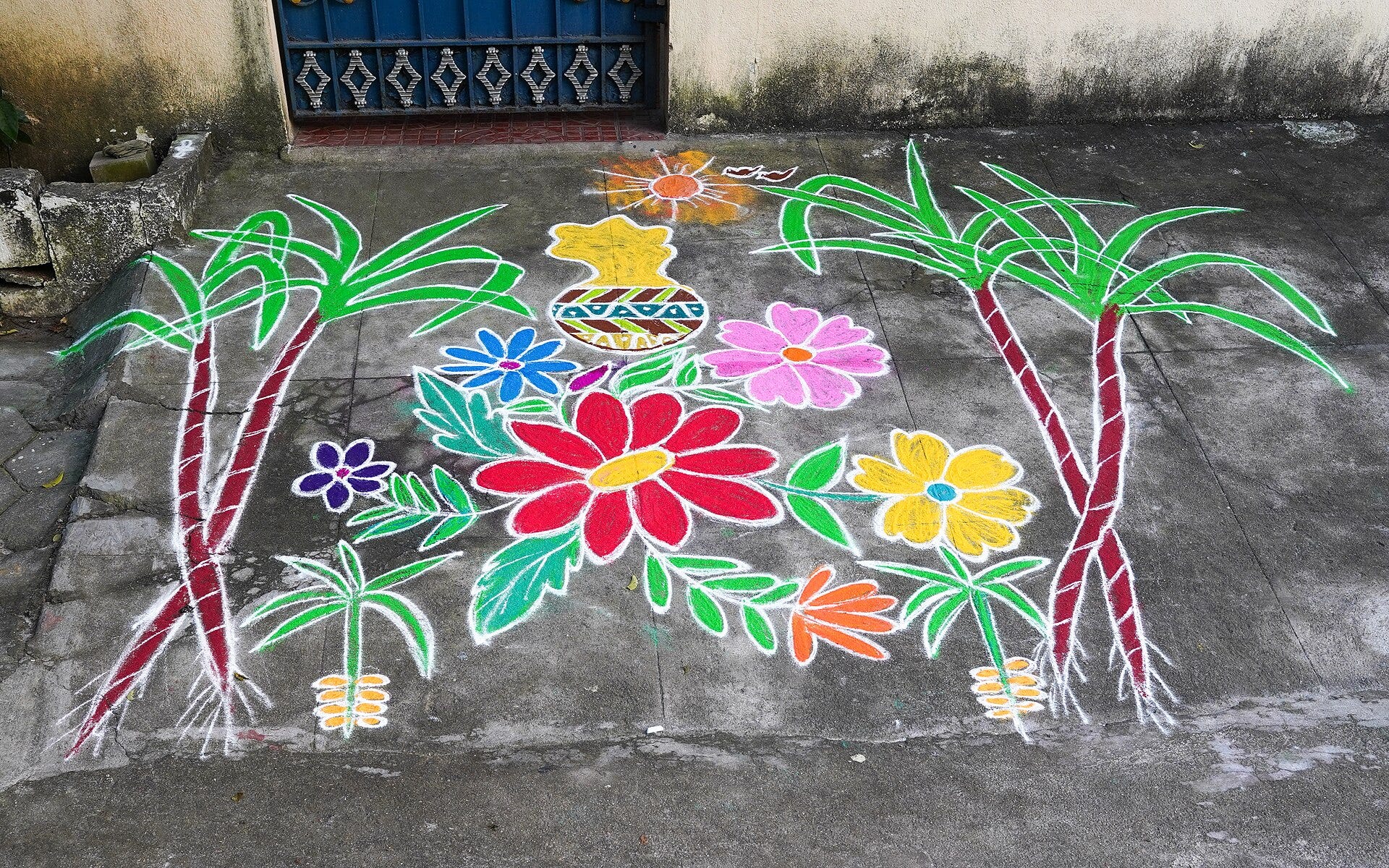
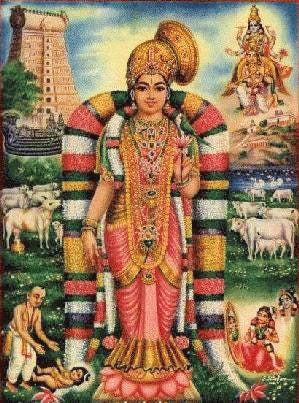
In the Tamil country, the solar Margazhi carries the same spirit with its own music. Margazhi is the month of Andal, the only woman among the twelve Alwars, whose thirty verses of the Tiruppavai are sung before dawn through the whole month. In Srirangam, in Srivilliputhur, and in thousands of Tamil homes, the day begins in the dark with her voice: young women drawing kolam at the threshold, the streets still asleep, and "Maargazhi thingal" rising from the temple loudspeakers.
Margazhi also holds Vaikuntha Ekadashi, when the gates of Vishnu's heaven are said to open, and Arudra Darshan, the cosmic dance of Nataraja at Chidambaram. Sabarimala's Mandala season continues through it. In Tamil tradition Margazhi is not merely a good month for worship; it is the month that is itself worship.

What the two traditions share
Different calendars, different languages, different songs, and yet the month teaches one lesson in both: the cold season is for going inward. Wake earlier than comfort suggests. Bathe before the sun. Sing or recite something ancient while the mind is still clean from sleep. Do it daily, not grandly.
- Rise in the Brahma muhurta, the quiet before dawn, and bathe. - Read a chapter of the Gita, or a pasuram of the Tiruppavai, each morning of the month. - Keep the month's Ekadashis: Mokshada Ekadashi and Vaikuntha Ekadashi both fall on Sunday, 20 December 2026 in their respective traditions this year. - Give warmth: blankets, food, or fuel to those the season tests hardest. Dana in Margashirsha is praised across the vrata literature. - Keep the practice small and daily rather than large and occasional.
The month that is a door
Krishna did not call Margashirsha the brightest month, or the most festive. He called it his own. The months of noise and light are easy to love. This one, grey mornings and all, is where the seeker learns that devotion is not a mood but a rhythm.
At DharmikVibes, our vision is to enable Divine Experiences for every seeker, on every yatra. May this Margashirsha, and the Margazhi that follows, turn your mornings into prayer.