

When the rest of India prepares for the riot of colors that is Holi, the ancient city of Varanasi (Kashi) pauses to celebrate a far more intense, mystical, and unsettlingly beautiful ritual - Masan Holi, the Holi of ashes. In 2026, Masan Holi is expected to be observed on February 28, the day after Rangbhari Ekadashi, at the sacred cremation grounds of Manikarnika Ghat and Harishchandra Ghat.
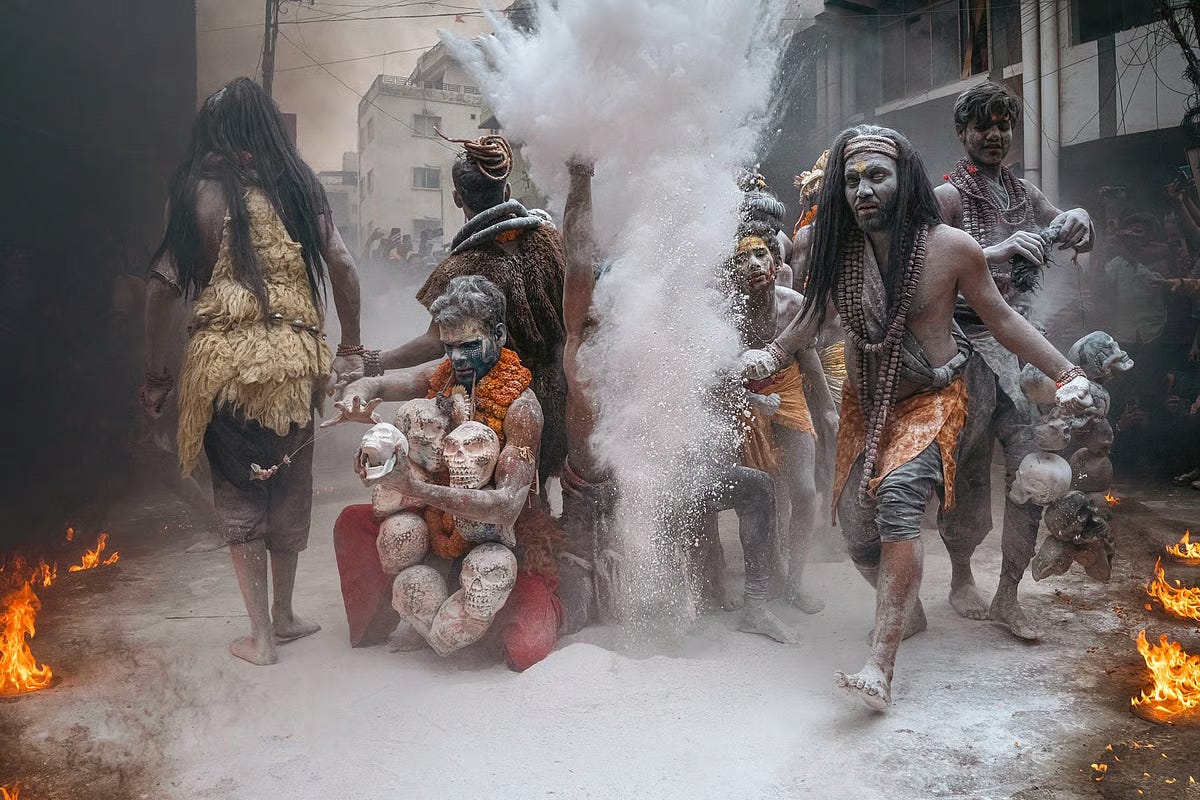
This is not a festival of joy in the conventional sense. It is a festival of truth - a stark reminder of mortality, detachment, and the eternal cycle of creation and destruction ruled by Lord Shiva, the Mahadev of Kashi.
What Is Masan Holi?
The word “Masan” refers to a cremation ground. Masan Holi is a Tantric-Shaivite ritual celebrated exclusively in Varanasi, where ashes (bhabhoot) from funeral pyres replace the usual gulal and colors of Holi.
Unlike mainstream Holi celebrations that symbolize joy and social unity, Masan Holi represents:
Impermanence of life
Victory over fear of death
Ultimate surrender to Shiva
It is believed that Lord Shiva himself descends to the cremation grounds on this day, accompanied by ghosts, spirits, Aghoris, Nagas, and ascetics, to celebrate Holi in its most primal form.
Date and Timing: Masan Holi 2026
Main Date: February 28, 2026
Occasion: The day after Rangbhari Ekadashi
Time: Late morning to early afternoon
(Traditionally begins after a special aarti for Baba Mahashamshan Nath)
Rituals intensify around mid-day, though devotees and observers start gathering at the ghats much earlier.
Primary Locations
1. Manikarnika Ghat
The spiritual epicenter of Masan Holi.
One of the oldest continuously used cremation grounds in the world
Dedicated to Baba Mahashamshan Nath, a fierce form of Shiva
Main site where sadhus, Aghoris, and devotees participate in ash rituals
2. Harishchandra Ghat
Secondary but equally sacred cremation ghat
Hosts parallel rituals and gatherings
Slightly less crowded, but equally intense in atmosphere
Rituals and Observances
Special Aarti
The day begins with a powerful aarti dedicated to Baba Mashan Nath, invoking Shiva’s presence in the cremation ground.
Playing with Ashes (Bhabhoot)
Instead of colors:
Ashes from cremation pyres are smeared on bodies
Devotees symbolically throw ashes in the air
Ash is applied to the forehead as a mark of detachment
This act signifies:
“From ash we came, and to ash we shall return.”
Presence of Sadhus and Aghoris
Aghori sadhus covered in ash
Naga ascetics chanting Shiva mantras
Tantric practitioners performing secretive rituals
Their presence gives Masan Holi its raw, otherworldly aura.
Chanting and Music
Continuous chants of “Har Har Mahadev”
Damru beats, conch sounds, and devotional folk music
No loud DJ music - the soundscape is deeply spiritual
Spiritual Significance
Masan Holi embodies the core philosophy of Shaivism:
Life and death are not opposites, but continuations
Fear dissolves when one accepts mortality
Shiva is both destroyer and liberator (Mahakaal)
In Kashi, death is not mourned - it is liberation (moksha). Masan Holi reminds devotees that liberation begins when ego, fear, and attachment turn to ash.
Experience for Visitors
Masan Holi is not a tourist festival in the usual sense. Visitors are welcome, but as observers, not participants.
Important Cultural Etiquette
Maintain silence and respect near cremation rituals
Avoid intrusive photography, especially of pyres or grieving families
Dress modestly (preferably white or neutral colors)
Do not touch ashes without permission
Best Time to Arrive
Reach the ghats early in the morning
Expect heavy crowds by late morning
Boat access may be restricted near the ghats
Safety and Practical Tips
Stay with a local guide if unfamiliar with the area
Wear old clothes - ash and dust are unavoidable
Avoid physical contact during peak ritual moments
Keep valuables secure due to dense crowds
Masan Holi vs Mainstream Holi
Medium of Celebration:
Masan Holi is celebrated using ashes (bhabhoot) taken from cremation grounds, symbolizing impermanence, detachment, and spiritual truth. In contrast, mainstream Holi is played with bright colors (gulal) that represent joy, love, and the arrival of spring.
Mood and Atmosphere:
The mood of Masan Holi is intense, raw, and deeply spiritual, often accompanied by silence, chanting, and ritualistic devotion. Regular Holi, on the other hand, is joyful, playful, and festive, filled with laughter, music, and social celebration.
Location:
Masan Holi takes place exclusively at cremation grounds, primarily Manikarnika and Harishchandra Ghats in Varanasi. Mainstream Holi is celebrated in streets, homes, temples, and public spaces across India and beyond.
Presiding Deity:
Masan Holi is devoted to Lord Shiva, the lord of destruction, transformation, and liberation. Regular Holi centers around Lord Krishna and Radha, celebrating divine love and playful devotion.
Participation:
Participation in Masan Holi is largely limited to sadhus, Aghoris, and deeply devoted Shaivites, with visitors generally observing respectfully. Mainstream Holi is open to everyone, cutting across age, gender, caste, and nationality.
Why Masan Holi Matters
In a world obsessed with celebration and escape, Masan Holi dares to confront the ultimate truth - death is not the end. By celebrating Holi amid ashes and pyres, Kashi teaches humanity its oldest lesson:
When fear burns away, only Shiva remains.
Masan Holi 2026, on February 28, is not just a festival - it is an initiation into Kashi’s eternal wisdom. Witnessed at Manikarnika and Harishchandra Ghats, it stands as one of the most powerful spiritual experiences in the world.
For those who seek more than color, noise, and celebration - for those willing to face silence, ash, and truth - Masan Holi offers something rare: a glimpse beyond life itself.