

1. Introduction
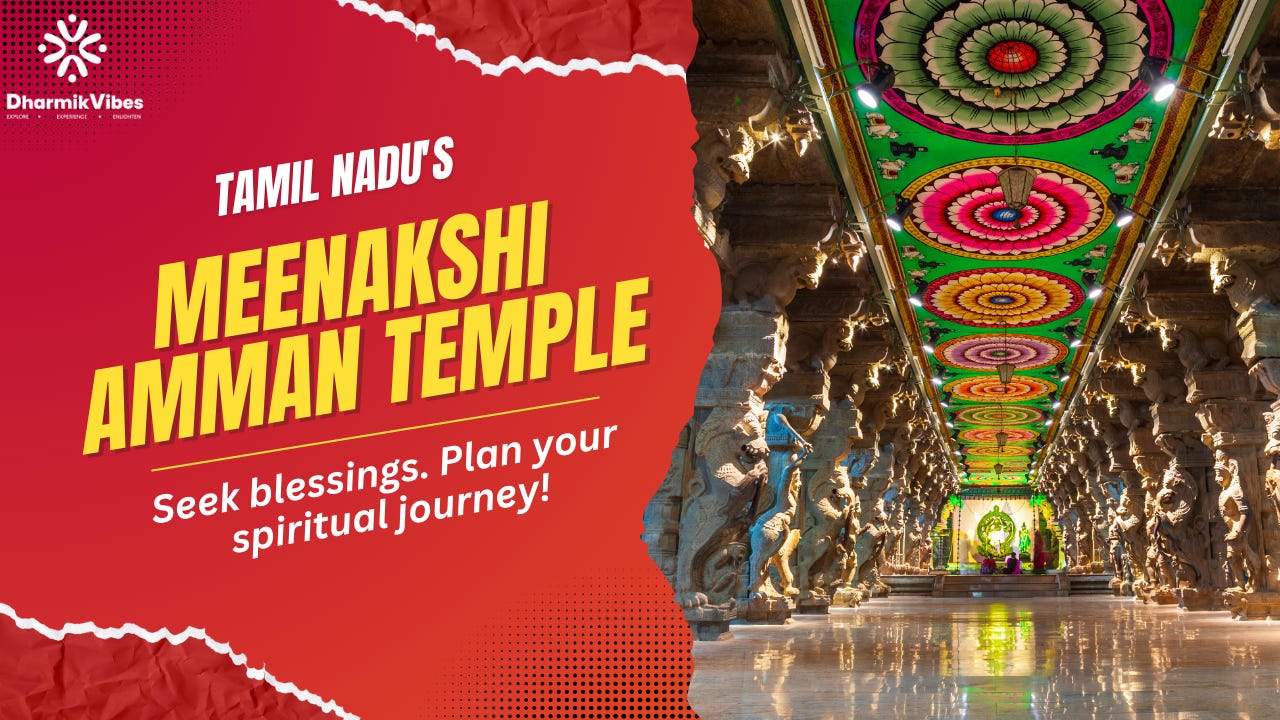
The Meenakshi Amman Temple, situated in the ancient city of Madurai, Tamil Nadu, stands as one of the most magnificent and spiritually significant Hindu temples in the world. Dedicated to Goddess Meenakshi, an incarnation of Parvati, and her consort Lord Sundareswarar, a form of Lord Shiva, the temple is a vibrant living center of devotion, culture, and sacred art.
Unlike many historical monuments, Meenakshi Amman Temple is a living temple, where rituals, festivals, and traditions have continued uninterrupted for thousands of years. It is the spiritual heart of Madurai, shaping the city’s layout, lifestyle, and identity.
2. Historical Background
Ancient Roots
The temple’s origins date back more than 2,500 years.
Mentions of Madurai and Meenakshi worship appear in Tamil Sangam literature, making it one of the oldest continuously worshipped temples in India.
Saints like Thirugnanasambandar, Appar, and Manikkavachagar praised the temple in their hymns.
Pandya Dynasty
The Pandya kings were the earliest great patrons.
Madurai served as their capital, and Meenakshi was revered as the royal deity.
The Pandya rulers considered themselves servants of the Goddess.
Nayak Period
The temple reached its present grandeur during the Nayak dynasty (16th–17th century).
Kings like Tirumalai Nayak expanded the complex, built massive gopurams, mandapams, and corridors.
The famous Thousand Pillar Hall belongs to this era.
3. Mythology & Sacred Legends
Birth of Goddess Meenakshi
According to legend:
King Malayadwaja Pandya and Queen Kanchanamala performed a yajna for an heir.
A divine girl emerged from the fire with three breasts.
A celestial voice foretold that the third breast would disappear when she met her destined husband.
Meenakshi grew into a powerful warrior queen who conquered the world. When she met Lord Shiva, the third breast vanished, revealing her divine destiny.
Divine Marriage
The marriage of Meenakshi and Sundareswarar symbolizes the union of Shakti and Shiva.
This cosmic wedding is celebrated annually as Meenakshi Thirukalyanam, the temple’s grandest festival.
4. Architectural Excellence
The Meenakshi Amman Temple is a supreme example of Dravidian architecture.
Key Architectural Features
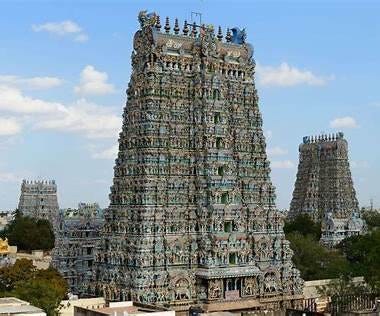
14 towering gopurams, richly adorned with more than 33,000 stucco sculptures
Sculptures depict gods, goddesses, demons, celestial beings, animals, and mythological scenes
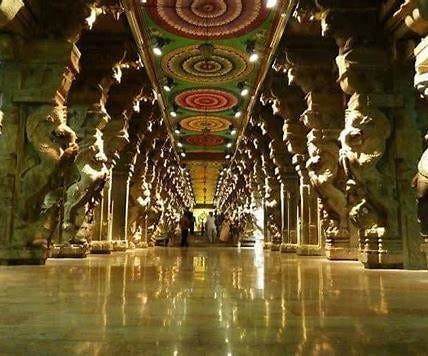
Aayiram Kaal Mandapam (Thousand Pillar Hall) – each pillar uniquely carved
Musical pillars that emit different sounds
Ceiling murals narrating Shaiva, Shakta, and Puranic stories
Golden Lotus Tank (Porthamarai Kulam)
Sacred water tank within the temple
Devotees take ritual baths
Tamil scholars once tested literary works here before public acceptance
Meenakshi Amman Temple, Madurai – A Comprehensive Detailed Article
5. Main Deities
Goddess Meenakshi
A powerful form of Parvati
Green-hued, fish-eyed (Meena + Akshi)
Represents fertility, strength, compassion, sovereignty, and wisdom
Lord Sundareswarar
A form of Lord Shiva
Represents cosmic beauty and eternal consciousness
The Shiva Lingam is worshipped with great reverence
6. Daily Pujas & Ritual System
The temple follows strict Agamic traditions.
Six Daily Pujas
Thiruvanandal – Early morning
Vizha Pooja
Kalasanthi
Uchikalam
Sayaratchai
Ardha Jamam – Night ritual
Palliarai Pooja
Unique ritual where Lord Sundareswarar is taken to Meenakshi’s shrine
Symbolizes divine marital harmony and cosmic balance
7. Special Abhishekams & Offerings
Milk, honey, sandalwood, turmeric, vibhuti abhishekam
Special pujas for:
Marriage blessings
Childbirth
Health and prosperity
Devotees offer flowers, silk sarees, lamps, coconuts
8. Major Festivals
Chithirai Festival
Celebrated in April–May
Re-enacts the divine wedding
Attracts millions of devotees worldwide
Other Festivals
Navaratri
Aadi Festival
Theppotsavam (Float Festival)
Shivaratri
Aavani Moolam
Each festival turns Madurai into a spiritual celebration.
9. Pilgrimage (Yatra) Significance
Spiritual Benefits
Devotees believe that visiting Meenakshi Amman Temple:
Removes negative karma
Grants marital harmony
Bestows prosperity and spiritual upliftment
Sacred Circuit
Meenakshi Amman Temple
Thiruparankundram Murugan Temple
Alagar Kovil
Pazhamudircholai
10. Cultural Influence
Madurai is called “Thoonga Nagaram” (The City That Never Sleeps) due to continuous temple rituals
Influenced:
Bharatanatyam
Carnatic music
Tamil literature
The temple shaped South Indian urban planning and temple culture
11. Rules & Devotee Etiquette
Modest traditional attire recommended
Silence near sanctums
Photography restricted
Special darshan tickets available
12. Modern Relevance
UNESCO tentative heritage site
Major spiritual tourism hub
Continues as a living spiritual institution, not a museum
13. Spiritual Philosophy
The temple represents:
Shiva–Shakti unity
Balance between power and compassion
The idea that the Divine Feminine is central to cosmic order
The Meenakshi Amman Temple is not merely an architectural wonder—it is a timeless spiritual universe where mythology, devotion, art, and philosophy converge. Every gopuram tells a story, every ritual carries centuries of faith, and every visit becomes a journey into the depths of Sanatana Dharma.
A pilgrimage to Meenakshi Amman Temple is not just travel - it is spiritual awakening, cultural immersion, and divine grace combined.