

On Monday, 16 November 2026, at around 5 PM, the doors of the Sabarimala temple in Kerala will open for the Mandala Kalam, the 41-day season of austerity and pilgrimage that ends with Mandala Puja on Sunday, 27 December, before the temple reopens for the Makaravilakku festival in January. For millions of devotees of Lord Ayyappa, this is not simply a temple opening. It is the beginning of a vow.
The 41-day vratham
The pilgrimage to Sabarimala begins long before anyone climbs a hill. For 41 days, devotees observe the Mandala vratham: a simple life of discipline. Black, blue or saffron clothing. No meat, no alcohol, no tobacco. Celibacy. Daily prayer, often twice a day, and the wearing of the tulsi or rudraksha mala received from a Guruswami, an experienced pilgrim who guides the group. Devotees address one another simply as "Ayyappa," because during the vratham every pilgrim is the Lord himself.
The idea is profound: you do not visit God as you are. You become worthy of the visit first.
The Lord who unites
Lord Ayyappa, also called Manikandan, is worshipped as the son of Shiva and Vishnu in his Mohini form, raised by the king of Pandalam. His shrine's character is unusual even by India's standards: devotees undertake the same vow regardless of wealth or status, wear the same dark clothes, carry the same bundle, and sleep in the same simple shelters. Rich and poor stand in the same queue. The Ayyappa tradition is deliberately levelling, which is why the vratham, not the darshan, is considered the real pilgrimage.
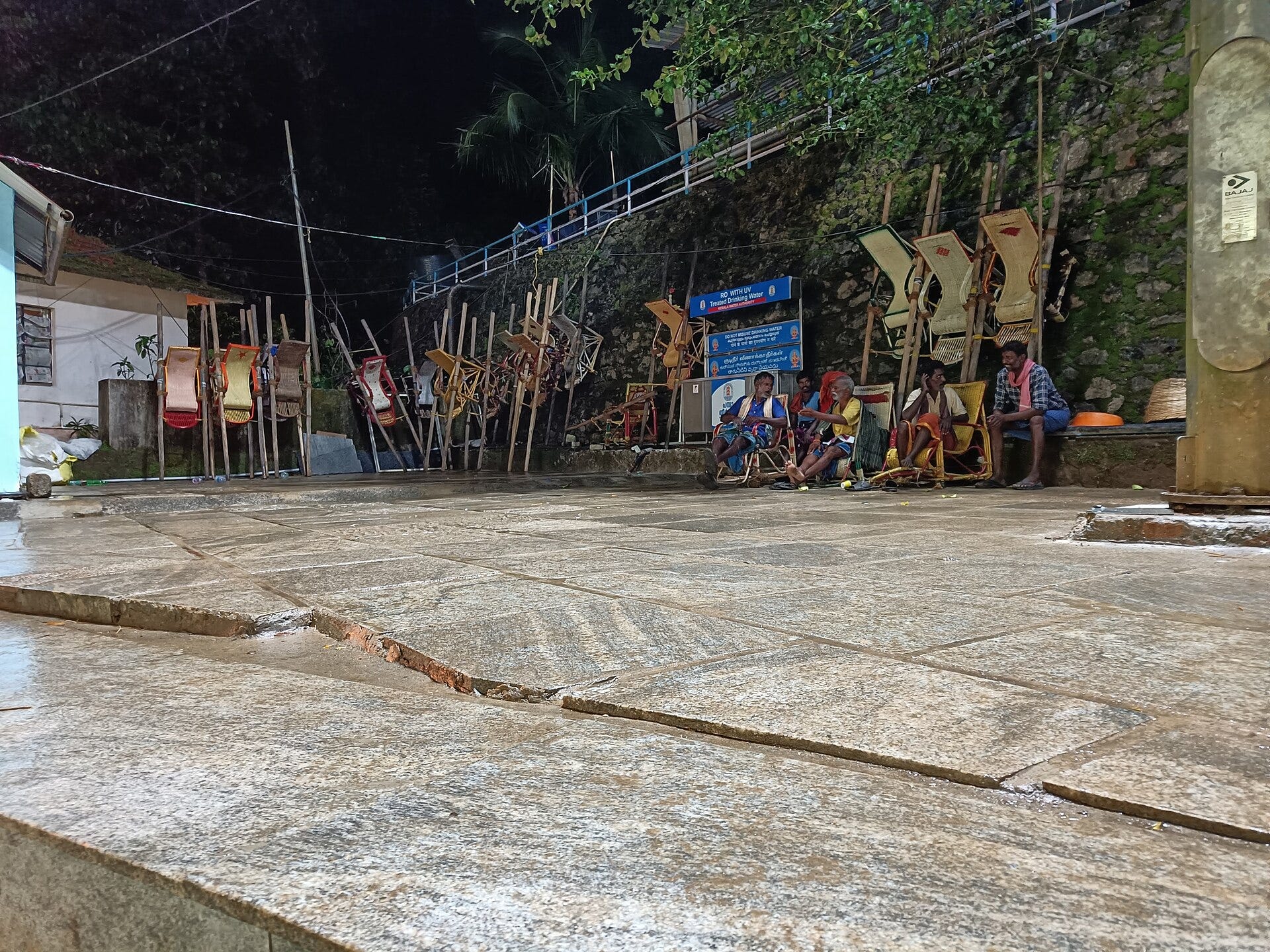
The approach to the Sabarimala temple. Photo: Dhinakar01, CC BY-SA 4.0

The journey to Sannidhanam
When the vratham is complete, pilgrims carry the irumudi kettu, a two-part bundle on the head holding offerings, especially the ghee-filled coconut for the Lord's abhishekam, and set out. The traditional route climbs through dense forest from Pampa, up the steep path to Sannidhanam, the sanctum. The final ascent is the eighteen holy steps, the Pathinettampadi, which only those carrying the irumudi may climb. Each step, the tradition says, marks something left behind: desire, anger, greed, and the rest of the burdens we carry without noticing.
A temple like no other
Sabarimala sits deep in the Periyar Tiger Reserve, reachable only on foot for the final stretch. Lord Ayyappa is worshipped here as a brahmachari, an eternal celibate, and entry to the shrine has long been restricted to men, and to women below ten and above fifty, a practice rooted in the deity's celibate form that remains a subject of continuing legal and social debate in India. Pilgrims of every faith come: the shrine's own traditions honour Vavar, a Muslim companion of the Lord, at the mosque at Erumeli on the traditional route, and most pilgrims stop there first.
Makaravilakku: the light in January
Makaravilakku falls on 14 January 2027, Makara Sankranti, when a light appears on the horizon at Ponnambalamedu and lakhs of voices cry "Swamiye Saranam Ayyappa" at once. The ornaments for the Lord, the Thiruvabharanam, travel in procession from the Pandalam palace, the royal house to which the Lord's family belonged, arriving just in time for the evening darshan.
If this is your first Mandala season
Begin with the vratham, not the travel plan. Find a Guruswami or a local Ayyappa bhajana group. Book through the Kerala Police's virtual queue system, which regulates darshan during the season. And expect the climb to change you a little. That, the pilgrims say, is the whole point.
Swamiye Saranam Ayyappa.
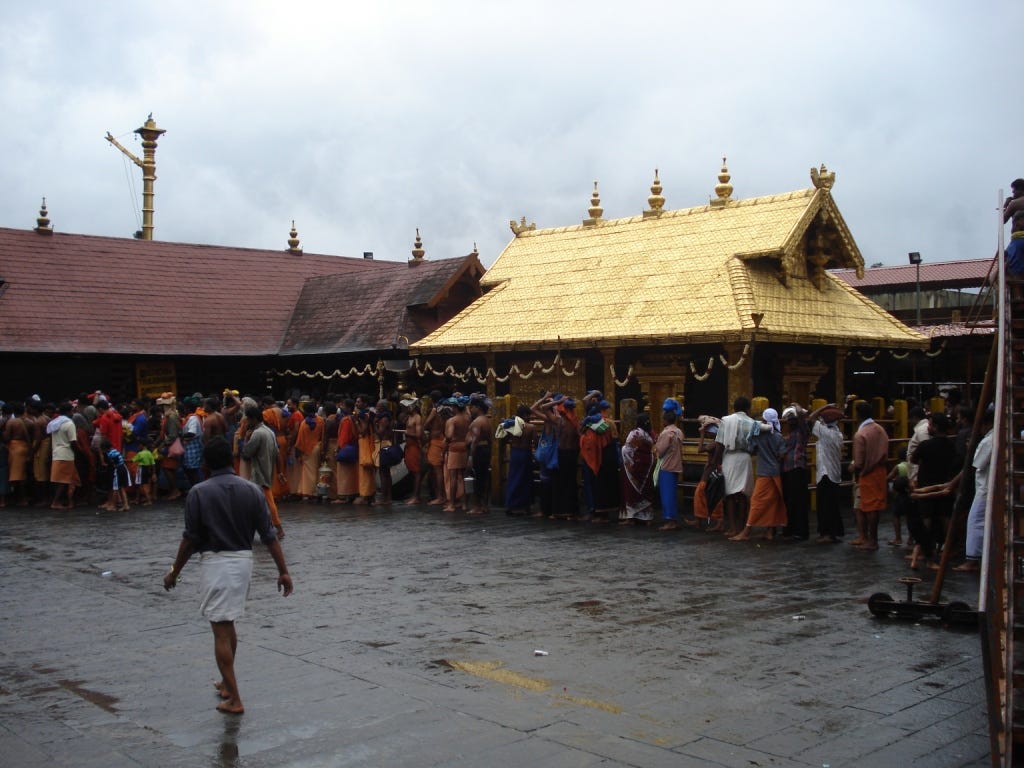
Pilgrims at Sabarimala. Photo: AnjanaMenon, CC BY-SA 3.0