

Among the pujas kept in Indian homes, the Satyanarayan Puja holds a special place. It is done on Purnima and on Sankranti, after a wedding and before a journey, at a new job, a new home, a new year of a child's life. It needs no particular lineage, no priestly monopoly and no rare materials. It is the puja of the ordinary householder, addressed to Satyanarayan: the Lord as Truth itself.
Here is the vidhi as it is commonly kept, step by step; families and regions vary the details.

When to do it
Purnima, the full-moon day, is the most common choice, and Ekadashi is considered equally auspicious. Beyond the calendar, the puja is performed for an occasion or a fulfilment: a wedding, a griha pravesh, a recovery, an exam passed, a wish granted. Many families do it annually on a fixed day. There is no wrong time to thank God; the tradition only asks that the sankalpa be honest and the promise be kept.
What you need
The samagri list is short and findable in any market:
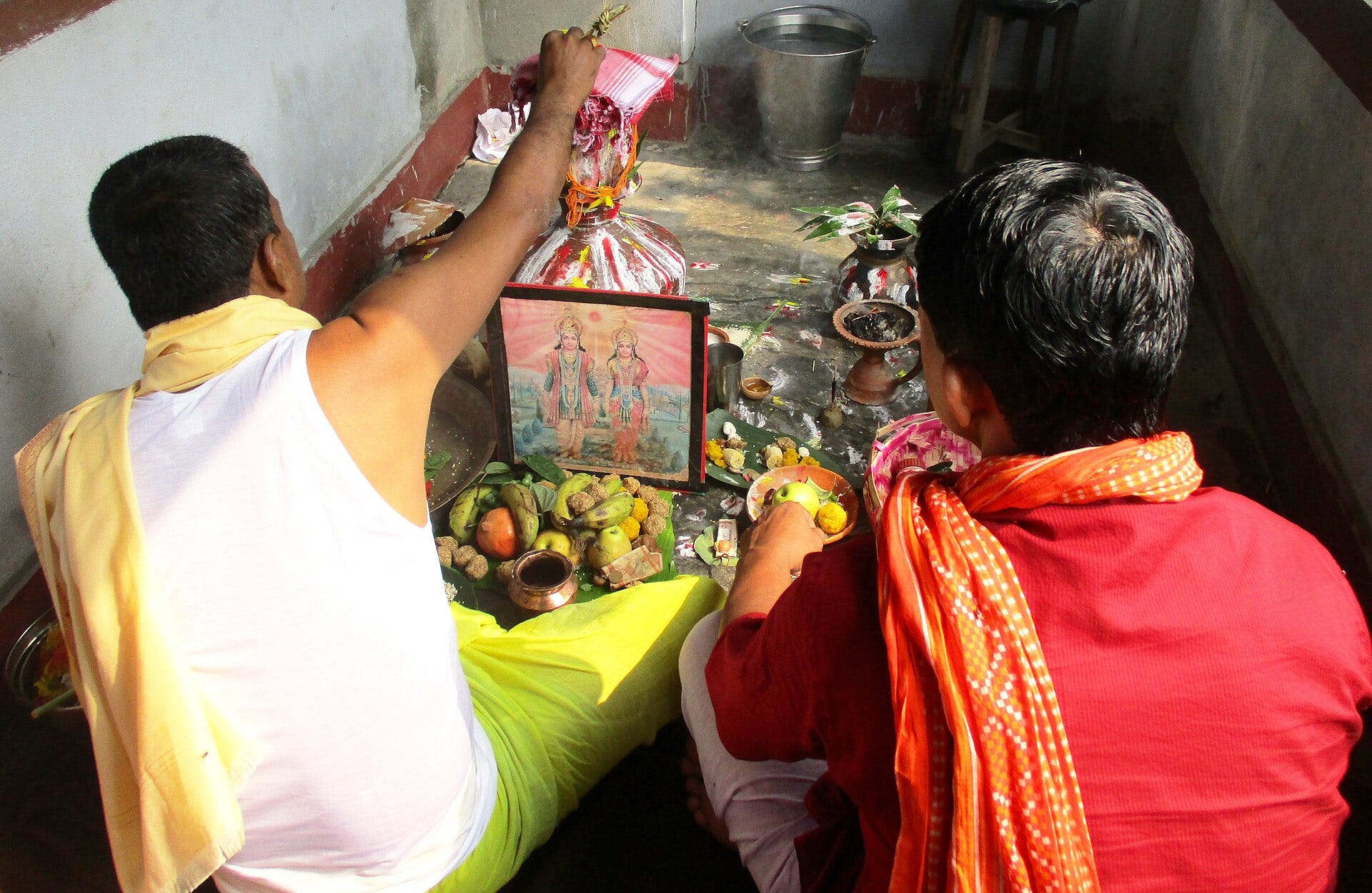
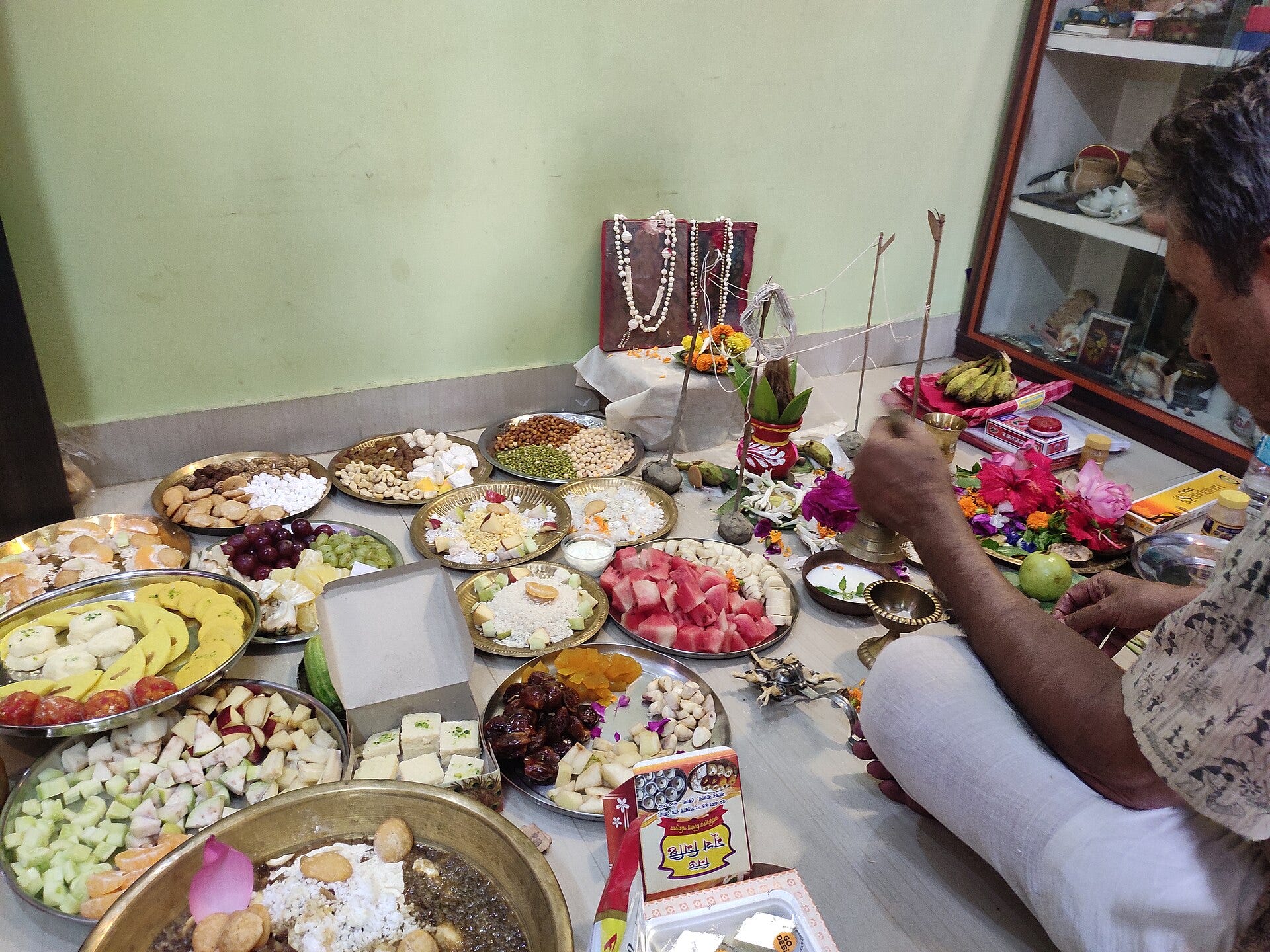
- An image or idol of Lord Satyanarayan, or the Shaligram - A low platform covered with a clean cloth, and a kalash with water, mango leaves and a coconut - Haldi, kumkum, akshata (unbroken rice), chandan, flowers and tulsi leaves - Panchamrit: milk, curd, honey, ghee and sugar mixed - Banana leaves or plates for the offerings, fruits, coconut - Ghee lamps, incense, camphor - And the prasad: the sheera or sapada bhakshya made with equal parts of rava, ghee, sugar, milk and banana. The equal-parts measure is tradition, not recipe.
The vidhi, step by step
1. Morning preparation. Bathe, clean the puja space, and set up the altar facing east or north. The family bathes before sitting; the puja is begun clean in body and intention. 2. Sankalpa. With water, rice and a flower in the right palm, state the sankalpa: who is performing the puja, where, on what tithi, and for what purpose or gratitude. This spoken intention is the puja's spine. 3. Ganapati puja. Every Satyanarayan Puja begins with Ganesha: a short invocation, akshata and flowers, asking that the puja proceed without obstacle. 4. Navagraha and kalash puja. The nine planets are invoked with akshata on the altar, and the kalash is worshipped as the seat of the deities: Varuna in the water, the goddesses in the coconut. 5. The main puja. Lord Satyanarayan is invoked into the image or kalash. Offer shodashopachara as fully as you can: chandan, flowers, tulsi (the Lord's own leaf), dhupa, deepa, and naivedya of panchamrit and fruits. 6. The Katha: five chapters. This is the heart. The Satyanarayan Vrat Katha is read or heard in five chapters: the promise of the Lord to those who keep the vrat, the merchant who forgot his vow, the woodcutter who was lifted from poverty, the merchant who lied to his sadhu guest and lost everything, and the king who received prasad with pride. Every chapter teaches the same two lessons: keep the vow you make, and never disrespect the prasad. The puja is not complete without the Katha; hearing it is itself the vrat. 7. Aarti and prasad. The aarti is sung, the family circumambulates the flame, and the sheera is distributed to everyone present. Nothing of the prasad is refused, wasted or set aside; the Katha has just explained why.

The questions every family asks
Can it be done without a priest? Yes. Families across India perform it themselves with a book or a recording of the Katha. A purohit helps; his absence does not invalidate.
Must it be on Purnima? No. Purnima and Ekadashi are customary, but the puja belongs to the occasion it honours.
What if the prasad is finished or someone is absent? A share is kept for them. The prasad is eaten, never thrown.
The point of it all
Strip away the kalash and the chapters and the Satyanarayan Puja is a family sitting down together to say: we asked, we received, and we have not forgotten to be grateful. Satya is the offering; everything else is decoration.
At DharmikVibes, our vision is to enable Divine Experiences for every seeker, on every yatra. May Satyanarayan bless the truth in your home.