

There is a reason the rains and Shiva arrive together. As the monsoon pours over India, nature itself performs abhishek — rivers swell, temple bells ring through wet air, and the chant of Bol Bam rises from every highway as kanwariyas walk barefoot with Ganga jal on their shoulders. This is Sawan (Shravan), the month the Shiva Purana calls the most beloved of Mahadev, when a single offering of water and bel patra carries the weight of a lifetime of prayer.
In 2026, Sawan in North India begins on July 30 and continues until August 28, with the four sacred Sawan Somwars — the Mondays of fasting and jalabhishek — falling on August 3, 10, 17, and 24. Devotees in Maharashtra, Gujarat, and southern India, who follow the Amanta calendar, will welcome Shravan about a fortnight later, which means the window of Shiva bhakti stretches across nearly two months of the national calendar.
If your heart is telling you this is the year to go beyond your neighbourhood Shivalaya — to stand where the Jyotirlingas themselves blazed into existence — here are seven shrines where Sawan is not just observed but lived. Each is one of the twelve Jyotirlingas, the self-manifested pillars of light where Shiva is believed to reside eternally.
1. Kashi Vishwanath, Varanasi — Where Moksha Lives
If the twelve Jyotirlingas form a garland across Bharat, Kashi is its central jewel. The scriptures say Kashi rests on the trishul of Shiva himself, untouched even by pralaya, and that darshan of Vishwanath grants liberation.
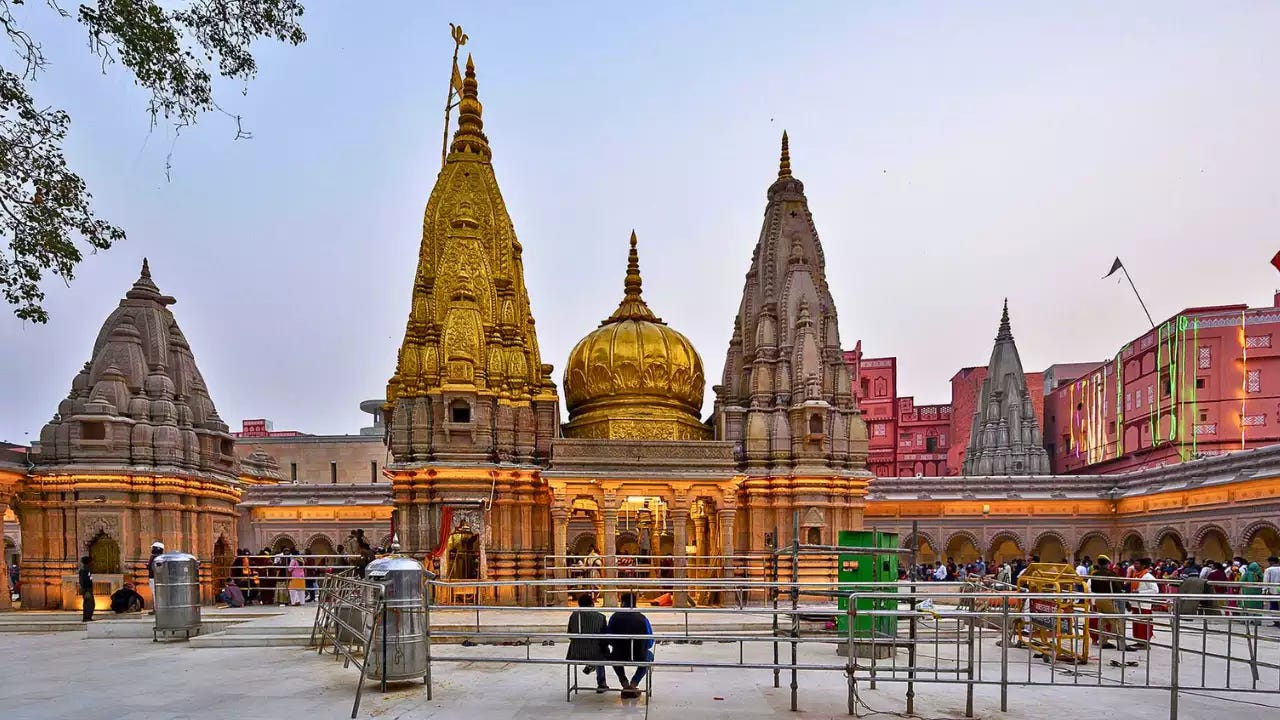
During Sawan, Varanasi becomes an ocean of saffron. Lakhs of kanwariyas and pilgrims queue from the pre-dawn hours to offer Ganga jal on the Jyotirlinga, and on Sawan Somwars the queues begin the night before. The Kashi Vishwanath Corridor has transformed the pilgrimage - the walk from the ghats to the garbhagriha is now open, orderly, and deeply moving, with the Ganga visible behind you as you approach Mahadev.
Yatra wisdom: Book Mangala Aarti or Sugam Darshan slots online through the temple’s official portal well in advance - Sawan slots sell out weeks ahead. Combine your darshan with the evening Ganga Aarti at Dashashwamedh Ghat and, if time permits, Kaal Bhairav darshan, for the tradition holds that no Kashi yatra is complete without seeking the city’s kotwal.
2. Mahakaleshwar, Ujjain — The Lord of Time Himself
Mahakal is the only south-facing (dakshinamukhi) Jyotirlinga, and Ujjain’s presiding deity is not merely worshipped - he rules. Tradition holds that no king may stay overnight in Ujjain, for Mahakal alone is sovereign here.
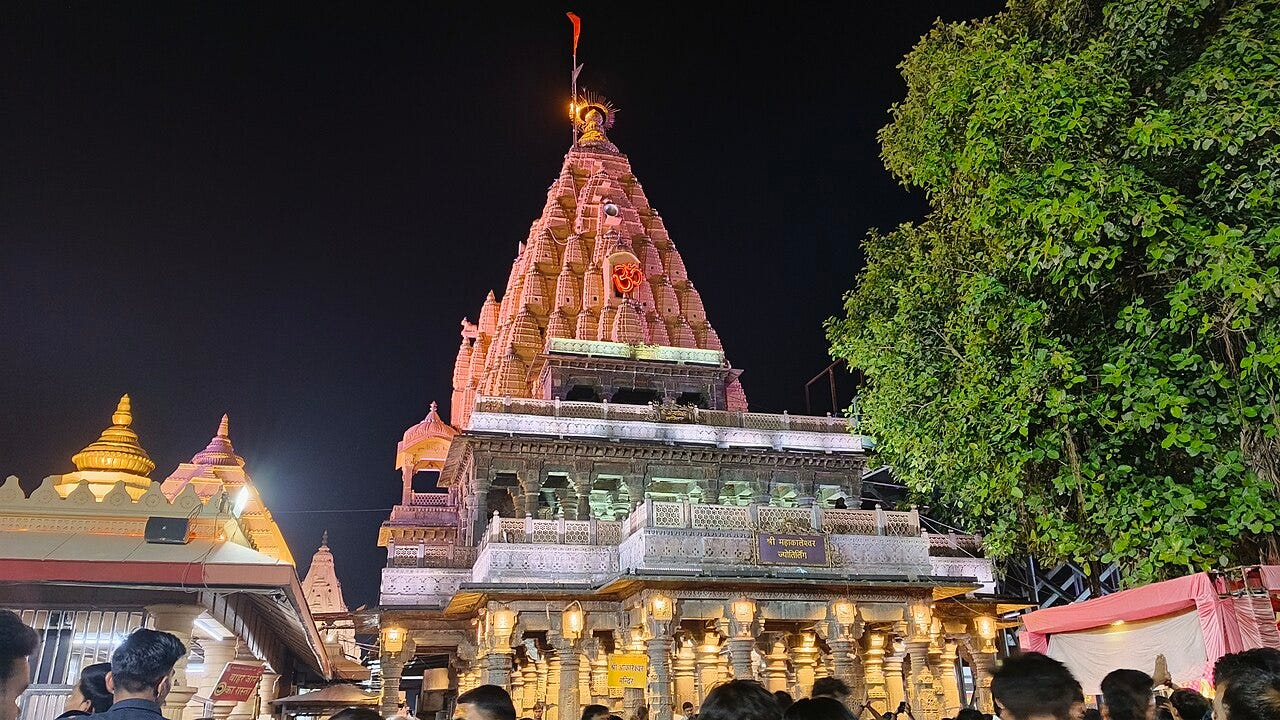
The soul of this temple is the Bhasma Aarti, performed in the small hours before dawn, when the lingam is adorned with sacred ash. Witnessing it once changes something in a devotee permanently. And Sawan brings Ujjain’s most beloved spectacle: the Sawan Sawari, when Mahakal himself leaves the temple in royal procession through the old city every Monday, greeted by lakhs of devotees as their living king.
Yatra wisdom: Bhasma Aarti requires advance online registration and permits are heavily oversubscribed in Sawan — plan four to six weeks out, and have a fallback plan for general darshan, which is itself beautifully managed. Position yourself along the Sawari route by early afternoon on Somwars. Ujjain pairs naturally with Omkareshwar Jyotirlinga, under three hours away, letting you complete two Jyotirlingas in a single yatra.
3. Kedarnath, Uttarakhand - Shiva of the High Himalayas
At nearly 11,700 feet, ringed by snow peaks and fed by the Mandakini, Kedarnath is where Shiva took the form of a bull to elude the Pandavas — and where his hump remained as the Jyotirlinga. It is at once a Jyotirlinga, a Char Dham, and the most demanding pilgrimage on this list: a trek of roughly 16 to 18 kilometres from Gaurikund, or a short helicopter hop for those who cannot walk it.
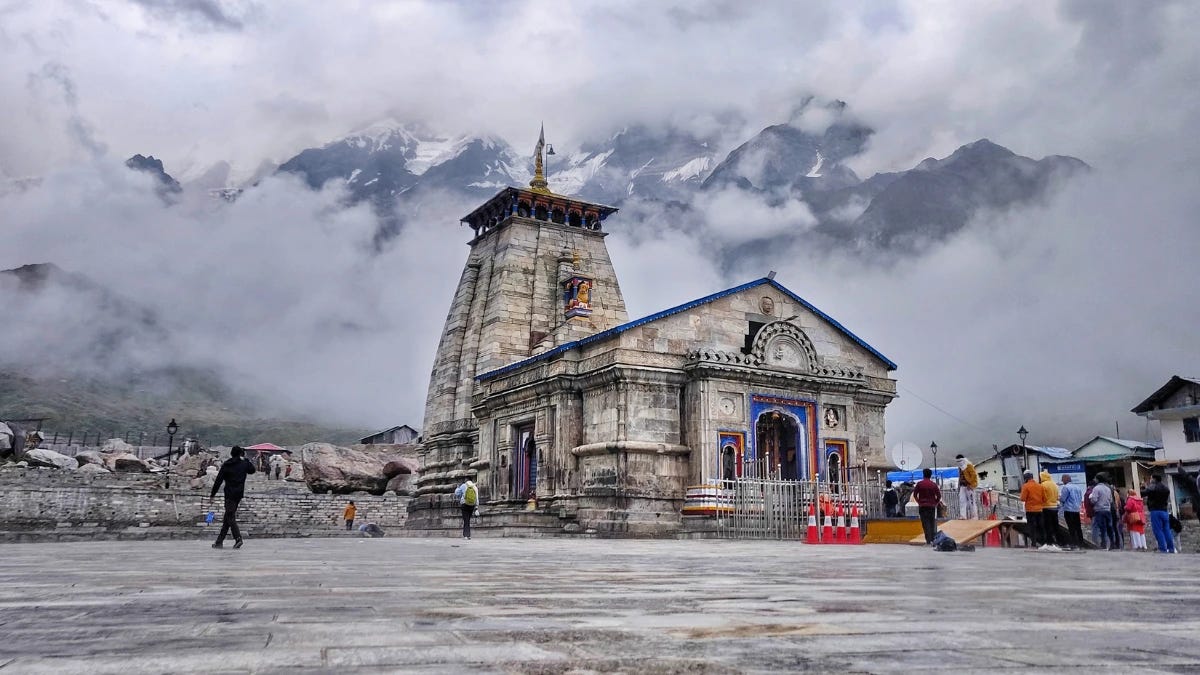
To reach Kedarnath in Sawan, through mist and drizzle, with Jai Bholenath echoing off the mountains, is an experience that words genuinely fail.
Yatra wisdom — read this carefully: Sawan is peak monsoon in Uttarakhand. Landslides and route closures are a real possibility, and weather can hold up helicopter services for days. Register on the Uttarakhand Char Dham portal (mandatory), build two to three buffer days into your itinerary, carry rain protection and warm layers even in August, and book helicopter tickets only through the official IRCTC HeliYatra portal — never through agents promising “confirmed” seats. Elderly yatris and those with health conditions should honestly assess the altitude and consider palki/pony support or a fair-weather window in September instead. Mahadev does not measure devotion in kilometres climbed.
4. Somnath, Gujarat - The Eternal Shrine by the Sea
Somnath is the first among the twelve Jyotirlingas - the shrine where, legend says, Chandra (Soma) himself worshipped Shiva to be freed of his curse. Destroyed and rebuilt again and again across centuries, Somnath standing proudly on the Arabian Sea shore is the very embodiment of sanatan resilience: faith that cannot be demolished.
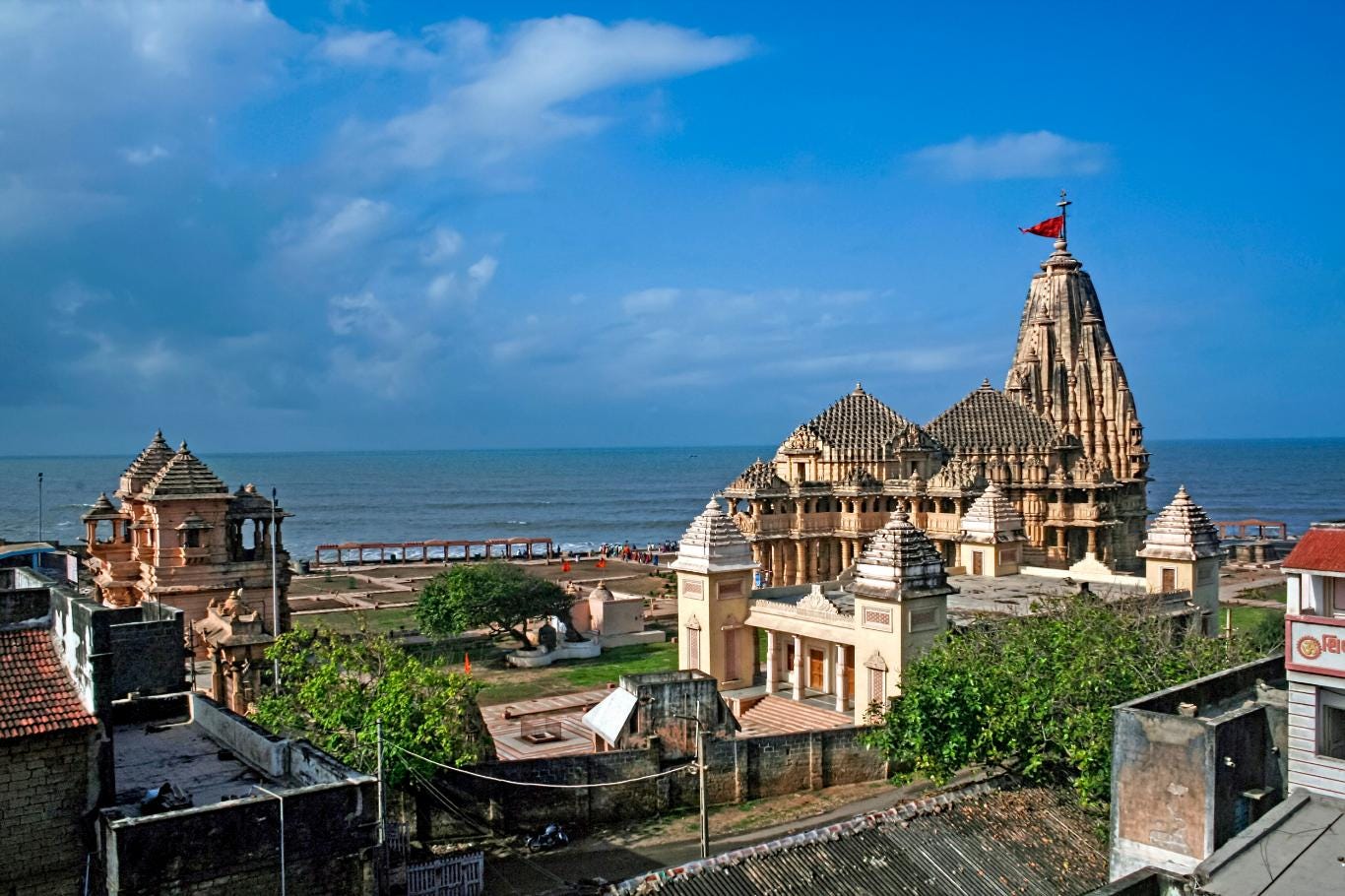
Sawan evenings here are unforgettable — the aarti with the sound of waves behind it, the sea breeze carrying the fragrance of incense, the Baan Stambh pointing across an unbroken ocean all the way to Antarctica.
Yatra wisdom: Stay for the evening light-and-sound show narrating the temple’s history — it deepens the darshan immeasurably. Somnath connects beautifully with Dwarka (under four hours) for a combined Jyotirlinga-and-Dham circuit, and Gir is nearby for families travelling with children.
5. Mallikarjuna, Srisailam - Where Shiva and Shakti Dwell Together
High on the Nallamala hills above the Krishna river gorge stands one of the rarest shrines in all of Bharat: Srisailam is both a Jyotirlinga and a Shakti Peetha. Mallikarjuna (Shiva) and Bhramaramba Devi (Parvati) are worshipped together in the same complex - the divine union itself, enshrined.
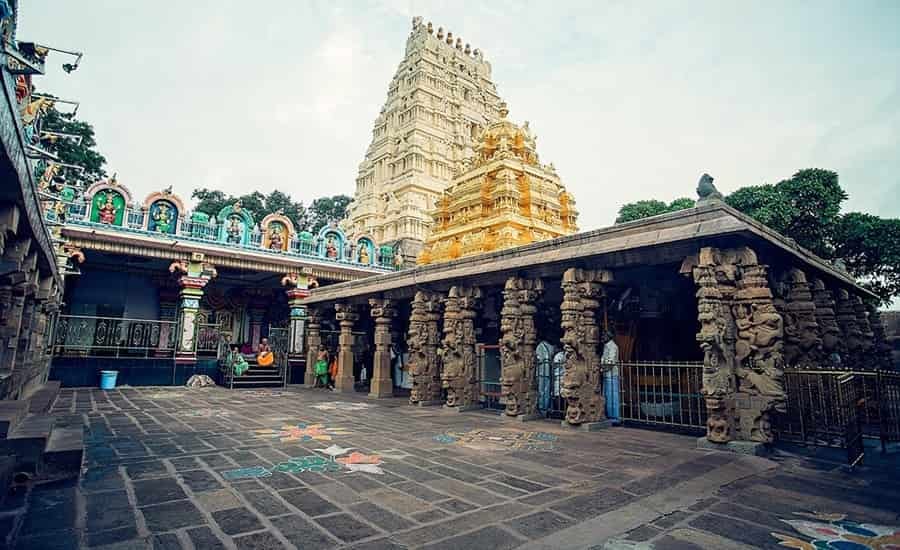
The sthala purana is tender: when Kartikeya withdrew to the south in disappointment, Shiva and Parvati followed their son here out of love. To visit Srisailam is to be received by divine parents. Couples especially seek darshan here for harmony and marital blessing, and Sawan - Parvati’s own month of tapasya for Shiva - is the most fitting time of all.
Yatra wisdom: Srisailam is a four-to-five hour drive from Hyderabad through tiger reserve forest - the ghat road itself is a darshan of nature. Do the Bhramaramba Devi darshan along with Mallikarjuna; skipping the Devi is considered leaving the yatra incomplete. The Patala Ganga ropeway down to the Krishna river adds a sacred snan to the visit.
6. Ramanathaswamy, Rameswaram - The Jyotirlinga Worshipped by Shri Rama
Where else does one avatar of the divine worship another? At Rameswaram, Lord Rama himself established and worshipped the Shivalinga before crossing to Lanka — making this Jyotirlinga a living bridge between the Ramayana and Shaiva tradition, and one of the four Char Dhams of the south.
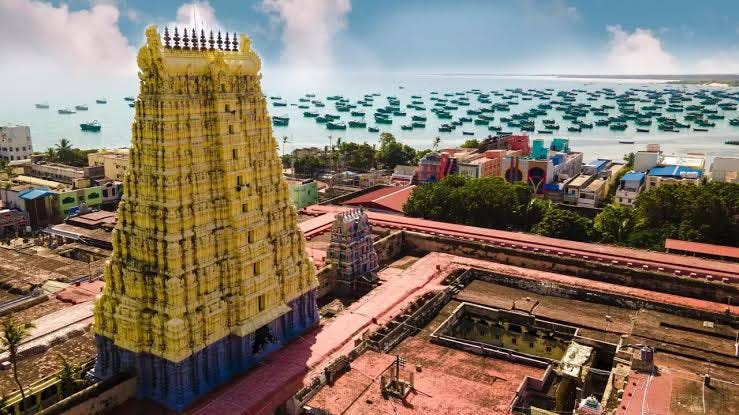
The temple is an architectural wonder: its third corridor is the longest temple corridor in the world, a forest of over a thousand carved pillars. But the heart of the Rameswaram pilgrimage is the 22 theerthams — sacred wells within the complex, each with distinct significance, in which pilgrims bathe sequentially before darshan. During Sawan, this ritual snan is believed to dissolve karmic burdens accumulated across lifetimes.
Yatra wisdom: Arrive early morning for the theertham snan (carry a change of clothes; attendants draw the water for you at each well), then proceed to darshan. The drive across Pamban Bridge and onward to Dhanushkodi — the ghost town at land’s end where the Ram Setu begins — turns the yatra into a Ramayana pilgrimage in itself.
7. Trimbakeshwar, Nashik — The Three-Faced Lord at Godavari’s Source
At the foot of Brahmagiri hill, where the Godavari - the Ganga of the South — takes birth, stands Trimbakeshwar, home to the only Jyotirlinga with three faces: Brahma, Vishnu, and Mahesh together. The crowned lingam, adorned with a jewelled mukut said to date from the age of the Pandavas, is displayed each Monday - making Sawan Somwars here especially significant.
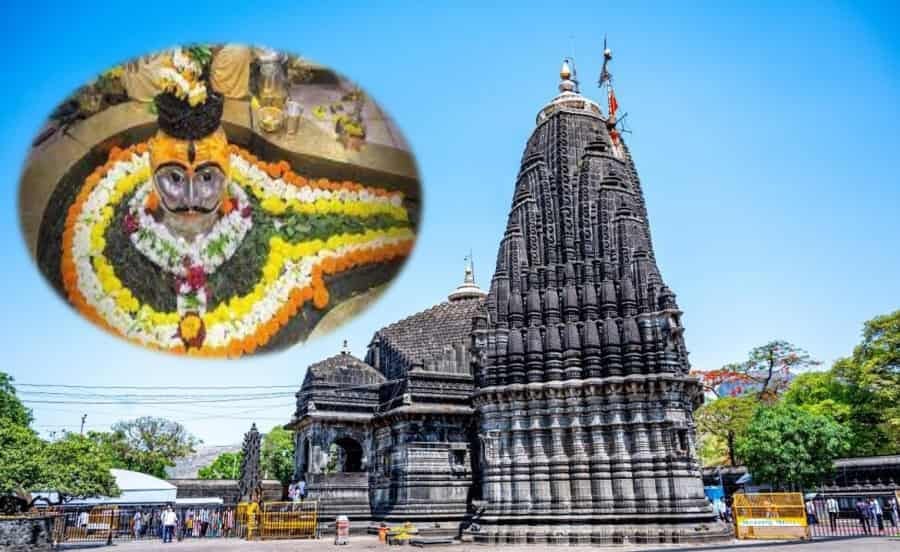
Trimbakeshwar is also Bharat’s foremost seat for ancestral rites: Narayan Nagbali, Tripindi Shraddha, and Kaal Sarpa dosh nivaran poojas are performed here by hereditary priests, and devotees come from across the world seeking peace for their pitras and freedom from doshas.
Yatra wisdom: These special poojas require specific tithis and advance booking with authorised purohits — arrange them before travelling, and be cautious of touts near the temple. A dip at Kushavarta Kund, the sacred tank where the Godavari emerges, precedes darshan by tradition. Nashik city, Panchvati, and Shirdi (90 minutes away) extend the circuit naturally.
Planning Your Sawan Yatra: A Word Before You Go
A Jyotirlinga yatra in Sawan is the most rewarding - and the most demanding - pilgrimage window of the year. Keep these in mind:
Book everything early. Darshan slots, aarti permits, trains, and hotels near major shrines are booked out weeks before Sawan Somwars. The Mondays of August 3, 10, 17, and 24 will see the year’s heaviest footfall.
Respect the monsoon. Kedarnath, Trimbakeshwar, and Srisailam all sit in heavy-rainfall zones. Build buffer days, carry rain gear, and never push against weather advisories. The Lord who waited for Parvati’s tapasya can wait a day for your darshan.
Travel with elders thoughtfully. Most major Jyotirlingas now offer wheelchair assistance, senior-citizen darshan lines, and palki services — but these need to be arranged in advance, not discovered at the gate.
Go with sankalp, not just a checklist. Take a sankalp before you leave home, keep your Somwar vrat if health permits, and offer what the shastras actually ask of you: jal, bel patra, and an undistracted heart.
This Sawan, let the yatra find you. DharmikVibes crafts complete Jyotirlinga yatras — darshan bookings, aarti permits, special poojas, stays, and on-ground seva — so that you carry only your devotion, and we carry everything else. Explore our Dwadash Jyotirlinga yatras or speak to our yatra team to plan your Shravan pilgrimage.
Har Har Mahadev. Bol Bam.