

Har Har Mahadev.
The first shower of Sawan touches the earth, and something ancient stirs. The temple bells sound a little different this month. The chant of “Om Namah Shivaya” carries a little further. The Ganga flows a little more sacred.
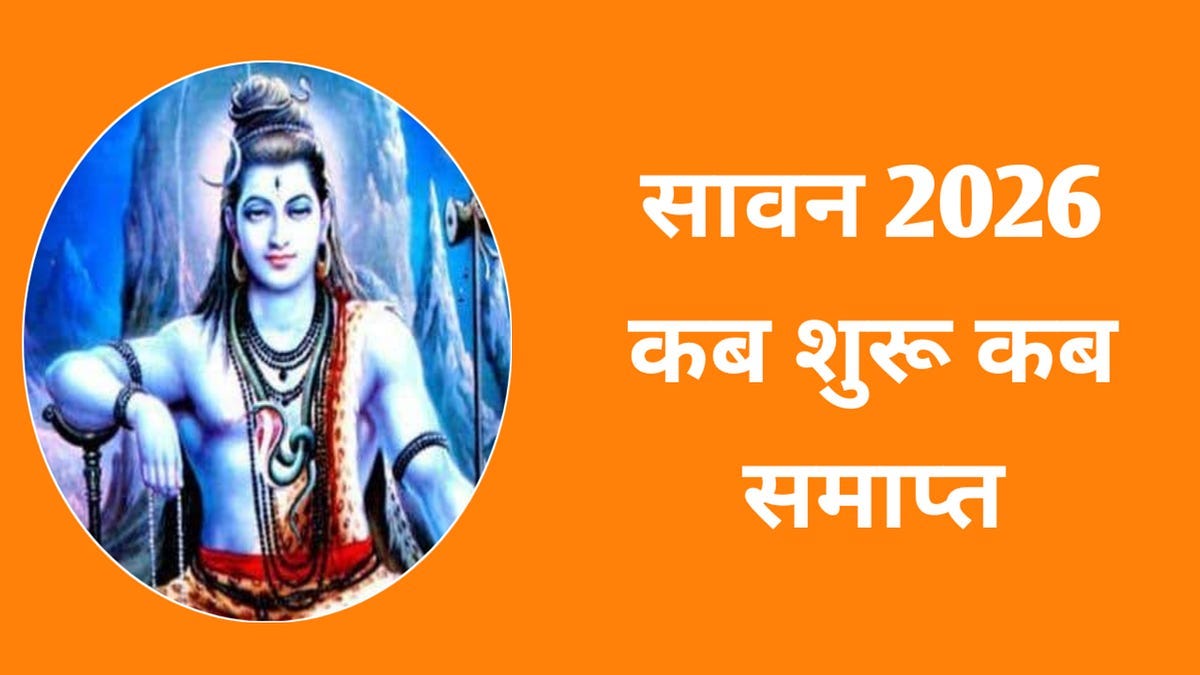
For Devotees of Lord Shiva, Sawan is not just a month on the calendar. It is a divine appointment. Thirty days when the veil between the material and the sacred grows thin, when every Somvar becomes a Maha Somvar, and when a single drop of Gangajal offered at a Shivalinga is said to equal a lifetime of ordinary worship.
Sawan 2026 begins on Thursday, 30 July in North India and Thursday, 13 August in South and West India. Whether you are planning a Jyotirlinga DharmikYatra, observing your first Sawan Somvar Vrat, or preparing to walk with the Kanwariyas, this guide is your complete companion for the sacred month ahead.
1. Sawan 2026 Dates: North vs South - Get This Right First
One of the most frequently asked questions each year - and the source of the most confusion - is why Sawan starts on two different dates across India.
The answer lies in the two lunar calendar systems that India follows.
North India (Purnimanta Calendar)
States: Uttar Pradesh, Bihar, Madhya Pradesh, Rajasthan, Delhi, Punjab, Haryana, Uttarakhand, Jharkhand, Himachal Pradesh.
Sawan Begins: Thursday, 30 July 2026
Sawan Ends: Friday, 28 August 2026 (Shravan Purnima)
In the Purnimanta system, a lunar month ends on the full moon (Purnima). So Sawan begins the day after Ashadha Purnima.
South & West India (Amavasyant Calendar)
States: Maharashtra, Gujarat, Karnataka, Andhra Pradesh, Telangana, Tamil Nadu, Goa.
Sawan Begins: Thursday, 13 August 2026
Sawan Ends: Friday, 11 September 2026
In the Amavasyant system, a lunar month ends on the new moon (Amavasya). This creates a 15-day difference from the northern calendar.
Both traditions are equally sacred. Devotees follow the calendar of their region and lineage.
2. Why Sawan Matters: The Story of Neelkantha
Every ritual has a story. Every fast has a reason. To understand why Devotees pour lakhs of litres of Gangajal on Shivalingas every Sawan, we must return to one of Hinduism’s most powerful legends - the Samudra Manthan.
Long ago, the Devas and Asuras churned the cosmic ocean in search of Amrit, the nectar of immortality. Using Mount Mandara as the churning rod and the serpent king Vasuki as the rope, they turned the ocean for a thousand years.
But before the Amrit could emerge, something terrible rose from the depths - Halahal, a poison so potent it threatened to destroy all creation. The Devas trembled. The Asuras fled. The universe itself began to wither.
In that moment, Lord Shiva stepped forward.
He gathered the poison in the hollow of his palm and drank it. Goddess Parvati, seeing what was about to happen, held his throat so the poison would not descend into his body. It settled there, turning his throat a deep blue - and from that day, Mahadev came to be known as Neelkantha, the Blue-Throated One.
To cool the burning of the poison, the Devas poured Ganga water over him continuously. They fanned him with Bilva leaves. They chanted his name.
This great cosmic event, Devotees believe, took place during the month of Shravan.
That is why every drop of water offered on a Shivalinga during Sawan is a re-enactment of that ancient devotion. Every Bilva leaf offered is remembrance. Every Kanwariya walking hundreds of kilometres with Gangajal on their shoulders is participating in a ritual older than memory itself.
Sawan is the month when Devotees say thank you to Mahadev for saving the universe.
3. The Four Sawan Somvars: Dates, Rituals & Vrat Vidhi
Every Monday of Sawan is called Sawan Somvar or Shravan Somvar, and each one is considered a Maha Somvar - dedicated entirely to Lord Shiva.
Sawan Somvar Dates 2026
North India (Purnimanta):
First Somvar - Monday, 3 August 2026
Second Somvar - Monday, 10 August 2026
Third Somvar - Monday, 17 August 2026 (also Nag Panchami - a rare double auspicious day)
Fourth Somvar - Monday, 24 August 2026
South & West India (Amavasyant):
First Somvar - Monday, 17 August 2026
Second Somvar - Monday, 24 August 2026
Third Somvar - Monday, 31 August 2026
Fourth Somvar - Monday, 7 September 2026
The Four Essential Sawan Somvar Rituals
1. Jalabhishek The most fundamental Sawan ritual. Devotees pour holy water - preferably Gangajal - over the Shivalinga. This can be done at a Shiva temple or on a home mandir Shivalinga. The pouring is done slowly, mindfully, with the chant of “Om Namah Shivaya.”
2. Rudrabhishek An extended abhishek performed by a Vedic Pandit using the Rudram Chamakam. The Shivalinga is bathed with Panchamrit - milk, curd, honey, ghee, and sugar - followed by water, sandalwood paste, and finally offerings of Bilva leaves, flowers, and Bhasma. Rudrabhishek during Sawan is said to remove doshas, bring health, and grant moksha.
3. Bilva Patra Arpan The three-leafed Bel Patra is Mahadev’s most beloved offering. Devotees offer 108 Bilva leaves - or as many as they can - placing each leaf with the smooth side down on the Shivalinga while chanting Shiva mantras. Each leaf represents the three eyes of Shiva, the three worlds, or the destruction of the three afflictions.
4. Maha Mrityunjaya Jaap The most powerful mantra for health, protection, and liberation from fear of death:
Om Tryambakam Yajamahe Sugandhim Pushti-Vardhanam Urvarukamiva Bandhanan Mrityor Mukshiya Maamritat
Devotees chant this 108 times each Somvar. During Sawan, its potency is said to multiply many times over.
Sawan Vrat Rules
Devotees observing the Sawan Somvar Vrat follow these disciplines:
No non-vegetarian food, onion, garlic, or alcohol
No leafy green vegetables (as per traditional practice)
Meals of Sattvic Phalahar - fruits, milk, sabudana, singhara atta, kuttu atta, sendha namak
Avoid cutting hair and nails
Speak the truth, avoid anger, practice charity
Break the fast after evening puja and Aarti
4. Top Jyotirlinga Circuits for Sawan 2026: Where Devotees Must Go
Sawan is the month when the twelve Jyotirlingas of Bharat blaze with divine energy. To offer Jalabhishek at even one Jyotirlinga during Sawan is considered a blessing of a lifetime.
Here are the most powerful Jyotirlinga DharmikYatras Devotees can undertake this Sawan.
1. Mahakaleshwar - Ujjain, Madhya Pradesh
The only south-facing Jyotirlinga. The Mahakal is the eternal Lord of Time himself. The famous Bhasma Aarti performed at 4:00 AM, where sacred ash is offered on the Shivalinga, is one of the most extraordinary spiritual sights on earth. During Sawan, Ujjain becomes an ocean of orange - Devotees from across India converge for the weekly Sawari processions when Mahakal himself is carried through the streets.
Best time to visit: Any Somvar. Book Bhasma Aarti darshan well in advance.
2. Kashi Vishwanath - Varanasi, Uttar Pradesh
The eternal city of Shiva. In Kashi, Sawan is not observed - it is lived. Every ghat becomes a puja mandap. Every gali echoes with “Har Har Mahadev.” The Vishwanath Corridor makes darshan easier than ever before. Devotees who bathe in the Ganga at sunrise, offer Gangajal at Vishwanath, and sit through an evening Ganga Aarti during Sawan carry that blessing for a lifetime.
Sawan Special: Attend the Mangala Aarti at 3:00 AM for the most sacred darshan.
3. Baba Baidyanath Dham - Deoghar, Jharkhand
The heart of the Kanwariya movement. Every Sawan, over one crore Devotees walk 105 kilometres from Sultanganj in Bihar - where they collect Gangajal - to Deoghar, where they offer it at the Baidyanath Jyotirlinga. The scale is beyond imagination. The devotion is unmatched. For any Devotee who wants to experience the raw, unfiltered spirit of Sawan, Baidyanath Dham is unmissable.
Sawan Special: The one-month Shravani Mela is the largest religious congregation in eastern India.
4. Omkareshwar - Khandwa, Madhya Pradesh
Set on a sacred island shaped like the syllable “Om” in the Narmada river, Omkareshwar is one of the most geographically beautiful Jyotirlingas. Devotees perform the Parikrama around the island - a 7-kilometre walk of pure devotion. During Sawan, boats ferry thousands across the Narmada each day.
Combine with: Mahakaleshwar (2 hours by road) for a two-Jyotirlinga Sawan DharmikYatra.
5. Somnath - Gujarat
The first among the twelve Jyotirlingas. Standing on the shores of the Arabian Sea, Somnath has been destroyed and rebuilt seventeen times - a symbol of Sanatana Dharma’s eternal resilience. The evening sound-and-light show tells its complete story. During Sawan, Devotees perform Jalabhishek with water carried from the Triveni Sangam nearby.
Combine with: Nageshwar Jyotirlinga near Dwarka (5 hours drive) for a Gujarat twin-Jyotirlinga circuit.
The Full Twelve Jyotirlingas
For Devotees planning the ultimate lifetime DharmikYatra:
Somnath (Gujarat)
Mallikarjuna (Andhra Pradesh)
Mahakaleshwar (Madhya Pradesh)
Omkareshwar (Madhya Pradesh)
Kedarnath (Uttarakhand)
Bhimashankar (Maharashtra)
Kashi Vishwanath (Uttar Pradesh)
Trimbakeshwar (Maharashtra)
Baidyanath (Jharkhand)
Nageshwar (Gujarat)
Rameshwaram (Tamil Nadu)
Grishneshwar (Maharashtra)
5. Kanwar Yatra 2026: The Walk of the Faithful
If Sawan has one image that defines it in the collective Indian mind, it is the Kanwariya.
Dressed in saffron. Barefoot on the highway. A Kanwar balanced on the shoulders - two pots of Gangajal suspended from a bamboo pole, decorated with flowers and bells. Chants of “Bol Bam” and “Har Har Mahadev” carrying through the night.
The Kanwar Yatra is one of the largest annual pilgrimages in the world. During Sawan 2026, an estimated three to four crore Devotees will walk.
The Main Kanwar Routes
Haridwar to Delhi / Meerut / Baghpat The most famous route. Devotees collect Gangajal from Har Ki Pauri and walk 200 to 300 kilometres back to their local Shiva temples in western Uttar Pradesh, Haryana, and Delhi.
Sultanganj to Deoghar The 105-kilometre walk to Baba Baidyanath Dham. The most spiritually intense Kanwar route in India.
Gaumukh / Gangotri to Local Temples The Dak Kanwar - a running Kanwar where Devotees carry the Kanwar without letting it touch the ground until Jalabhishek is offered.
The Three Types of Kanwar
Saadharan Kanwar - Devotees rest and walk at their own pace
Dak Kanwar - The Kanwar cannot touch the ground until Jalabhishek is complete
Baithi Kanwar - Devotees carry the Kanwar sitting on a decorated seat
Kanwariya Sawan Shivratri 2026
The Kanwariyas offer their Gangajal on Sawan Shivratri, which falls on Tuesday, 11 August 2026 in North India - the darkest night before Amavasya, considered the most auspicious moment for Jalabhishek in the entire month.
6. Nag Panchami & Shravan Purnima: The Sacred Bookends of Sawan
Sawan is not one festival. It is many. Two of the most significant within the month are Nag Panchami and Shravan Purnima.
Nag Panchami 2026: Monday, 17 August
In 2026, Nag Panchami falls on a Somvar - a rare and highly auspicious coincidence. Devotees worship the twelve sacred serpents including Vasuki, Takshak, Ananta, and Shesha. Milk is offered to serpent idols. Anthills are visited with offerings.
Since Lord Shiva himself wears Vasuki as an ornament, Nag Panchami during Sawan carries a double blessing. Devotees performing Kaal Sarp Dosh remedies on this day are believed to receive maximum relief.
Nag Panchami Puja Muhurat 2026: 06:04 AM to 08:39 AM
Shravan Purnima / Raksha Bandhan 2026: Friday, 28 August
The concluding day of Sawan in North India. A day that carries three layers of celebration:
Raksha Bandhan - Sisters tie the sacred Rakhi on their brothers’ wrists
Shravan Purnima - The full moon that ends the holy month
Upakarma (Avani Avittam) - Vedic Brahmins change their sacred thread (Yajnopavita)
Devotees close Sawan with a final Rudrabhishek or Satyanarayan Katha - locking in the merits earned through the month.
Rakhi Muhurat: After Bhadra ends on the evening of 27 August, or early morning before 07:20 AM on 28 August.
7. Sawan 2026 with DharmikVibes: Walk This Sacred Month with Us
For Devotees who wish to experience Sawan not as a rushed weekend visit but as a truly transformative spiritual journey, DharmikVibes has curated dedicated Sawan DharmikYatra experiences at every major Jyotirlinga circuit.
Our Sawan 2026 DharmikYatra Circuits
Kashi Sawan DharmikYatra Guided Ganga Aarti participation, Vishwanath Mangala Aarti darshan, Panchakroshi Parikrama initiation, and evening satsangs at the ghats. Stay at our Kashi DharmikHub - an authentic Devotee-focused retreat within walking distance of the Vishwanath Corridor.
Ujjain Mahakaleshwar Sawan DharmikYatra Bhasma Aarti darshan bookings, Kaal Bhairav and Harsiddhi darshan, and Sawari procession experience. Stay at our Ujjain DharmikHub for peaceful pre-Aarti mornings and evening bhajans.
Deoghar Kanwariya Support DharmikYatra For Devotees walking the Sultanganj-to-Deoghar Kanwar route - complete logistical, medical, and spiritual support all along the way.
Twin Jyotirlinga Sawan Circuits
Mahakaleshwar + Omkareshwar (Madhya Pradesh)
Somnath + Nageshwar (Gujarat)
Trimbakeshwar + Bhimashankar (Maharashtra)
The DharmikVibes Difference
We do not run tours. We facilitate DharmikYatras. Every itinerary is designed for Devotees, by Devotees. Every detail - from Pandit-led Rudrabhishek at your accommodation, to Sattvic meals aligned with Sawan Vrat, to darshan facilitation without long queues - is thought through with devotional discipline.
A Closing Word
Sawan comes only once a year. And within Sawan, there are only four Somvars. Within those four Somvars, only one Shivratri. Within that Shivratri, only one Nishita Kaal - the sacred midnight window.
The month passes quickly. Life gets busy. The reasons to postpone are always there.
But Mahadev does not ask for grand gestures. He asks for a single Bel Patra offered with devotion. A single lota of water poured with love. A single “Om Namah Shivaya” chanted with sincerity.
Whatever you can offer this Sawan - offer it. Whether you walk with the Kanwariyas or perform a simple Jalabhishek at home. Whether you journey to Kashi or sit before your home mandir. Whether you fast all four Somvars or just one.
Sawan is Shiva’s gift to his Devotees.
Take it with both hands.
Har Har Mahadev. Om Namah Shivaya.
This guide has been prepared by the DharmikVibes editorial team for the benefit of Devotees preparing for Sawan 2026. For personalised Sawan DharmikYatra planning, Rudrabhishek arrangements at Jyotirlingas, or Kanwariya support services, reach out to us at dharmikvibes.com.
Bookmark this guide and share it with fellow Devotees. May this Sawan bring you closer to Mahadev than any before.