

Across Tamil Nadu, from the shore of the Laccadive Sea to a forest hill above Madurai, six temples of Murugan hold a special place in the Tamil heart: the Aarupadai Veedu, the six abodes. Every Murugan temple is loved, but these six are the ones the old poems name, the ones Arunagirinathar sang in the Tiruppukal, and the ones to which millions of devotees measure their own yatra.
Murugan, the son of Shiva and Parvati, the young commander of the devas, the god who carries the vel, is the deity of the kurinji, the mountain country of old Tamil geography. Works of the Sangam era call him the favoured god of the Tamils, and the six abodes are where his story is written into the land: a wedding, a war, a quarrel over a fruit, a lesson taught to his own father, a marriage in the hills, and a forest home with both his consorts.
The six are not arranged around a single city, and there is no fixed order to keep. They spread across the state, from Tiruttani near the Andhra border to Tiruchendur at the southern shore, which makes the Aarupadai Veedu a true yatra: three to six days of driving through Tamil Nadu's temple country. The gentlest months for it are November to February, when the northeast monsoon is fading and the air turns mild. This guide covers the six abodes and their stories, how to plan the circuit, and the dates that matter this season.

One god, six stories
The Tamil telling of Murugan's birth, given in the Kanda Puranam, begins with a tyranny the gods could not end. The asura brothers Surapadman, Simhamukhan and Tarakasuran had won a boon that only a son of Shiva could destroy them. From Shiva's divine sparks, carried to the Saravana lake, six infants were born and nursed by the Krittika stars; when Parvati gathered them into her arms, the six became one child with six faces: Shanmukha, the six-faced.
Armed with the vel, the spear that is the power of his mother, Murugan destroyed Tarakasuran and Simhamukhan, and faced Surapadman in his final battle by the sea. The asura took the form of a great mango tree; the vel split it in two, and the halves became the peacock Murugan rides and the rooster on his banner. For this victory the devas gave him Deivanai, the daughter of Indra, as his bride. Later, in the hills, he wooed and wed Valli, the daughter of a tribal chief. And once, when his father Shiva asked him the meaning of the primal sound Om, the son became the teacher: he is shown at Swamimalai instructing Shiva, who bends to listen like a disciple.
The six abodes
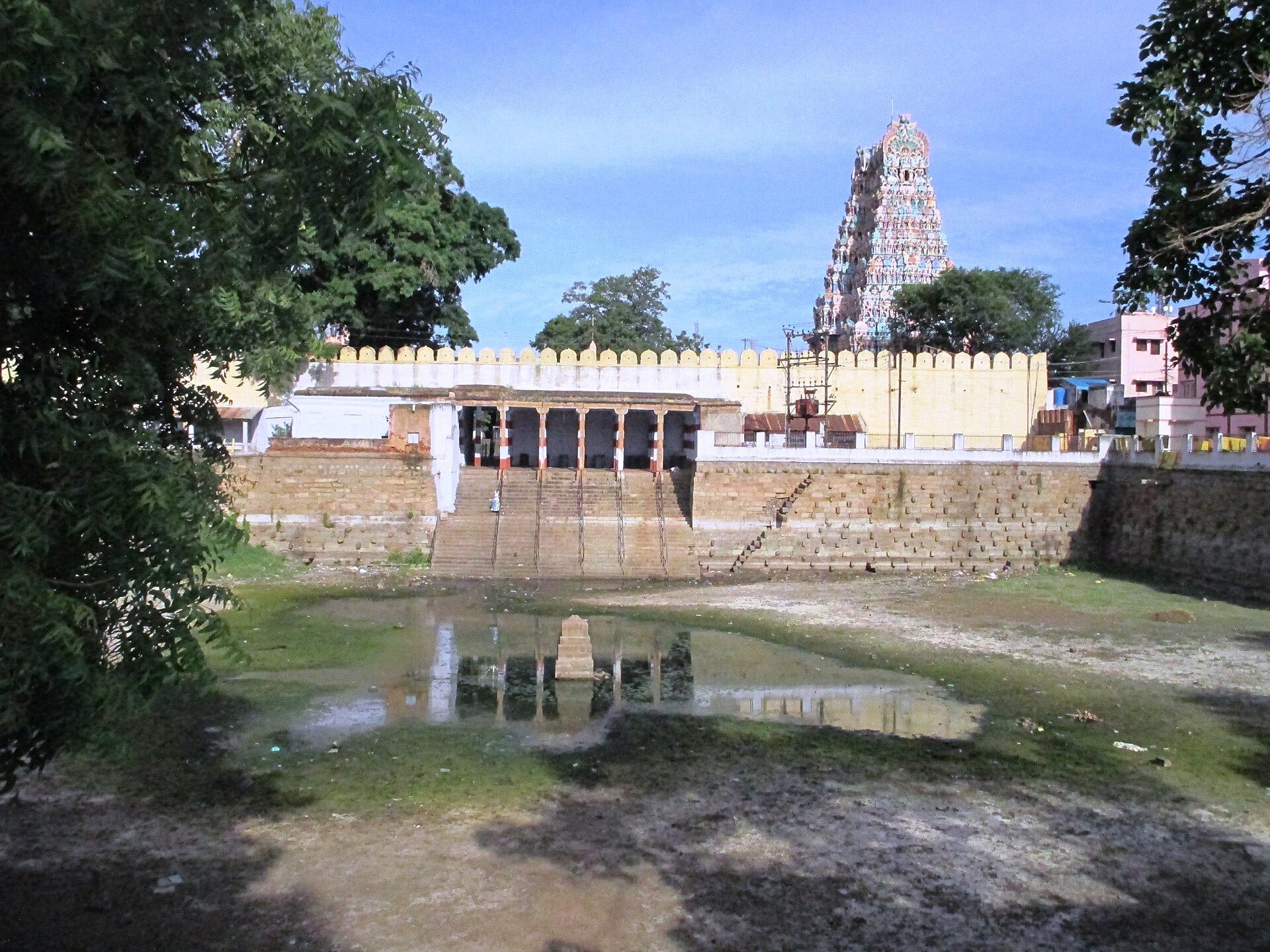
1. Thiruparankundram, near Madurai. The first of the six, on a hillock about eight kilometres from Madurai, and the place where Murugan's marriage to Deivanai is celebrated. The temple is among the oldest rock-cut shrines in the Tamil country, and the Sangam poem Tirumurukarruppatai, the oldest guide to the abodes, is said to have been composed here. For Madurai families this is the wedding temple: marriages are still conducted before the god who married here himself.

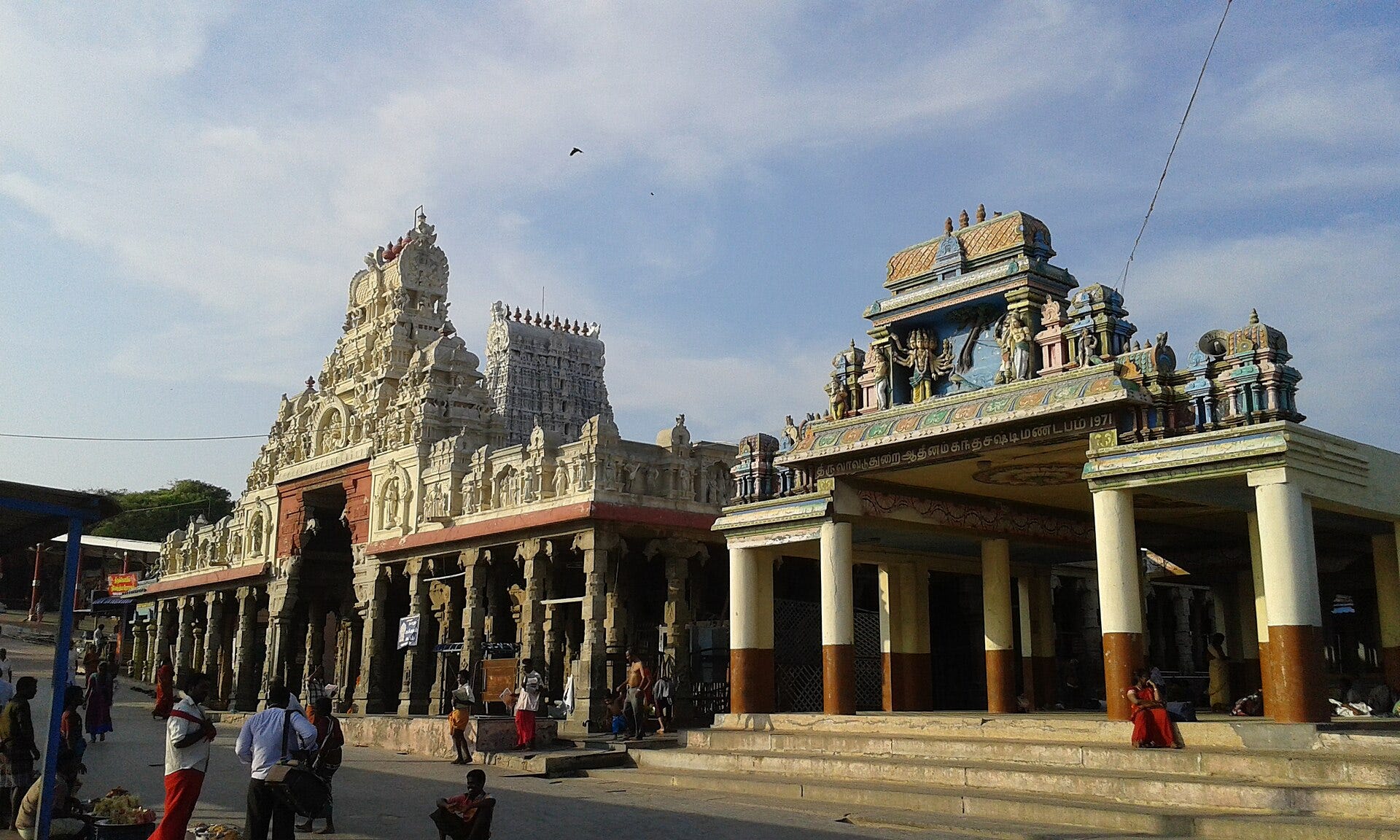
2. Tiruchendur, on the seashore. The second abode stands where few great temples in India stand: directly on the beach, its gopuram facing the waves of the Laccadive Sea. Here the war with Surapadman was fought and won, and each year, in the Tamil month of Aippasi, the six days of Kanda Sashti end with the Soorasamharam, the dramatic re-enactment of the demon's defeat on the shore. The sea wind, the salt light and the roar of the surf make Tiruchendur unlike any other Murugan temple on earth.
3. Palani, the hill of the young renunciate. The third abode, in Dindigul district, is the most visited of the six. The story is the famous quarrel: the divine fruit of knowledge was promised to whichever son circled the world first; Murugan set off on his peacock, while Ganesha simply walked around his parents and won. When Murugan returned, angry and hurt, he left Kailasa and came to live on this hill as a hermit with nothing but his staff: Dhandayuthapani, the staff-bearer, clad in a loincloth, his head shaven. Devotees climb the hill's steps or ride the winch and rope car to the top; the temple's panchamritam, a sweet of banana, honey and ghee, is famous across the south, and the sandal paste applied to the murti at night is distributed as rakkala chandanam.
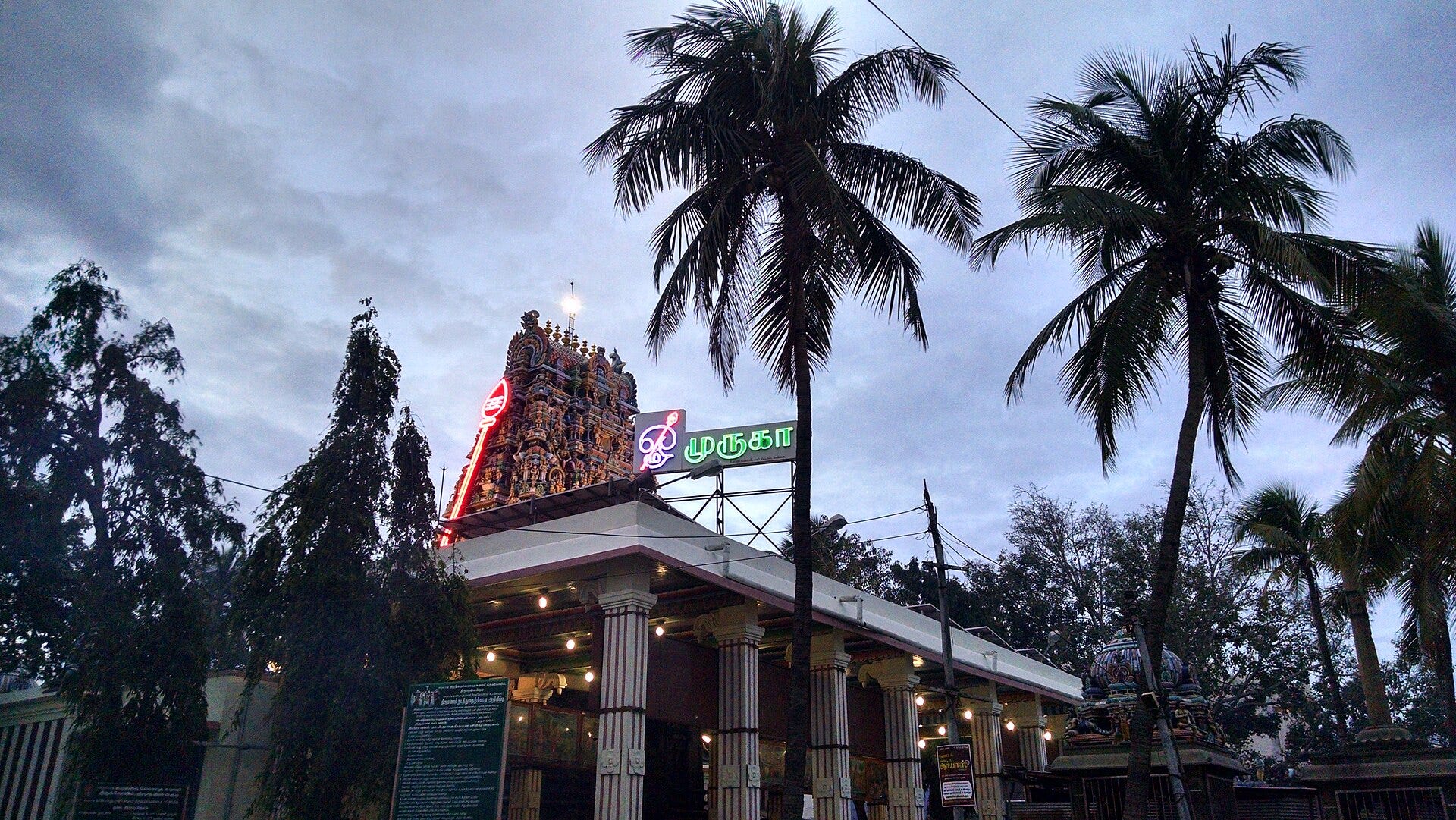

4. Swamimalai, near Kumbakonam. The fourth abode stands on a small artificial hill above the Cauvery delta country, a few kilometres from Kumbakonam. This is where the son taught the father: asked for the meaning of the pranava mantra, Om, Murugan expounded it to Shiva himself, who stood before him with folded hands. The murti of Swaminatha, the lord-teacher, is worshipped at the summit, and the image of Shiva below is that of the obedient disciple. Parents bring young children here before their first lessons, for the god who once taught his own father.
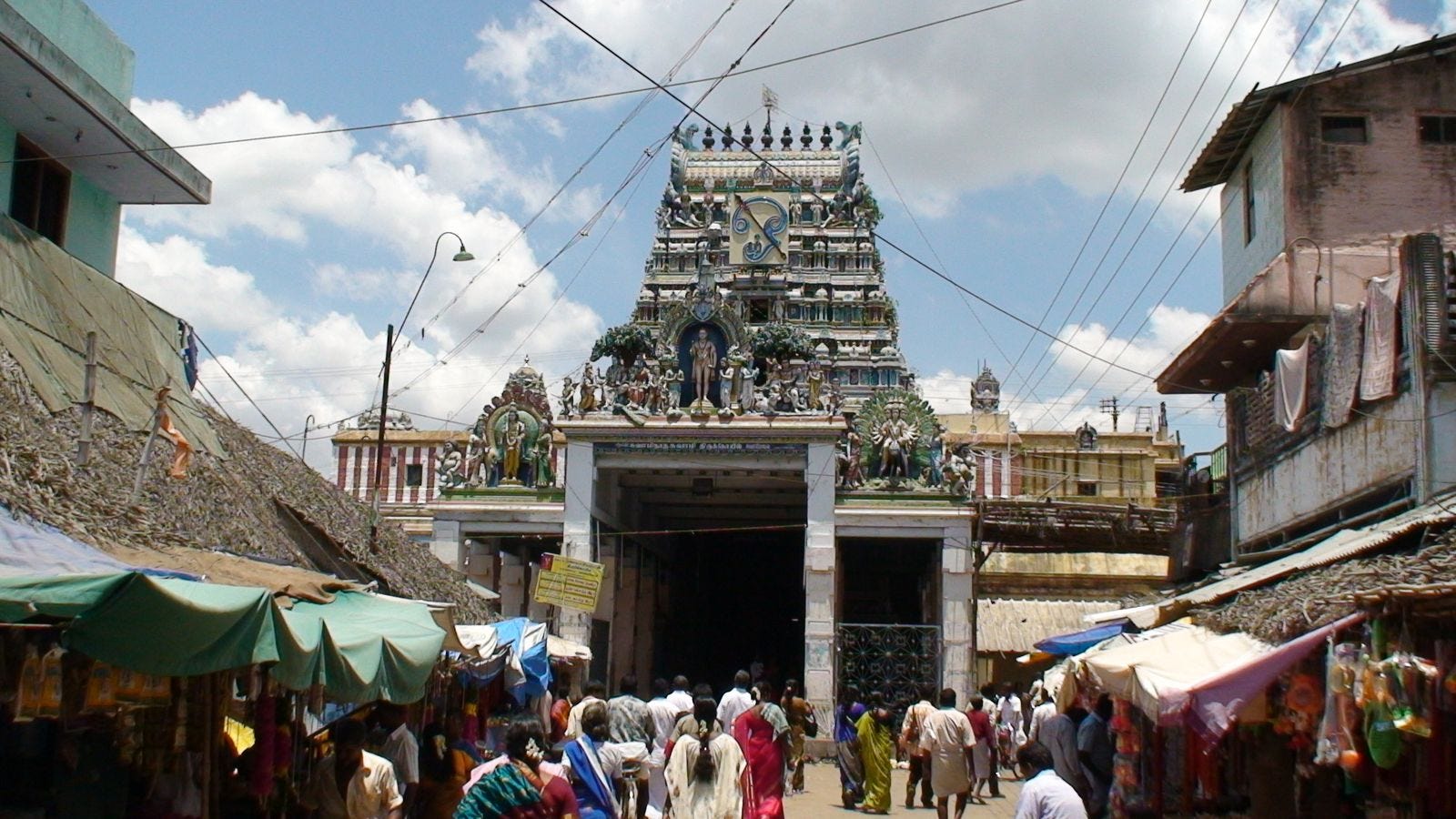

5. Tiruttani, the hill of peace. The fifth abode rises on a hill near the Andhra border, a couple of hours from Chennai. After the fury of the war, it is here that Murugan's anger cooled: the name itself is tied to the calming of the mind, and it is here that he married Valli, the hunter's daughter he had wooed in disguise. A long flight of steps climbs the hill to the temple; those who cannot climb can drive up the ghat road. The day after Deepavali, when the hill lamps are lit, is among the temple's great days.
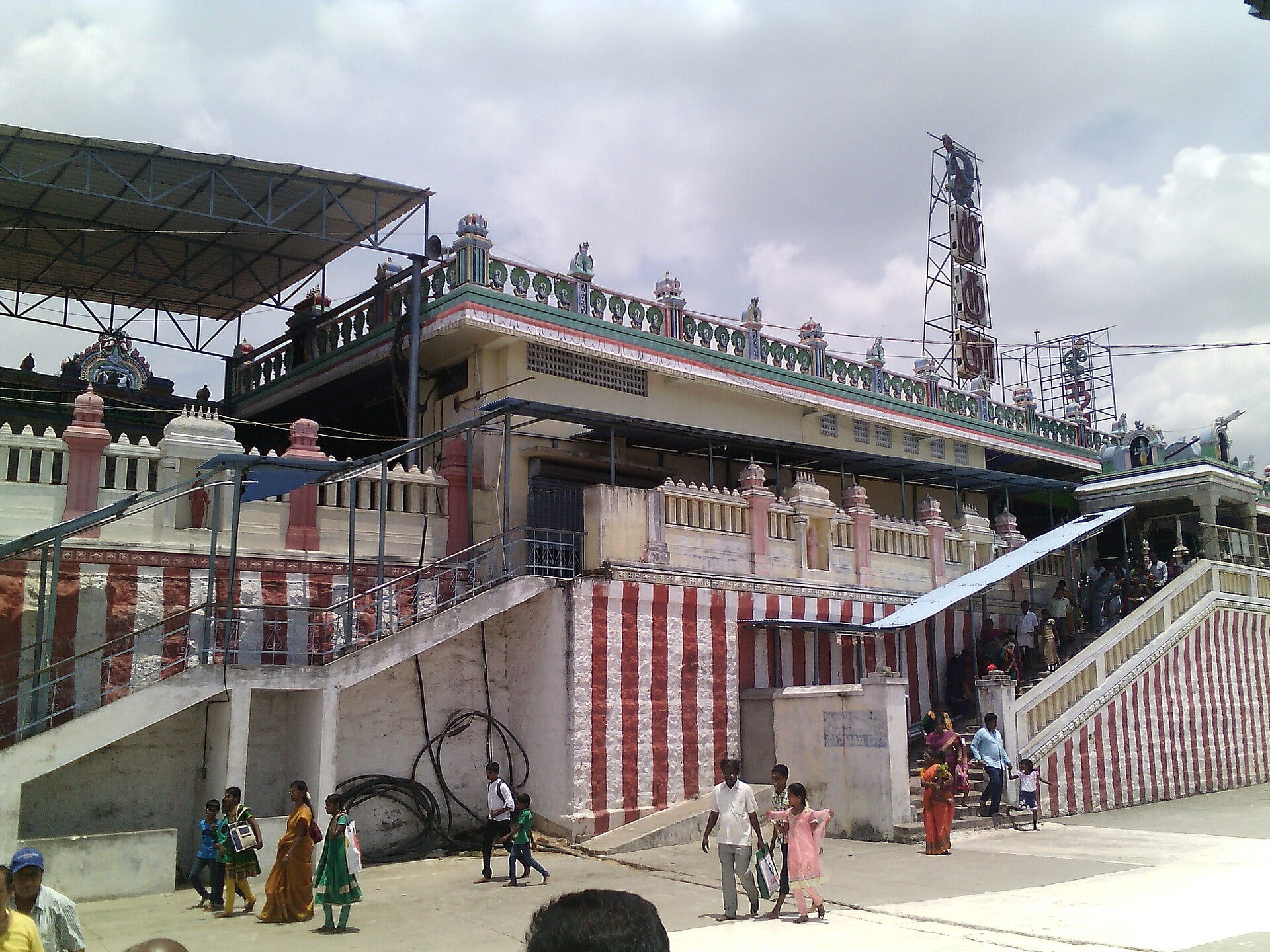

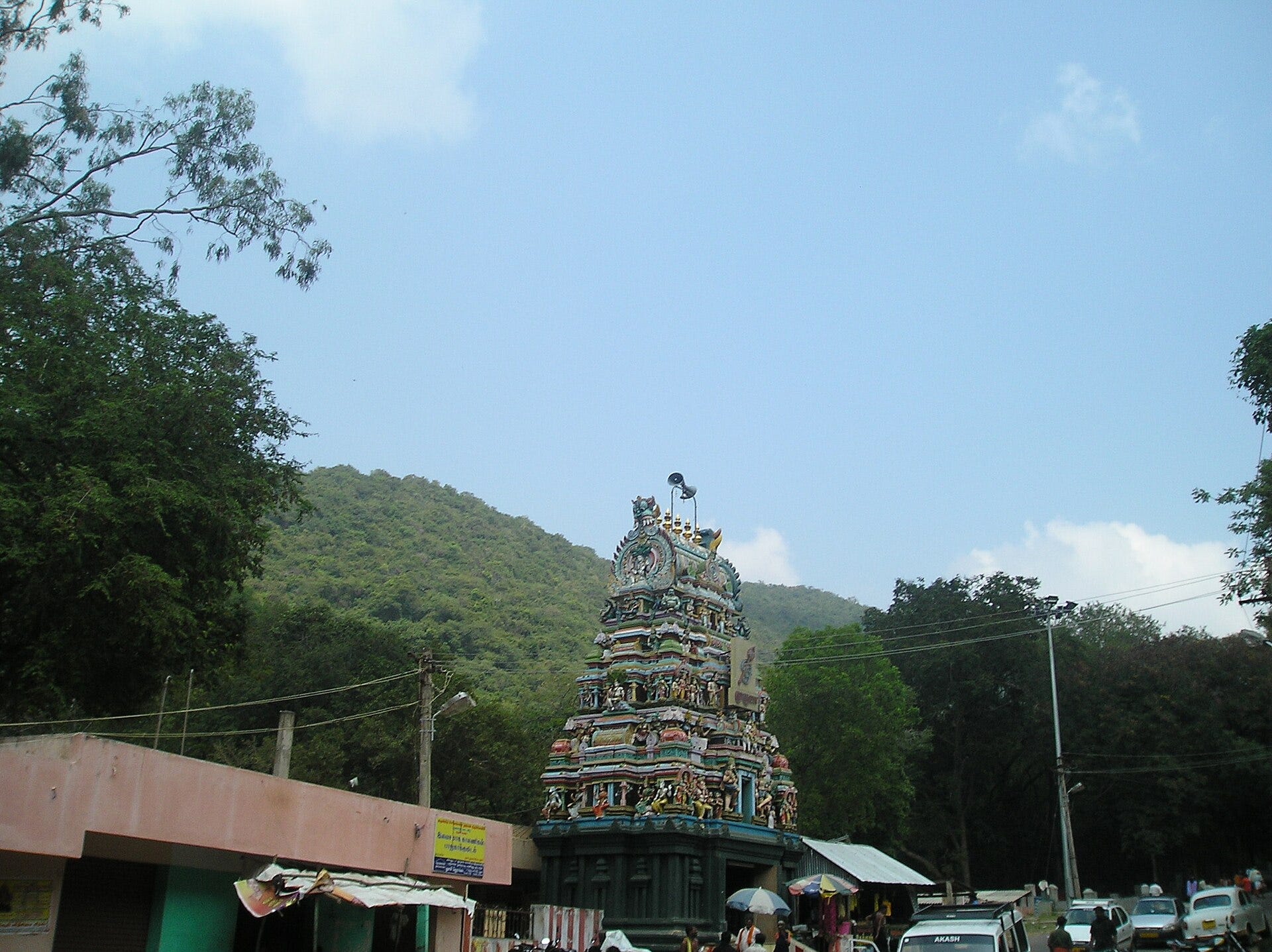
6. Pazhamudircholai, the forest hill. The sixth abode hides in the woods of the Solaimalai hill, about twenty kilometres from Madurai near the Alagar temple. Here Murugan sits with both his consorts, Deivanai and Valli, together: the two stories of his marriage joined in one sanctum. A stream called the Nupura Gangai, named for the anklet's ring, rises on the hill. The drive up through the reserved forest is part of the pilgrimage; monkeys own the road, and the temple keeps the feel of a grove hermitage.

Planning the circuit
The six abodes fall into natural groups. Around Madurai: Thiruparankundram and Pazhamudircholai, both easy half-days from the city. Down south: Tiruchendur, a half-day beyond Tuticorin, on the coast. West: Palani, about two to three hours from Madurai by road. In the Cauvery delta: Swamimalai, beside Kumbakonam. And far north: Tiruttani, between Chennai and Tirupati.
A comfortable circuit is four to six days. Fly into Madurai for the southern five, or Chennai if Tiruttani comes first; Madurai, Kumbakonam and Tiruchendur all have rail connections, and the roads between the temples are good. A sensible order from Madurai: Thiruparankundram and Pazhamudircholai on day one, Palani on day two, across to Kumbakonam for Swamimalai on day three, down the coast for Tiruchendur on day four, and Tiruttani last if you are driving out through Chennai. Hire a car with a driver who knows the temple towns; the distances are real but never exhausting.
Why winter is the season
Tamil Nadu's own pleasant season runs from November to February. The northeast monsoon brings its sharpest rain in October and November and then eases; December and January days are warm without being fierce, and the mornings in the Palani hills and on the Solaimalai road are genuinely cool. For a circuit built around driving, this is the window.
The season also holds the great Murugan dates. Thaipusam, the festival of the vel, falls on Friday, 22 January 2027: the biggest day of the year at Palani, when kavadi-bearers fill the roads for days in advance. Panguni Uthiram, the festival of the divine weddings, falls on Monday, 22 March 2027, and is celebrated with special splendour at Thiruparankundram and Tiruttani, the two marriage abodes. Vaikasi Visakam, Murugan's birth star day, comes with the summer. Kanda Sashti and the Soorasamharam at Tiruchendur belong to Aippasi, around October and November, and are worth a yatra of their own.
If you want quiet darshan, choose ordinary weekdays between the festivals. If you want to see these temples at their fullest, come for Thaipusam, and book accommodation well ahead; Palani in Thaipusam week is one of the great gatherings of the Tamil year.
On the ground: practical notes
Darshan at all six temples is free; the larger ones, especially Palani and Tiruchendur, also offer paid special-entry darshan that shortens the queue, and Palani's winch and rope car charge small fares for the climb. Temple timings vary by temple and by day, and most close for a few hours in the afternoon, so check the current timings before setting your driving order, and plan hill temples for the morning. Dress modestly: at the big Murugan temples, men are commonly expected to be bare-chested or in a veshti for entry into the inner areas, with the practice varying by temple.
Food on this circuit is a pleasure in itself: Madurai's jigarthanda and Kumbakonam's degree coffee are local institutions, and every temple town runs on vegetarian meals. At Palani, do not leave without the panchamritam. Tonsuring is a common offering at Palani and Tiruttani, and ear-piercing for children is done at several of the abodes. If you are travelling with elders, note that Palani and Tiruttani both have road or winch alternatives to the steps.
Questions first-timers ask
Is there a fixed order, like the Ashtavinayak? No. The six abodes are listed in the traditional sequence, Thiruparankundram to Pazhamudircholai, but pilgrims visit them in whatever order the roads suggest. There is no return visit to close the circuit.
How many days do I need? Four days is comfortable for all six with a driver. Three is possible if you drop Tiruttani or combine the Madurai pair. Six days lets you add Madurai's Meenakshi temple and the delta temples around Kumbakonam.
Can NRIs and first-time visitors manage without Tamil? Yes. The temple towns are used to pilgrims from everywhere, signboards are in Tamil and English, and a driver-guide handles the rest. Festivals are the only time to plan carefully.
Which abode should I not miss if time is short? Every devotee answers differently, but the pairing that shows the god's full range is Tiruchendur, where he fought, and Palani, where he renounced. The sea and the hill.
Is it suitable for children and elders? Very much so. The temples are towns, not treks, the two Madurai abodes and Swamimalai involve little walking, and Palani and Tiruttani both offer alternatives to the steps. The drives are the longest part of the day, and even those rarely cross three hours.
Six abodes, six landscapes, one young god who married, fought, sulked, taught and forgave across them. The Aarupadai Veedu is Tamil devotion at its most personal, and winter is when the whole circuit lies open and gentle. At DharmikVibes, our vision is to enable Divine Experiences for every seeker, on every yatra, and there is no friendlier first yatra through the Tamil country than this one.