

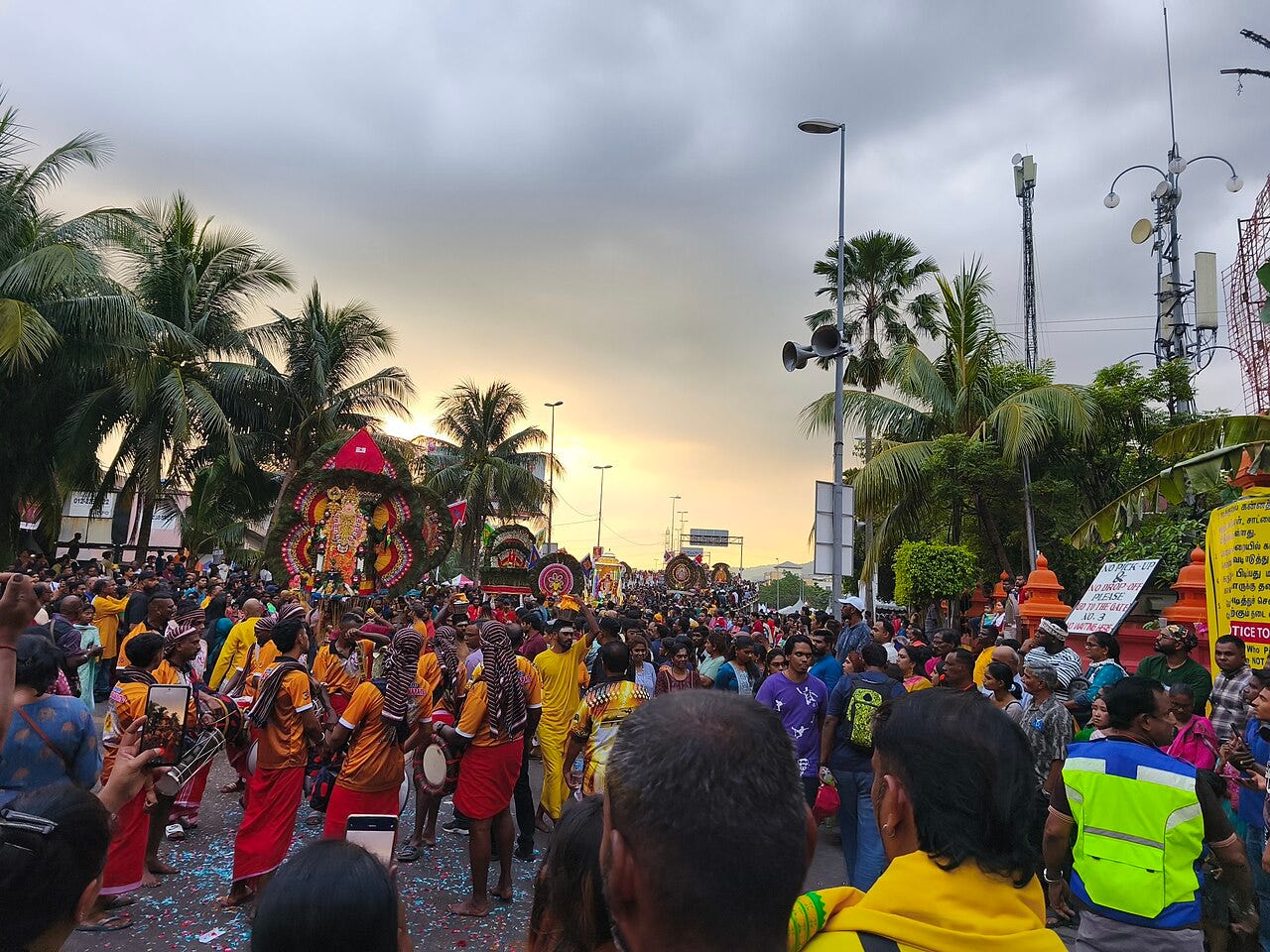
On the full moon of the Tamil month of Thai, something remarkable happens from the hills of Tamil Nadu to the streets of Kuala Lumpur and Singapore. Hundreds of thousands of devotees, dressed in yellow and barefoot in the morning heat, walk for hours carrying offerings to Lord Murugan: pots of milk balanced on their heads, and on their shoulders the kavadi, the decorated burden that gives the festival its most famous image. This is Thaipusam, or Thai Poosam, the day of the Vel.
For first-timers, Thaipusam can look intense from the outside. From the inside, it is a festival of vows kept: families who promised an offering in a difficult year, devotees giving thanks for a prayer answered, and whole communities turning out to feed, guide and cheer the walkers along the road. It is kept with deep local variations, quiet and temple-centred in much of Tamil Nadu, vast and processional in Malaysia and Singapore.
Here is what the day means, when it falls in 2027, how the kavadi tradition works, where the great gatherings happen, and how to witness it respectfully.

When is Thaipusam 2027
In 2027, Thaipusam falls on Friday, January 22. The festival is kept when the Pusam star, the Pushya nakshatra, meets the full moon of the month of Thai. This year the Poosam nakshatra begins at about 10:24 AM on January 22 and runs until about 7:31 AM on January 23, as calculated for India, so the festival day is the Friday. A small note: because the festival is read from the star and the full moon together, a few almanacs can print the day before or after; the widely kept date, and the public holiday in Malaysia, is January 22.
In Malaysia, Thaipusam is a state public holiday in Kuala Lumpur, Selangor, Penang, Perak, Johor, Negeri Sembilan and Putrajaya, which tells you something about its scale there. In Tamil Nadu it is not a general public holiday, but the Murugan temples are full from the early hours, and Palani in particular draws one of its largest gatherings of the year. Devotees in Singapore, Sri Lanka, Mauritius and wherever the Tamil diaspora has made home keep the day with processions and temple worship.

The story of the Vel
Thaipusam honours the moment, the tradition says, when the goddess Parvati gave her son Murugan the Vel, the divine spear, before his battle with the asura Surapadman. With that lance Murugan defeated the demon and his hosts, and the Vel became his sign: the spear of wisdom and grace that pierces ignorance and protects those who call on him. On Thai Pusam, devotees worship the Vel as much as the god who bears it.
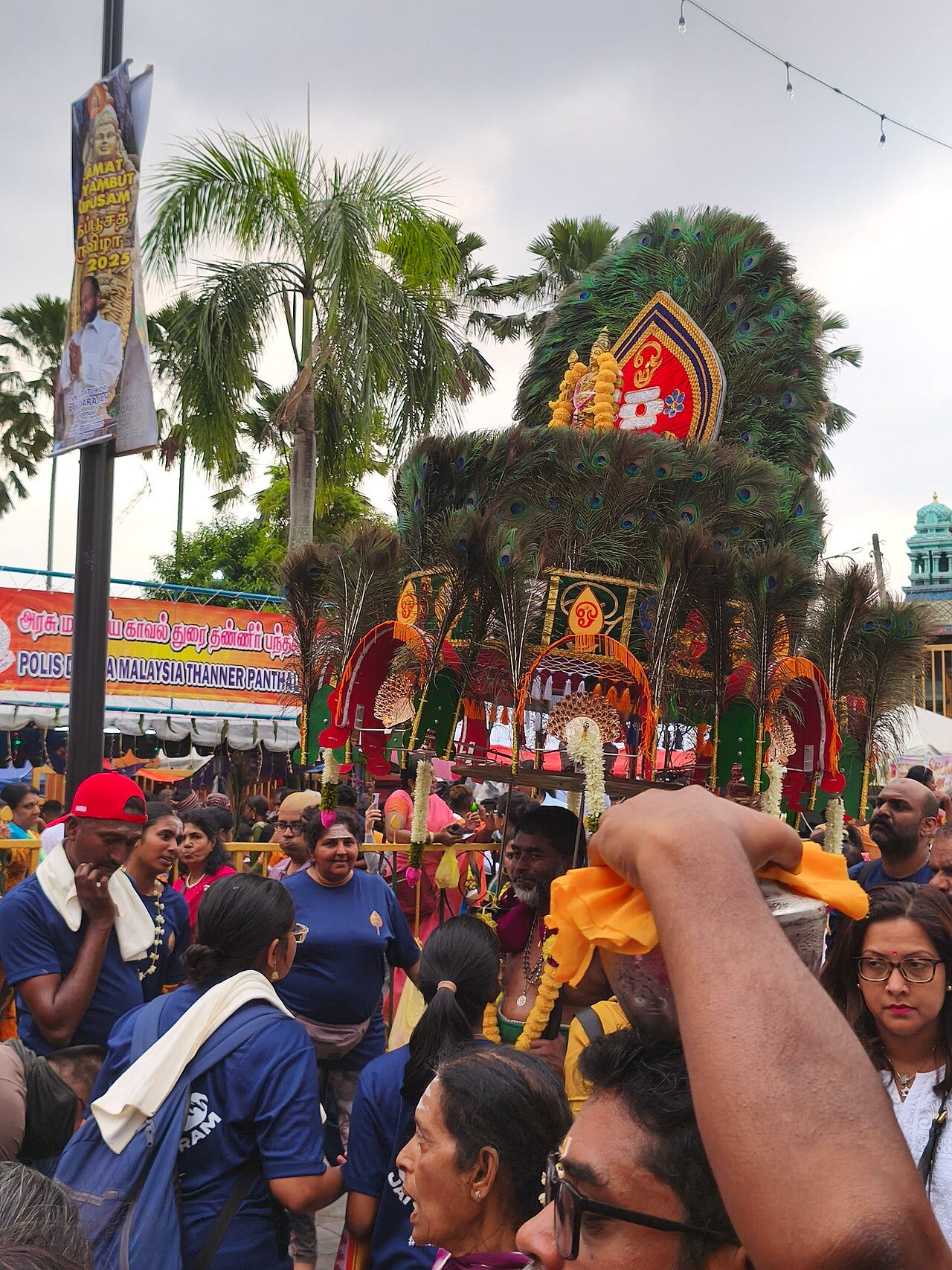
There is a detail in the story worth holding. Surapadman, struck by the Vel, is said to have been transformed rather than destroyed: he became the peacock that Murugan rides and the rooster on his banner, the enemy taken into service. That is why the peacock feather crowns every kavadi, and why the bird's iridescent green runs through the whole festival. The victory the day celebrates is not only the defeat of a demon but his conversion into something beautiful.
The kavadi has its own beloved story, and it belongs to Palani. The great asura devotee Idumban, the legend tells, carried the two hills of Sivagiri and Sakthigiri slung from a pole across his shoulders, a kavadi, to please his guru. When he set the hills down to rest, he found he could not lift them again: the boy Murugan had claimed one hill as his own. In the tussle that followed, Idumban was struck down and restored, and he asked for one boon: that whoever comes to the hill bearing a kavadi, carrying a burden in the Lord's name, should be blessed. Murugan granted it, and Idumban stands at Palani to this day as the watchman of the hill. Every kavadi carried on Thaipusam walks in that first devotee's footsteps.

Kavadi and paal kudam: the offerings
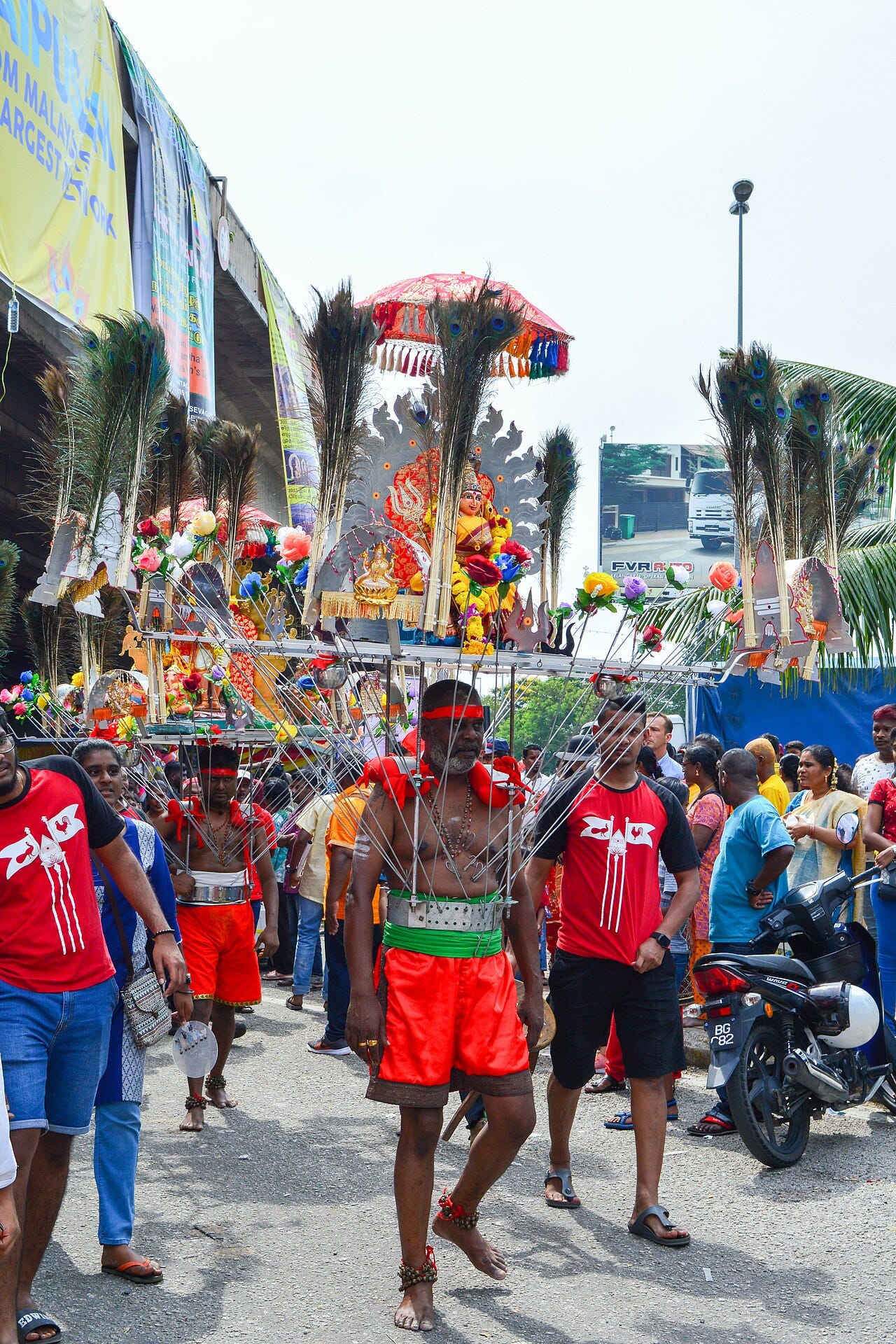
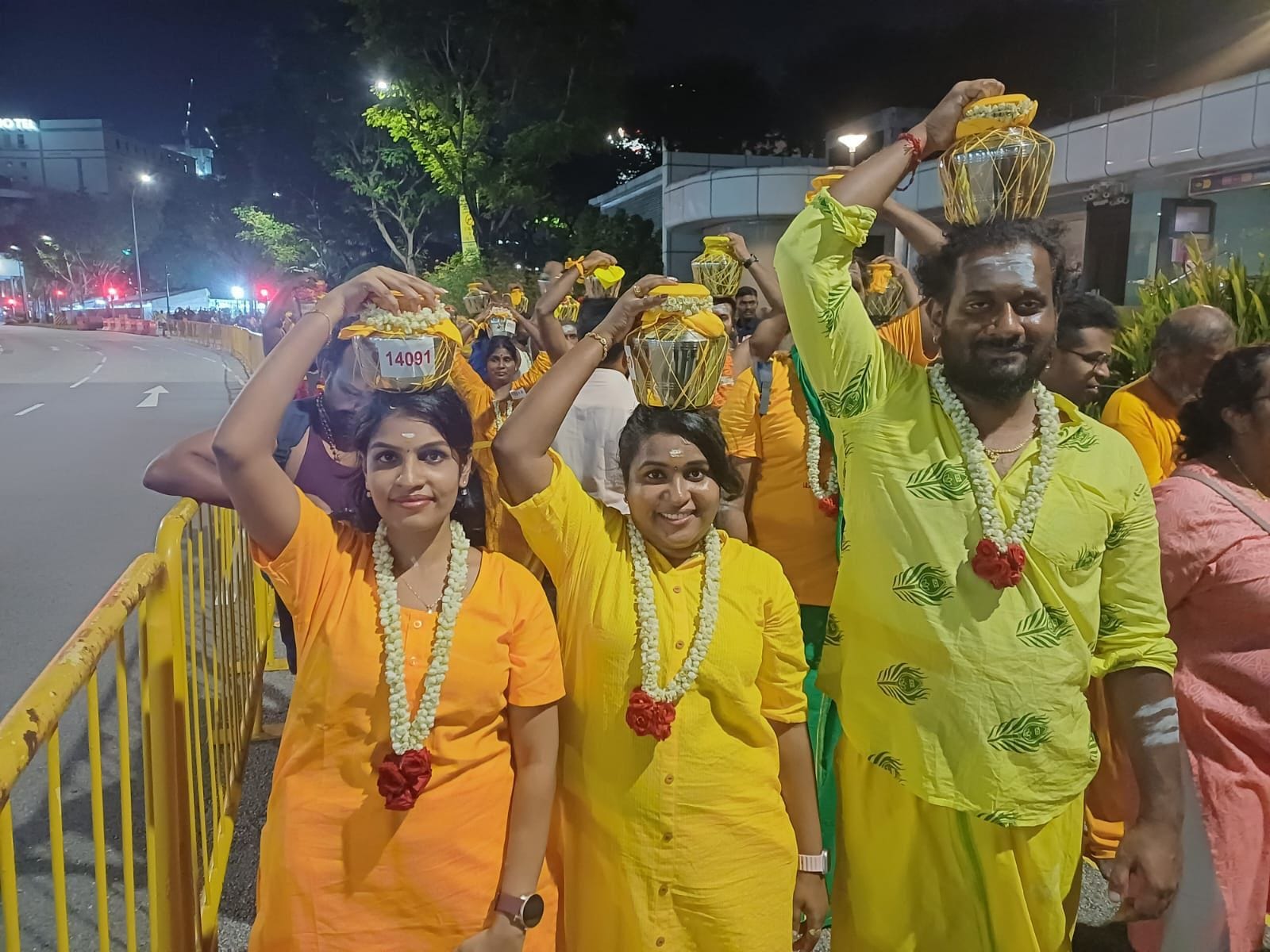
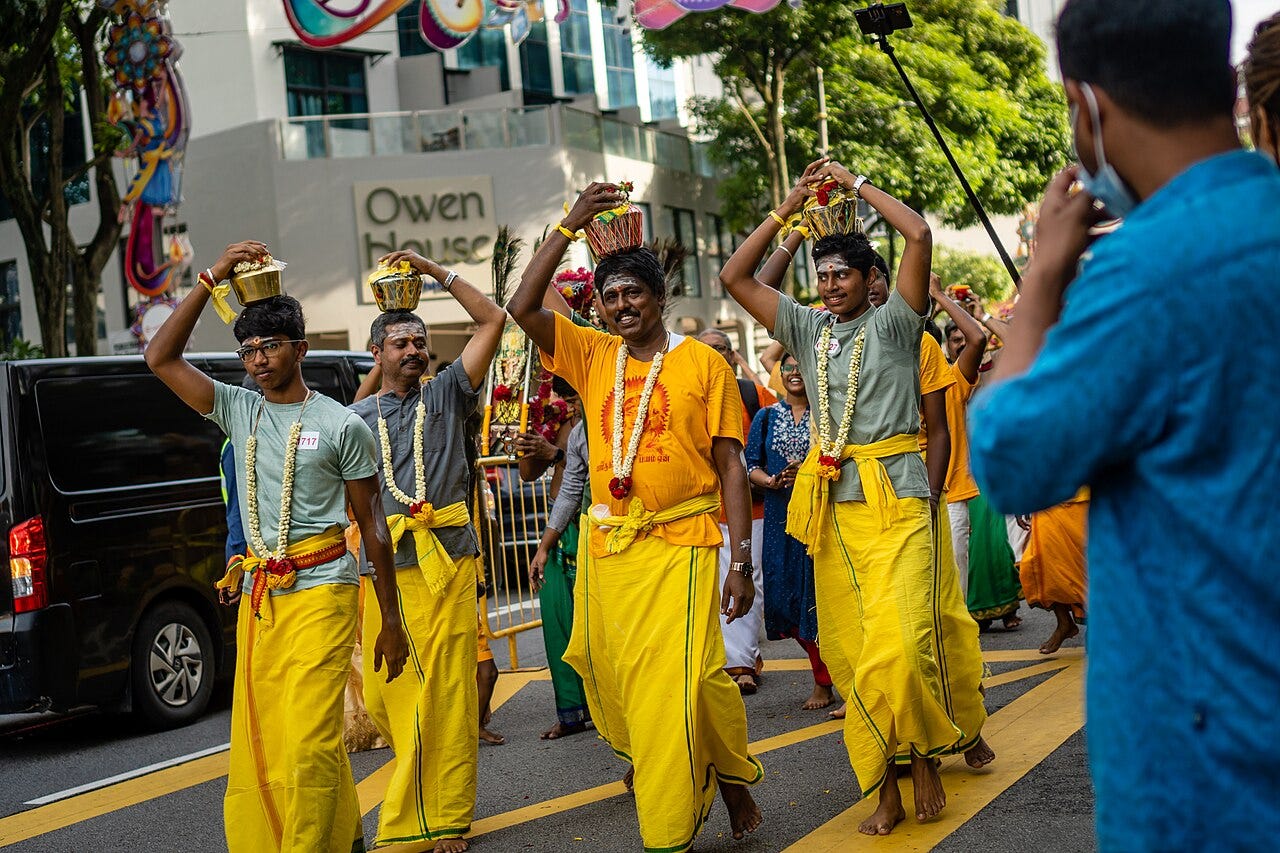
The simplest and most beloved offering is the paal kudam, a pot of milk carried on the head to the temple and poured over the image of the Lord as abhishekam. Anyone can carry one: children, grandparents, whole families in matching yellow. The kavadi proper is a burden taken up for a vow. In its everyday form it is a decorated semicircular frame carried on the shoulders, hung with peacock feathers and pictures of the Lord. In its grandest forms it becomes a tall, shimmering structure of feathers, flowers and lights that a devotee has spent weeks building.
Some devotees take on more demanding vows still, including the bearing of small spears and hooks on the body, a practice kept by a minority within the tradition and undertaken with long preparation, in a state of devotion that onlookers are asked to respect rather than gawk at. It is not required of anyone, and most carriers of kavadi carry no piercings at all. The heart of the offering, in every form, is the same: a burden willingly carried in gratitude.
The preparation matters as much as the day. Kavadi bearers commonly keep a period of discipline beforehand, often for weeks and traditionally up to a full mandalam of 48 days: a simple vegetarian diet, celibacy, sleeping on the floor, daily prayer, and the yellow or saffron clothing of a pilgrim. On the day itself they walk barefoot, often for many kilometres, while family and friends walk beside them with water and encouragement, and volunteers line the route with food stalls called thanneer pandal that serve everyone, devotee or passer-by, without charge.

Where Thaipusam is kept
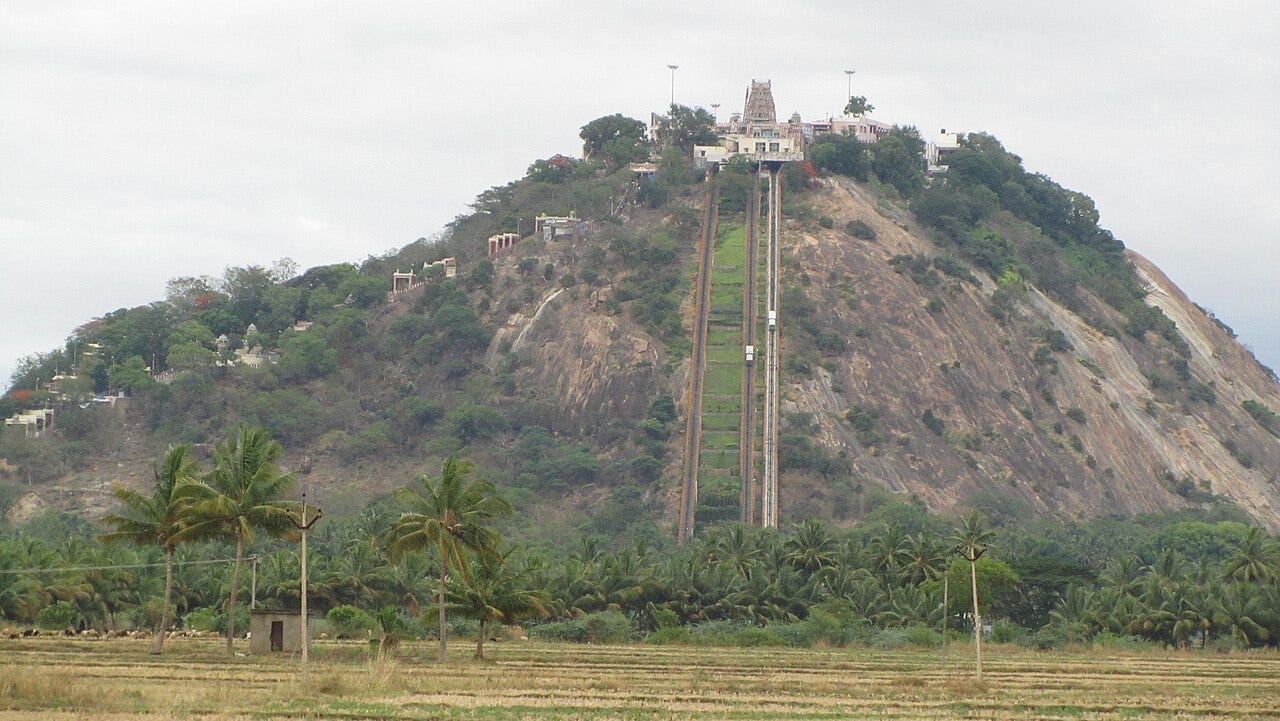
The spiritual home of the festival is Palani in Tamil Nadu, the third of Murugan's six abodes, where the hill temple of Dhandayuthapani rises above the town. Pilgrims climb the hill steps or ride the winch and ropeway, and on Thaipusam the queues wind far down the slope while kavadi after kavadi makes its way up. Other great Murugan shrines, Tiruchendur by the sea, Marudhamalai above Coimbatore, Swamimalai, Tiruttani and Tiruparankundram, each keep the day in their own way.
The largest Thaipusam gathering in the world, though, is not in India. At Batu Caves outside Kuala Lumpur, the festival fills the limestone hill and its 272 rainbow-painted steps with well over a million people across the days of the festival, one of the great religious gatherings anywhere. In Penang, silver and golden chariots carry the Lord across George Town over three days while devotees break coconuts on the road before them. In Singapore, the procession walks from the Sri Srinivasa Perumal Temple on Serangoon Road through the city to the Sri Thendayuthapani Temple on Tank Road, a barefoot river of yellow through the heart of a modern city.
Plan for the eve as well as the day. In Kuala Lumpur, a silver chariot carries the Lord from the Sri Maha Mariamman Temple in the city to Batu Caves in a procession that takes hours and draws its own crowds on the day before Thaipusam; in Penang the chariots likewise set out on the eve, which in 2027 is Thursday, January 21. The main day is the Friday, and the day after, the chariots return. If you are travelling for the festival, the whole arc is worth the long weekend.

Visiting respectfully: a guide for first-timers
Thaipusam welcomes witnesses. Visitors of every background line the routes at Batu Caves, Penang and Singapore, and the temple towns of Tamil Nadu are used to guests. A few courtesies make the day better for everyone. Dress modestly and comfortably, in light colours if you can; yellow will never be out of place. The walk is hot and the crowds are dense, so carry water, a hat and patience in equal measure, and plan transport early: roads near the big sites close, and trains and buses fill from the night before.
Remember that the people carrying kavadi are in the middle of a sacred vow, often after weeks of preparation and hours of walking. Give them the road. Do not touch a kavadi or a devotee without invitation, do not block the procession for a photograph, and ask before taking close portraits; most devotees are gracious, and a request is well received where a lens in the face is not. The free food stalls are part of the worship of the day, and accepting a meal or a drink at a thanneer pandal is a way of sharing in the festival, not taking advantage of it.
If you want the fullest day with the least strain, arrive before sunrise for the start of the processions, watch the kavadi bearers set out, and leave the peak midday crowds to the devotees. At Batu Caves the climb is steep and slow on the festival day; the view from the base, with the whole hill alive, is already worth the journey.

Questions about Thaipusam
Can women carry kavadi? Yes. Women commonly carry the paal kudam and many carry kavadi as well, keeping the same preparation; you will see whole families walking together, the smallest children in yellow carrying little pots of milk.
Is Thaipusam a holiday in India? It is not a central public holiday, though the Murugan temples of Tamil Nadu keep it as one of their great days, and Palani is crowded from the night before. In Malaysia it is an official holiday in the states named above, and in Singapore it is a major festival on the civic calendar.
Do you have to fast or carry something to take part? Not at all. You can come to the temple in the ordinary way, offer flowers or a pot of milk, and receive the day's blessing. The kavadi is a vow, taken up freely, not an entry ticket.
Is the festival only for Tamils? The tradition is Tamil in its roots, but the roads of Thaipusam are famously mixed: at Batu Caves and in Singapore, devotees of many backgrounds take up kavadi, and the crowds that feed and cheer them belong to every community. Murugan himself, the old poems say, does not ask who your people are.
Why milk? Milk is the simplest and oldest offering, the food of a cowherd's world offered pure and white to the Lord. Poured over the image as abhishekam, it carries the prayer with it.
Thaipusam asks its witnesses to look twice: past the spectacle, to the grandmother with her little milk pot, the young man who built his kavadi over forty days of prayer, the stranger handing you a free meal in the sun. The Vel pierces, the tradition says, so that grace can enter. May your Thai Poosam be blessed. Vetrivel, Veeravel.