

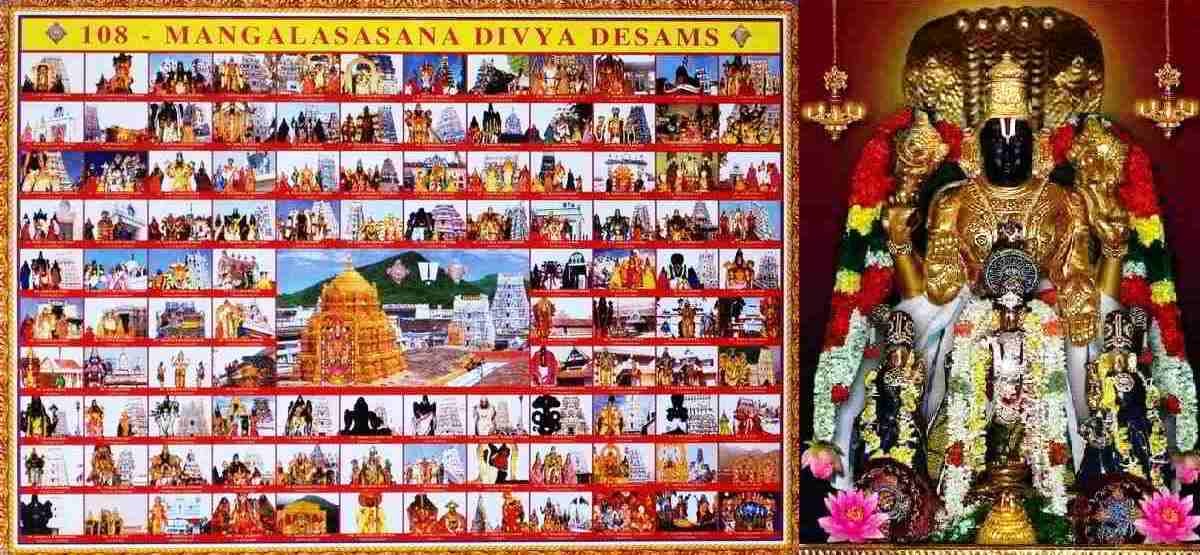
The 108 Divya Desams
A Comprehensive Research-Grade Guide to History, Theology, Ritual Tradition, Architecture, and Pilgrimage Practice in the Sri Vaishnava Tradition
I. Introduction: The Sacred Geography of Vishnu
The 108 Divya Desams constitute one of the most refined sacred geographies in Hinduism. These temples, sanctified by the Tamil Vaishnava poet-saints known as the Alwars, form the spiritual backbone of the Sri Vaishnava sampradaya. They are not merely pilgrimage centers but theological statements carved in stone, living ritual ecosystems, and embodiments of Vishnu’s cosmic presence across the Indian subcontinent and beyond.
The Divya Desams are unique because their sanctity does not arise solely from antiquity or royal patronage. Instead, their authority derives from devotional revelation. The twelve Alwars, through mystical experience, composed 4,000 hymns collectively known as the Naalayira Divya Prabandham. These hymns identified 108 temples as divinely manifested sites worthy of eternal remembrance.
Of these 108:
106 are physical temples located across India and Nepal.
Thirupparkadal represents the cosmic ocean where Vishnu reclines.
Paramapadam represents Sri Vaikuntha, the transcendental abode.
The Divya Desam tradition integrates theology, poetry, architecture, ritual performance, music, philosophy, and pilgrimage into a single cohesive system.
II. Historical Foundations
1. The Alwars (6th–9th Century CE)
The Alwars were mystic poet-saints whose devotional hymns revolutionized Bhakti spirituality in South India. They came from diverse social backgrounds - Brahmin, Kshatriya, agricultural, and even marginalized communities - emphasizing devotion over caste identity.
The twelve Alwars are:
Poigai Alwar
Bhoothath Alwar
Pey Alwar
Thirumazhisai Alwar
Nammalwar
Madhurakavi Alwar
Kulasekara Alwar
Periyalwar
Andal
Thondaradippodi Alwar
Thiruppaan Alwar
Thirumangai Alwar
Among them, Nammalwar and Thirumangai Alwar composed the largest number of hymns describing Divya Desams.
2. Compilation of the Divya Prabandham
In the 10th century, Nathamuni rediscovered and compiled the 4,000 hymns. This compilation became known as the Tamil Veda. The Divya Desams are those temples mentioned in these hymns.
This canonization created a sacred network of pilgrimage that continues uninterrupted for over 1,000 years.
III. Theological Framework
1. Vishnu in Sri Vaishnavism
In Sri Vaishnavism, Vishnu (Narayana) is the Supreme Being. His divine consort Lakshmi mediates grace between the devotee and the Lord.
Divya Desams manifest different theological dimensions of Vishnu:
Para (transcendent form in Vaikuntha)
Vyuha (emanations such as Vasudeva)
Vibhava (incarnations like Rama and Krishna)
Antaryami (indwelling presence)
Archa (iconic temple form)
The Divya Desams primarily represent the Archa form - where the infinite becomes accessible through consecrated idols.
2. Symbolism of 108
The number 108 holds deep symbolic meaning in Hindu cosmology:
12 zodiac signs × 9 planets = 108
108 Upanishads
108 beads in a japa mala
Represents cosmic completeness
Thus, 108 Divya Desams represent totality of divine manifestation.
IV. Geographic Distribution
Tamil Nadu (84 Temples)
Tamil Nadu forms the heartland of the Divya Desam tradition. These are subdivided into:
Chola Nadu (40)
Pandya Nadu (18)
Malai Nadu (13)
Nadu Nadu (2)
Thondai Nadu (22)
Other Regions
Andhra Pradesh – 2
Karnataka – 1
Gujarat – 1
Uttar Pradesh – 2
Uttarakhand – 1
Nepal – 1
V. Major Divya Desams: In-Depth Profiles
1. Srirangam – The First Among Divya Desams
Location: Tiruchirappalli, Tamil Nadu
Deity: Ranganatha (Reclining Vishnu)
Srirangam is the spiritual capital of Sri Vaishnavism. It is the largest functioning temple complex in the world, spanning 156 acres with seven concentric prakarams.
Historical Layers:
Early Chola construction
Pandya and Vijayanagara expansions
Patronage from Nayak rulers
Ritual Tradition:
Follows Pancharatra Agama.
Major Festivals:
Vaikunta Ekadasi (most significant)
Panguni Brahmotsavam
Adhyayana Utsavam (recitation of Divya Prabandham)
The temple also houses the preserved body of Ramanujacharya.
2. Tirumala – Sri Venkateswara
Location: Andhra Pradesh
The Tirumala temple represents Vishnu as the divine protector of Kali Yuga. It is among the wealthiest and most visited religious centers globally.
Daily Ritual Complexity:
Over 300 ritual services conducted regularly.
Theological Significance:
Considered self-manifested (Swayambhu).
3. Kanchipuram – 14 Divya Desams
Kanchipuram is a sacred city housing 14 Divya Desams, including:
Varadaraja Perumal
Ashtabujakaram
Yathothkari
Deepaprakasa
Ulagalantha Perumal
The Athi Varadar festival (every 40 years) draws millions.
4. Nava Tirupati (Pandya Nadu Cluster)
Nine temples located along the Tamiraparani River.
Associated with:
Navagrahas (nine planetary deities)
Nammalwar hymns
These temples are traditionally visited in a single pilgrimage circuit.
5. Badrinath – Himalayan Divya Desam
Located in Uttarakhand at high altitude.
Open: May to October
Represents Vishnu in meditative posture. Linked to Adi Shankaracharya and ancient Vedic worship.
6. Muktinath (Salagramam) – Nepal
Associated with sacred Salagrama stones.
Considered a Moksha Kshetra.
VI. Ritual Systems
Most Divya Desams follow either:
Pancharatra Agama
Vaikhanasa Agama
Daily Ritual Sequence:
Suprabhatham
Alankaram
Archana
Naivedyam
Deeparadhana
Sayana Seva
Temple worship integrates music, Vedic chanting, Divya Prabandham recitation, and ritual processions.
VII. Temple Architecture
Divya Desam architecture reflects Dravidian style:
Gopuram (gateway towers)
Mandapam (pillared halls)
Prakaram (circumambulatory corridors)
Vimana (sanctum tower)
Iconographic Variations:
Standing Vishnu (Nindra)
Seated Vishnu (Irunda)
Reclining Vishnu (Kidanda)
Walking Vishnu (Nadanda)
VIII. Pilgrimage Practice
Completing all 106 earthly Divya Desams is considered a lifetime vow (Yatra Vrata).
Typical Pilgrimage Durations:
Short Circuit: 5–7 days
Tamil Nadu Circuit: 20 days
Full 106 Divya Desams: 2–3 months
Spiritual Observances:
Chant “Om Namo Narayanaya”
Observe Ekadasi fast
Offer Tulasi
Participate in Annadanam
Maintain vegetarian diet
IX. Major Festivals
Vaikunta Ekadasi
Brahmotsavam
Panguni Uttiram
Rama Navami
Krishna Janmashtami
Adhyayana Utsavam
Each temple celebrates unique annual utsavams.
X. The Two Transcendent Divya Desams
Thirupparkadal
Represents Vishnu reclining in the cosmic ocean of milk.
Paramapadam (Sri Vaikuntha)
The ultimate spiritual realm beyond material existence.
XI. Philosophical Dimensions
Sri Vaishnava theology emphasizes:
Prapatti (total surrender)
Divine grace through Lakshmi
Vishishtadvaita philosophy (qualified non-dualism)
Eternal service (Kainkarya)
Divya Desam pilgrimage reinforces surrender and humility.
XII. Cultural and Literary Impact
The Divya Desams shaped:
Tamil devotional literature
Carnatic music compositions
Temple dance traditions
Vaishnava iconography
South Indian temple town urban planning
XIII. Preservation and Modern Challenges
Issues include:
Urban encroachment
Temple maintenance funding disparities
Ritual continuity
Pilgrimage commercialization
Yet many temples remain vibrant centers of daily worship.
The 108 Divya Desams represent a sacred spiritual cartography of Vishnu’s presence across time and geography. They unite theology, architecture, poetry, and lived devotion into a continuous tradition spanning more than a millennium.
To visit them is not merely to travel - it is to participate in a living sacred continuum of surrender, grace, and divine remembrance.
Even visiting one Divya Desam with sincere devotion is considered spiritually transformative.
Completing all 106 earthly Divya Desams is regarded as one of the highest devotional accomplishments in Sri Vaishnavism.