

The diyas have barely cooled from Diwali night when the festival turns a corner. In 2026 the calendar gives a two-day pause after Diwali night, and then Tuesday, 10 November, carries not one celebration but three, and all of them are about gratitude: Govardhan Puja, the great Annakut offering, and the Gujarati New Year, Bestu Varas.
Govardhan Puja: the mountain Krishna lifted
The story is one of the best loved in the Bhagavata Purana. In the village of Gokul, the people prepared their annual offering to Indra, king of the heavens and god of rain. Young Krishna asked a disarming question: why worship the distant storm-king, when it is Govardhan hill, whose forests feed your cattle, whose streams water your fields, that truly sustains you? The villagers offered their gratitude to the hill instead. Indra, furious, unleashed a deluge, and Krishna lifted the entire Govardhan hill on the little finger of one hand, sheltering every person and animal of Braj beneath it for seven days, until the storm god's pride was spent.
The lesson the festival carries forward is gentle and radical at once: honour what actually sustains you. The earth, the cattle, the food on your plate, the people near you. Worship of Govardhan is worship of nature itself.
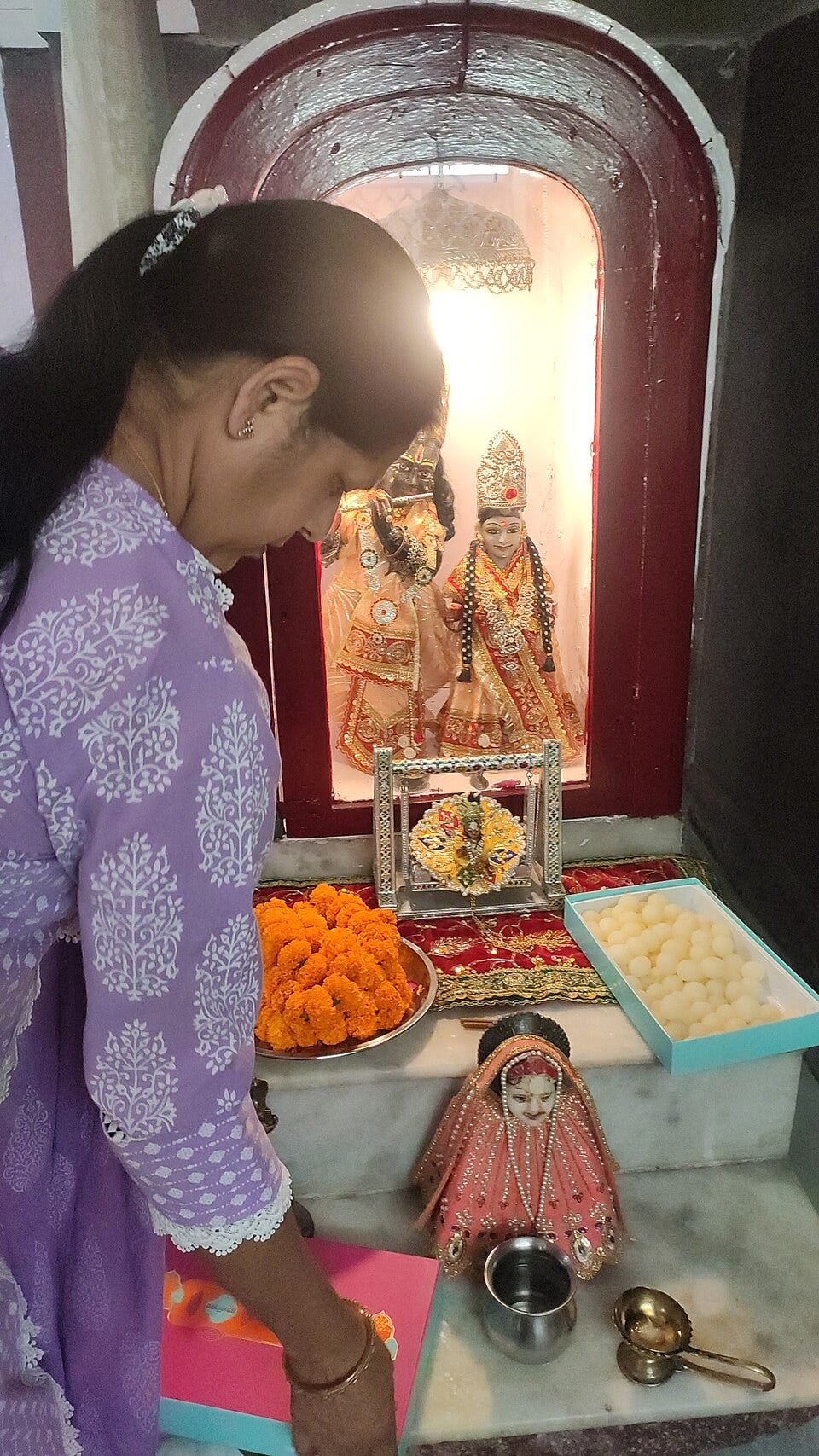
Annakut Puja. Photo: Goutam1962, CC BY-SA 4.0

Annakut: the mountain of food
On this day, temples and homes recreate the hill in the only fitting way, with food. Annakut, the "mountain of food", sees hundreds of dishes prepared and offered to Krishna: sweets, savouries, dals, rice, vegetables, milk and more, traditionally counted as chhapan bhog, the fifty-six offerings. In Krishna temples across Braj, Gujarat and Rajasthan, and in Swaminarayan temples around the world, the day's darshan is a breathtaking sight, the deity surrounded by literal hills of food, all of which is then shared as prasad with everyone who comes.
At home, families mark the day more simply: a small mound of rice or sweets symbolising Govardhan, decorated with flowers, worshipped in the evening, then shared.
Bali Pratipada: the king who visits
The same day is also Bali Pratipada, remembering King Bali, the generous daitya king whom Vishnu, in his Vamana avatar, blessed with a boon: that he could return to visit his people once a year. In Maharashtra and Karnataka, the day honours him, and traditionally it is a day when husbands and wives exchange gifts and play ceremonial games, celebrating the partnership that runs a household.
Bestu Varas: the Gujarati New Year
For Gujarat, Tuesday, 10 November 2026 is the first day of the new year, Nutan Varsh, Vikram Samvat 2083. Homes are decorated, new account books are opened with the chopda puja the previous night, and the morning begins with temple visits, sweets and greetings of "Saal Mubarak". Shops that closed their old ledgers on Diwali night open fresh ones with a swastika and the words "Shubh Labh", auspicious profit, written at the head of the page.
What the day asks of us
Between the mountain of food, the story of the storm, and the fresh page of a new year, the day carries one clear message. Prosperity is not only received; it is cooked, offered, shared and accounted for with gratitude. If Diwali night is the prayer, today is the thanksgiving. Nutan Varshni Shubhkamna, and happy Govardhan Puja.
Whether you offer chhapan bhog or a single sweet, whether you write "Shubh Labh" in a new ledger or simply call your family, the tradition is the same: begin the year by saying thank you.
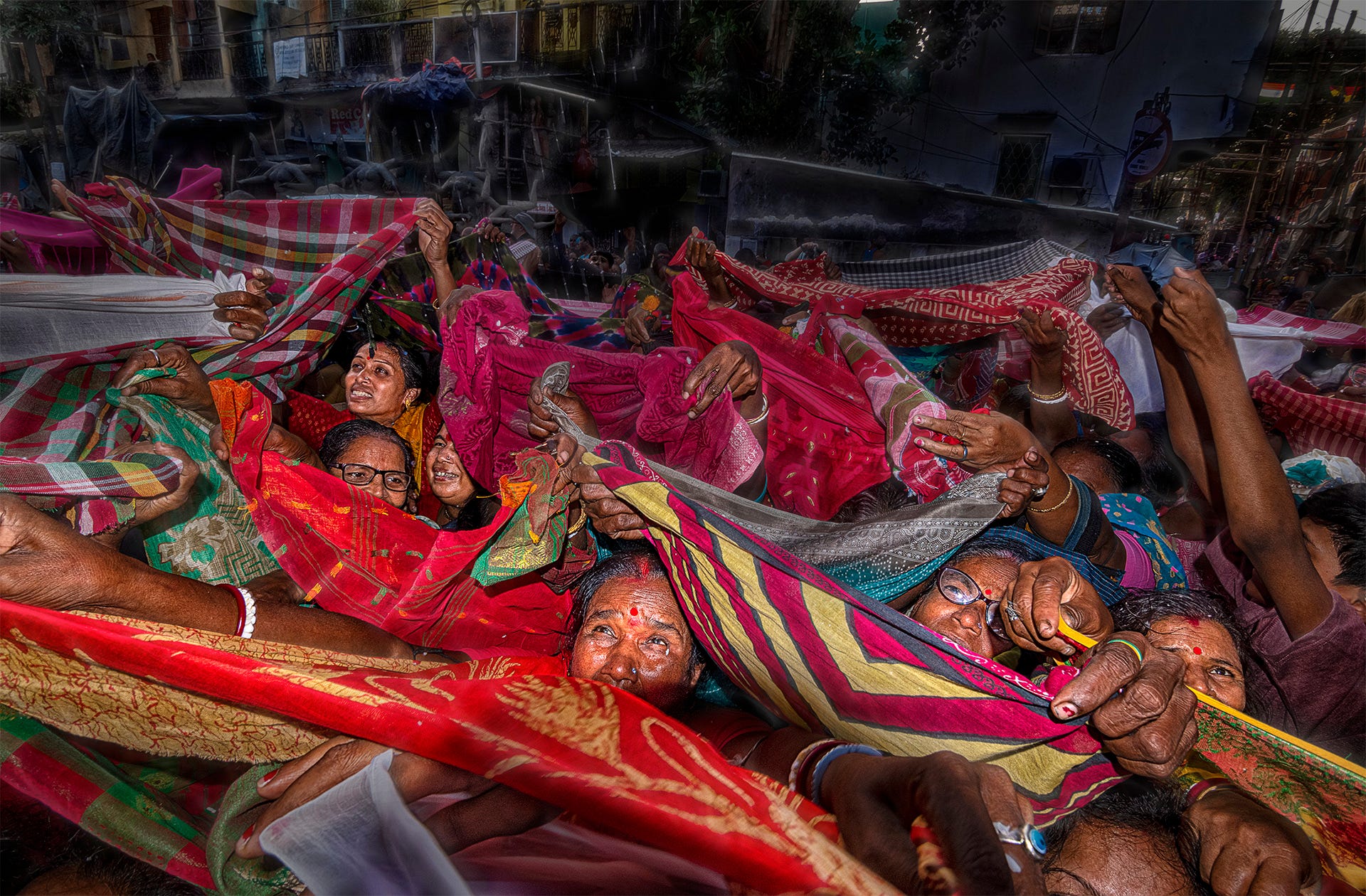
Devotees collecting prasad during Annakut Utsav. Photo: Susovan Chakraborty5, CC BY-SA 4.0
