
The Ekadashi That Comes Once in Three Years: Understanding Padmini Ekadashi
Padmini Ekadashi 2026: The Lotus Vrat of Purushottam Maas - Meaning, Significance, and a Complete Observance Guide

Some vrats arrive every fortnight. Padmini Ekadashi arrives once in nearly three years.
That single fact should change how we approach it. When something is rare, it asks for preparation, not routine. And the rarity of Padmini Ekadashi is not an accident of the calendar - it is woven into the structure of sacred time itself.
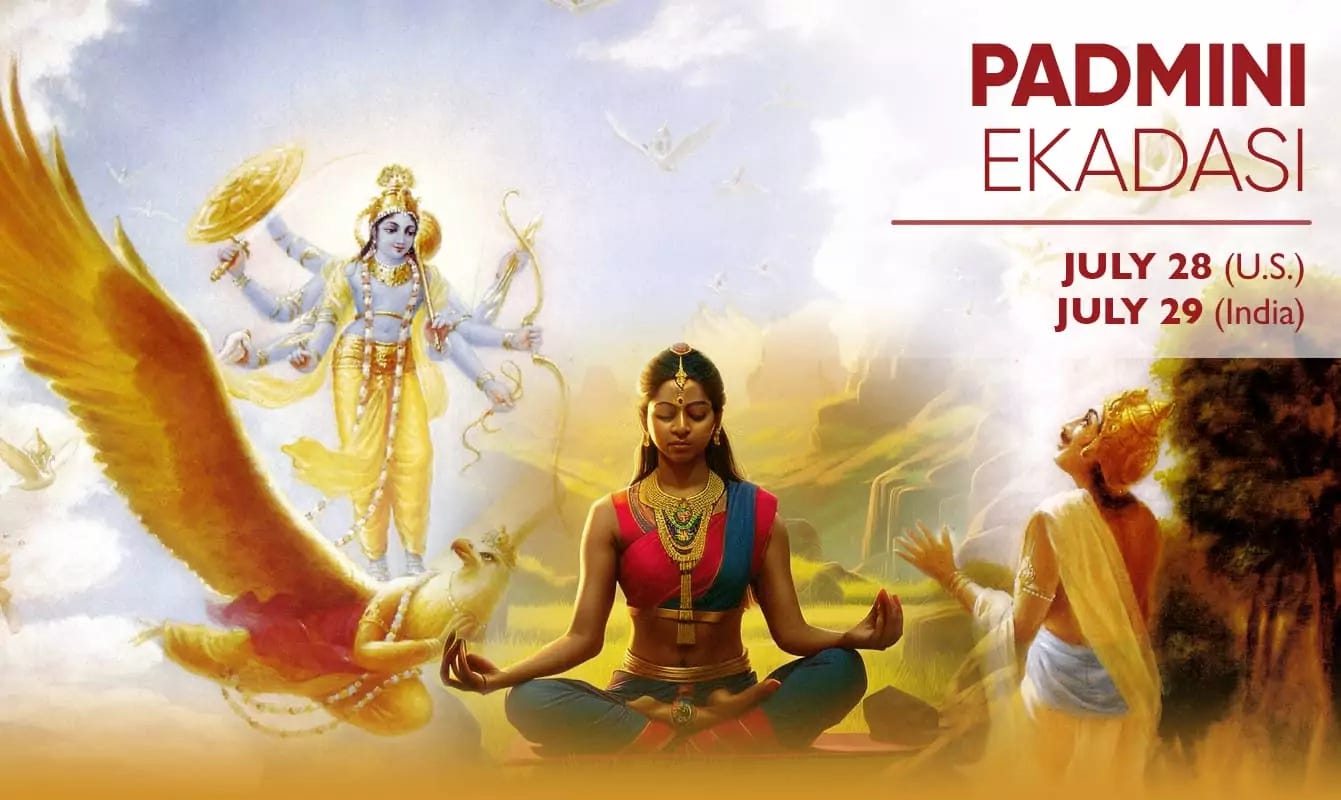
This guide is meant to be complete. It walks through what Padmini Ekadashi is and why it is so rare, the deeper teaching it carries about prosperity and discipline, and then a clear, step-by-step method for observing the vrat - from the evening before, through the day itself, to breaking the fast the next morning. Read it once now, and return to the practical sections again as 27 May approaches.
Part One - Understanding the Rarity
Why this Ekadashi comes only once in three years
The Hindu calendar is unusual in that it follows both the sun and the moon at the same time. The solar year governs the seasons; the lunar months govern tithis, festivals, and vrats. The difficulty is that twelve lunar months fall short of one solar year by roughly eleven days. Left uncorrected, that gap would slowly pull our festivals out of their seasons - Holi would drift into winter, Diwali into the monsoon.
To prevent this, the calendar performs a quiet correction. Roughly once every 32 to 33 months, an extra lunar month is inserted. This is the Adhik Maas - literally the “additional month” - and it keeps the lunar and solar years in step.
A few things follow from this:
Adhik Maas appears only once in about three years
It carries two Ekadashis - Padmini Ekadashi in the Shukla Paksha (bright fortnight) and Parama Ekadashi in the Krishna Paksha (dark fortnight)
Because Adhik Maas itself is rare, Padmini Ekadashi is observed only once in roughly three years
This is the first reason the vrat is considered so spiritually weighty. It is not a date that returns soon. An opportunity missed is an opportunity that will not come again for years.
The month no one wanted — and how it became Purushottam
There is a beautiful tradition behind why Adhik Maas is also called Purushottam Maas.
Because this extra month sat outside the normal twelve, it was once regarded as inauspicious - an “orphan month” with no presiding deity, unfit for auspicious work. The story tells that the month itself, distressed at being shunned, approached Lord Vishnu. Moved by its plight, Vishnu adopted the month as his own and gave it his own name - Purushottam, the Supreme Being.
So the month that was seen as having no value became the most valuable of all. The overlooked became the supreme.
This is not just a story. It is the entire logic of the month, and we will return to it - because it tells us exactly why disciplined, ordinary, unglamorous effort during this period is believed to carry such weight.
When is Padmini Ekadashi in 2026?
In 2026, Adhik Maas falls as Adhik Jyeshtha Maas, and Padmini Ekadashi falls on the Ekadashi tithi of its Shukla Paksha.
Vrat day: Wednesday, 27 May 2026 (observed by the Udaya Tithi rule)
Ekadashi Tithi begins: 26 May, around 5:10 AM
Ekadashi Tithi ends: 27 May, around 6:21 AM
Parana (fast-breaking): 28 May morning, within the prescribed Dwadashi muhurat
A short note on the Udaya Tithi rule: because a tithi can begin and end at any hour, Hindu tradition observes a vrat on the day when the Ekadashi tithi is present at sunrise. Even though the tithi begins on 26 May, it prevails at sunrise on 27 May - so the vrat is kept on the 27th.
Timings shift slightly from city to city, and panchang sources differ by a few minutes. We will share location-specific muhurat in our guided observance content closer to the day. Always confirm the exact parana window for your city before breaking the fast.
Padmini, Kamla, and the symbolism of the lotus
Padmini Ekadashi carries a second name - Kamala Ekadashi. Both names point to the same image. Padma and kamala both mean the lotus.
The lotus is one of the most precise symbols in the Sanatan tradition, and it is worth pausing on, because it holds the entire meaning of this vrat.
The lotus is rooted in mud, yet it rises clean and unstained
It rests on water without being soaked by it
It is the seat of Goddess Lakshmi - here invoked as Kamla, the giver of wealth, abundance, and fulfilment
It opens toward the sun - turning, always, toward light
Each of these is a teaching about how to live. To be rooted in the world without being stained by it. To be surrounded by circumstances without being soaked through by them. To keep turning, through everything, toward the light.
So Padmini Ekadashi is not only a fast. It is an invitation to a particular inner posture - the posture of the lotus.
What the vrat is believed to give
The scriptures speak generously of this vrat. Observed with devotion, Padmini Ekadashi is said to:
Cleanse the effects of past actions and bring inner purity
Remove obstacles and bring prosperity, stability, and good fortune
Strengthen devotion and steadiness of mind
Bring peace and harmony within the family
Bestow merit said to equal that of pilgrimage to many holy sites
Carry the devotee, ultimately, toward Moksha and the abode of Lord Vishnu
The vrat katha — Queen Padmini’s devotion
The story attached to this Ekadashi is found in the Puranic tradition.
A righteous king longed for a son to continue his lineage, and despite years of effort, he and his queen, Padmini, remained without a child. They eventually withdrew to the forest to undertake severe austerities, but even prolonged penance brought no result.
Queen Padmini, grieved to see her husband’s sorrow, met the sage-consort Anasuya, who revealed to her a secret the couple had not known - the power of the Adhik Maas, and the Ekadashi of its Shukla Paksha. Anasuya explained the vrat vidhi and asked her to observe it with complete dedication.
Queen Padmini kept the fast exactly as instructed - with sincerity, with a night vigil, with her mind held steadily on the Lord. Pleased by the quality of her devotion, Lord Vishnu appeared and offered her a boon. She asked that the blessing be given not to herself but to her husband - and through that grace, a son of extraordinary strength was born to them.
The katha is less about the wish and more about the manner of the observance. What pleased the Lord was not the severity of the penance but the systematic, sincere, undistracted way Padmini kept the vrat. That is the model the story holds up for us.
Part Two — The Inner Teaching: Prosperity and Discipline
We often imagine prosperity and discipline as opposites. One feels like ease; the other like effort. Padmini Ekadashi, falling in Purushottam Maas, quietly corrects this. It places them on the same path.
Kamla — prosperity with a condition
Padmini Ekadashi is associated with Goddess Kamla, the form of Lakshmi who grants wealth, abundance, and fulfilment. But the lotus she is seated on carries a teaching, and it is easy to miss.
A lotus does not appear overnight. It grows slowly, patiently, through murky water, toward light. Prosperity in our tradition is understood the same way - not as sudden fortune that arrives from nowhere, but as something cultivated, something grown.
Kamla is generous, but tradition is clear that she is drawn to a life that is steady, clean, and disciplined. The elders say plainly that Lakshmi does not stay where there is restlessness, disorder, and neglect. She settles where there is care.
This is why the vrat matters. The fast is not a transaction - “I go hungry, therefore I am owed.” It is the preparation of the vessel. A disciplined day, kept with attention, creates the kind of inner ground where genuine prosperity - material and spiritual - can take root and stay.
Purushottam Maas — the month that rewards quiet effort
Recall the story from Part One. Adhik Maas was the month no deity wanted, until Lord Vishnu adopted it and made it Purushottam - the supreme.
There is a direct teaching in that for our own lives.
The month seen as having “no value” became the most valuable. What was overlooked became the highest. This is the logic of the entire month - that effort placed into ordinary, unglamorous, disciplined practice is exactly what is capable of becoming precious. It is not the dramatic gesture that transforms a life. It is the quiet, repeated, faithful act.
This is why fasting, charity, japa, and self-restraint during Purushottam Maas are said to carry multiplied merit. Not because the actions themselves change, but because they are offered in a month whose very nature is transformation - the lifting of the overlooked into the supreme.
The three alignments of the vrat
Padmini Ekadashi observance traditionally asks for purity in three places at once - and this is the practical heart of the inner teaching.
Mind - releasing anger, comparison, anxiety, and negative thought for the day
Speech - keeping words true, soft, and few; filling the day with chanting rather than chatter
Action - simple food, simple conduct, and acts of charity and service
We usually live with these three pointing in different directions - thinking one thing, saying another, doing a third. When they align, even for a single day, something settles. This is what “inner alignment” actually means. It is not a vague feeling. It is the rare, real experience of thought, word, and deed all pointing the same way.
The vrat is a structured opportunity to taste that alignment - and once tasted, it tends to stay with us.
Prosperity, rightly understood
If we observe Padmini Ekadashi only to “get something,” we have understood only half of it. The deeper invitation holds two kinds of prosperity together:
Outer prosperity - stability, abundance, the removal of obstacles, harmony at home
Inner prosperity - a mind that is unshaken, content, clear, and turned toward the Divine
Kamla, seated on the lotus, offers both. But she offers them to a life that has done the inner work - that has, like the lotus, risen clean through whatever it was rooted in.
This is why discipline is not the price of prosperity. Properly understood, discipline is prosperity, in its early and growing form.
Carry one question gently into the vrat: What in my life am I asking to grow - and what discipline is that growth quietly asking of me? That question, held through the day, turns a fast into genuine alignment.
Part Three — How to Observe Padmini Ekadashi 2026
Padmini Ekadashi 2026 falls on Wednesday, 27 May. This section is the practical guide - read it now, and return to it as the day approaches.
A note before we begin: vrat is a personal commitment, not a competition. Choose the level your health and circumstances allow. Sincerity matters far more than severity. A simple fast kept with a steady heart is worth more than a strict one kept with resentment.
Step 1 — Choose your level of fast
There are three traditional levels. Choose one honestly, based on your health, age, and daily demands:
Nirjala - without food or water. The strictest form, and only for those in genuinely good health.
Phalahar - fruits, milk, water, and permitted non-grain foods. The most commonly observed level, and a sound choice for most people.
Saatvik ahar - one simple sattvic meal, without grains, onion, or garlic. Suitable for elders, children, those who are unwell, expectant mothers, and first-time observers.
There is no shame in choosing the gentler path. The vrat is measured by devotion, not by hardship.
Step 2 — Know what to set aside
During the vrat, traditionally avoid:
Rice and all grains
Onion and garlic
Tamasic and heavy foods - including fried, stale, or overly rich food
Anger, harsh speech, gossip, and negative thoughts
The food rules are widely known. The last point matters just as much. A fast of the stomach without a fast of the temperament is considered incomplete. If the body is fasting but the mind is irritable all day, the vrat has only half happened.
Step 3 — The day before: Dashami (26 May)
Preparation begins the evening before:
Keep the evening meal light, early, and sattvic
Avoid grains at dinner if you can - this eases the body gently into the fast and is a traditional practice
Take a quiet while for remembrance, and form your sankalp - the clear intention you will carry into the vrat
Sleep early, so you can rise before dawn
Step 4 — The vrat day: Padmini Ekadashi (27 May)
In the morning
Wake during Brahma Muhurta, the sacred window before sunrise
Bathe, adding a few drops of Ganga jal to the water if you have it
Wear clean clothes
At your home altar, place an image or idol of Lord Vishnu, together with Goddess Lakshmi / Kamla
Take your sankalp formally before the Lord - state your fast and your intention aloud or in the heart
The puja
Offer a lamp (deepa), incense (dhoop), fragrance, flowers, and naivedya (food offering)
Offer Tulsi leaves and yellow flowers - both especially dear to Lord Vishnu
Chant whatever you are able to with sincerity:
Vishnu Sahasranama
Shri Hari Stotra
or simply Om Namo Bhagavate Vasudevaya, repeated with attention
Read or listen to the Padmini Ekadashi vrat katha - the story of Queen Padmini’s devotion
Through the day
Keep the mind in remembrance - japa, sacred reading, kirtan, or seva
Practise charity - food, clothing, or help offered to those in need is especially valued in Purushottam Maas. Even a small act, offered sincerely, counts.
Keep speech gentle and conduct simple
Avoid daytime sleep, idle entertainment, and conflict
The night vigil (jagran)
Staying awake through the night in devotion is a central part of this vrat - Queen Padmini’s katha itself turns on her night vigil
Spend the night in bhajan, kirtan, the reading of sacred texts, or chanting
If a full vigil is not possible for you, extend your evening practice for as long as you comfortably can. Do what is sincere and sustainable.
Step 5 — Breaking the fast: Parana (28 May)
The fast is broken on Dwadashi, the morning after Ekadashi, within the prescribed parana muhurat
It should not be broken before the muhurat begins, nor left unbroken past it
Traditionally, offer food to a Brahmin or to someone in need first, before you eat
Then break your own fast with a simple, sattvic meal
Parana timings vary by city - we will share city-specific timings in our guided observance content, and you should confirm the exact window for your location
A gentle observance checklist
Use this as a quick reference:
Decide your level of fast - Nirjala, Phalahar, or Saatvik ahar
Keep a light, grain-free dinner on 26 May
Rise in Brahma Muhurta, bathe, and take sankalp on 27 May
Perform the Vishnu-Lakshmi / Kamla puja with Tulsi and yellow flowers
Read or listen to the Padmini Ekadashi vrat katha
Keep japa, charity, gentle speech, and simple conduct through the day
Hold a night vigil in devotion, as fully as you are able
Break the fast on 28 May, within the parana muhurat, after giving to others first
The Spirit Behind the Vrat
Every step in this guide points to a single thing - a day lived with more attention than usual. More attention to what we eat, what we say, what we think, and where we place our heart.
Padmini Ekadashi comes once in three years. It falls in Purushottam Maas - the month that teaches us that the overlooked can become the supreme, and that quiet, disciplined effort is exactly what becomes precious. It is named for the lotus - the flower that rises clean through mud and turns, always, toward the light.
Observed sincerely, even simply, this vrat leaves the mind a little clearer and the heart a little steadier than it found them. That is its true gift - not something received from outside, but something cultivated within.
May your vrat be peaceful, your discipline gentle, and your sankalp fulfilled.
Jai Shri Hari. Har Har Mahadev.