

Forget yoga tourism.
For thirty years, India’s wellness story was told through a Western lens: backpackers in Rishikesh, celebrities at Ananda, a vague promise of “finding yourself” somewhere between the Ganga aarti and a juice cleanse. That story is over. A new one has quietly replaced it - and most of the industry hasn’t noticed yet.
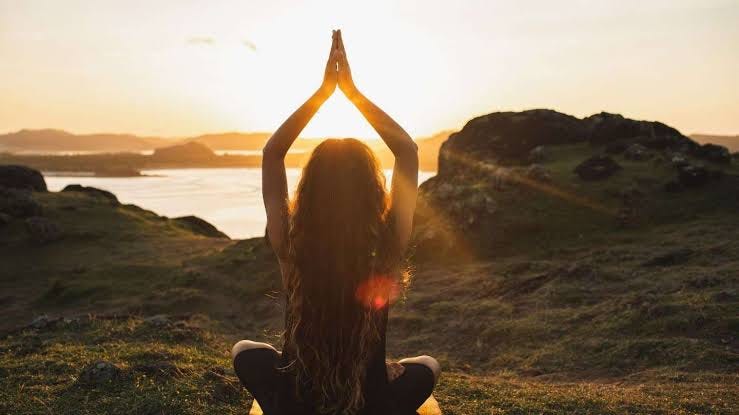
In May 2026, Travel and Tour World released its Top 50 Wellness Destinations ranking, and India took the number one position - ahead of Thailand, Indonesia, Japan, Switzerland, and Australia. Not a regional award. Not a “best for yoga” category prize. The top of the global list, in a wellness travel market now approaching USD 1 trillion.
The interesting question is not that India won. It is why - and what happens next.
Systems, not trends
The Western wellness industry has spent the last decade selling optimisation: cold plunges, red-light panels, continuous glucose monitors, biohacking stacks that cost more than a month’s rent. The results have been expensive and, for most people, marginal. Wellness became a consumption category - something you buy, photograph, and replace next season.
India’s proposition is structurally different. Ayurveda, Yoga, and meditation are not products. They are systems — complete frameworks of diagnosis, protocol, and practice, refined over millennia and designed to be lived rather than purchased. When a traveller checks into a Panchakarma programme in Kerala, they are not buying a treatment. They are entering an operating system for the body that predates every wellness trend by several thousand years.
This is the distinction the global market has finally priced in. TTW’s ranking explicitly credits India’s leadership in Ayurveda, yoga, spiritual wellness, and meditation tourism - and notably, names India the frontrunner in the “longevity and preventive healthcare” trend, attracting travellers who want evidence-based, holistic programmes rather than cosmetic quick fixes.
Read that again. The longevity crowd - the demographic currently spending fortunes on Blueprint-style protocols and Swiss clinics - is being pointed toward India. Not for novelty. For efficacy.
The numbers behind the shift
The scale of this is easy to underestimate, so let us put numbers on it.
Yoga and meditation retreats alone account for roughly 41% of India’s entire wellness tourism market - the single largest service segment, anchored by destinations like Rishikesh with structured, immersive programmes. That is not a niche within Indian tourism. That is the mainstream of it.
The market itself is estimated at around USD 35 billion in 2025, projected to cross USD 61 billion by 2034. South India - Kerala’s Ayurveda corridor above all - commands nearly half of it today, while North India, driven by the yoga and meditation belt of Uttarakhand and Himachal, is the fastest-growing region. And the fastest-growing category is telling: digital-detox escapes, growing at over 17% annually, built around device surrender, guided silence, breathwork, and forest immersion.
Notice the pattern. The growth is not in spa weekends. It is in structured, protocol-driven, multi-week immersions - exactly the format Indian traditions were built for. Panchakarma was never a two-hour treatment; it is a two-to-four-week discipline. Sadhana was never a class; it is a daily architecture. The global market has bent toward India’s native format, not the other way around.
The contrarian part: the next wave is not yoga classes
Here is where it gets interesting for anyone building in this space.
The first wave of India’s wellness tourism was destination-led: come to Rishikesh, come to Kerala, do yoga, feel better. The second wave - the one now forming - is condition-led. Travellers are no longer arriving with a destination in mind. They are arriving with a problem: broken sleep, burnout, hormonal transitions, metabolic decline, the slow erosion of healthspan that no supplement stack has fixed.
The properties winning this wave are not selling yoga classes. They are selling condition-specific programmes: sleep optimisation protocols, hormonal health journeys, longevity programming with before-and-after biomarkers. They pair a Vaidya’s pulse diagnosis with a blood panel. They track HRV alongside dinacharya. They speak both languages fluently — Charaka Samhita and clinical literature — and refuse to choose between them.
This creates a talent arbitrage that almost nobody is discussing. Most Western wellness properties still hire yoga instructors off Instagram — beautiful feeds, thin training, no systems knowledge. The leading Indian properties are hiring something else entirely: system designers. Practitioners trained in classical Ayurveda who can also read a metabolic panel. Meditation teachers who understand sleep architecture. Facilitators who can hold a devotional container and explain the mechanism.
Guess whose retreats are running full seasons.
For practitioners, the implication is blunt. If you are trained in both a classical Indian discipline and modern wellness science, the 2026 rankings just made India your global job market — because the clientele arriving here is international, discerning, and paying for exactly that hybrid. The coaches who position themselves as “traditional plus scientific” are going to command career-defining compensation over the next three years. The ones who stay local, teaching drop-in classes, will watch the wave pass them.
Why this matters to us at DharmikVibes
At DharmikVibes, we have argued from the beginning that the yatra is the original wellness journey — that long before “transformative travel” became a conference panel, Indian civilisation had already engineered it: the discipline of the route, the austerity of the stay, the devotion at the destination, the person who returns changed. Wellness tourism and spiritual tourism are not adjacent markets. They are the same river, seen from two banks.
The world’s #1 ranking confirms what the dharmic traveller has always known: India does not offer escape from life. It offers a technology for living it. When a devotee walks the Jyotirlinga circuit, or spends a fortnight in the Magadha region tracing the Buddha’s footsteps, the “outcomes” — stillness, clarity, resilience, renewal — are the very ones the global longevity industry is now chasing with wearables and IV drips.
Our thesis is that the next decade belongs to journeys that refuse the false choice between the sacred and the scientific: pilgrimages designed with the rigour of a wellness protocol, and wellness programmes rooted in the depth of a living tradition. That is the India the world just voted for. That is the India we are building for.
The world has ranked India first. The deeper truth is that India was never competing. It was waiting for the world to catch up.
DharmikVibes designs immersive spiritual journeys across India and the sacred geographies of Asia - from the Dwadash Jyotirlinga to the Ramayana Trail. Explore our upcoming yatras at dharmikvibes.com.