

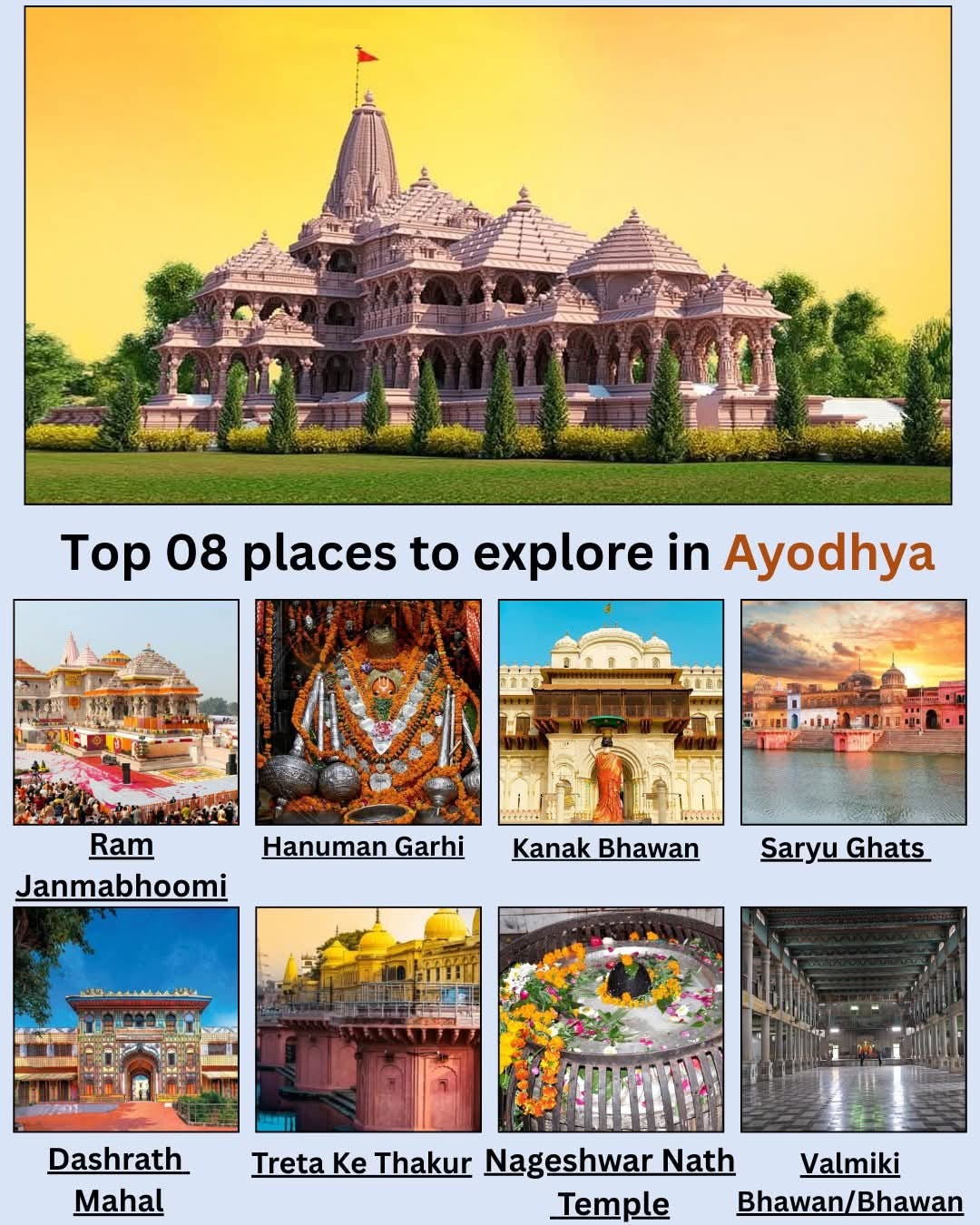
Ayodhya, one of the seven sacred cities (Sapta Puri) of Hinduism, holds a revered place in Indian history, mythology, and spiritual consciousness. Situated on the banks of the holy River Saryu in Uttar Pradesh, Ayodhya is believed to be the birthplace of Lord Shri Ram, the seventh avatar of Lord Vishnu.
With roots tracing back thousands of years, Ayodhya beautifully blends ancient legends, grand temples, sacred ghats, and royal heritage. Below are the top 8 must-visit places in Ayodhya, each carrying profound cultural and religious significance.
1. Ram Janmabhoomi – The Birthplace of Lord Ram
Ram Janmabhoomi is the heart and soul of Ayodhya. According to the Ramayana, this sacred site marks the exact birthplace of Lord Shri Ram, the ideal king and symbol of righteousness (Maryada Purushottam).
The newly constructed Shri Ram Mandir, inaugurated in 2024, stands as a monumental symbol of faith, devotion, and architectural brilliance. Built in Nagara-style architecture, the temple features intricate carvings, sandstone construction, and spiritually symbolic design elements.
Spiritual Significance:
One of the holiest pilgrimage sites for Hindus
Associated with the Treta Yuga
Represents dharma, devotion, and cultural unity
2. Hanuman Garhi – Fortress of Devotion
Hanuman Garhi is one of the most prominent temples in Ayodhya, dedicated to Lord Hanuman, the ardent devotee of Lord Ram. The temple is built like a fortress atop a hill, symbolizing protection over Ayodhya.
Legend says that Hanuman resided here to guard Ram Janmabhoomi. Devotees believe that visiting Hanuman Garhi before Ram Mandir ensures fulfillment of wishes.
Key Highlights:
Ancient temple dating back to the 10th century
76 steep steps leading to the shrine
Idol of child Hanuman seated on his mother Anjani’s lap
3. Kanak Bhawan – Palace of Divine Love
Kanak Bhawan is a magnificent temple gifted to Goddess Sita by Queen Kaikeyi after her marriage to Lord Ram. It is considered the most beautiful and richly decorated temple in Ayodhya.
Inside, stunning idols of Lord Ram and Goddess Sita adorned with gold crowns captivate devotees. The temple symbolizes marital bliss, devotion, and royal grace.
Why Visit:
Strong association with Ram–Sita’s divine relationship
Rich murals and ornate interiors
Peaceful spiritual atmosphere
4. Saryu Ghats – Where Faith Meets Serenity
The River Saryu is deeply sacred in Hinduism, mentioned in ancient scriptures and the Ramayana. The ghats along the river serve as places for holy baths, rituals, and evening aartis.
It is believed that a dip in the Saryu washes away sins and grants spiritual liberation. The Saryu Aarti at sunset is a mesmerizing experience filled with lamps, chants, and devotion.
Highlights:
Sacred bathing rituals
Evening Ganga-style aarti
Calm, meditative environment
5. Dashrath Mahal – Royal Residence of King Dashrath
Dashrath Mahal is believed to be the royal palace of King Dashrath, father of Lord Ram. This site reflects the royal heritage of the Ikshvaku dynasty, one of the oldest dynasties in Indian history.
The palace complex today houses shrines and beautifully painted halls depicting scenes from the Ramayana.
Cultural Importance:
Associated with Lord Ram’s childhood
Celebrations during Ram Navami and Diwali
Richly decorated interiors
6. Treta Ke Thakur – Witness to Ancient Yajna
Treta Ke Thakur is believed to be the site where Lord Ram performed the Ashwamedha Yajna after returning victorious from Lanka. The temple houses ancient black stone idols of Ram, Sita, Lakshman, Bharat, Shatrughan, and Hanuman.
Legend states that these idols were installed by King Vikramaditya during the revival of Ayodhya.
Why It’s Special:
Rare ancient idols
Deep connection to Treta Yuga
Historical and archaeological value
7. Nageshwar Nath Temple – Sacred to Lord Shiva
This ancient temple dedicated to Lord Shiva was established by Kusha, son of Lord Ram. According to legend, Kusha lost his armlet while bathing in the Saryu, which was found by a Nag-Kanya, leading to the temple’s construction.
The temple plays a crucial role during Maha Shivratri, attracting thousands of devotees.
Significance:
Strong Shaivite connection in Ram’s lineage
Ancient mythology and rituals
Important during Shivratri
8. Valmiki Bhawan – Birthplace of the Ramayana
Valmiki Bhawan is dedicated to Maharishi Valmiki, the revered sage who authored the Ramayana, one of the greatest epics of Indian civilization.
It is believed that parts of the Ramayana were composed here, making this site extremely important for literary and spiritual heritage.
Importance:
Tribute to India’s first poet (Adi Kavi)
Cultural and educational value
Peaceful, reflective atmosphere
Ayodhya – A Journey Beyond Time
Ayodhya is not just a city; it is a living embodiment of faith, history, and eternal values. Every temple, ghat, and palace here tells a story rooted in devotion, sacrifice, and righteousness.
Whether you are a spiritual seeker, history enthusiast, or cultural traveler, Ayodhya offers a deeply enriching experience that stays with you long after you leave.
✨ A visit to Ayodhya is not a trip - it is a pilgrimage of the soul. ✨
Sacred Aartis, Pujas & Rituals in Ayodhya
Ayodhya’s spiritual essence truly comes alive through its daily aartis, Vedic rituals, and traditional pujas, which allow devotees to actively participate in centuries-old devotional practices. These sacred ceremonies are deeply rooted in the Ramayana tradition and offer an immersive spiritual experience.
Saryu Aarti – The Divine Evening Ritual
The Saryu Aarti, performed every evening at the river ghats, is one of Ayodhya’s most soul-stirring experiences. As the sun sets, priests offer lamps, incense, and chants to Mother Saryu, accompanied by devotional hymns and the rhythmic sound of bells. Devotees gather to witness hundreds of lamps floating on the river, symbolizing purification, gratitude, and liberation from sins. Participating in or witnessing this aarti is believed to bring peace, prosperity, and spiritual cleansing.
Ram Lalla Aarti – Daily Worship at Ram Janmabhoomi
At the Shri Ram Janmabhoomi Temple, daily Ram Lalla Aartis are performed with strict Vedic procedures. These include:
Mangala Aarti (early morning)
Shringar Aarti
Rajbhog Aarti
Sandhya Aarti
Shayan Aarti (night)
Each aarti marks a different phase of the divine day of Balak Ram (Ram Lalla) and allows devotees to experience the deity in various forms. The rituals emphasize devotion, discipline, and spiritual connection.
Ram Darbar Aarti – Worship of the Divine Family
The Ram Darbar Aarti is dedicated to Lord Ram along with Goddess Sita, Lakshman, Bharat, Shatrughan, and Hanuman. This aarti symbolizes ideal family values, harmony, and dharma. It is performed with traditional lamps, conch shells, and Vedic mantras, reminding devotees of Ram Rajya—an era of justice, compassion, and righteousness.
VIP Darshan – Special Access for Devotees
For devotees seeking a more serene and closer darshan experience, VIP Darshan facilities are available at major temples, including Ram Janmabhoomi and Hanuman Garhi. VIP darshan allows:
Reduced waiting time
Organized entry
Special viewing arrangements during aartis and festivals
Advance booking, valid identification, and adherence to temple guidelines are usually required.
Pujas, Abhisheks & Ritual Offerings
Ayodhya offers a wide range of religious services and rituals, conducted by trained priests according to ancient scriptures:
Ram Naam Jap & Sankirtan
Abhishek Puja (holy bathing of deities)
Vishnu Sahasranama Path
Ramayan Path & Akhand Ramayan
Pind Daan & Shraddha (ancestral rituals at Saryu Ghats)
Navgraha Puja
Maha Rudrabhishek at Nageshwar Nath Temple
Special Pujas on Ram Navami, Diwali, Kartik Purnima & Makar Sankranti
Many temples and ghats provide arrangements for personalized pujas, allowing devotees to participate under priest guidance.
Spiritual Benefits for Devotees
Participation in Ayodhya’s rituals is believed to:
Cleanse negative karma
Strengthen faith and inner peace
Bring prosperity and family harmony
Offer moksha-related spiritual merit
Ayodhya is not just a place to see - it is a place to experience devotion in action. From the glowing lamps of Saryu Aarti to the sacred chants of Ram Lalla Aarti, every ritual invites devotees into a timeless spiritual journey rooted in faith, discipline, and divine love.