

Photo: AditiChintarevula, CC0, via Wikimedia Commons
You have finally bought the flat in Pune, the plot in Patna, the house in Hyderabad. The keys exist, the registration is done, and you are ten thousand kilometres away in Toronto or Dubai or Sydney. Now comes the part that truly makes it yours: the griha pravesh, the first formal entry of the family into a new home.
For NRIs, this puja is both deeply emotional and logistically awkward. This guide covers how families actually plan it from abroad: the muhurat, who performs what, the samagri, and how to be present even when you cannot fly in.
What the puja involves
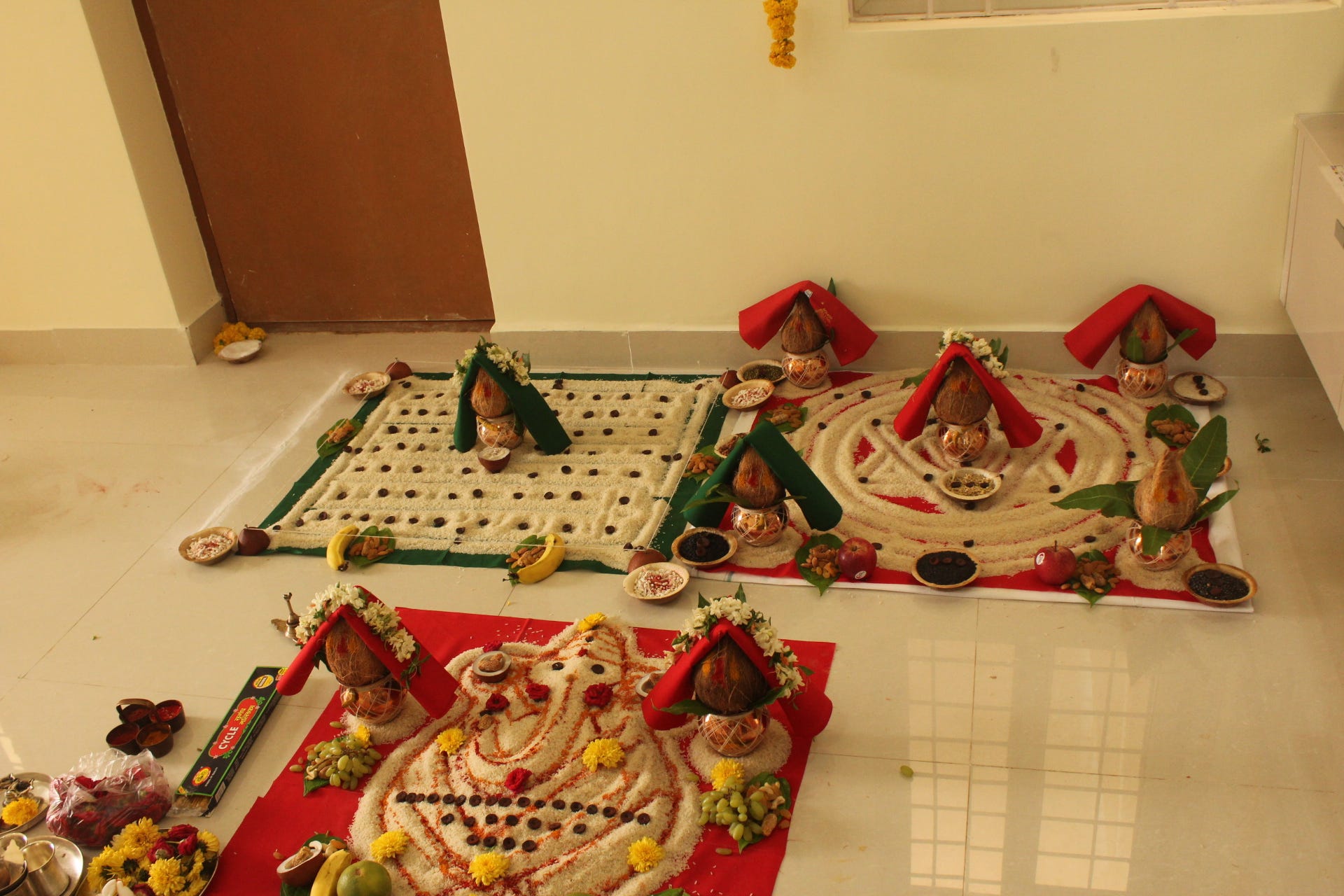
Griha pravesh traditionally begins at the threshold. A kalash filled with water, topped with mango leaves and a coconut, is placed at the entrance. The lady of the house, or the senior-most family member, breaks a coconut, marks the doorway with haldi and kumkum, and steps in right foot first. Inside, the puja usually includes Ganesh puja to remove obstacles, a navagraha puja for the nine grahas, and often a vastu shanti for the space itself, ending with a havan in many families. Milk is boiled until it overflows in a new vessel, a small symbol of abundance, and shared as prasad.
Customs differ by region and community. A Tamil family, a Marwari family and a Bengali family will do this puja differently, and a good pandit will ask about your family tradition rather than impose a generic order.
Choosing the muhurat
Griha pravesh muhurats are chosen from the panchang, and the list of auspicious dates changes with the season. Traditionally, many families avoid certain months and prefer the period after Dev Uthani Ekadashi, when the wedding and housewarming season begins. Date lists are published by panchang sources, but the final muhurat for a specific family usually comes from the family pandit, who matches the date with the owners' janma nakshatras.
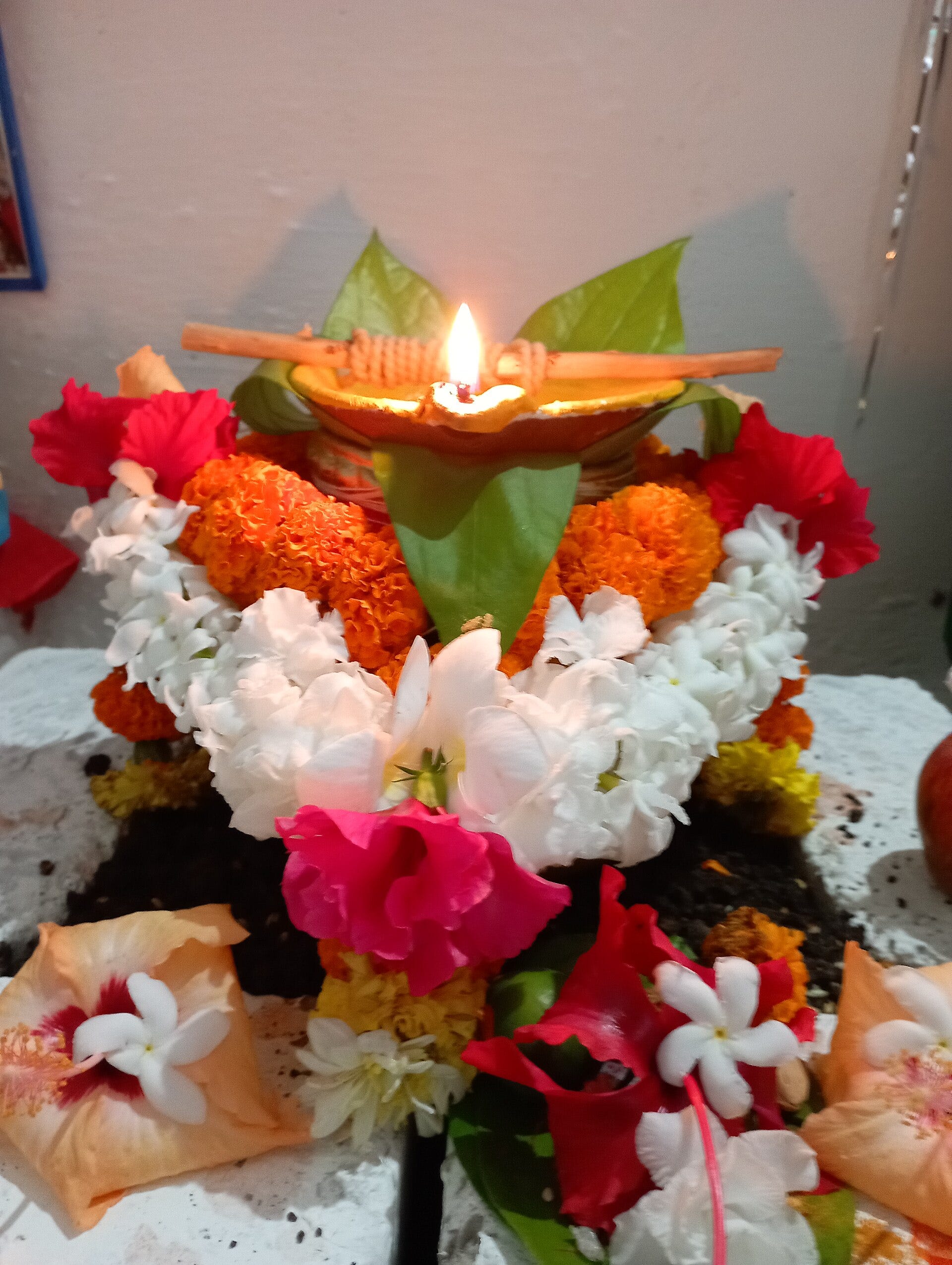
Photo: Ashish Suryavanshi858, CC0, via Wikimedia Commons
Three ways NRIs actually do this
Fly home for it. The traditional preference is that the homeowners themselves perform the puja. If the timing works, many families plan the India trip around a good muhurat rather than the other way round.
Parents or siblings perform it with you on video. Very common now. The family in India performs the physical rituals while the pandit includes your name in the sankalpa, and you join live on a video call for the key moments: the entry, the havan, the arti.
A hybrid. The puja is done in India on the muhurat, and you do a small parallel ceremony in your apartment abroad: a diya, a coconut, the same mantra playing on the call.
All three are widely practised. Which one is right is a family decision, ideally made with your pandit, not a rule book.
The practical checklist
Book the pandit early. Good pandits are booked out weeks ahead in muhurat season, especially for morning slots. Verify who you are hiring: our guide How to Verify a Pandit Online Before You Book lists nine checks, and our NRI puja checklist covers booking from abroad end to end.
Get the samagri list in writing. Ask the pandit for the full list at least a week ahead so family in India can shop without last-minute runs. Coconut, mango leaves, kalash, haldi, kumkum, rice, ghee, flowers and the havan samagri are standard; the rest varies.
Agree the dakshina upfront, including whether samagri is included in the amount or separate.
Plan the timezone. An 8 AM muhurat in India is late evening in North America and mid-morning in the Gulf. If you are joining by video, put the exact IST time in everyone's calendar with the conversion done.
Decide who holds the camera. One steady phone on a tripod pointed at the entrance beats a cousin's shaky hand.
What matters most
The rituals are the frame; the meaning is the family crossing the threshold together. Families who plan the logistics early, the muhurat, the pandit, the samagri, the call, get to spend the day itself on the part that counts. At DharmikVibes, our vision is to enable exactly this: devotion at a distance, without distance getting in the way.
A simple four-week timeline for NRI families
Four weeks out: fix the muhurat window with your family pandit or a verified online pandit service, and align it with your travel dates. Confirm who in India is the on-ground coordinator.
Three weeks out: book the pandit and the samagri. Ask for a written samagri list and decide who buys what locally; some families order a ready griha pravesh kit to the Indian address.
Two weeks out: confirm the home is actually ready: electricity, water, gas connection, basic cleaning. A puja cannot be calm if the municipality connection is still pending.
One week out: reconfirm everyone: pandit, coordinator, photographer if any, and the menu if you plan to feed guests. Share the muhurat time in IST explicitly with relatives on other time zones.
On the day: keep the kalash, coconut, mango leaves and rice ready the night before. Enter with the family together at the muhurat, and let the on-ground coordinator handle logistics while the family participates.
Pitfalls specific to NRIs
Three come up repeatedly. Time zone confusion: a "10:30 AM muhurat" is IST, and relatives abroad joining on video need the conversion done for them. Document gaps: society or builder permissions for the function, and utility transfers, are easier to settle before the date than after. And over-scheduling: families flying in try to combine the puja, a house tour for relatives and a lunch for fifty people into one morning. Give the ceremony its own unhurried space. The first entry into your home happens once; let it feel like it.