

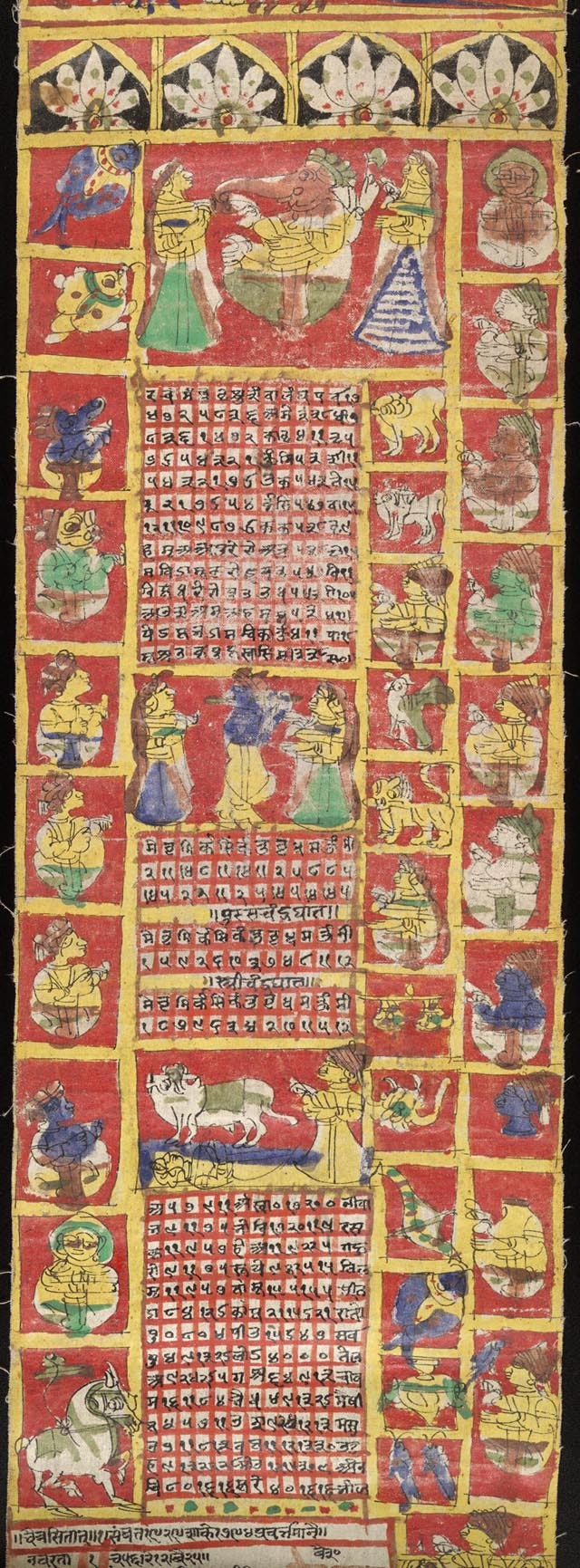
Photo: Unknown author, public domain, via Wikimedia Commons (a Hindu almanac page from 1871-72)
In many Indian homes, no important work begins before someone checks the time. Not the clock for punctuality, but the panchang for Rahu Kaal: a roughly ninety-minute window each day that the Jyotisha tradition treats as unsuitable for starting anything new.
If you have ever wondered why a shop opening waited eleven extra minutes, or why a family left for a journey a little earlier than planned, the answer is often Rahu Kaal. Here is what it actually is, how its timing is calculated, and what the tradition asks of those who follow it.
The idea: the day divided into eight
The classical method divides the time between sunrise and sunset into eight equal parts, each lasting about ninety minutes. Each part is governed by one planetary influence. One of those parts belongs to Rahu, the shadow graha associated in the tradition with confusion and obstruction, and that part is Rahu Kaal, also written Rahu Kalam or Rahu Kala.
Because it is built from sunrise and sunset, Rahu Kaal is not a fixed clock time. It changes with your city and with the season. This is why panchang apps and daily newspapers print it fresh for each date and place.
Which part of which day
The first period after sunrise is always considered free of Rahu. After that, Rahu Kaal falls on a different period each weekday, in this order:
Monday: 2nd period
Saturday: 3rd period
Friday: 4th period
Wednesday: 5th period
Thursday: 6th period
Tuesday: 7th period
Sunday: 8th period
On a day with a 6 AM sunrise and 6 PM sunset, each period is exactly ninety minutes, so Monday's Rahu Kaal would run 7:30 to 9:00 in the morning. In practice, always check the day's actual timing for your location rather than relying on a printed average.
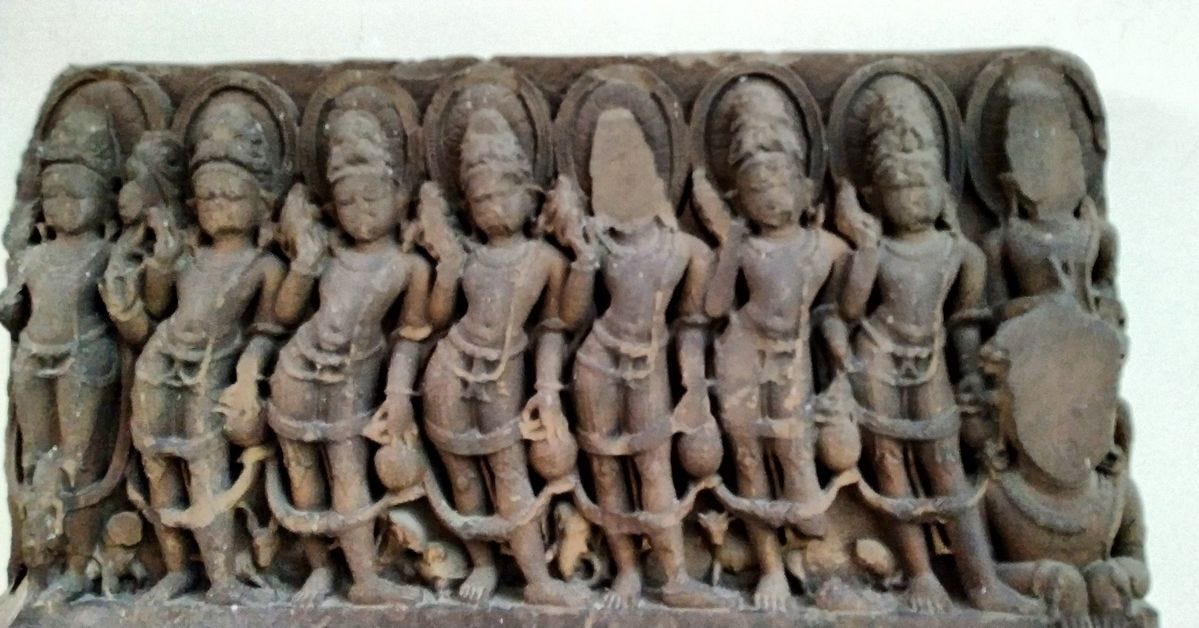
Photo: SpeakingArch, CC BY-SA 4.0, via Wikimedia Commons (a 10th-century Navagraha panel, Rani Durgavati Museum, Jabalpur)
Yamaganda and Gulika: the other two windows
Rahu Kaal is the best known of three daily windows many almanacs list:
Yamaganda (also Yamagandam), the period associated with Yama, traditionally avoided for beginnings as well.
Gulika (Gulikai, sometimes linked with Mandi), a third period with its own weekday order. In parts of South India, Gulika is also consulted for certain specific activities rather than avoided outright.
Many panchang listings print all three side by side along with the day's shubh muhurat, the auspicious windows chosen for ceremonies. If you are new to reading a daily almanac, our guide How to Read Today's Panchang walks through tithi, vara, nakshatra, yoga and karana step by step.
What the tradition actually asks
The classical guidance is narrower than the reputation. Rahu Kaal is about beginnings: do not start a new venture, sign something important, begin a long journey, open a shop or start a ceremony during the window. Work already in progress, routine tasks and ordinary daily life are not interrupted by it. Many families also observe small remedies, such as a prayer to Goddess Durga or to Rahu, when something unavoidable must begin anyway.
Some almanacs note a night Rahu Kaal as well, calculated from sunset to next sunrise, though the daytime window is the one most families observe.
A living custom, understood on its own terms
Rahu Kaal is a tradition, not a measurable force, and even within the tradition its strictness varies: some families will not sign a lease during it, others simply avoid starting pujas in it, and many younger Indians check it mainly for weddings and griha pravesh. Understanding it is useful even if you never plan around it, because so much of India's ceremonial timing quietly runs on this clock.
At DharmikVibes, our vision is to enable every seeker to meet these customs with clarity, whether you observe them fully or simply want to understand why your family does.
A rough way to understand the calculation
Rahu Kaal is tied to the local sunrise, which is why it differs from city to city and shifts slightly through the year. The traditional method divides the daytime (sunrise to sunset) into eight equal parts, and assigns one part to Rahu on each weekday in a fixed order. On Monday it falls in the second part of the day, on Saturday in the third, on Friday in the fourth, on Wednesday in the fifth, on Thursday in the sixth, on Tuesday in the seventh, and on Sunday in the eighth part. The first part of the day is never Rahu Kaal, so there is no Rahu Kaal at sunrise on any day.
Because sunrise varies, the same weekday's Rahu Kaal in Chennai and in Delhi can differ by many minutes. This is why printed panchangams are city-specific, and why online panchang pages like drikpanchang ask for your location before showing the day's timing. When someone quotes a Rahu Kaal time, the fair question is: for which city, and which date?
What people traditionally avoid, and what continues
In the tradition, Rahu Kaal is considered inauspicious for beginning new undertakings: signing an agreement, starting a journey, inaugurating a shop, the first entry into a new home. Work already in progress simply continues; the belief attaches to beginnings, not to ongoing activity. Routine acts like eating, commuting to a regular job, or studying are not treated as "beginnings". Many families use the day's panchang the way earlier generations did: as one input among several, respected but not feared. If a new beginning cannot avoid the window, tradition itself offers reassurance - devotion, care and honest effort matter more than the clock.