

On the evening of Monday, 16 November 2026, the doors of the Sabarimala temple open for the Mandala-Makaravilakku season. From 17 November, the first day of the Malayalam month of Vrischikam, the 41-day Mandala Kalam begins, closing with the Mandala Puja on Sunday, 27 December. The season's second great day, Makaravilakku, falls on 14 January 2027, when a lamp is lit on the hill of Ponnambalamedu and millions of eyes turn toward it.
Long before the temple doors open, the season has already begun in homes across Kerala, Tamil Nadu, Karnataka, Andhra Pradesh, and in Ayyappa groups from Singapore to Houston. It begins with a string of beads and a promise: forty-one days of discipline in the name of the Lord of the Hills.
New to Sabarimala? Begin with our introduction to the Mandala Kalam season. This guide is the practical companion: how to book the darshan, how to keep the vrata, what to pack, and how devotees outside India do it all from abroad.
Ayyappa, in brief
Ayyappa, also called Dharma Sastha and Manikandan, is the son of Shiva and Vishnu, born of Vishnu's form as the enchantress Mohini. He is the celibate god of the forests, raised by the king of Pandalam, and his temple sits deep in the Periyar forests of the Western Ghats, reachable only on foot through the hills. The pilgrimage to his shrine is among the largest annual pilgrimages on earth, and it is open to all: every caste, every faith, every language. The only qualification is the vrata.
The 41-day vrata: what it asks and what it gives
The Mandala vrata begins with the mala, a string of rudraksha or tulsi beads with the Lord's pendant, placed around the neck by a Guru Swami, a senior devotee who has made the pilgrimage many times. From that morning, for forty-one days, the devotee lives by a single rule of simplicity. Black, dark blue or saffron clothes. No footwear. No alcohol, no non-vegetarian food, no tobacco. Celibacy. A simple bed, often a mat on the floor. Bath and puja twice a day, morning and evening, ending with the words every Ayyappa devotee knows: Swamiye Saranam Ayyappa, Lord Ayyappa, I surrender to you.
The vrata is strict on the outside and radical on the inside. For these forty-one days the devotee is called Ayyappa or Swami by everyone, and calls everyone else the same, including his own father, his own children. The office title, the bank balance, the family hierarchy: all of it is set down with the shoes. When lakhs of men in identical black mundus stand in the same queue at Pamba, the Managing Director and his driver are indistinguishable. That is the point.
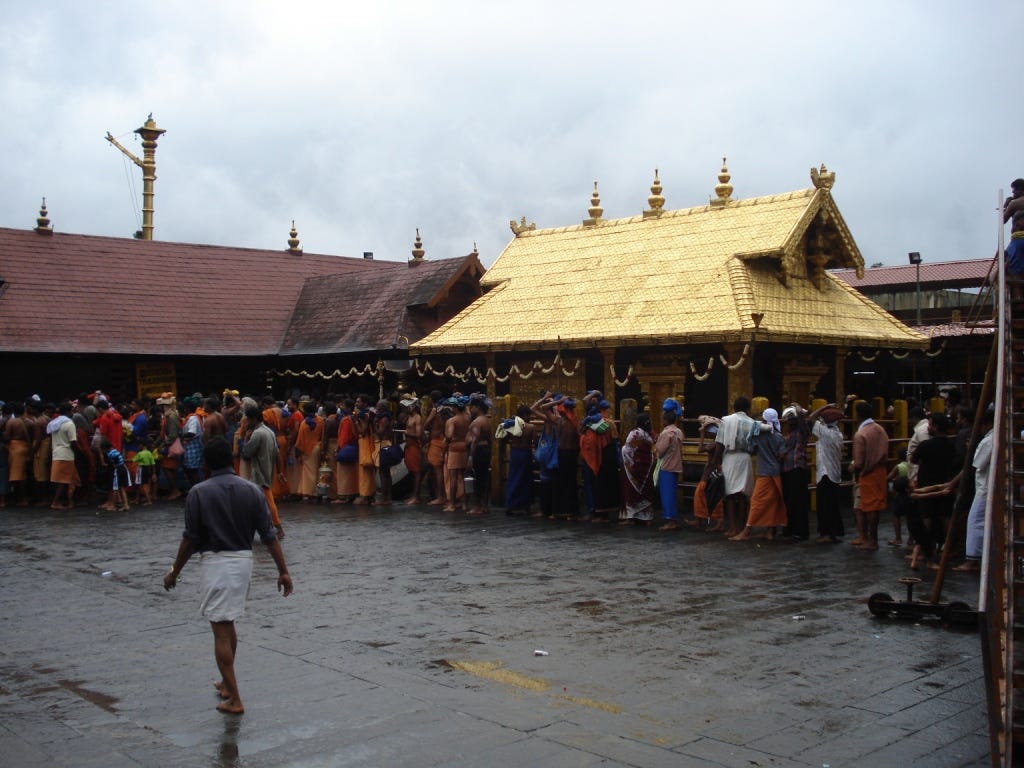

The vrata day by day
What does the discipline actually look like? The details vary by region and by Guru Swami, but the common shape is this. The day begins before sunrise with a bath and morning puja, and closes with an evening puja; through the day the pilgrim keeps the Saranam chant close. Black, saffron or dark blue is worn, and the tulsi or rudraksha mala received at the mala-dharana ceremony is never taken off.
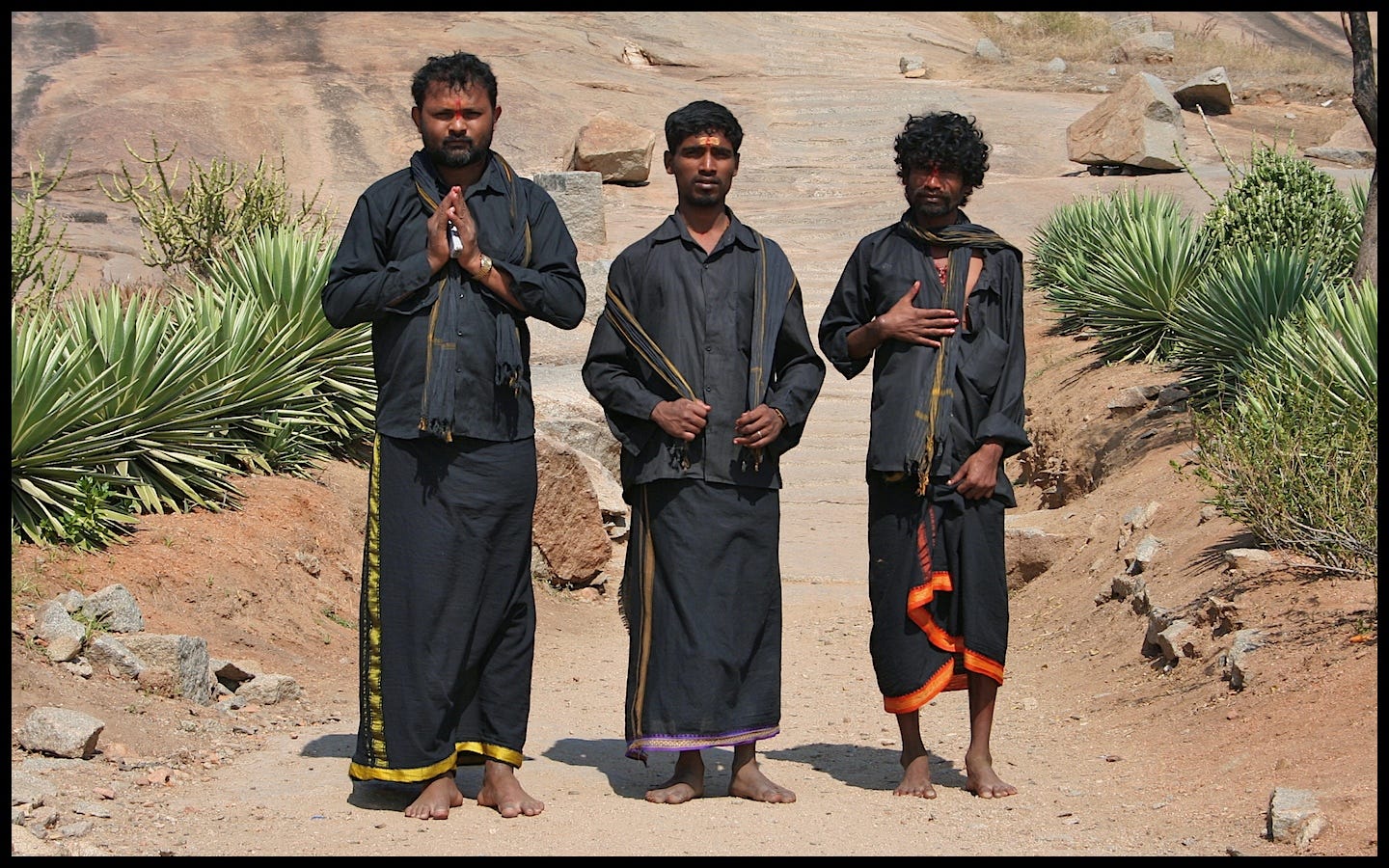

Food is kept strictly vegetarian and simple, and many pilgrims eat one full meal a day. Alcohol and tobacco are set aside completely. So are leather belts and wallets, haircuts and shaving, footwear of every kind, and the comforts of a bed: the vrata is commonly kept sleeping on a floor mat.
The rules of the body are meant to carry the rules of the heart. Speech stays calm, anger is refused, and every fellow pilgrim, whatever his age, language or wealth, is greeted as Swami or Ayyappa, because the discipline treats each one as the deity walking. A first-timer does not improvise any of this: the vrata begins with the mala-dharana, when a Guru Swami, an experienced pilgrim, ties the mala and takes responsibility for guiding the group.
The irumudi and the eighteen steps
The pilgrim who completes the vrata carries the irumudi kettu, the two-part bundle, on his head: one part for the Lord, with the coconut filled with ghee for the abhishekam, and one part for his own needs on the road. From Pamba, the river where pilgrims bathe before the climb, the path rises about five kilometres through the forest to the Sannidhanam, the sanctum. At its end stand the eighteen steps, the Pathinettampadi.
Only a devotee who has kept the full vrata and carries the irumudi climbs those steps. The tradition reads them as a ladder out of the human condition: the five senses, the eight inner enemies from lust to pride, the three gunas, and the final steps into knowledge and then liberation itself. Whether a pilgrim counts the philosophy or simply counts the steps, no one climbs them casually. At the top, in the glow of oil lamps, is the small shrine where the Lord sits, and for a moment the whole forty-one days make sense.
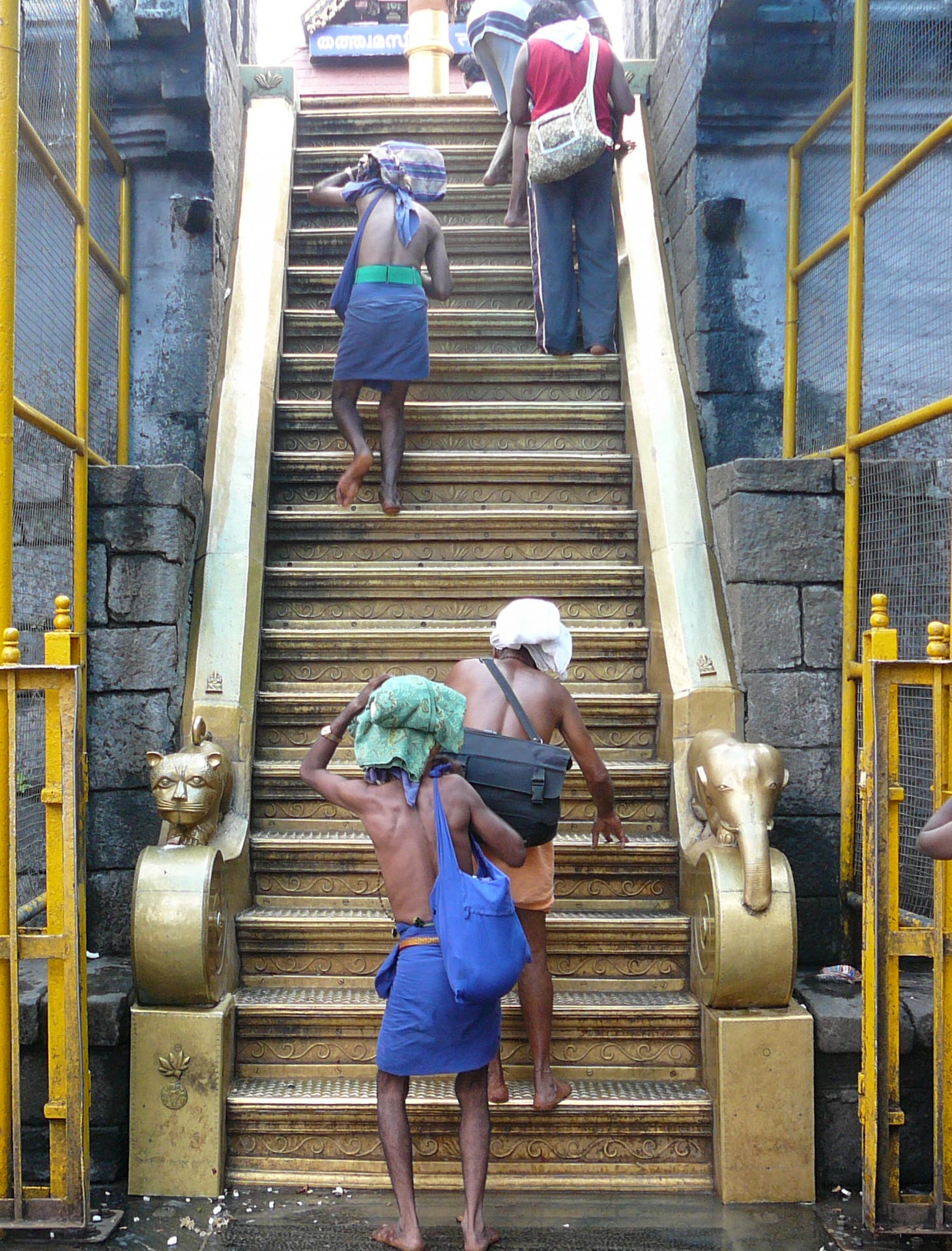

What do the eighteen steps mean? Tradition and the commentators commonly read them as a ladder out of the self. The first five stand for the five senses, to be mastered rather than served. The next eight are the inner enemies: desire, anger, greed, delusion, pride, envy and their companions. Then come the three gunas, the qualities that colour all of nature, and the final two steps are knowledge and the ignorance it dispels. The readings vary in detail between traditions; the rule does not. The steps are climbed only by a pilgrim in vrata, carrying the irumudi, and the first climb is made only after the full discipline.
The irumudi itself is a small teaching. Its front compartment holds what belongs to the deity, above all the coconut filled with ghee that will anoint Ayyappa in abhishekam. The rear holds the pilgrim's own meagre provisions. At the Sannidhanam the ghee coconut is broken and offered, and the emptied bundle is carried home: the self arrives full and returns light.
Who can go, and how to plan
Sabarimala is open to men of every age and to women and children as well; by long tradition, women between about ten and fifty do not enter the shrine, out of regard for the deity's vow of celibacy. Visitors of every faith come; the temple town of Pamba and the forest path carry signs in many languages, and the season runs on a managed system rather than a free-for-all.
Practical planning matters because the crowds are carefully regulated. Entry to the trek is controlled through the Kerala government's official virtual queue: book a darshan slot in advance at sabarimala.kerala.gov.in, the official portal, before fixing train or flight tickets. Carry no leather items such as belts or wallets beyond what rules allow at the base camps, dress for wet winter hills, and remember there is no road to the top: the last stretch is walked barefoot, as it has always been. Mark the season's spine: temple opens on the evening of 16 November, Mandala Puja on 27 December, and Makaravilakku on 14 January 2027.
Booking the virtual queue, step by step
Darshan in the season runs on the Kerala government's official virtual queue, and registration is free. Create an account on the official portal at sabarimala.kerala.gov.in, add each pilgrim's details with a photo identity document, choose a date and time slot, and download the darshan pass. Carry the same identity document on the yatra; it is checked. Slots for weekends, the opening days, Mandala Puja and Makaravilakku fill well in advance, so book the darshan before you book anything else. Registration is online, and can be done from anywhere in the world.
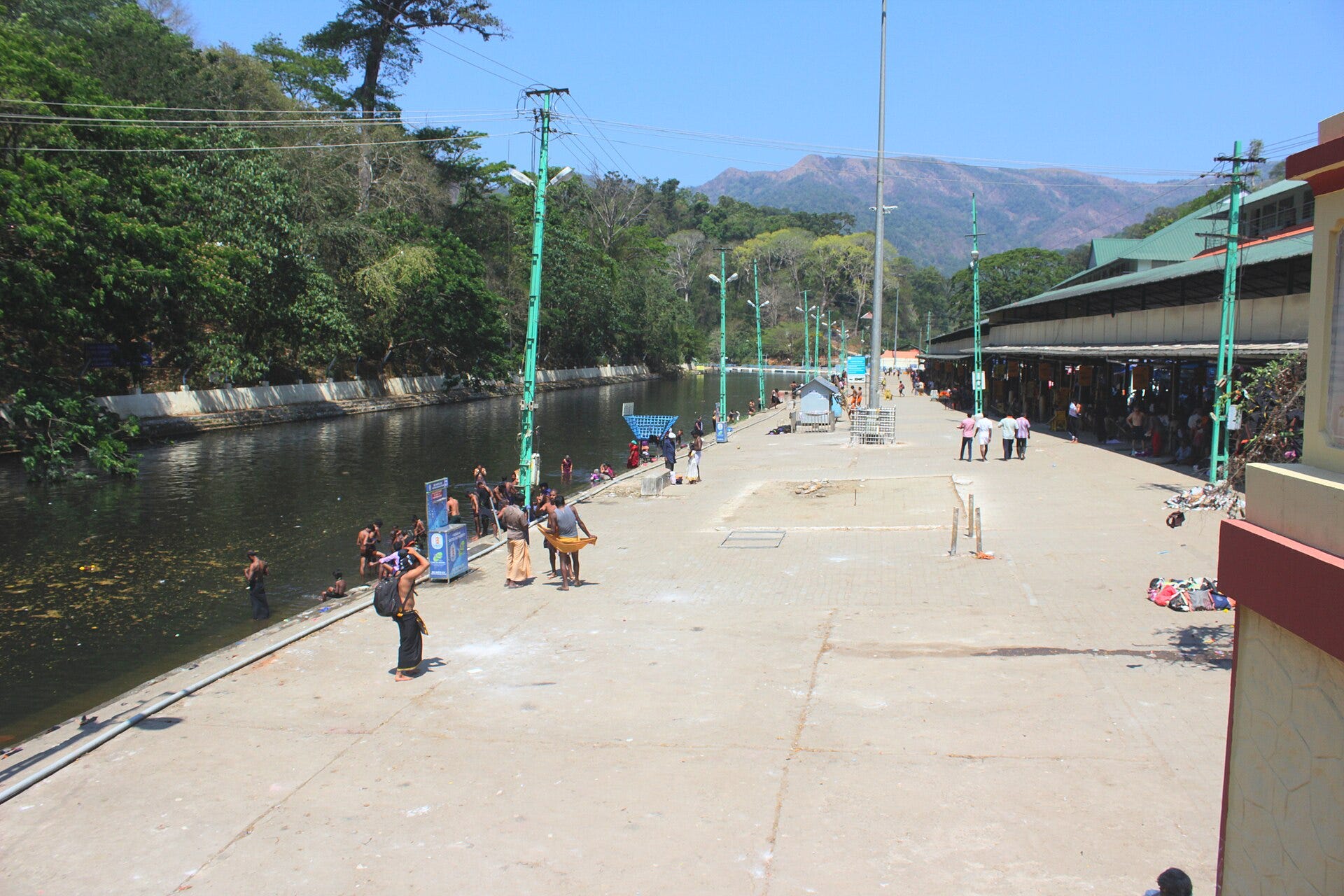

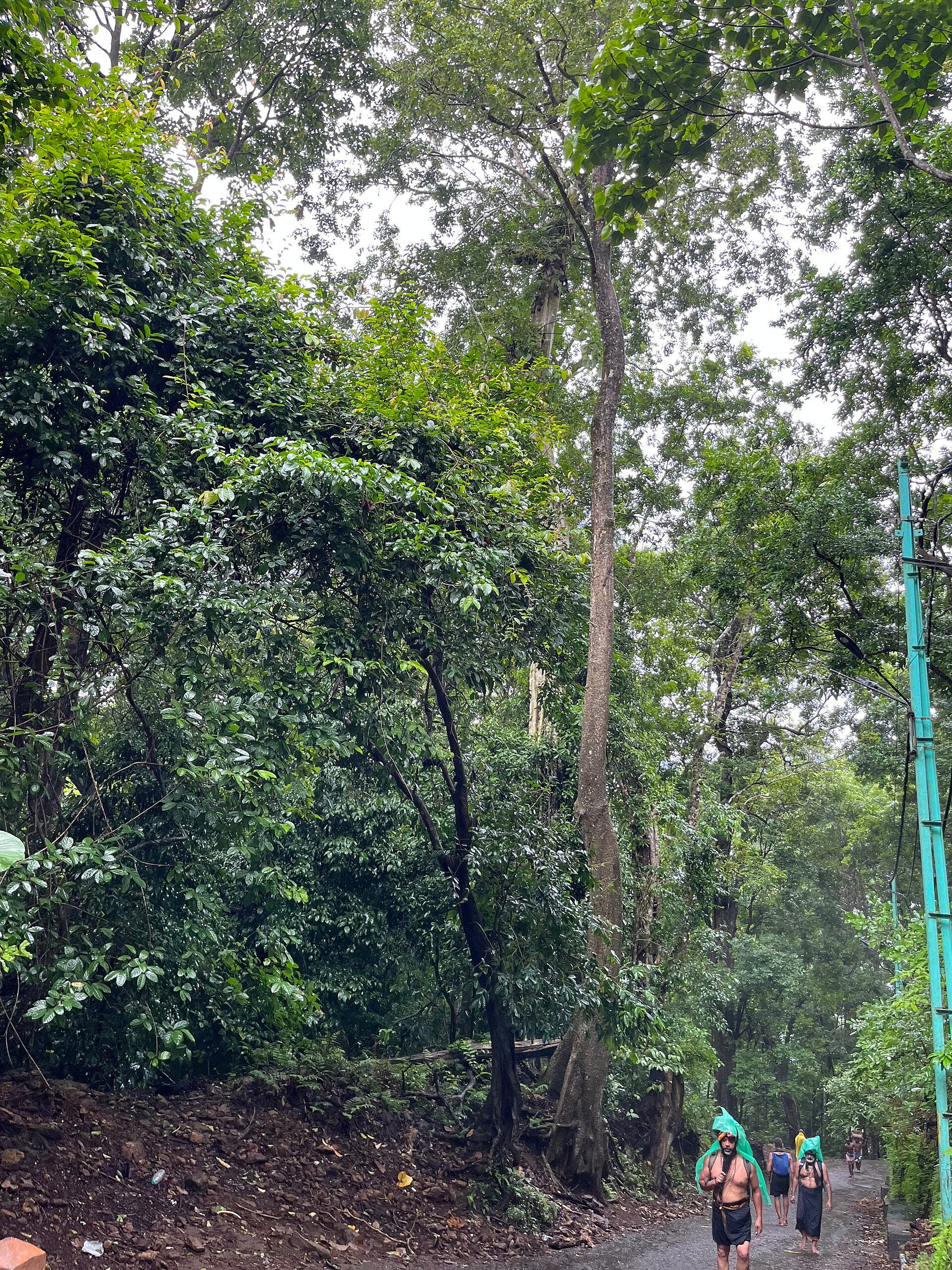
On the ground, the rhythm is old. Pilgrims reach Pamba, bathe in the river at the ghats, and begin the roughly five-kilometre climb through the forest to the Sannidhanam, barefoot, irumudi on the head. The path is steep in stretches but lined with water points, medical posts and rest shelters. Those who cannot walk the climb can hire a doli, a chair carried by bearers, at Pamba.
What to carry, and how to stay well on the hill
Pack light and pack for wet cold: a warm layer for the night air at the top, a rain jacket or poncho, a small first-aid kit, drinking water and electrolytes for the climb, and a charged phone. Leave leather behind, as the discipline asks, and carry any regular medicines with their prescription.

The yatra is a real physical effort in a very large crowd. If you live with a heart condition, blood pressure, asthma or joint trouble, speak with your doctor before fixing dates. Climb at your own pace and use the rest stops; nobody's darshan is improved by exhaustion. Fix a meeting point with your group in case you are separated, and keep to the marked queues rather than the crush at the front.
Makaravilakku: the season's crown
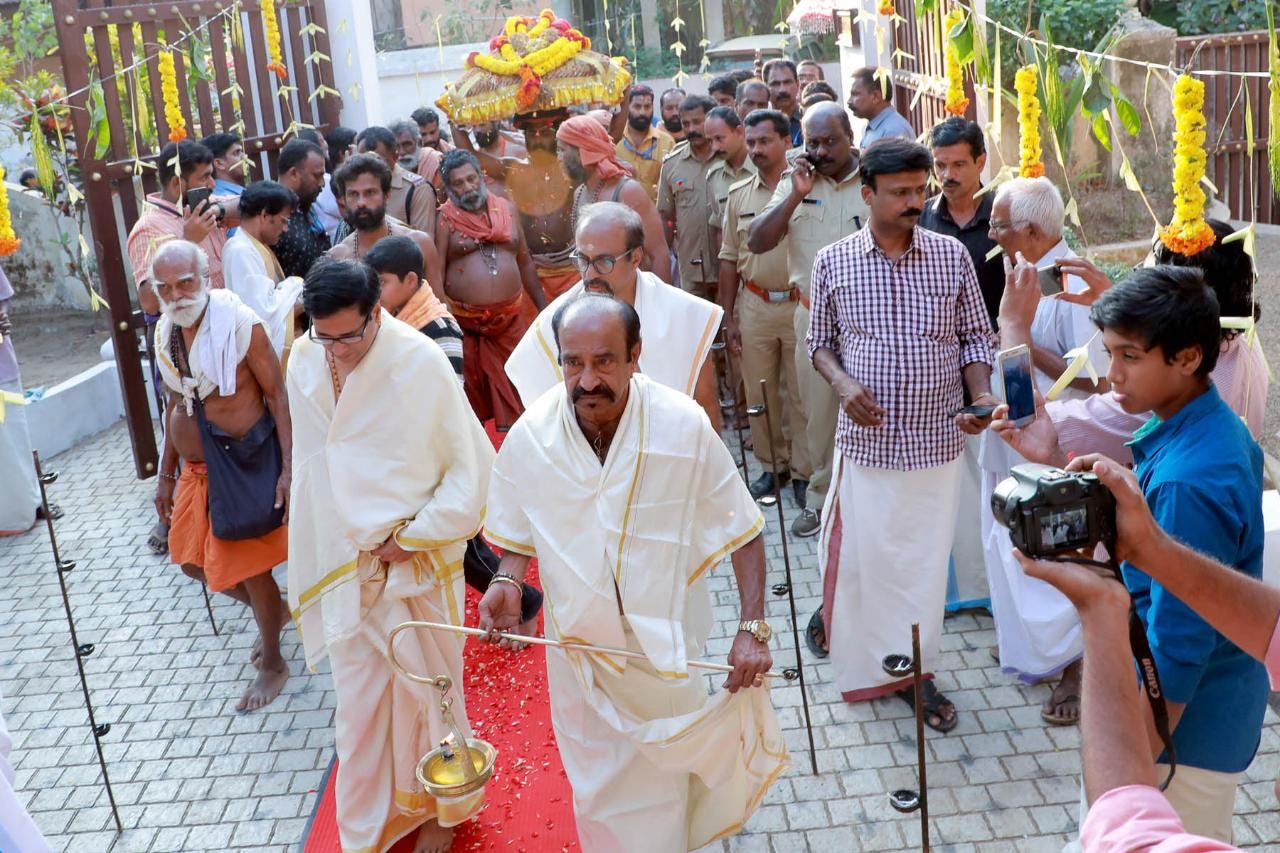

The season ends in glory. Days before Makara Sankranti, the Thiruvabharanam, the sacred ornaments of Ayyappa kept at the Pandalam palace, set out for Sabarimala in a procession that halts at temples and palaces on the way, drawing crowds at every stop. On the evening of 14 January the deity is adorned with the ornaments, and as the deeparadhana is performed, the Makara Jyothi, a light on the facing hill of Ponnambalamedu, appears to the assembled devotees. The chant of Swamiye Saranam Ayyappa rolls across the hills, and the season closes a few days later.
Questions first-timers ask
Can I have darshan without keeping the 41-day vrata? The vrata is the heart of this yatra, and the eighteen steps are reserved for pilgrims carrying the irumudi. Devotees also come in simple devotion without the full discipline, and the temple receives them; but the steps, and the full meaning of the pilgrimage, belong to the vrata.
Do I need a Guru Swami? Tradition strongly recommends it. First-timers ordinarily join a group led by an experienced Guru Swami, who conducts the mala-dharana and guides the discipline. Ayyappa societies in India and abroad can connect you to one.
Can women make this yatra? By long tradition, women between about ten and fifty years of age have not entered Sabarimala, and the question has been before the courts for years. The position continues to evolve; check the current official guidance before planning for the women in your family.
How many days should I plan in Kerala? Most groups allow two to three days: travel to the base town, onward to Pamba, the climb and darshan, and the return, with buffer for the season's crowds.
What does it cost? Darshan registration on the virtual queue is free. Your real costs are travel, simple accommodation at the base towns, and whatever offerings you choose to make.
Can I keep the vrata abroad and finish another year? Yes. Many devotees keep the full discipline where they live and offer the ghee coconut at a local Ayyappa temple, making the Kerala yatra when life allows. The discipline is the darshan; the hill is where it flowers.
Keeping the vrata far from Kerala
The vrata does not require Kerala. Ayyappa societies across the world, in the Gulf, Singapore, the United States, the United Kingdom and Australia, hold mala-dharana ceremonies where a local Guru Swami ties the mala, conduct daily and weekly bhajans through the season, and organise group cooking for the strictly vegetarian kitchen the vrata asks for. If you are an NRI beginning the vrata abroad, three things make it workable: find your local Ayyappa group rather than keeping the discipline alone, set the twice-daily puja to an alarm because foreign workdays do not bend, and plan early if you intend to finish at Sabarimala itself, because the virtual queue fills weeks ahead for the peak days.
Many who cannot make the yatra this year keep the full vrata anyway and offer the ghee coconut at a local Ayyappa temple. The tradition holds that the discipline is itself the darshan: the hill is where it ends, not where it happens.
At DharmikVibes, our vision is to enable Divine Experiences for every seeker, on every yatra, whether the path is the five kilometres from Pamba or a quiet flat in a foreign winter. Swamiye Saranam Ayyappa.